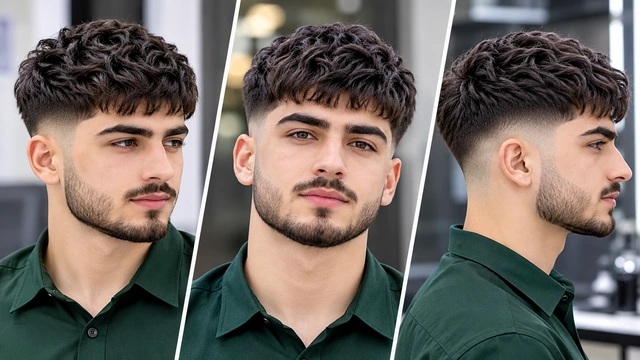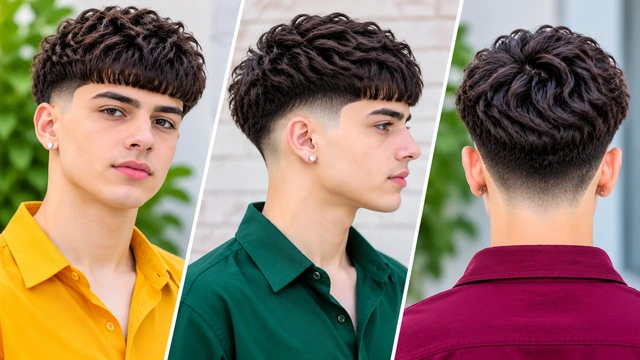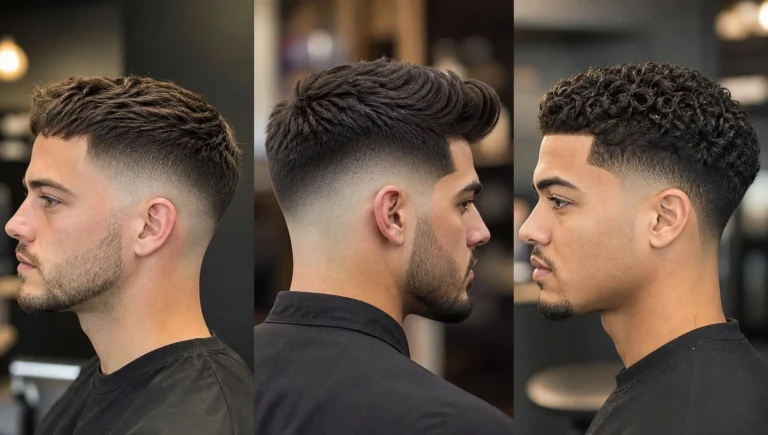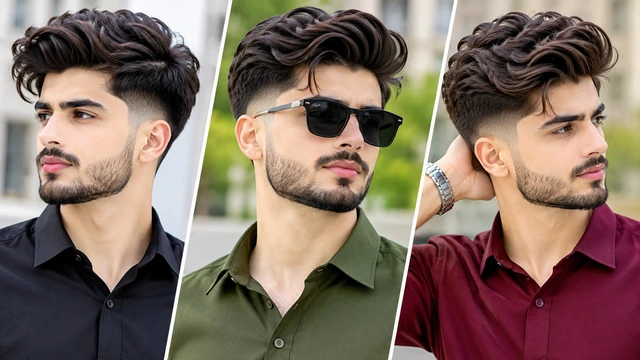


Low Taper Fade Afro: 26 Best Hairstyles for Black Men in 2026
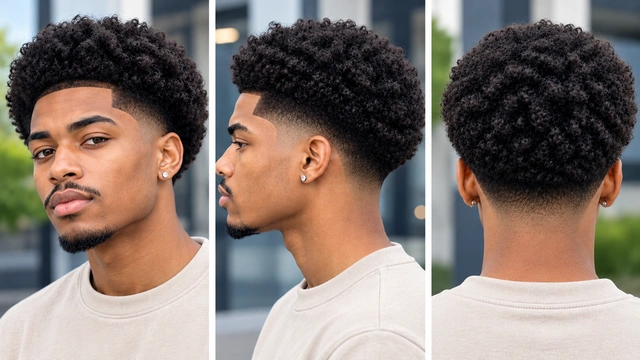
A low taper fade afro keeps the volume and shape of your natural hair on top while the sides and back thin out gently toward the skin. It looks sharp without looking severe. That balance is why so many barbers and clients keep coming back to it.
If you are trying to decide what to ask for at your next appointment, this guide covers 26 different takes on the cut, how to match one to your hair type and face shape, what to say in the chair, and how to care for it at home. Use the headings to jump to what you need.
What Is a Low Taper Fade Afro?
A low taper fade afro pairs a rounded or shaped afro on top with a low taper fade around the sides and back. The hair stays full above the ears and gradually gets shorter as it moves down toward the neckline. The fade only starts low, so the cut stays soft and natural.
What Is an Afro Hairstyle?
An afro is hair that is grown out and shaped so the curls or coils stand away from the scalp, forming a rounded silhouette. It works best on textured hair, usually types 3 and 4, because those curl patterns hold their shape without help from gravity.
Afros range from a tight, close-to-the-head mini afro to a tall, full shape. The common thread is that you wear your natural texture rather than straightening or flattening it.
What Is a Low Taper Fade?
A taper is a haircut where the hair gets gradually shorter toward the edges. A fade goes a step further and blends down to very short hair or bare skin. A low taper fade begins just above the ear and along the neckline, so most of the head keeps its length.
It sits lower than a mid or high taper. That makes it the gentlest option, and the one that grows out the most gracefully. Think of it as a clean frame around your hair instead of a dramatic contrast.
Why Is the Low Taper Fade Afro So Popular?
There are a few practical reasons it has stayed popular:
- It suits almost every setting. You can wear it to the office, the gym or a wedding.
- It protects your length. You keep volume on top while the edges stay neat.
- It grows out well. A low taper looks decent for weeks, not days.
- It is easy to adjust. Add a line up, a part or a beard and the same base cut looks completely different.
- It celebrates natural texture. More men are embracing their curls and coils, and this cut shows them off cleanly.
Social media has also pushed textured hair into the mainstream, which has made barbers more confident working with it.
26 Best Low Taper Fade Afro Hairstyles for Men
These styles all share the same low taper foundation. What changes is the length, texture, finish and extras. Pick the one closest to your hair, then adjust it with your barber.
1. Short Low Taper Fade Afro
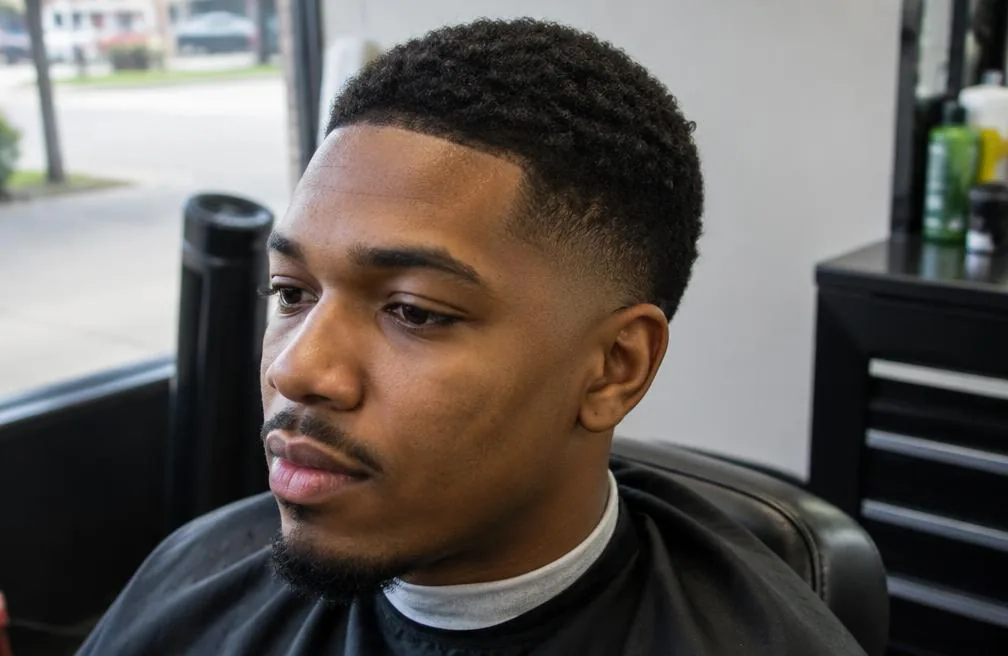
This is the easiest way in. The top is around one to two inches, shaped into a soft round, and the taper trims the sides and neckline. It suits most face shapes and almost any lifestyle. Maintenance is low: a quick pick-out and some moisturizer in the morning. Ask for “a short afro on top with a low taper, keeping the length even.”
2. Mini Afro with Low Taper Fade
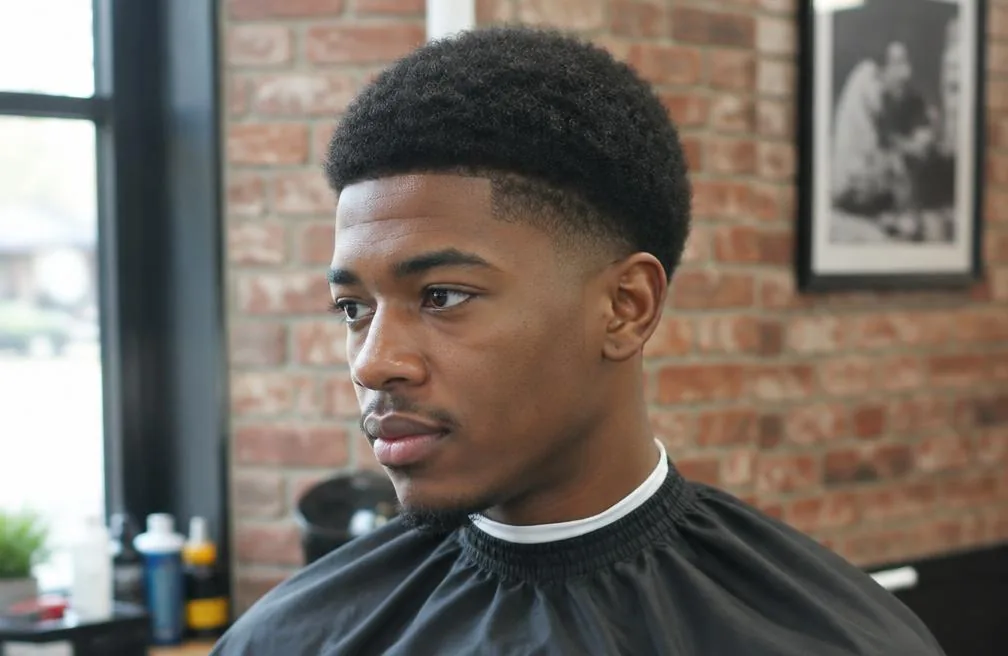
The mini afro stays close to the scalp, usually about an inch. It works well on tight type 4 coils that spring up on their own. Because there is so little length, the low taper does the heavy lifting visually, giving a crisp edge. Wash, moisturize and go. It is a smart pick if you swim, train often or hate styling.
3. Short Textured Afro with Low Taper Fade
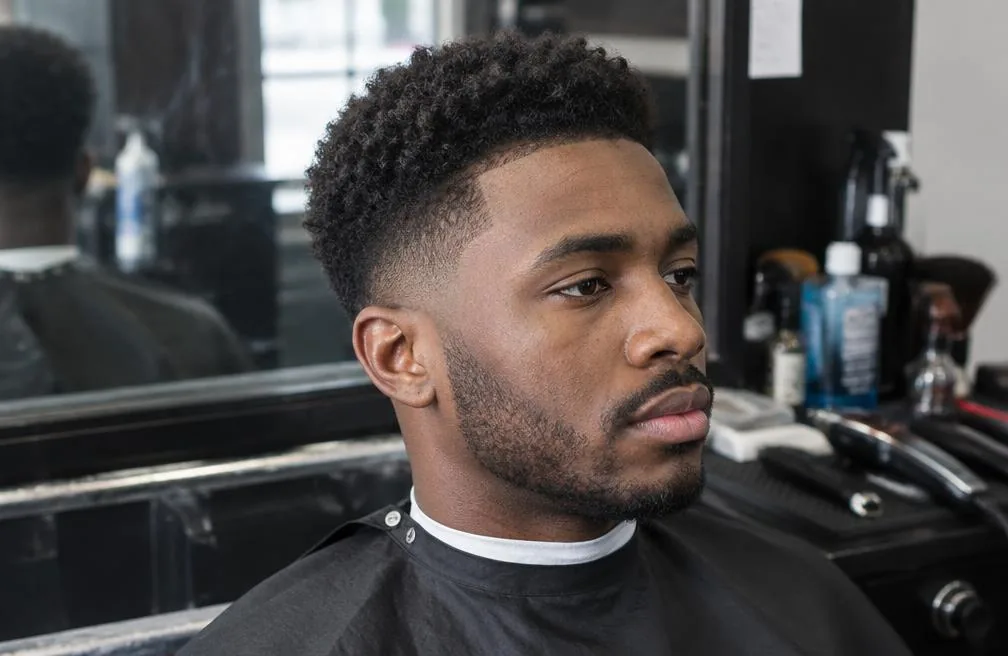
Here the barber adds movement to the top with a twist sponge, finger coils or light point cutting at the tips. The result looks lived-in rather than perfectly round. It suits oval and square faces, and it hides uneven growth well. Ask your barber to leave texture on top and keep the taper soft.
4. Classic Low Taper Fade Afro
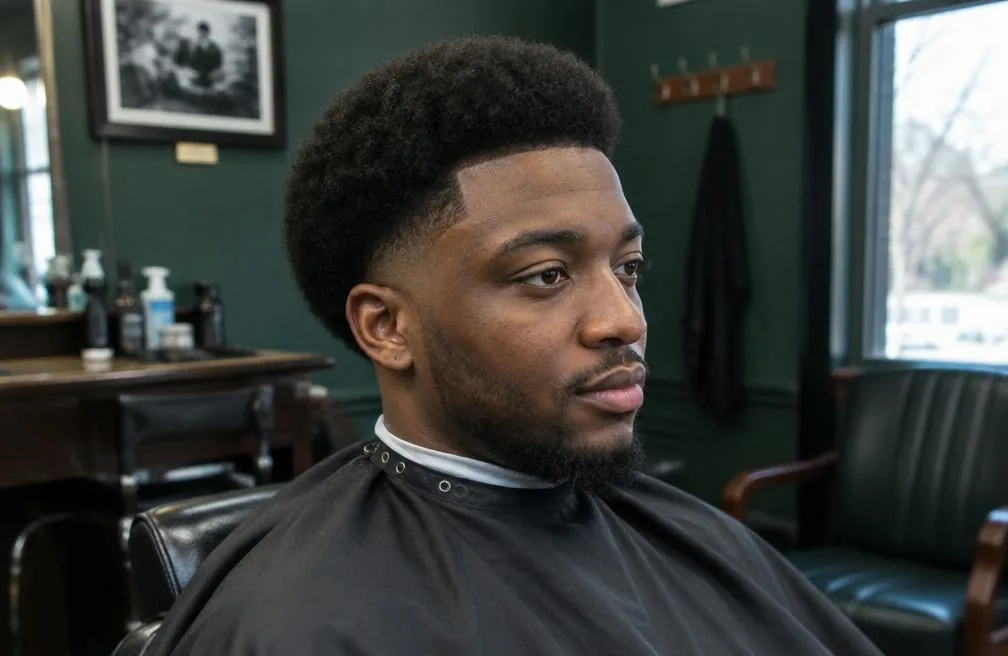
The classic is a balanced, evenly rounded afro with a clean low taper. Nothing about it is trendy, which is exactly why it never looks dated. It is a good first cut for someone who has only worn short hair before. Expect a trim every three to four weeks to keep the shape tidy.
5. Rounded Low Taper Fade Afro
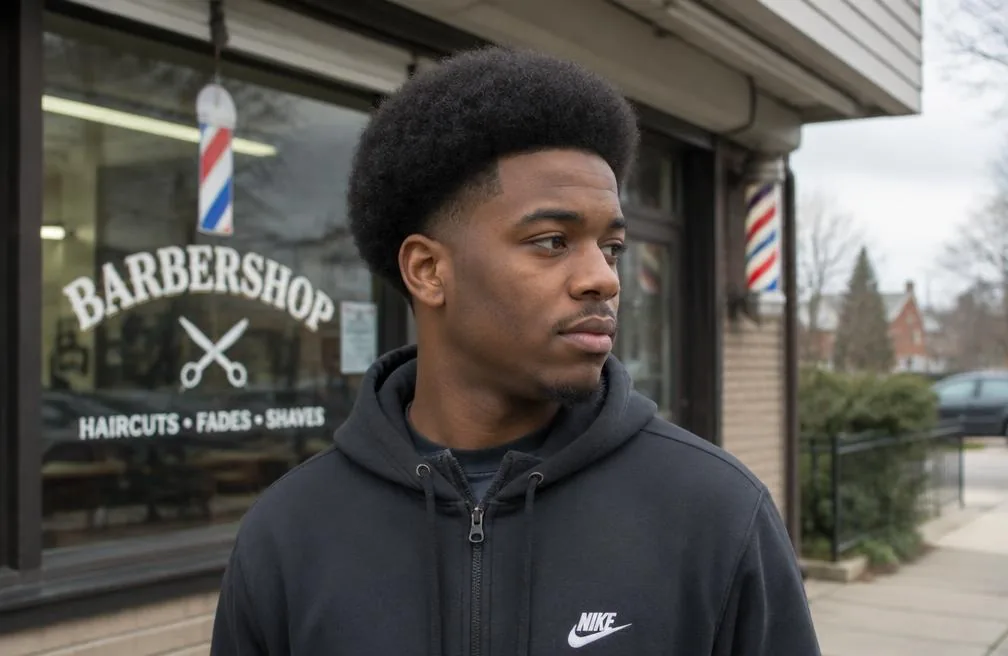
This version is sculpted into a deliberate circle, with the top, crown and sides all sitting at a similar distance from the head. It flatters longer and square faces because it adds width. On a very round face it can add too much fullness, so keep the top shorter. Your barber will need to shape it by eye from several angles.
6. Textured Low Taper Fade Afro

Texture is the main feature here. The tips stay slightly uneven and choppy, which gives a relaxed, modern feel. Use a light cream for hold without shine. It suits type 4 hair best, since coils give natural definition. Ask for “texture on top, no hard edges, low taper.”
7. Curly Low Taper Fade Afro
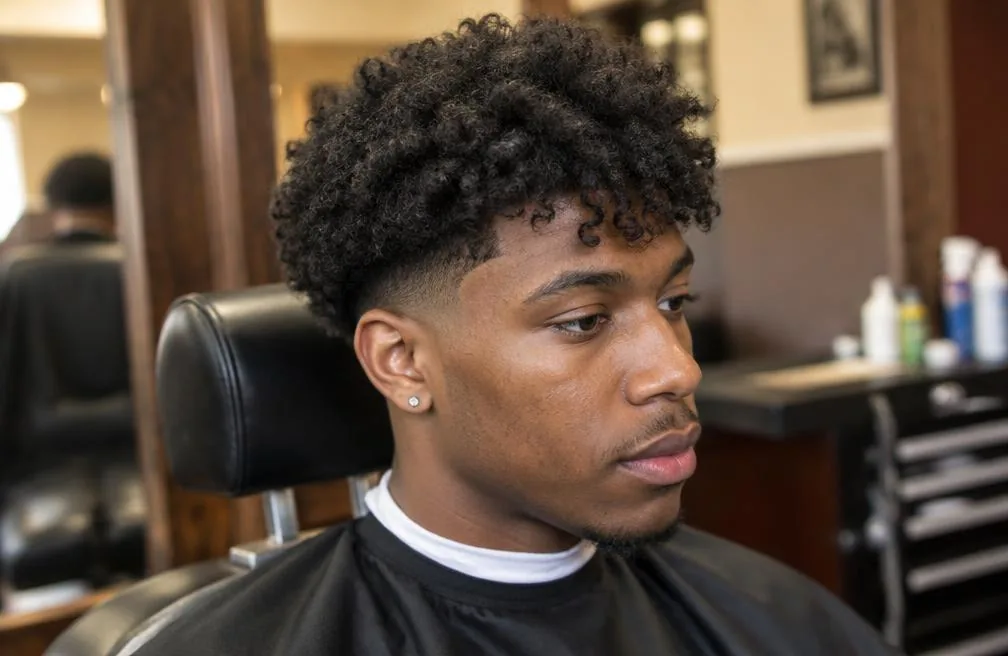
If your hair is a looser type 3 curl, let it show. The curls sit on top in soft spirals while the taper keeps the sides clean. This style asks for more moisture, because looser curls frizz quickly when dry. Apply a curl cream to damp hair and let it dry without brushing.
8. Natural Low Taper Fade Afro
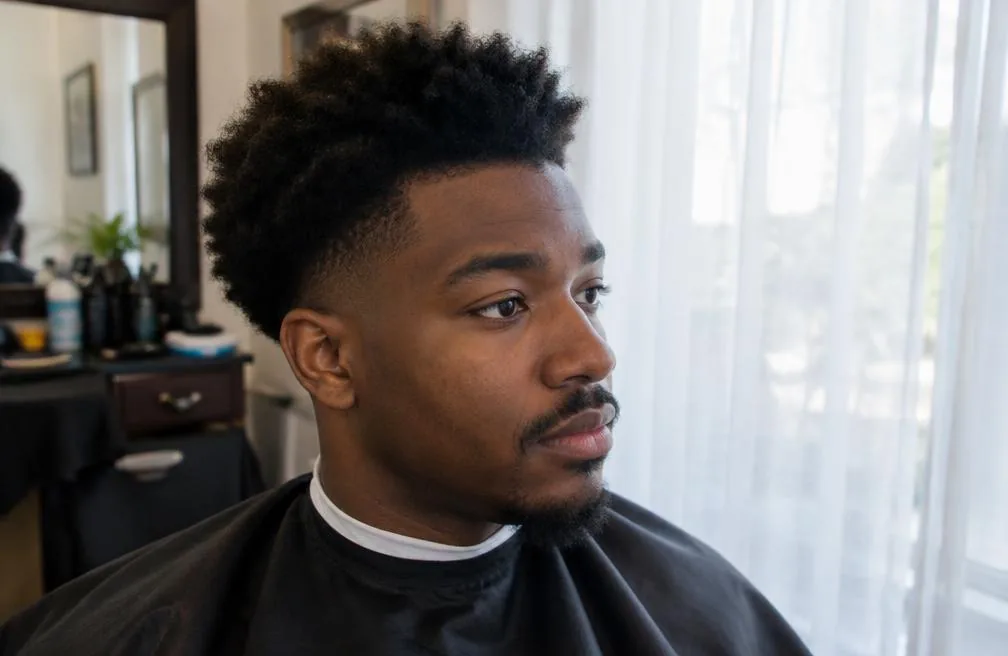
The natural version skips the sharp line up and leaves your hairline as it grows. The edges are softened rather than cut with a razor. It looks effortless and works if you do not want the weekly upkeep a crisp line demands. It is also kind to a receding or uneven hairline because nothing is forced into a straight edge.
9. Modern Low Taper Fade Afro
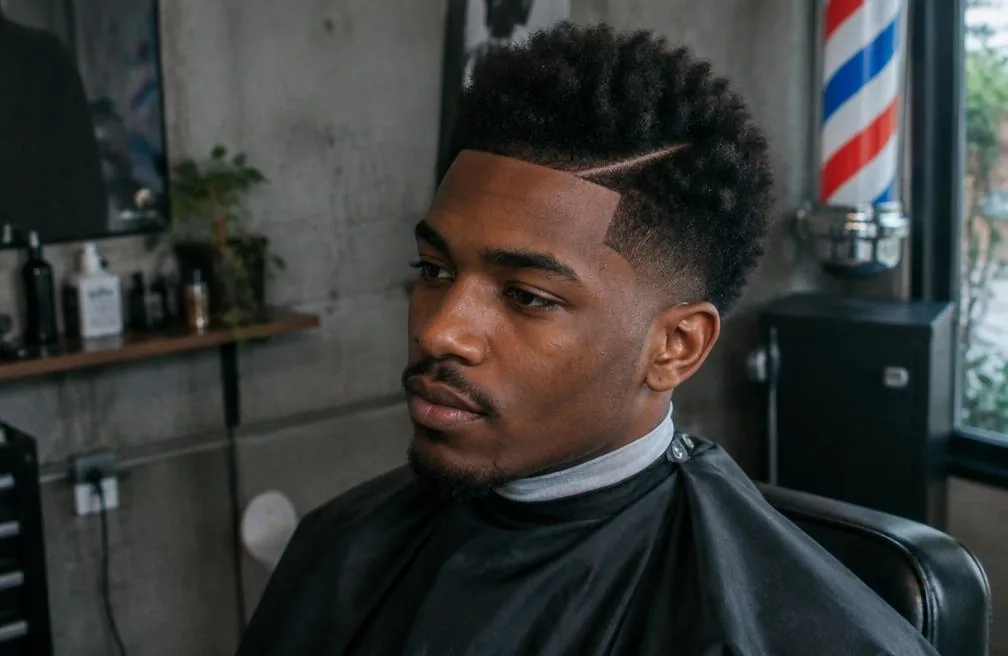
The modern take gives the top a slightly squared or flat finish and often pushes the neckline closer to skin. It is clean, graphic and a little more architectural than the classic. Many barbers now lean toward softer transitions with less harsh contrast, so ask for a smooth blend instead of a stark skin line.
10. Professional Low Taper Fade Afro
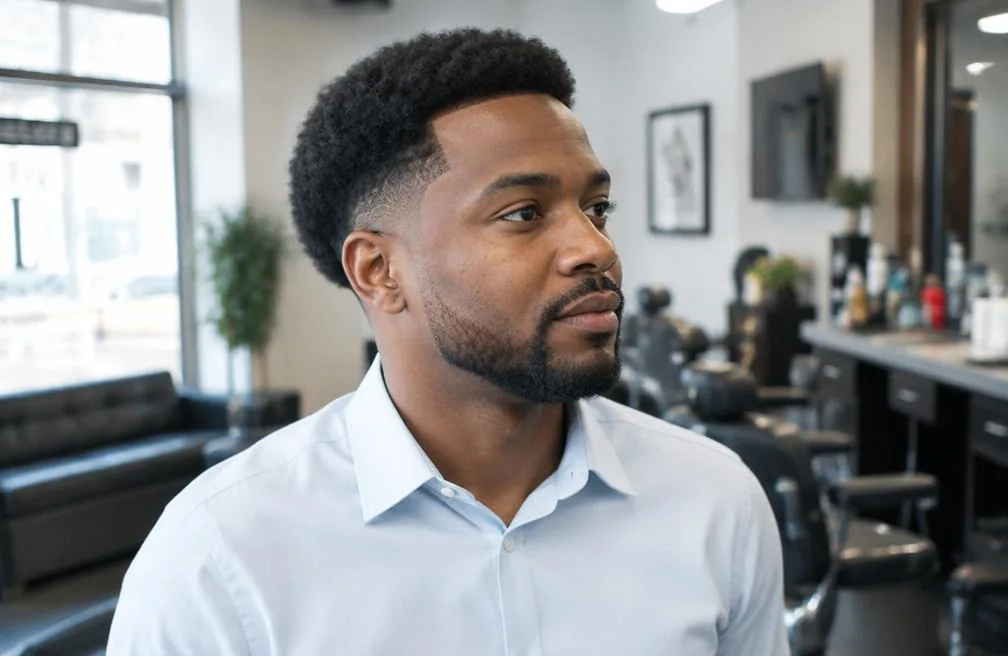
For a conservative workplace, keep the top short and even, the taper subtle and the edges neat. Think of it as the afro in a collared shirt. It is polished enough for interviews and client meetings, and it does not need much styling. A tidy line up and a trim every three weeks keep it looking deliberate.
11. Low Taper Fade Afro for Teen Boys

Teens usually want something easy that still looks sharp. A short to medium afro with a low taper is hard to get wrong, and it usually fits school grooming rules. Teach the basics early: moisturize, pick gently and wear a satin cap at night. Bring a photo to the barber so the cut matches what he has in mind.
12. Long Low Taper Fade Afro
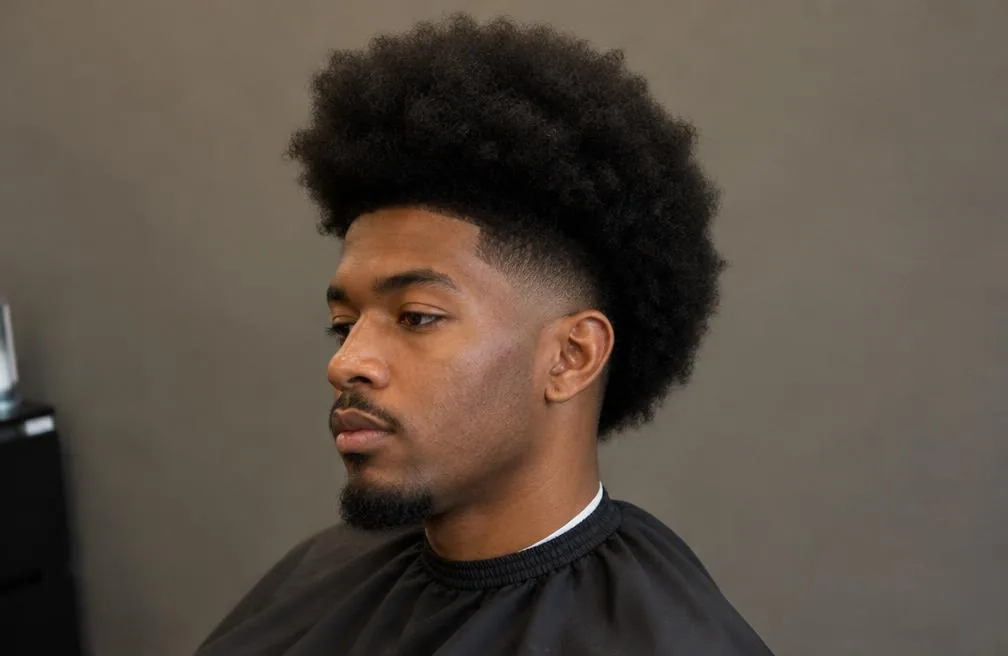
With five inches or more on top, the afro becomes a statement. The low taper stops the shape from looking heavy by keeping the sides and back tight. It needs regular deep conditioning and careful detangling, because length shows dryness quickly. Keep it shaped every four to five weeks to avoid a lopsided silhouette.
13. High Volume Low Taper Fade Afro
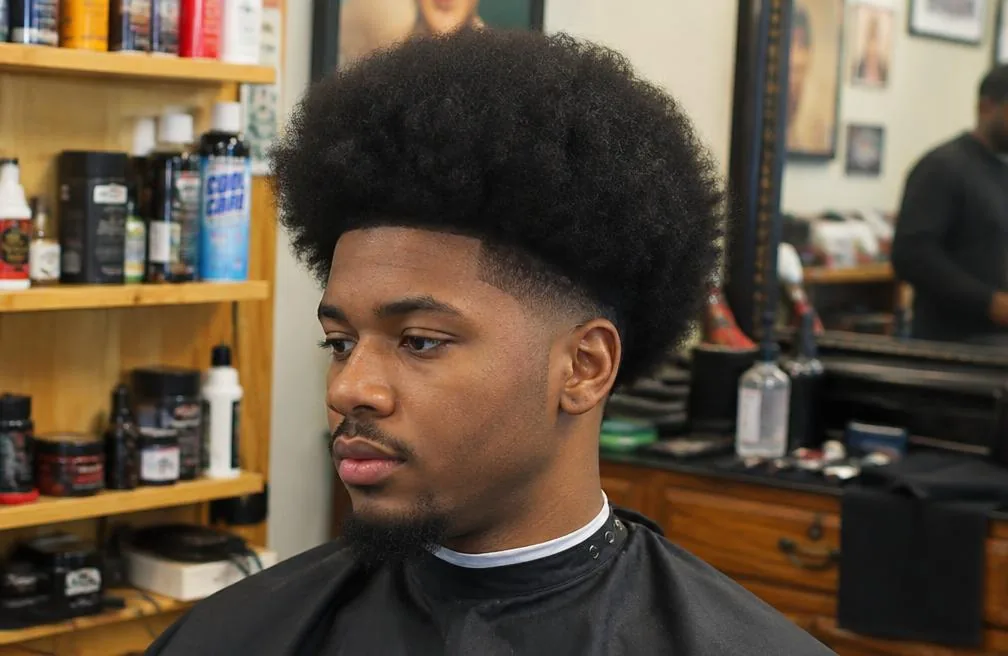
This one rises upward rather than outward, creating height and drama. It suits men with strong jawlines and balanced features, since the extra height lengthens the face. If your face is already long, keep the volume wider instead of taller. Pick the hair upward at the roots, not through the ends, to protect the curls.
14. Low Taper Fade Afro with Sponge Twists
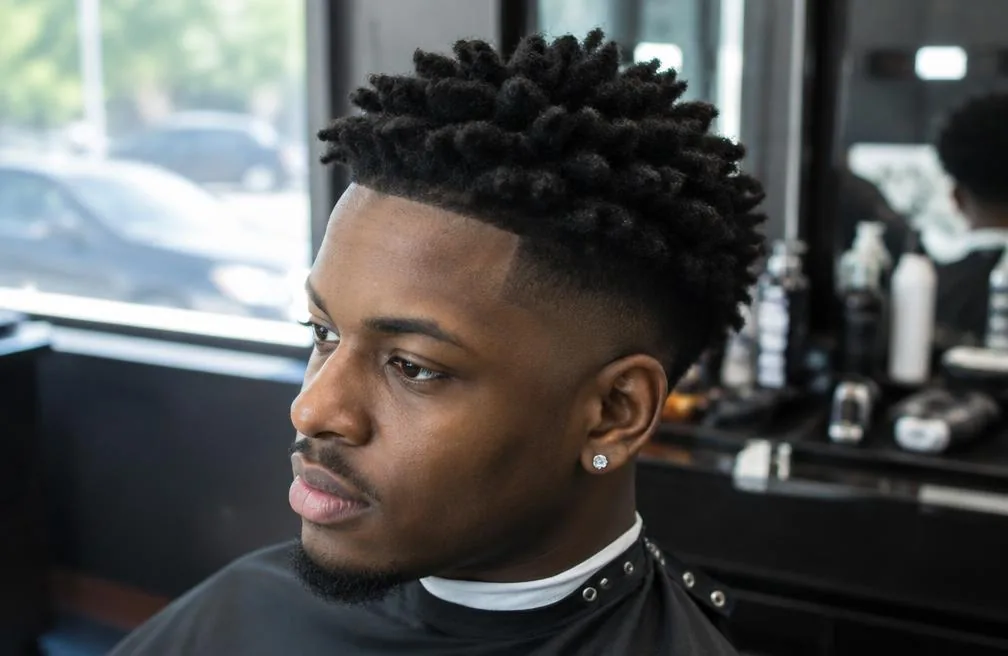
Sponge twists create tiny, tight coils across the top by rubbing a twist sponge in small circles on damp hair. The pattern looks deliberate and textured against the clean taper. It works best on type 4 hair that is at least two inches long. Expect to redo it every few days, and apply a little gel or cream first for definition.
15. Low Taper Fade Afro with Finger Coils
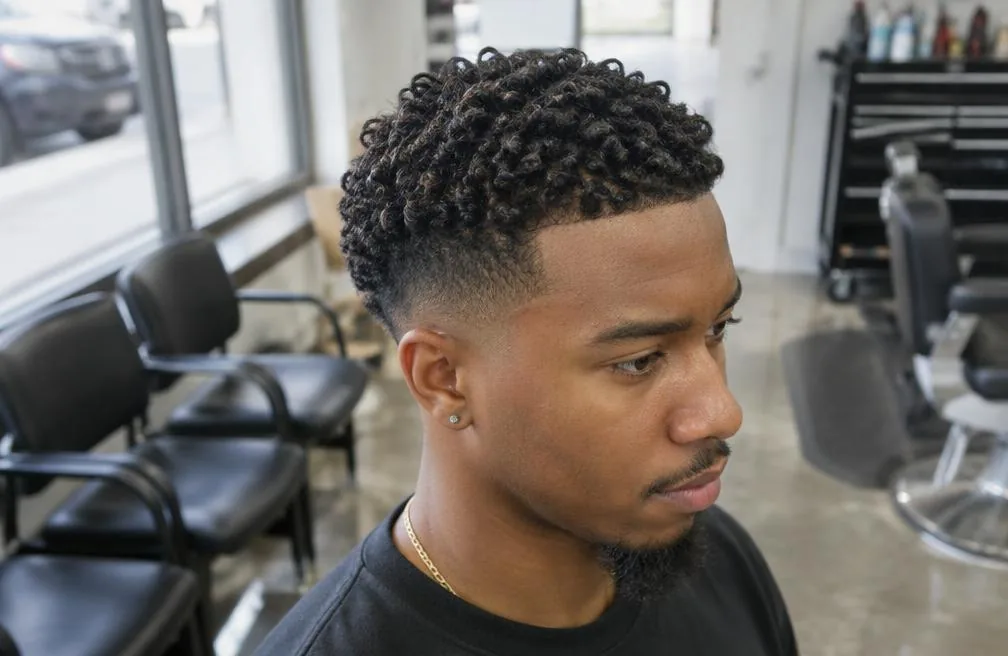
Finger coils are made by wrapping small sections of damp, product-coated hair around your finger. They give a neat, polished curl and last longer than sponge twists. The trade-off is time, since a full head can take an hour. Ask a barber or stylist who does them often, then maintain the set at home.
16. Low Taper Fade Afro with Defined Curls
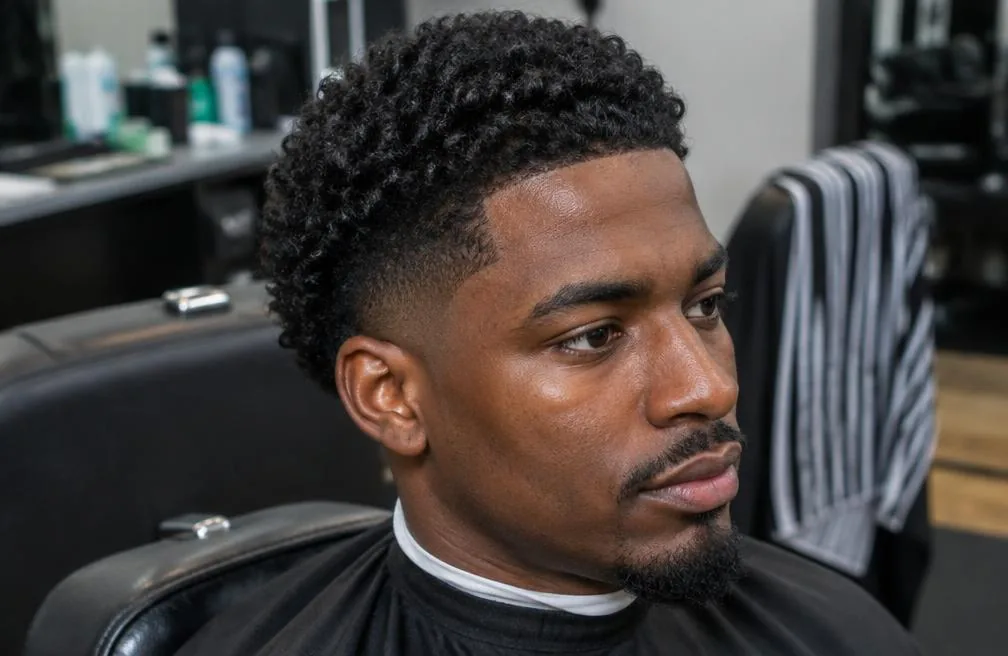
This style is about clear, bouncy curl definition rather than height. It suits type 3 and loose type 4 hair. After washing, apply leave-in conditioner and a curl cream, scrunch gently and air dry or diffuse. Skip brushing once the curls are set, because it breaks the clumps apart.
17. Low Taper Fade Afro Twist-Out
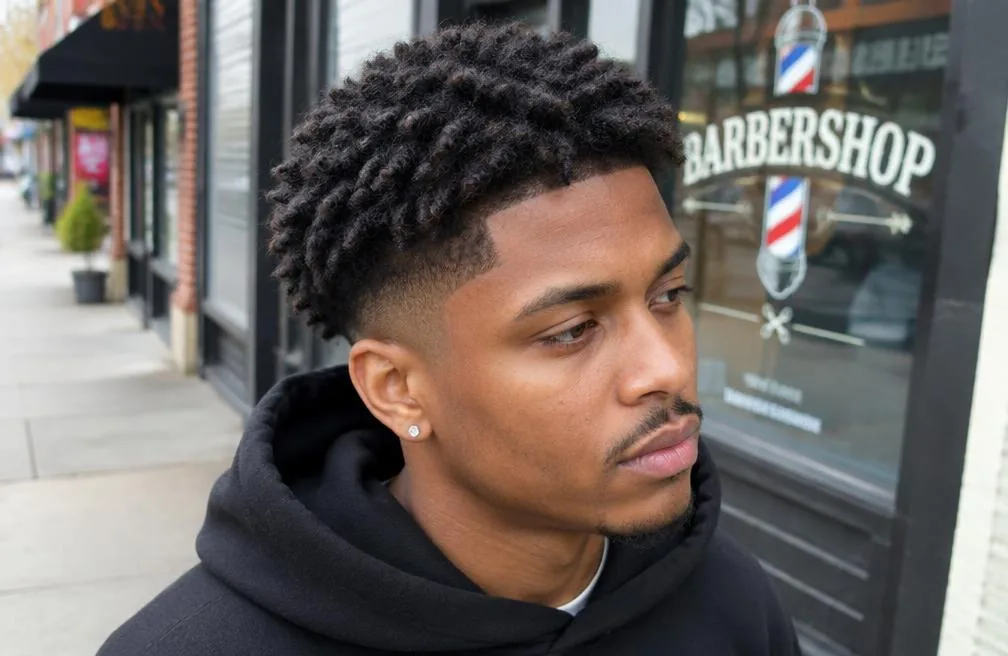
A twist-out is made by twisting damp hair in sections, letting it dry, then unraveling it into soft, stretched waves. It gives you length and fullness without heat. It pairs nicely with a low taper because the sides stay neat while the top looks full and relaxed. Twist at night and separate in the morning for a result that can last several days.
18. Low Taper Fade Afro with Beard
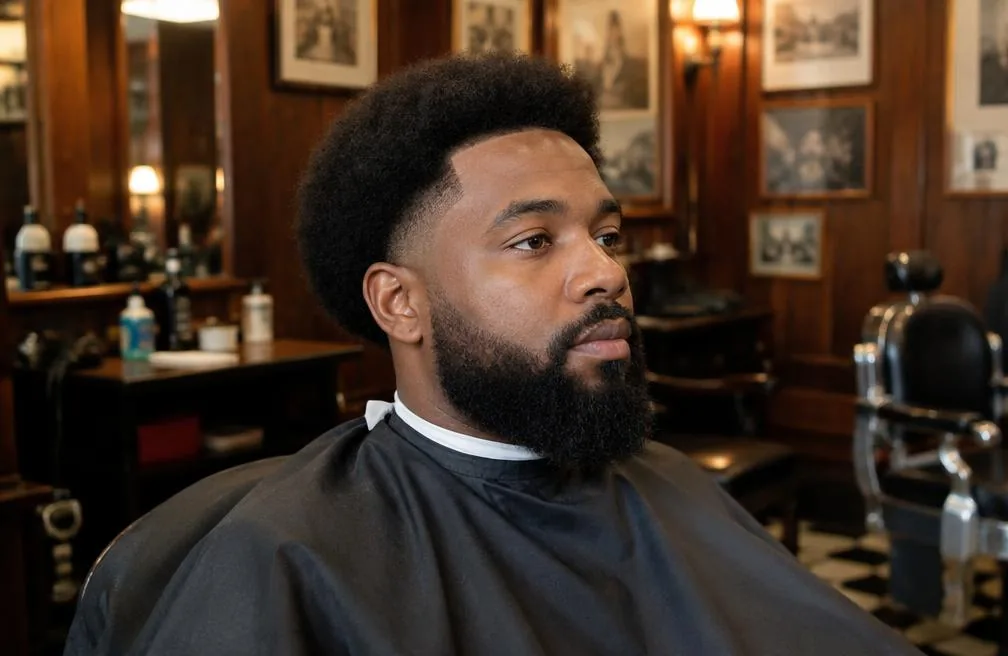
A beard and a low taper blend naturally, because the taper can flow into the sideburns and beard without a gap. Keep the beard trimmed at a similar sharpness to the hair so the whole look feels consistent. It suits men with a softer jawline who want more definition. Ask your barber to “connect the taper into the beard.”
19. Low Taper Fade Afro with Line Up
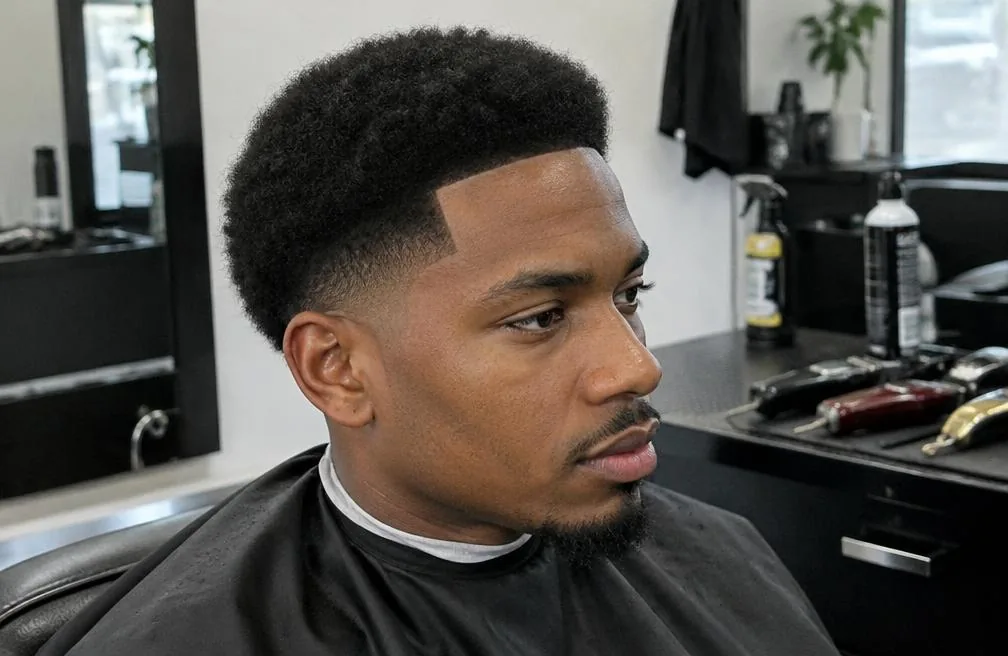
A line up, also called a shape-up or edge-up, is a crisp razor line along the forehead and temples. It frames the face and makes any afro look freshly cut. The downside is upkeep: the line softens within a week or two. Tell your barber how sharp you want it, because a slightly softer line often grows out better.
20. Low Taper Fade Afro with Hair Design

A hair design is a pattern shaved into the faded section, such as a thin line, a curve or a simple shape. Done on a low taper it stays subtle and tasteful. It needs a barber with a steady hand and clean clippers, and it fades back to plain skin as hair grows. Start with something small if it is your first design.
21. Low Taper Fade Afro with Temple Fade
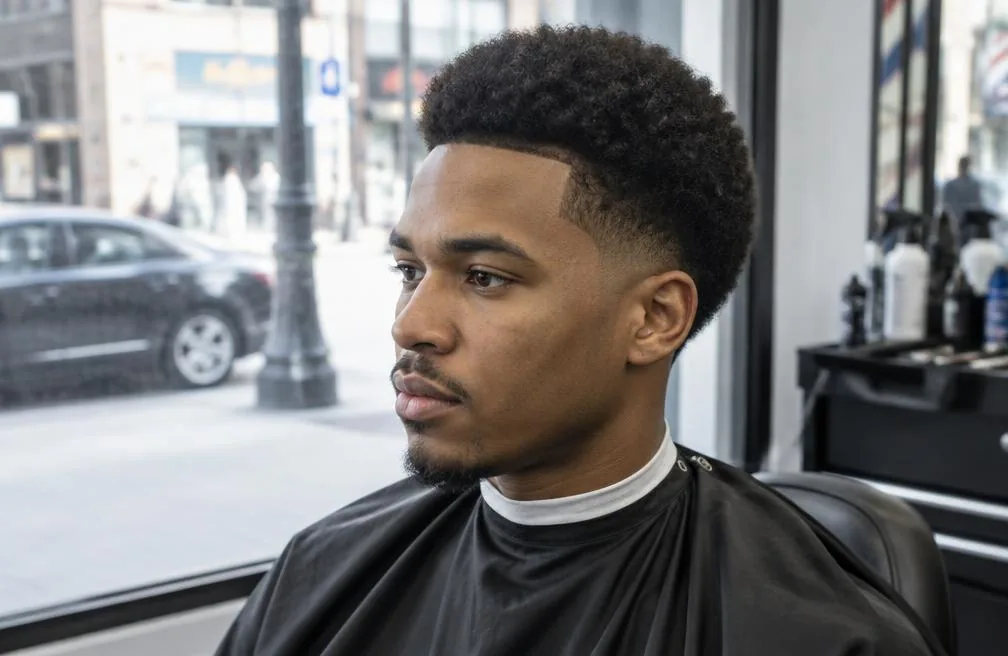
The temple fade blends only the area around the temples and sideburns, leaving more hair at the back. Combined with a low taper, it gives a crisp frame around the face without removing too much length. It is a neat pick for men who want a sharper front but a fuller overall shape.
22. Low Taper Fade Afro with Burst Fade

A burst fade curves around the ear in a semi-circle, fading down to the neckline while leaving length behind. Mixed with an afro it creates a rounded, almost halo-like contrast. It is a good choice for medium-to-long afros, and it looks especially good from the side. Ask the barber to “burst around the ear and keep the back fuller.”
23. Low Taper Fade Afro with Drop Fade
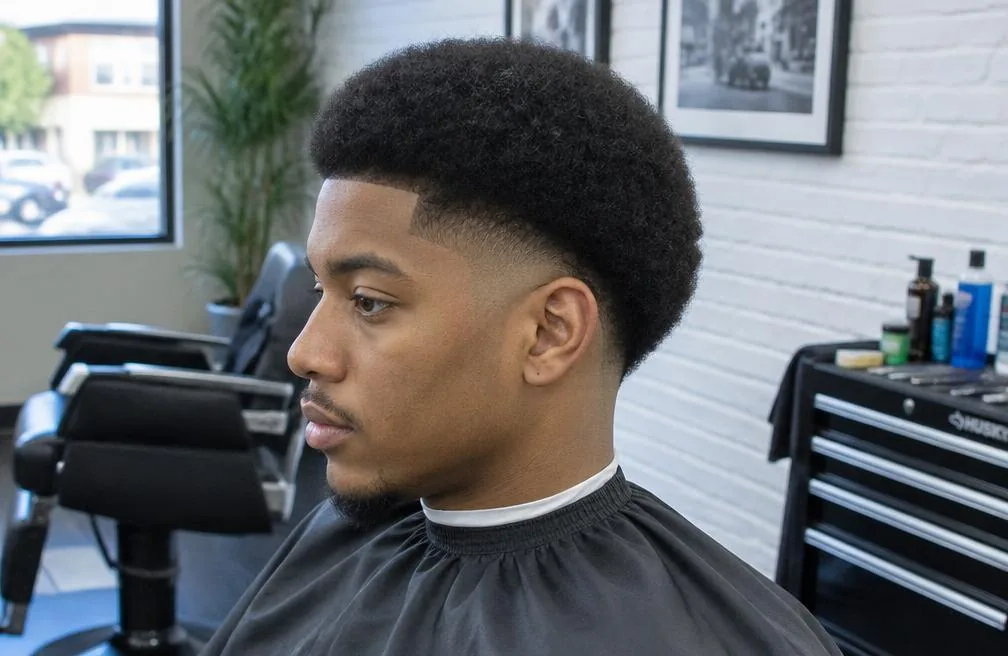
A drop fade curves down behind the ear, following the shape of the skull. The line sits lower at the back than the front, which adds a flattering curve to the silhouette. On an afro it gives a subtle, sculpted effect. It suits men with a rounded back of the head, since the curve follows that shape.
24. Low Taper Fade Afro with Color Tips

Color tips are bleached or dyed ends on the top while the base stays natural. Blonde, copper and ash tones are popular on dark hair. Bleach dries out textured hair, so use deep conditioner and give your hair time to recover before repeating. Book a stylist with experience on coily hair, because a rough lift can cause breakage.
25. Low Taper Fade Afro with Hard Part
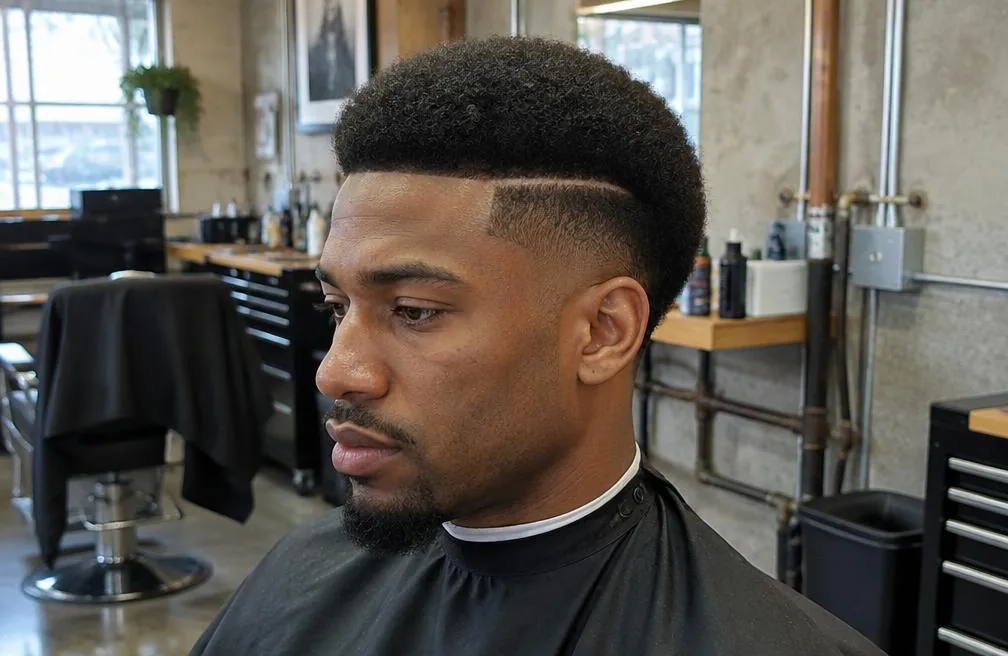
A hard part is a thin razor line cut into the hair at the side to give a defined parting. It adds a sharp, deliberate detail to an otherwise soft cut. It works best on a medium-length afro, where the part has enough hair on both sides to stand out. Keep the line fresh by touching it up every week or two.
26. Low Taper Fade Afro with Tapered Neckline

This version softens the back with a gentle taper at the nape, instead of a blunt cut-off. The neckline fades smoothly into the skin, and it grows out far better than a square edge. It suits any afro length and is especially forgiving if you go a few extra weeks between visits.
What Is the Best Afro Length for a Low Taper Fade?
The best length depends on your hair’s texture and how much time you want to spend on it. Coily hair shrinks, so an afro that looks short when stretched can look much shorter when dry. Measure on dry, unstretched hair when you talk to your barber.
Short Afro with Low Taper Fade
About one to two inches. It is the lowest-maintenance option and the easiest to keep shaped. Good for work, sport and busy mornings.
Medium Afro with Low Taper Fade
About two to four inches. This range gives you enough hair to shape, pick and style, and it is where most men look their best. It holds a rounded silhouette well, and it handles twist-outs and curl definition.
Long Afro with Low Taper Fade
Four to six inches or more. You get dramatic shape and plenty of styling options, but it takes more moisture, more detangling and more patience. The taper keeps the back and sides from looking heavy.
High-Volume Afro Hair Length
For a tall, full afro you generally need four inches or more of healthy, well-hydrated hair. If you are growing yours out, ask your barber to keep the taper tidy while the top catches up. It stops the in-between stage from looking messy.
Who Should Get a Low Taper Fade Afro?
Almost anyone with textured hair can wear it. The right version comes down to your curl pattern, how thick your hair is and the shape of your face.
Low Taper Fade Afro for Type 3 Hair
Type 3 hair forms defined curls or loose spirals. It tends to frizz when dry, so moisture is the priority. A medium length with a curly or defined finish works beautifully. Because the curls are looser, they can fall flatter, so a little styling cream helps keep volume.
Low Taper Fade Afro for Type 4 Hair
Type 4 hair is tightly coiled and holds shape without effort, which makes it ideal for an afro. It is fragile when dry, so avoid dry combing and use a wide-tooth pick on damp or moisturized hair. Shrinkage can be dramatic, so ask your barber to cut with that in mind.
Low Taper Fade Afro for Thick and Coily Hair
Thick hair benefits from the taper, because it removes bulk at the sides and keeps the shape from looking too wide. Ask the barber to thin out the density gently around the sides so the silhouette stays balanced. Dense hair also needs a longer drying time, so plan your wash day accordingly.
Choosing a Low Taper Fade Afro for Your Face Shape
Use this as a starting point, not a strict rule:
| Face shape | What works well | What to watch |
| Oval | Almost any version | Very little to avoid |
| Round | Slightly taller top, tight sides | Too much width at the sides |
| Square | Rounded shape to soften the jaw | Boxy, flat-top finishes |
| Long or oblong | Wider, fuller afro, less height | Very tall, high-volume shapes |
| Heart | Fuller sides, softer top | Extremely narrow tapers |
When in doubt, ask your barber what he sees. A good one will shape the top to balance your proportions.
How to Ask Your Barber for a Low Taper Fade Afro
Clear words save you from a haircut you did not want. Barbers use shorthand, but they appreciate a client who knows what he is after.
What Fade Height and Hair Length Should You Request?
Say “low taper fade” and name the length on top in inches. Add whether you want the fade to start above the ear and wrap around the neckline. If you want some length kept, say so directly: “leave three inches on top and keep the taper subtle.” Tell the barber how short you want the clipper guard at the lowest point, such as a number one or a skin finish.
How to Choose Between a Natural Hairline and a Sharp Line Up
A natural hairline looks softer and needs less upkeep. A sharp line up looks cleaner but needs a touch-up every one to two weeks. If your hairline is receding or uneven, a softened edge usually looks better than a hard one. Tell your barber which finish you prefer before the clippers come out.
Reference Photos to Show Your Barber
Bring two or three photos that match your hair type, not just the cut. A picture of straight hair will not help a barber visualize coils. Show the front, side and back if you can. Point out what you like, and what you do not, so the barber can adapt the style to your head.
How to Style a Low Taper Fade Afro at Home
Your barber builds the shape. Your routine keeps it healthy and looking good between visits.
How to Moisturize Afro Hair
Textured hair dries out faster than straight hair because natural oils struggle to travel down the coil. Start with damp hair. Apply a water-based leave-in conditioner first, then seal it with a light oil or butter. Do this daily if your hair feels dry, and less often if it feels heavy.
How to Define Curls and Coils
Apply a curl cream or gel to damp hair in small sections. Use your fingers or a twist sponge to shape the coils, then let the hair air dry or use a diffuser on low heat. Avoid touching it while it dries, because that is what causes frizz.
How to Pick Out an Afro Without Causing Breakage
Use a wide-tooth pick or comb, and work from the ends up to the roots. Do it on slightly damp or moisturized hair, never bone dry. Lift gently at the roots to add height instead of dragging the pick through the length.
Best Products for a Low Taper Fade Afro
You do not need a shelf full of bottles. A handful of well-chosen products does the job. Brands change formulas over time, so check the ingredient list and test a new product on a small section first. The examples below are types of products to look for.
Best Leave-In Conditioner for Afro Hair
Look for a lightweight, water-based leave-in with ingredients such as aloe, glycerin or shea. It adds moisture without weighing the curls down. Apply it to damp hair after washing, and refresh with a light mist between wash days.
Best Curl Cream and Hair Butter
Curl cream defines and softens, while hair butter seals in moisture and adds a bit of hold. Use cream on looser curls and butter on thicker, drier coils. A small amount goes a long way, so start with a coin-sized dollop and add more only if needed.
Best Curl Gel and Hair Oil
A curl gel locks in definition and helps twist-outs and finger coils last. Pick an alcohol-free formula so it does not dry the hair. Finish with a few drops of light oil, such as jojoba or argan, to add shine and reduce flaking.
Best Afro Pick and Twist Sponge
Choose an afro pick with wide, smooth teeth that will not snag. A twist sponge, a small sponge with slits, creates quick coils on short hair. Both are cheap, so replace them if the teeth bend or the sponge begins to crumble.
How to Maintain a Low Taper Fade Afro
The low taper is forgiving, but it still needs regular care to look sharp. A simple routine goes further than occasional heavy effort.
How Often Should You Get a Taper Touch-Up?
Most men do well with a visit every two to four weeks. If you wear a sharp line up or a very clean neckline, aim closer to two weeks. If you wear a natural hairline and a soft taper, you can stretch it to four or five before it looks untidy.
The Best Washing and Deep-Conditioning Routine
Wash every week or two with a gentle, sulfate-free shampoo, and always follow with conditioner. Deep condition every one to two weeks, leaving the mask on for twenty to thirty minutes. Washing too often strips natural oils, and washing too rarely lets buildup weigh the curls down.
How to Protect Your Afro While Sleeping
Cotton pillowcases pull moisture out of your hair and cause friction. Sleep on a satin or silk pillowcase, or wear a satin bonnet or durag. If you have a twist-out set, loosely pineapple or tie it so the shape is not crushed.
Common Low Taper Fade Afro Maintenance Mistakes
- Combing dry hair. It causes breakage and frizz.
- Skipping moisture. Dry hair looks dull and loses shape.
- Overusing heavy products. Buildup makes curls limp and dull.
- Waiting too long between trims. Split ends and a lopsided shape follow.
- Sleeping on cotton. It dries the hair and flattens it overnight.
- Picking out hair when it is soaking wet. Wet hair stretches and snaps more easily.
Low Taper Fade Afro vs. Other Fade Styles
The main differences are where the fade starts, how much hair it removes and how bold the contrast is.
| Style | Where the fade starts | Contrast | Best for |
| Low taper | Just above the ear and neckline | Soft | Work, everyday wear, easy grow-out |
| High taper | Near the temples and crown | Strong | A bold, sharp look |
| Burst fade | Curves around the ear | Medium | Longer afros with side contrast |
| Temple fade | Temples and sideburns only | Soft to medium | Framing the face |
| Drop fade | Curves lower behind the ear | Medium | Adding shape at the back |
Low Taper Fade Afro vs. High Taper Fade Afro
A high taper starts closer to the temples, which removes more hair and creates stronger contrast. It looks sharper and more dramatic, but it needs more frequent trims. The low taper keeps more length and grows out more gently. Choose the high version if you want a bold look and do not mind the upkeep.
Low Taper Fade Afro vs. Burst Fade Afro
A burst fade curves around the ear instead of running straight down. It leaves more hair at the back and gives an eye-catching contrast. A low taper is quieter and more uniform. If you like a statement shape, go burst. If you want a classic, conservative finish, stay with the low taper.
Low Taper Fade Afro vs. Temple Fade Afro
A temple fade only blends the area around the temples and sideburns. It is subtle and works well with a full afro, but it does not clean up the neckline. A low taper does both the sides and the nape. Many men combine the two for a tidy frame around the face.
Low Taper Fade Afro vs. Drop Fade Afro
A drop fade curves downward behind the ear, following the line of the skull. A low taper stays level. The drop adds shape and is a good option for men who want a bit of style at the back, while the low taper is the safer, simpler choice.
Pros and Cons of a Low Taper Fade Afro
No haircut is perfect for everyone. Here is an honest look at what you gain and what you take on.
Benefits of Choosing a Low Taper Fade Afro
- Keeps your natural texture and length on top.
- Looks neat enough for work and formal events.
- Grows out gracefully, so you are not stuck with an awkward stage.
- Easy to personalize with a part, line up, design or beard.
- Suits most face shapes and curl types when shaped well.
Potential Drawbacks and Maintenance Requirements
- Needs a trim every two to four weeks to keep the edges clean.
- Textured hair needs a consistent moisture routine.
- Longer afros take more time to wash, dry and style.
- Results depend heavily on your barber’s experience with coily hair, so choose carefully.
- Shrinkage can make the length look different from what you expected.
Frequently Asked Questions About Low Taper Fade Afro
Final Thoughts on the Low Taper Fade Afro
The low taper fade afro earns its popularity because it is flexible. You can wear it short and minimal, tall and dramatic, or twisted and textured, and it still looks tidy. The low fade keeps your length where you want it and trims only what needs to be neat.
To choose well, start with three things: your curl type, the length you are happy to maintain, and your face shape. A short or medium afro is the easiest place to begin. Add details, such as a line up, a beard, a part or color tips, once you are comfortable with the base cut.
Then work with a barber who has real experience with textured hair, bring photos of similar hair to yours and be clear about the length and edge you want. At home, keep your hair moisturized, protect it at night and book a trim every few weeks.
If you are unsure, go with the classic or short textured version. It is simple, polished and easy to adjust later. Once you see how your hair behaves, you will know which style on this list to try next.

Daniel Carter
Hi, I’m Daniel Carter, the founder of The Fade Haircuts. I’m passionate about men’s hairstyles, modern fade cuts, and grooming trends. Through this website, I share hairstyle inspiration, detailed haircut guides, and practical grooming tips to help men find their perfect look.
Learn More About Us →