
14 Trendy Fade Haircuts Bald Styles for Men in 2026
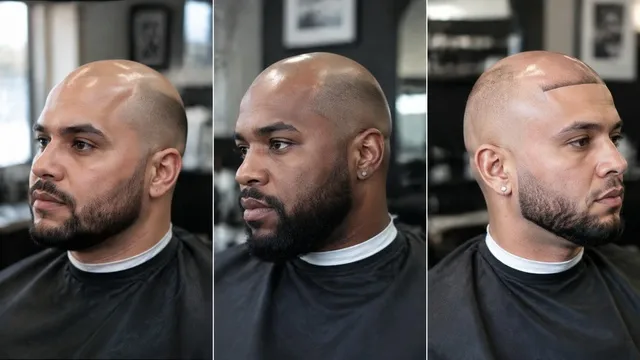
Picking a haircut shouldn’t feel like a guessing game, but walking into a barbershop without a clear idea of what you want almost always ends in a rushed decision. If you’ve been searching for fade haircuts bald, you’re probably after that clean, sharp, skin-level finish that barbers can create in a dozen different ways depending on your hair type, face shape, and how much upkeep you’re willing to commit to.
This guide breaks down 14 real variations of fade haircuts bald, explains how they differ from a regular taper fade, and gives you the exact words to use with your barber so you don’t leave the chair disappointed.
What Exactly Are Fade Haircuts Bald? (Quick Definition)
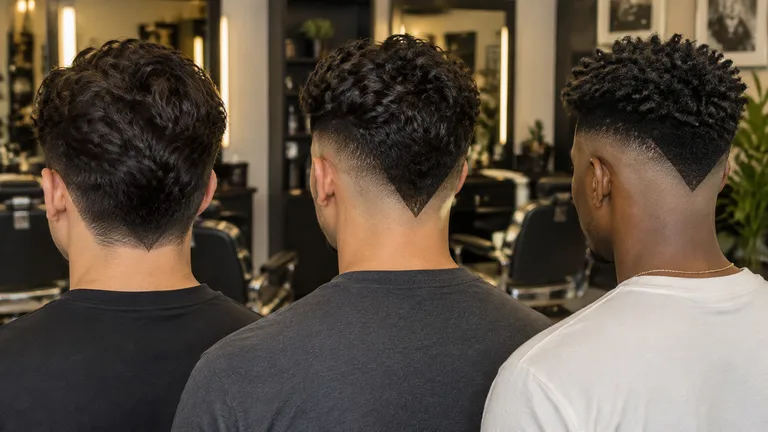
Fade haircuts bald refer to a style where the hair on the sides and back is cut progressively shorter until it disappears completely into skin — no stubble, no shadow, just smooth skin at the fade point. That’s the defining feature: the fade doesn’t stop at a short clipper guard, it goes all the way down.
The top can be left short, long, curly, straight, or textured — that part is flexible. What stays consistent across every version of bald Fade Haircut styles is the contrast between the shaved sides and whatever you’re doing on top. That contrast is what gives the cut its sharp, put-together look.
Fade Haircuts Bald vs Taper Fade vs Skin Fade — What’s the Difference?
These three terms get mixed up constantly, so here’s the simple breakdown:
- Fade haircuts bald — the hair fades all the way to bare skin at some point on the head. The transition can start high, mid, or low, but it always ends at zero.
- Taper fade — the hair gets shorter toward the bottom but usually doesn’t hit full skin. It’s a softer, more gradual shortening, often used around the neckline and sideburns.
- Skin fade — this term is often used interchangeably with a bald fade, but technically it just means the fade exposes skin at some point, which could be anywhere from the ears down to the neck, not necessarily the whole side.
In practice, a lot of barbers use “skin fade” and “bald fade” to mean the same thing. The safest way to avoid confusion is to tell your barber directly that you want the fade to go down to the skin, not just short.
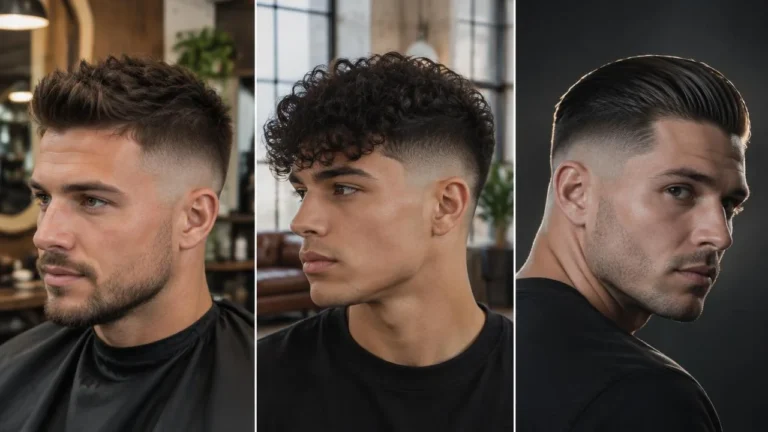
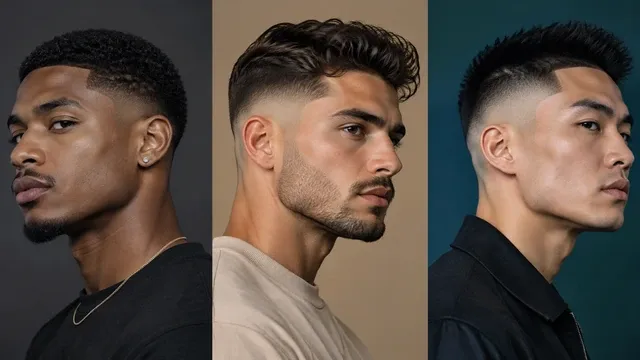
14 Fade Haircuts Bald Styles Every Man Should Know
Mid Fade Haircuts Bald

This is the most requested version for a reason — it starts around the temple area, which puts it right in the middle between dramatic and subtle. It works on nearly every face shape because it doesn’t pull attention too far up or down the head.
Best for: most face shapes and hair types
Maintenance: every 3 weeks
Ask your barber for: “a fade starting at my temples, down to skin”
High Fade Haircuts Bald

The fade line sits noticeably higher, sometimes close to the top of the head, creating a bold, high-contrast look. This version reads as more fashion-forward and works well if you want your haircut to be the statement piece.
Best for: thicker or longer tops that can handle the visual weight
Maintenance: every 2–3 weeks (grows out faster visually since the fade line is more exposed)
Ask your barber for: “a high fade, starting well above my ears”
Low Fade Haircuts Bald

The fade starts just above the ears and blends into the neckline, keeping most of the head covered. It’s the most office-friendly version of a bald fade — sharp, but not attention-grabbing.
Best for: workplaces with conservative dress codes, first-time fade wearers
Maintenance: every 3–4 weeks
Ask your barber for: “a subtle low fade, mostly around the neckline and ears”
Fade Haircuts Bald Taper

Instead of a straight fade line circling the head, this version follows your natural hairline, so the transition curves rather than running in a flat band. It looks more organic and less “cut with a machine.”
Best for: men who want a fade that doesn’t look overly structured
Maintenance: every 3 weeks
Ask your barber for: “a tapered bald fade that follows my natural hairline”
Low Fade Haircuts Bald Taper

A combination of the low fade’s subtlety and the taper’s natural curve. The blend happens close to the neckline and follows your head shape rather than a straight guideline. This is one of the more understated options on this list.
Best for: men who want minimal visual change but still want a clean finish
Maintenance: every 4 weeks
Ask your barber for: “a low taper, blended into skin near my neckline only”
High Fade Haircuts Bald Taper

This takes the boldness of a high fade and softens the edges with a tapered curve instead of a hard line. You still get the dramatic height, just with a slightly more natural transition.
Best for: men who like a strong contrast but not an overly geometric look
Maintenance: every 2–3 weeks
Ask your barber for: “a high taper fade, curved rather than straight”
Fade Haircuts Bald Drop Style

Instead of following a straight or curved line around the head, the drop fade dips down behind the ear, creating a distinctive curved silhouette. It’s one of the more technical cuts on this list and needs a barber with real fade experience.
Best for: curly hair, afros, and mohawk-style tops
Maintenance: every 2–3 weeks
Ask your barber for: “a drop fade that curves down behind my ear”
Reverse Fade Haircuts Bald

Most fades go from longer on top to shorter on the sides. This one flips that — the top is kept short while the hair gradually gets longer moving down toward the neck. It’s unconventional and not something every barber does regularly, so bring a reference photo.
Best for: men who want something different from the standard fade look
Maintenance: every 2 weeks (harder to maintain the shape as it grows)
Ask your barber for: “a reverse fade — short on top, longer toward my neck”
Fade Haircuts Bald with Beard

Pairing a bald fade with a full or stubble beard creates one continuous, groomed look rather than two separate styling decisions. The key is getting the fade and beard line to blend at the sideburns instead of leaving a visible gap.
Best for: anyone who already grows a beard
Maintenance: fade every 3 weeks, beard trim weekly
Ask your barber for: “blend my fade into my beard line, no gap at the sideburns”
Fade Haircuts Bald for Thin Hair

If your hair is thin, a bald fade actually works in your favor. Removing bulk from the sides shifts all visual attention to the top, making it appear fuller than it is. Pairing it with a slightly longer, textured top amplifies the effect.
Best for: thinning or fine hair
Maintenance: every 3 weeks
Ask your barber for: “keep more length on top, fade the sides down for contrast”
Fade Haircuts Bald for Curly/Coily Hair

Curly and coily hair holds shape differently than straight hair, so the fade needs to be cut with the curl pattern in mind rather than just clipper guards. This version often pairs with an afro, twist-out, or coil top, letting natural texture do most of the styling work.
Best for: curly, coily, and tightly textured hair
Maintenance: every 2–3 weeks, plus regular moisturizing to prevent dryness on the faded sides
Ask your barber for: “fade my sides but don’t disturb my curl pattern on top”
Fade Haircuts Bald with Hard Part

A hard part is a shaved line separating the top section from the fade, adding a crisp, defined break instead of a soft blend. It’s a small detail that makes the whole haircut look more deliberate and finished.
Best for: straight or wavy hair that’s styled with a comb or side part
Maintenance: the part needs touch-ups every 1–2 weeks even between full fade appointments
Ask your barber for: “add a hard part above my fade on one side”
Fade Haircuts Bald for Thick Hair

Thick hair can look heavy without the right cut, and a bald fade solves that by carving away weight on the sides while leaving enough density on top to work with. This version often looks best with texturizing scissor work to prevent the top from looking like a solid block.
Best for: dense, thick hair types
Maintenance: every 3 weeks
Ask your barber for: “thin out the top slightly and fade the sides to skin”
Fade Haircuts Bald with Design/Line-up Art

For men who want something extra, barbers can add shaved line designs, part patterns, or geometric shapes into the fade itself. This isn’t a subtle option — it’s meant to be noticed.
Best for: special occasions or anyone who wants a more personalized look
Maintenance: every 1–2 weeks, since designs grow out and blur quickly
Ask your barber for: “add a simple line design into my fade” (bring a photo — freehand designs vary a lot between barbers)
Which Fade Haircuts Bald Suit Your Face Shape?
Not every version of a bald fade works equally well on every face. Here’s a general guide.
Round Face
Higher fades with more height on top help elongate the face visually. Avoid low fades paired with a flat top, since that combination can emphasize width.
Square Face
Square faces can handle almost any fade height, since the jawline already provides strong structure. Mid or low fades with a slightly textured top tend to soften sharp angles nicely.
Oval Face
This is the most flexible face shape for fade haircuts bald — nearly every version on this list works well. Mid fades are the easiest default if you’re unsure.
Long Face
Low or mid fades work better than high fades here, since a high fade adds extra visual length to an already long face. Keeping some width on top, rather than height, balances things out.
Step-by-Step: How Barbers Create Fade Haircuts Bald
Understanding the process helps you communicate better with your barber, even if you’re not doing it yourself.
- Trim the top first. The barber usually starts with a guard on top to set the base length before touching the sides.
- Set the first guideline. A trimmer creates the initial line where the fade will begin, usually just above where the shortest section will sit.
- Layer in additional guidelines. Using progressively shorter guards, the barber builds several blending lines moving down toward the guideline that will end at skin.
- Blend everything together. This is the most skill-dependent step — flicking motions with the clippers smooth out the harsh lines between guard lengths.
- Finish with a foil shaver. For a true bald finish, the lowest section gets shaved smooth with a foil razor rather than just clipped short.
- Clean up the lineup. The hairline, sideburns, and neckline get sharpened for a finished look.
Styling Tips to Keep Fade Haircuts Bald Fresh Every Day
- Use a light matte product, not heavy gel, to avoid a greasy look on the top section.
- Moisturize the shaved skin on the sides a few times a week — dry, shaved skin can flake and look unkempt even if the cut itself is fresh.
- Brush or comb daily, even briefly, to keep the top from looking flat or messy overnight.
- Touch up the hairline yourself between barber visits if you notice stray hairs, using a small trimmer.
Common Mistakes to Avoid With Fade Haircuts Bald
- Waiting too long between trims. A bald fade looks sharp for about a week, then starts blurring. Letting it go a month or more defeats the purpose of the style.
- Not moisturizing the scalp. Shaved skin exposed to sun and air dries out faster than people expect, leading to flaking or irritation.
- Skipping the reference photo. Verbal descriptions of fade height and style vary a lot between barbers — always bring a photo to avoid miscommunication.
- Choosing a fade height that doesn’t suit your face shape. A high fade on a long face, for example, can look off-balance even if the cut itself is executed well.
- Ignoring beard blending. If you have facial hair, an unblended fade-to-beard transition is one of the most common giveaways of a rushed cut.
How to Maintain Fade Haircuts Bald Between Barber Visits
Plan on a touch-up every 2–3 weeks for most versions, and closer to every 2 weeks for high fades or designs, since those show regrowth fastest. Between visits, keep the scalp moisturized, trim stray hairs around the hairline with a small trimmer if needed, and avoid letting the top get so long that it overwhelms the fade’s proportions.
Fade Haircuts Bald Cost — Barber vs At-Home
At a barbershop, fade haircuts bald typically cost more than a standard trim because of the precision blending involved — pricing varies significantly by city and barber experience level, so it’s worth asking your local shop directly. Doing it at home is possible with clipper guard sets and practice, but the blending step is genuinely difficult to master, and a poorly blended fade is one of the most noticeable bad-haircut signs. For a first attempt, a professional cut is worth the cost, even if you plan to maintain it yourself afterward.
How to Ask Your Barber for Perfect Fade Haircuts Bald
Clear communication makes the biggest difference in getting the result you want.
- Say it directly: “I want a fade that goes down to skin, not just short.”
- Bring a photo of the exact style, ideally from a similar hair type to yours.
- Specify the fade height — low, mid, or high — since this is the single biggest variable.
- Describe the top length in concrete terms, like inches or “leave it long enough to style with a comb.”
- Ask for a lineup around the hairline and temples as a finishing step.
FAQs
Final Verdict — Are Fade Haircuts Bald Right for You?
If you want a haircut that looks deliberate, low-maintenance in terms of daily styling, and works with almost any hair type, fade haircuts bald are hard to beat. The real decision isn’t whether to get one — it’s which version fits your face shape, hair texture, and how often you’re realistically willing to visit the barber.
Start simple if you’re new to the style: a mid fade is the safest, most universally flattering option. Once you’re comfortable with the upkeep, experimenting with a drop fade, a hard part, or even a design is an easy way to make the cut your own without starting from scratch.




One Comment