13 Stylish Fade Haircut Slick Back Styles & Ideas for Men 2026

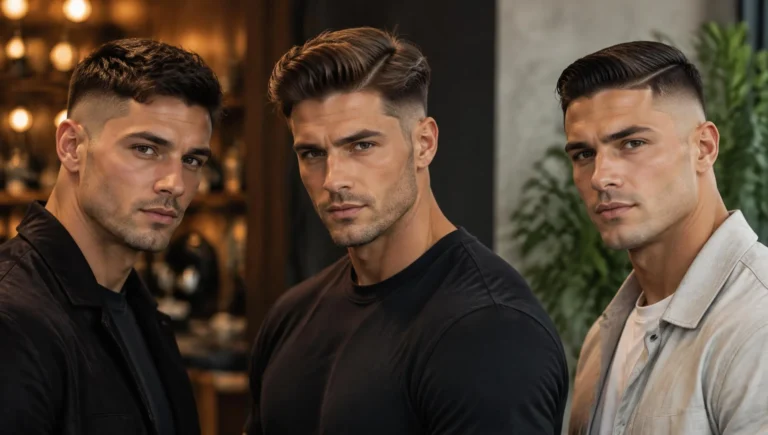
There’s a reason the fade haircut slick back keeps showing up in barbershops year after year. It takes two of the most reliable men’s grooming techniques — a clean fade on the sides and a polished, combed-back top — and puts them together into something that works everywhere from the office to a night out.
This guide covers thirteen ways to wear a Fade Haircut with a slick back, how to pick the right fade for your face and hair type, the exact styling steps to get that smooth backward finish at home, and what it actually costs to maintain. Whether you’re walking into a barbershop for the first time or just want to refine how you style it yourself, this should answer pretty much everything you need to know.
What Is a Fade Haircut Slick Back?
A fade haircut slick back is exactly what it sounds like on paper, but the details matter. The sides and back of the head are faded — gradually shortened from longer hair down to very short or bare skin — while the top is left long enough to comb straight back, away from the face.
The fade does the heavy lifting on the “clean” side of the look. The slicked-back top does the heavy lifting on the “polished” side. Together, they create a style that reads as sharp without looking overly done-up, which is part of why it’s stayed relevant instead of fading out with other short-lived trends.
Slick Back vs Comb Over vs Pompadour — What’s the Real Difference?
These three styles get mixed up a lot, so it’s worth separating them clearly:
- Slick back — hair is combed straight backward, away from the forehead, usually flat against the head with a smooth finish.
- Comb over — hair is combed to one side rather than straight back, often with a defined part.
- Pompadour — hair is swept upward and back with volume built at the front, creating height rather than a flat backward sweep.
The slick back is generally the lowest-maintenance of the three day-to-day, since there’s no side part to keep straight and no volume to build up front. If you want something polished but don’t want to spend ten minutes each morning with a blow dryer, slick back is usually the easier route.
How Much Hair Length Do You Need for a Slick Back?
This is one of the most common questions barbers get, and it matters more than people expect. You generally need at least two to three inches of length on top to comb it back and have it actually stay in place. Anything shorter and the hair tends to spring back forward rather than lying flat.
If you’re growing your hair out specifically for this style, expect an awkward in-between stage around the one-inch mark, where it’s too long to look neat short but too short to slick back properly. Most barbers can help you style through this phase with the right product, but it’s worth knowing it’s coming.
13 Best Fade Haircut Slick Back Styles for 2026
Slick Back by Fade Height
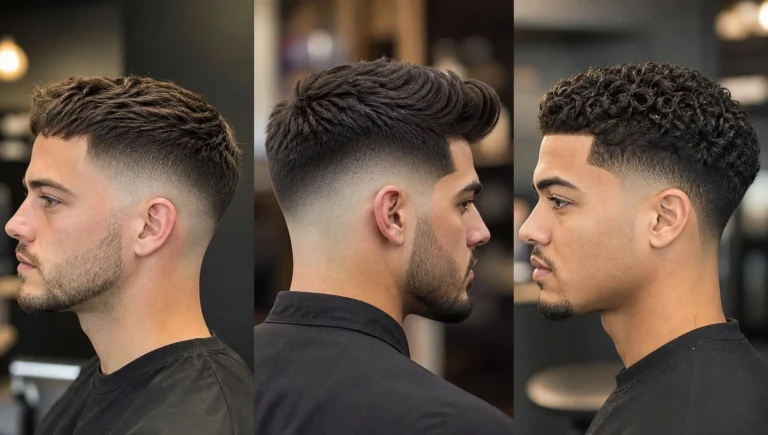
High Fade Slick Back

The high fade slick back starts fading close to the temple, leaving a shorter, more dramatic silhouette on the sides. This is the boldest height option, and it puts maximum focus on the slicked-back top since there’s so little hair left around it for contrast.This suits men with strong, well-defined facial features, since a high fade doesn’t leave much hair to soften the face. It works best with straight or wavy hair that holds a backward sweep easily. Expect to see your barber every two to three weeks to keep the fade line from growing out and blurring.
Mid Fade Slick Back

The mid fade sits in the middle of the side of the head, and it’s the most balanced choice on this list. It gives enough contrast between the top and sides to look intentional, without the higher upkeep that comes with a high fade.This is generally the safest starting point if you’re trying a fade haircut slick back for the first time and aren’t sure which height suits you. It works across most face shapes and both straight and wavy hair textures without needing much adjustment.
Low Fade Slick Back

The low fade keeps more length around the sides, starting the fade just above the ears rather than higher up the head. It’s a subtler version of the cut, better suited to more conservative or professional settings where a dramatic fade might feel out of place.This option tends to suit rounder faces well, since it doesn’t shave away as much volume around the temples. It also grows out more gracefully, so you can often stretch appointments a week or two longer than with a high fade.
Slick Back by Fade Type
Skin Fade Slick Back

A skin fade takes the sides all the way down to bare skin before blending upward. Paired with a slicked-back top, this creates one of the sharpest contrasts on this list — bare skin at the bottom, smooth length at the top, nothing in between to soften the transition.This style needs a skilled barber, since any unevenness in a skin fade is very visible with no hair to hide it. It suits thicker hair well, where the contrast against bare skin is more striking, and it typically needs a touch-up every two weeks to stay looking fresh.
Bald Fade Slick Back

A bald fade is similar to a skin fade but blends into a very short, buzzed section rather than going straight into longer hair. It’s a slightly softer transition than a full skin fade while still keeping the sides extremely clean.This is a solid pick if you want the sharp look of a skin fade but with a bit less upkeep, since the buzzed section is more forgiving as it grows out compared to bare skin.
Taper Fade Slick Back

A taper fade blends gradually without dropping all the way to skin, which gives a softer, more subtle finish overall. This is a favorite in office environments and more traditional settings, since it reads as neat and professional rather than edgy.It also tends to need less frequent maintenance than a skin fade, since the gentler blend doesn’t show regrowth as obviously. If you want the fade haircut slick back look without committing to constant barber visits, taper is worth asking for.
Drop Fade Slick Back

A drop fade curves downward behind the ear instead of running in a straight line up the side of the head. This adds a bit of extra shape to the cut, and it pairs particularly well with a slicked-back top because the curve draws the eye around the ear in a way a straight fade doesn’t.This combination suits straight or slightly wavy hair best, since the curve of the drop is easier to see clearly against those textures. It’s a good option if you want something that looks a touch more custom than a standard fade.
Burst Fade Slick Back

A burst fade fades in a semicircle around the ear rather than in a straight line across the whole side of the head. Combined with a slicked-back top, it creates a look where the ear area gets its own distinct shape while the rest of the fade blends more traditionally.This tends to suit men with a bit more length on top, since the burst detail is easier to notice when there’s volume up top to contrast against. It’s a slightly more technical cut, so it’s worth finding a barber who’s specifically comfortable with burst fades.
V Fade Slick Back

A V fade adds a pointed V-shaped detail at the back of the neckline, instead of the usual straight or rounded edge. When paired with a slicked-back top, the V shape becomes a nice finishing touch that most people won’t notice from the front but that shows up clearly from behind.This works with any of the fade heights above, so if you already like a specific height, you can simply ask your barber to add the V detail at the neckline rather than changing anything else about the cut.
Slick Back by Hair Texture
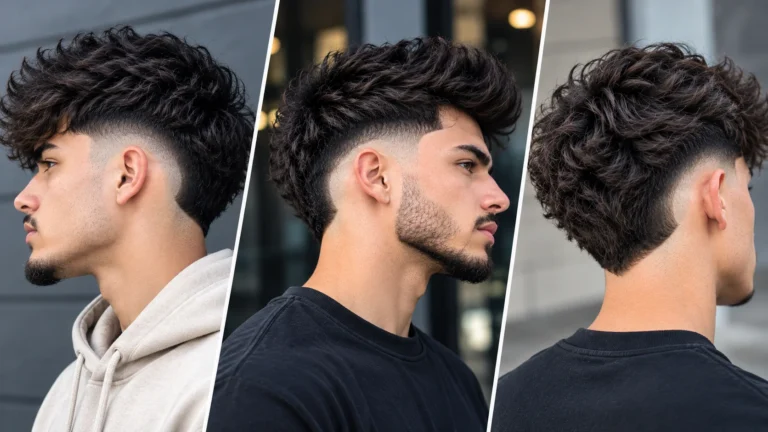
Curly Hair Slick Back Fade

Curly hair and a slicked-back top might sound like an odd pairing, but it works well when you let some natural texture show rather than forcing everything completely flat. The fade keeps the sides clean while the curls on top add volume and personality instead of lying perfectly straight.A curl-defining cream, rather than a heavy pomade, tends to give better results here, since it controls frizz without flattening the curl pattern completely.
Textured Slick Back Fade

This variation keeps some movement and texture in the top section instead of going for a completely smooth, glass-like finish. It’s a more relaxed take on the slick back that still looks put-together but feels a little less formal.Matte clay works better than shiny pomade for this look, since it holds the hair back while keeping a more natural, textured appearance rather than a high-shine finish.
Slick Back with Extra Detail
Undercut Slick Back Fade

An undercut takes the sides down shorter and more abruptly than a standard fade, creating a stronger visual break between the top and sides. Paired with a slick back, this gives a bold, high-contrast look that reads as more fashion-forward than a traditional fade.This suits men who want a noticeably dramatic style rather than something subtle, and it works best with enough length on top to really show off the backward sweep.
Slick Back Fade with Beard

Pairing this haircut with a beard is one of the most requested combinations at barbershops, and it comes down to one key detail: the beard blend. Rather than letting the fade end abruptly where the beard starts, a good barber blends the two together so there’s no hard line between hair and facial hair.This combination generally works well across most face shapes, since a well-groomed beard adds definition to the jaw while the fade and slicked-back top keep everything else clean. It does mean slightly more frequent trims, since you’re maintaining both the beard line and the fade together.
Fade Haircut Slick Back by Face Shape
Round Face
A higher fade with more height and volume built into the slicked-back top helps elongate a round face. Avoid very low fades that keep extra width around the sides, since that tends to emphasize roundness rather than balance it.
Square Face
Square faces generally suit almost any fade height well, since the jawline is already strong and defined. A mid fade with a beard blend works particularly nicely here, softening the jaw slightly while keeping the overall look sharp.
Long Face
For longer face shapes, a low fade with fuller sides helps add width and balance rather than elongating the face further. Keeping some length and volume on the sides, not just on top, tends to work better here than a very high, dramatic fade.
Oval Face
Oval faces are considered the most versatile shape for this haircut, and nearly every variation on this list — from low to high, taper to skin — tends to look good without much adjustment needed.
Choosing the Right Fade Level and Height
If you’re stuck deciding between fade heights, think about two things: how bold you want the contrast to be, and how often you’re realistically willing to visit the barber. High and skin fades look sharper for longer stretches right after a cut, but they show regrowth faster and need more frequent touch-ups. Low and taper fades are more forgiving between appointments, which makes them a better fit if you’d rather stretch out your barber visits.
Face shape and hair texture matter too, but maintenance tolerance is often the deciding factor people don’t think about until after they’ve committed to a high-upkeep style.
Styling Guide — Step by Step
Prepping Damp Hair
Start with clean, towel-dried hair that’s damp but not dripping. Product spreads more evenly through damp hair than dry hair, and it gives you a bit more working time to comb everything into place before it sets.
Choosing the Right Product (Pomade vs Clay vs Wax vs Cream)
| Product | Finish | Best For |
| Pomade | High shine, strong hold | Classic, glossy slick back |
| Clay | Matte, textured hold | Textured or curly slick back |
| Wax | Medium shine, flexible hold | Everyday styling, easy restyle |
| Styling cream | Light hold, natural movement | Fine or thin hair |
Pick based on the finish you want, not just what’s popular. A high-shine pomade looks great for a formal event but can feel heavy for daily wear, while a lighter cream is easier to live with day to day.
Combing and Blow-Drying Technique
Work the product through from roots to ends, then comb the hair backward in one consistent direction rather than going back and forth. If you want extra volume, use a blow dryer on a low-to-medium heat setting while combing backward, lifting slightly at the roots before directing the hair back.
Locking It In with Hairspray
A light mist of hairspray after styling helps the look hold through a full day, especially useful if you’re heading into humid weather or a long work shift. Don’t overdo it — a couple of light passes is usually enough to lock things in without making the hair feel stiff.
How Barbers Create This Look (Barber Tutorial)
Debulking and Setting Guidelines
Barbers typically start by removing excess bulk from the sides and back, which makes it easier to see the natural shape of the head and set clean fade guidelines before any fading begins.
Building and Blending the Fade
Using a series of clipper guards from longer to shorter, the barber gradually blends the fade upward, working in small sections to avoid any visible lines between lengths.
Detailing the Hairline and Beard
Once the fade is blended, the barber cleans up the hairline around the forehead, temples, and ears. If you have a beard, this is also when it gets blended into the fade for a seamless transition.
Finishing with a Razor
Many barbers finish with a straight razor around the hairline and beard edges for extra sharpness, giving the whole look a crisper, more defined edge than clippers alone can achieve.
Slick Back Fade Haircut Cost Guide
Pricing for a fade haircut slick back varies quite a bit depending on your barber’s experience and your location. Specialized barbershops that focus on precision fades and detail work — skin fades, beard blends, razor finishing — typically charge more than a standard walk-in haircut, since the service takes more time and skill. Regular salons may charge less but might not offer the same level of fade precision or beard blending as a barbershop that specializes in it. It’s worth asking upfront what’s included, especially if you want a beard blend or razor finish, since some shops charge those as add-ons.
Maintenance Schedule and Longevity
High and skin fades need the most frequent attention, generally every two weeks, to keep the line from growing out and losing its sharpness. Mid and low fades can usually stretch to three or four weeks between visits. Taper fades are the most forgiving of all, since the gradual blend doesn’t show regrowth as obviously as a hard fade line does.
On the styling side, the slicked-back top holds its shape day to day as long as you’re using the right product for your hair type, but the overall haircut will need a refresh once the fade grows out enough to blur into the top section.
Common Mistakes to Avoid
A few mistakes come up again and again with this haircut. Using too much product is one of the biggest — it’s easy to end up with a greasy, weighed-down look rather than a clean slick back. Skipping barber visits until the fade has completely grown out is another, since it turns a simple touch-up into a full recut. And not communicating clearly about fade height and beard blending can leave you with a cut that doesn’t match what you actually wanted, so it’s always worth being specific with your barber rather than assuming they’ll guess correctly.
FAQs
Conclusion — Which Fade Haircut Slick Back Should You Choose?
The fade haircut slick back works because it’s flexible enough to fit almost any hair type, face shape, and lifestyle, while still delivering that clean, put-together look people notice. If you’re after something low-maintenance and professional, a low or taper fade is the way to go. If you want maximum contrast and don’t mind more frequent barber visits, a skin or high fade delivers that sharper edge.
Whichever height and type you land on, the real key to nailing this look is picking the right product for your hair texture and being specific with your barber about fade height, beard blending, and how sharp you want the finish. Get those details right, and this is a haircut that’ll keep looking sharp well beyond 2026