Mullet Low Taper Fade: 26 Best Modern Mullet Haircuts for Men in 2026
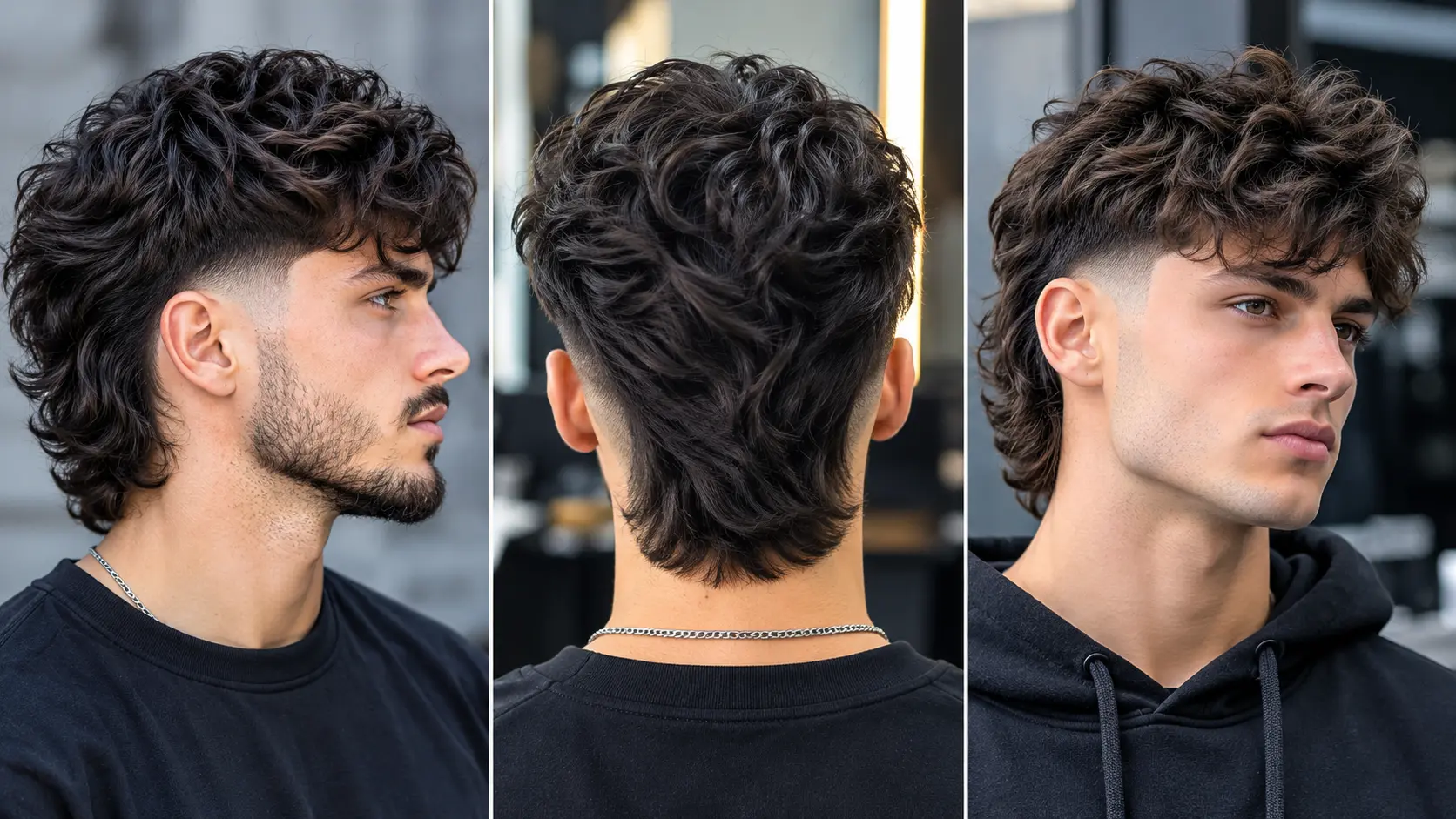
The mullet is back, but it doesn’t look like the one your dad had in old photos. Today’s version is cleaner, softer and far easier to wear. The secret is the fade. A mullet low taper fade keeps the length and attitude of a mullet while tidying the sides and neckline so the whole cut looks sharp, not shaggy.
If you’ve been saving mullet photos and wondering what to actually say to your barber, this guide is for you. You’ll find 26 distinct styles, plus advice on face shapes, hair types, products, maintenance and the mistakes that ruin good cuts.
What Is a Mullet Low Taper Fade?
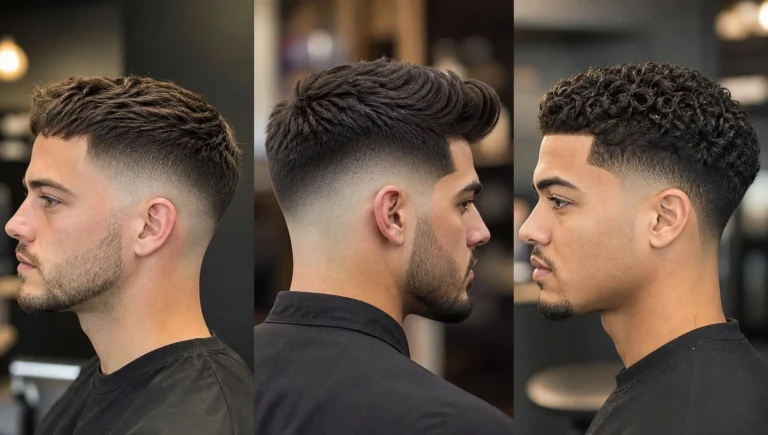
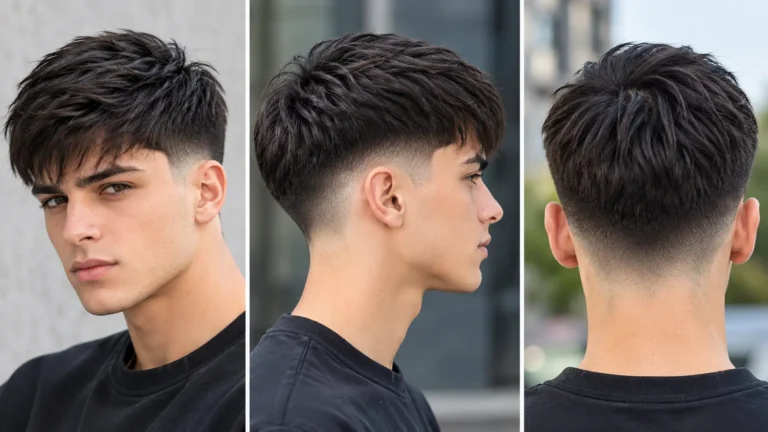
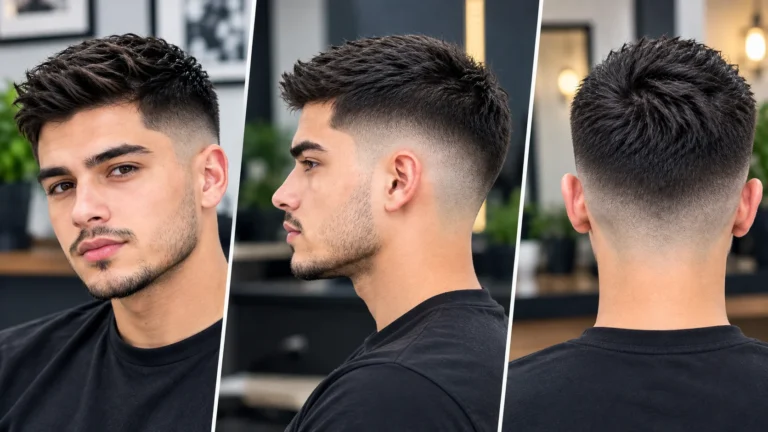
A mullet low taper fade combines two ideas. The mullet part means shorter hair on top and sides with noticeably longer hair at the back. The low taper fade part means the hair around the ears and nape gets gradually shorter, starting low on the head.
“Low” matters here. The fade begins just above the ear and curves down toward the nape, so it frames the ear and neckline without cutting into the sides of your head. A taper is also subtler than a skin fade. It usually leaves a little length at the shortest point, which gives a soft, clean edge instead of a bold, bald contrast.
The result is a mullet that looks intentional. The back keeps its length, and the sides stay neat enough for work, school or a night out.
What Is a Low Taper Fade Modern Mullet?
The modern mullet is the updated version of the classic. It’s usually more textured, more layered and less extreme in contrast. Instead of a flat, blunt back, you get movement, shape and a gradual blend between top, sides and nape.
When you add a low taper fade, the modern mullet becomes much more wearable. The taper cleans up the sideburns and neckline, which are the areas that made older mullets look messy. The top is often cut with layers or a textured fringe, and the back is kept long enough to show, but rarely so long it feels unmanageable.
Think of it as a mullet that has been through a good barber’s hands: relaxed in feel, precise in structure.
Why Is the Mullet Low Taper Fade Trending in 2026?
A few things keep this cut popular.
First, men’s hair has been moving toward texture and length for several years. Short, severe cuts are no longer the only “clean” option, and the mullet fits that shift well.
Second, it photographs and moves well. The longer back adds personality, while the taper keeps the shape tidy in photos and in real life.
Third, it works across hair types. Straight, wavy and curly hair can all be adapted to a mullet, and barbers can adjust the length, layering and fade height to match.
Finally, it’s flexible. You can wear it messy and casual or slicked back and polished. That range is a big reason it has stuck around instead of fading as a quick trend.
Low Taper Fade vs. Traditional Mullet
The traditional mullet is often described as “business in the front, party in the back.” It typically has a fairly uniform short top and sides, with a long, often untouched back.
A low taper fade mullet changes that in a few ways:
| Feature | Traditional Mullet | Mullet Low Taper Fade |
| Sides | Short, usually scissor or clipper cut with little blending | Gradually tapered, cleaner around ears |
| Neckline | Often natural or uneven | Tapered and defined |
| Top | Flat or feathered | Layered and textured |
| Overall feel | Retro and bold | Polished and modern |
If you want a throwback, the traditional cut delivers that. If you want something that looks current and easy to maintain, the taper fade version is usually the better choice.
26 Best Mullet Low Taper Fade Hairstyles for Men in 2026
Not every mullet suits every person. Use these 26 variations to find the one that matches your hair, your face and your lifestyle.
1. Classic Mullet Low Taper Fade
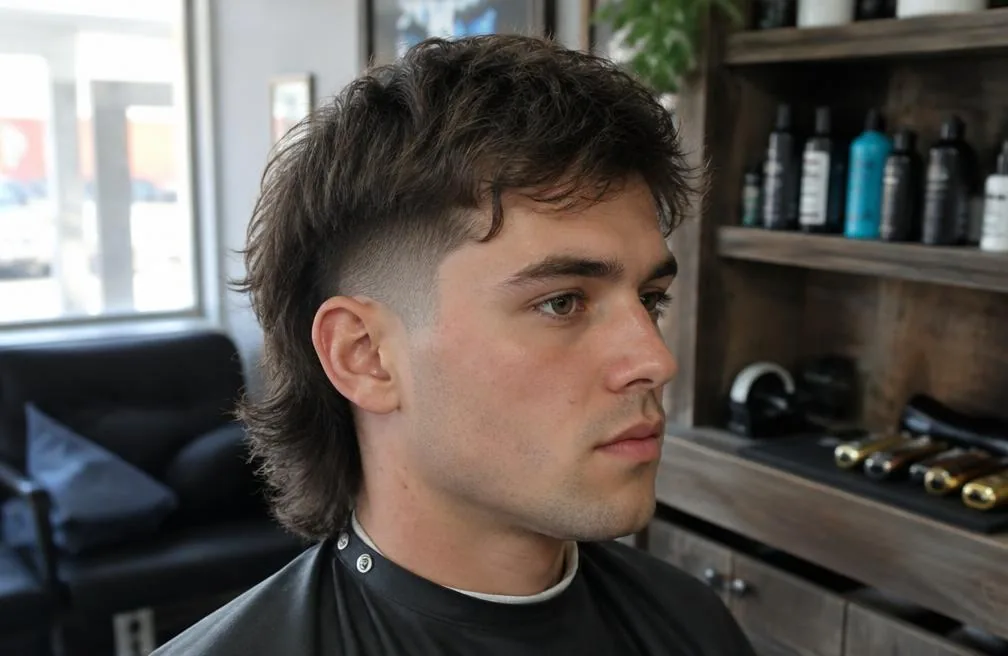
This is the foundation. The top and sides are short to medium, the low taper cleans up the ears and nape, and the back stays noticeably longer. It’s balanced and easy to recognize.It suits most face shapes and works best on straight to slightly wavy hair. Ask your barber for a low taper, a short top with a bit of length at the crown, and a back that sits around the collar.
2. Textured Modern Mullet with Low Taper Fade
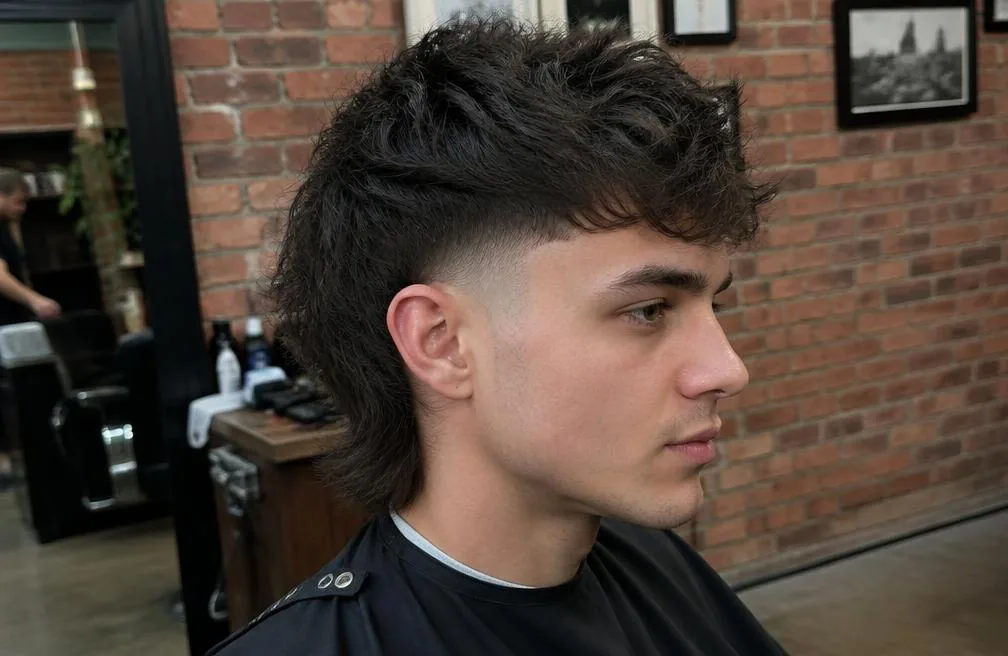
Here the top is cut with choppy layers or point cutting, which creates a lived-in look. The taper stays clean while the top and back look soft and dimensional.It’s great for people who like a casual style. A little matte clay worked through dry hair gives definition. Ask for “lots of texture on top, low taper, and a layered back.”
3. Messy Mullet Low Taper Fade
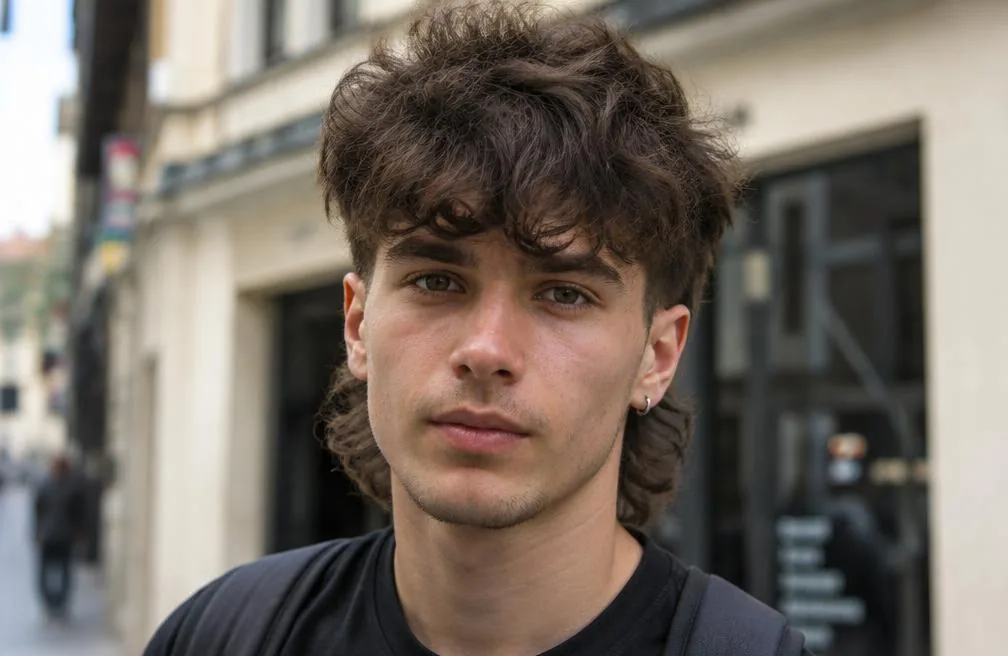
This one leans into the undone look. The layers are uneven on purpose, and the hair is styled with fingers rather than a comb. The taper keeps it from looking neglected.It works well on wavy or thick hair that already has natural movement. Use sea salt spray and let it air dry. Tell your barber you want it “relaxed, not perfect.”
4. Curly Mullet Low Taper Fade
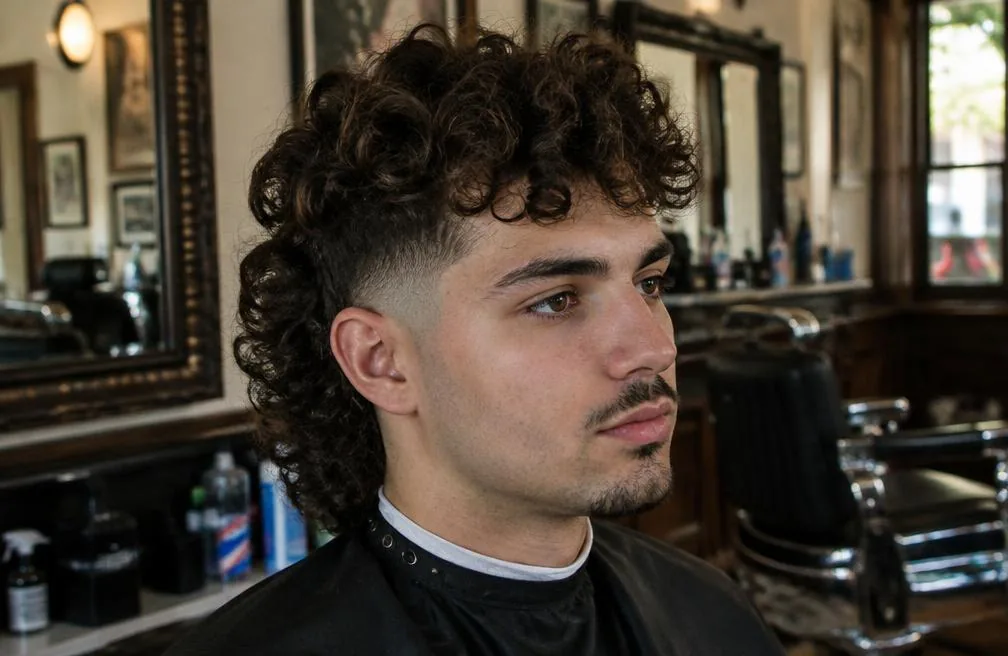
Curls and mullets are a natural pair. The curls on top and back create volume and shape, while the low taper adds structure around the ears and neck.Ask your barber to cut curls dry or damp so they can see the real pattern. Keep the sides tapered but not too tight, and avoid thinning the top too aggressively, which can cause frizz.
5. Straight Hair Mullet Low Taper Fade
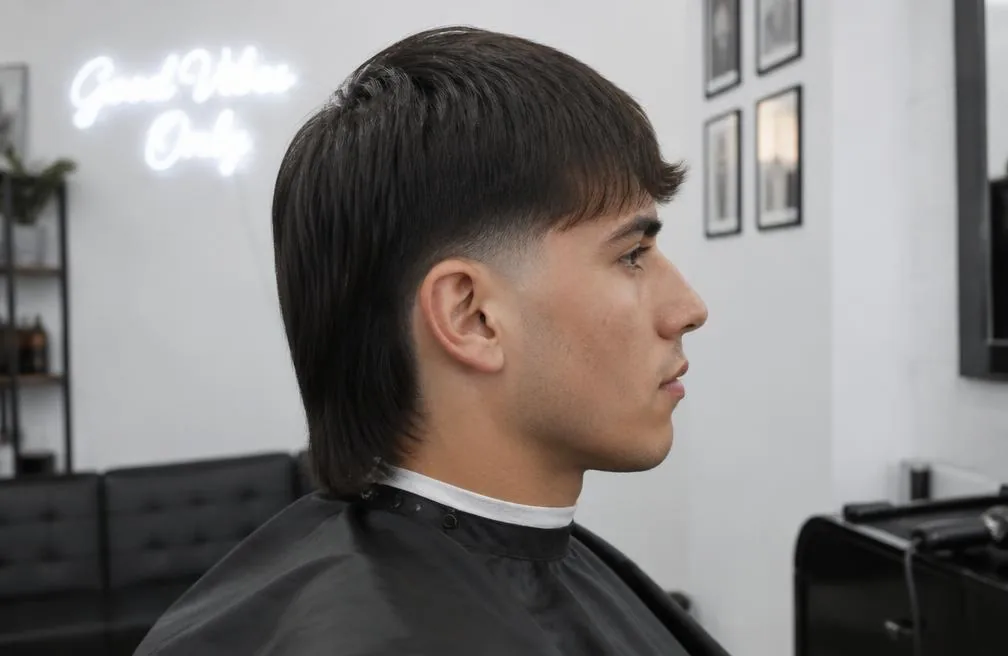
Straight hair shows every line, so precision matters. The cut often looks smooth and sleek, with the taper blending cleanly into the longer back.It benefits from layering to avoid a flat, helmet-like shape. A light texture spray adds grip. Ask for subtle layers on top and a back that’s slightly textured, not blunt.
6. Wavy Mullet Low Taper Fade
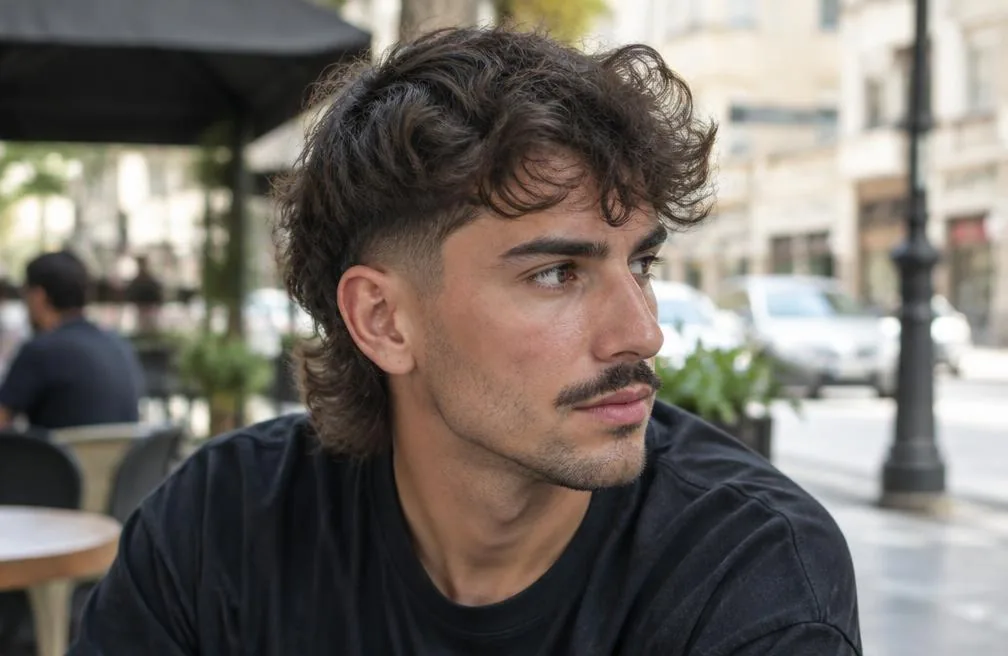
Wavy hair is arguably the easiest to style as a mullet. The natural bend adds volume at the top and gives the back a soft, flowing shape.Keep the cut layered so waves can stack instead of puffing out. A little cream or sea salt spray enhances the pattern. Ask for a low taper and “layers that follow my wave.”
7. Blonde Mullet Low Taper Fade
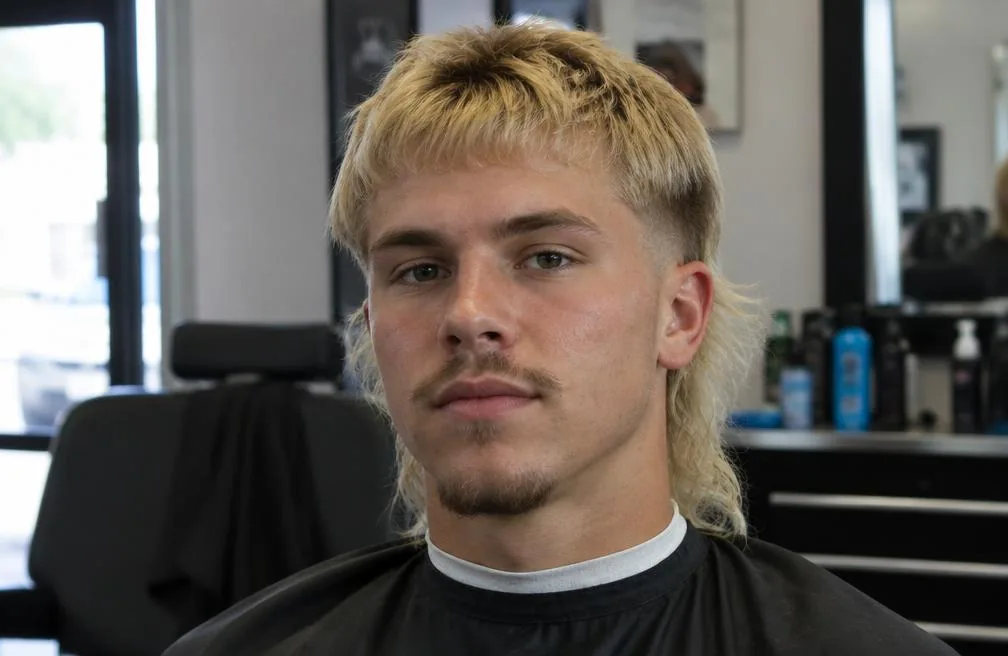
Bleached or blonde hair makes the shape of a mullet stand out. The contrast between lighter hair and a clean taper is eye-catching, especially on darker skin tones or with a bold style.Lightened hair is more fragile, so keep conditioning and trims regular. Mention your color history to the barber so they can adjust cutting technique.
8. Short Mullet Low Taper Fade
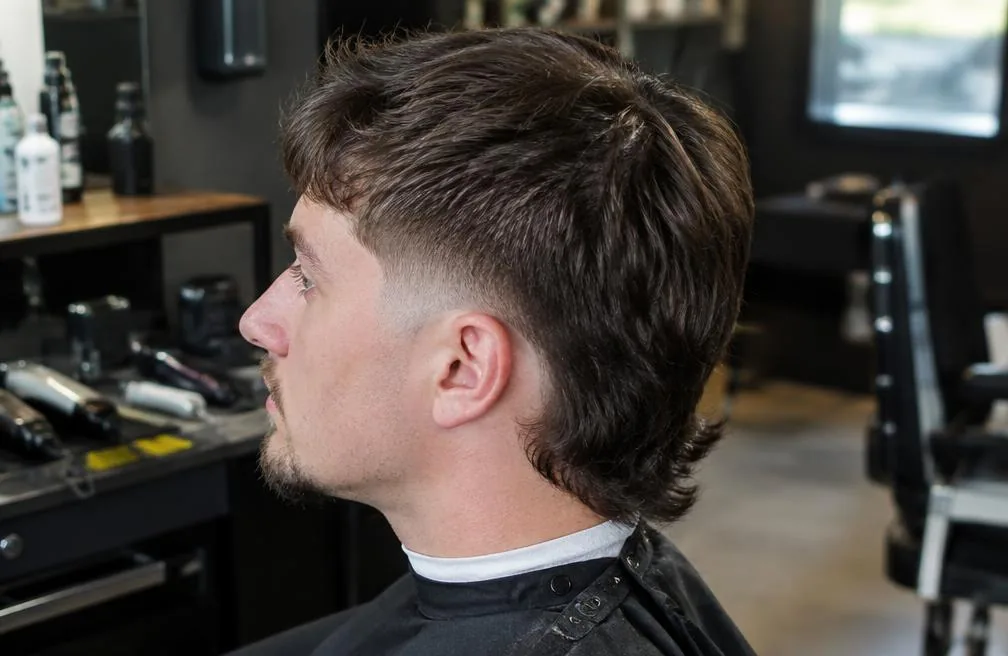
A short mullet is a good starting point if you’re nervous. The back sits just past the nape and the top stays compact, so the cut reads as modern and subtle.It’s very low maintenance and works for most professional settings. Ask for a taper, a short textured top, and a back that is only slightly longer than the sides.
9. Long Mullet Low Taper Fade
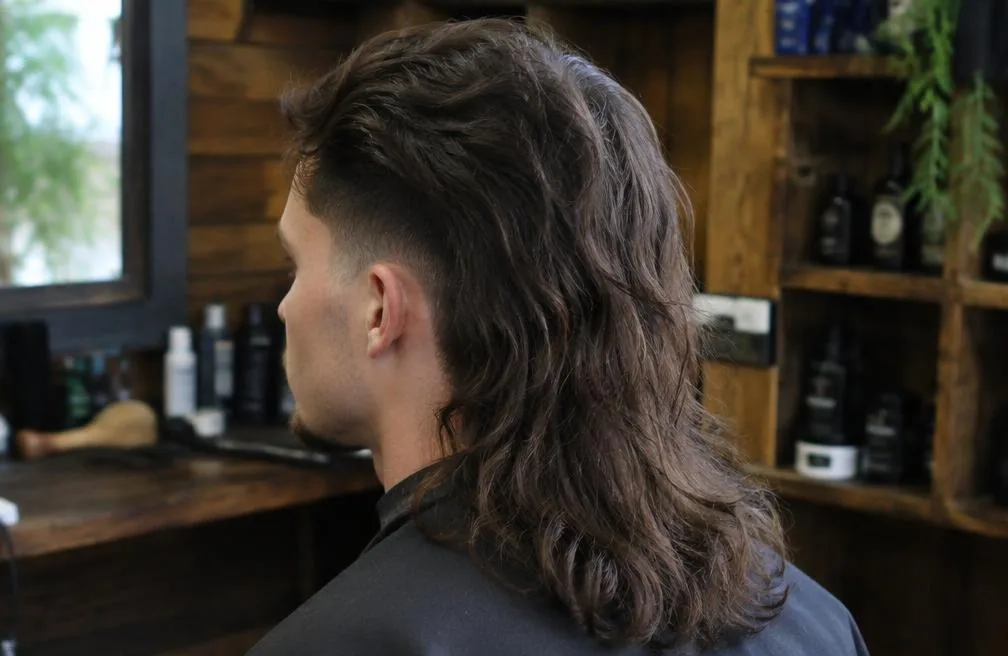
This is the statement version. The back reaches the shoulders or past, while the sides and neckline stay tapered and neat. The contrast between length and cleanliness is the whole point.It needs more care, especially on dry or fine hair. Expect regular conditioning and some effort on bad hair days. Ask your barber to keep the weight in the back and blend it into the taper.
10. Burst Fade Mullet with Low Taper
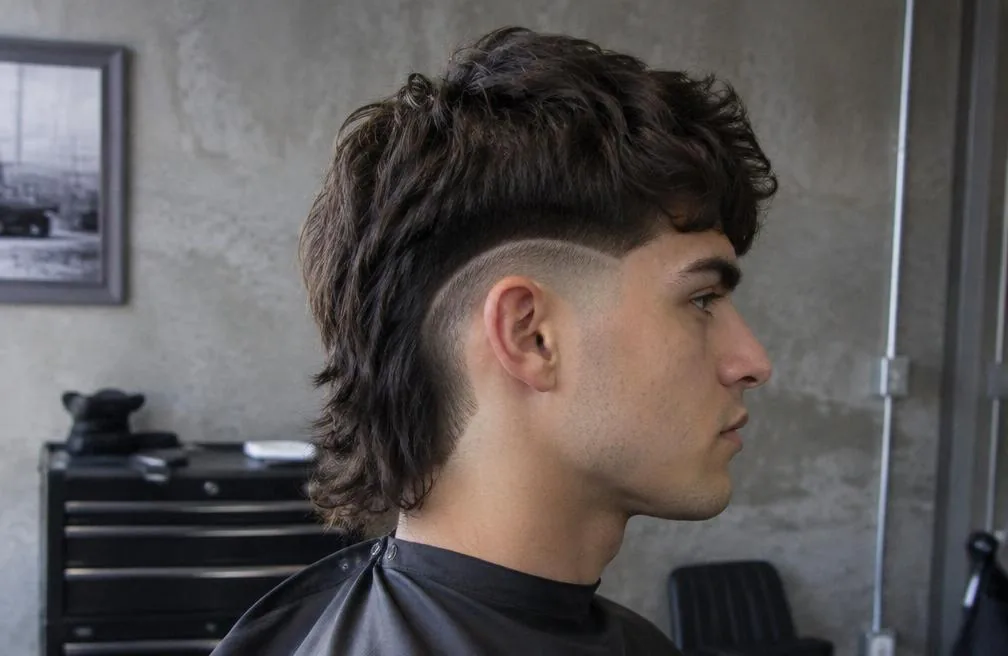
A burst fade curves around the ear in a semicircle, leaving more length at the back. Combined with a mullet, it creates a sharp frame around the ear while the back stays long.It’s a good fit for people who want a clear shape and some edge. It tends to look best on thicker hair and a bit of beard. Be specific with your barber about where the burst starts and ends.
11. Mullet Low Taper Fade with Textured Fringe
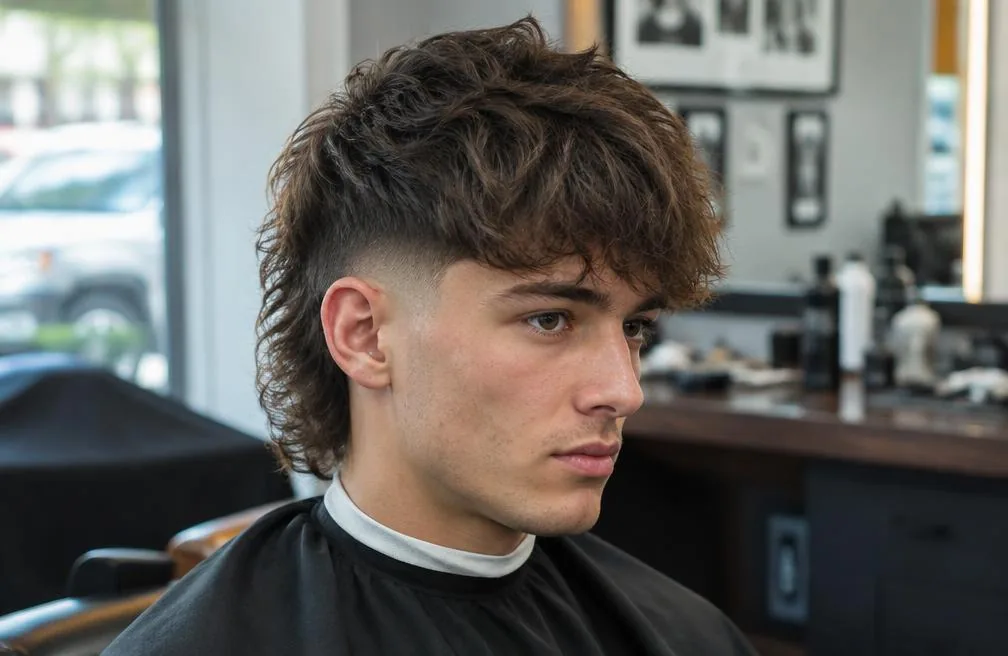
Here the fringe (the front hair) gets attention. It’s cut short to mid-length and shaped with texture so it falls naturally across the forehead.It softens strong foreheads and works well for round and square faces. Ask for a “choppy, textured fringe” and a taper that leaves the sides clean.
12. Mullet Low Taper Fade with Side Part
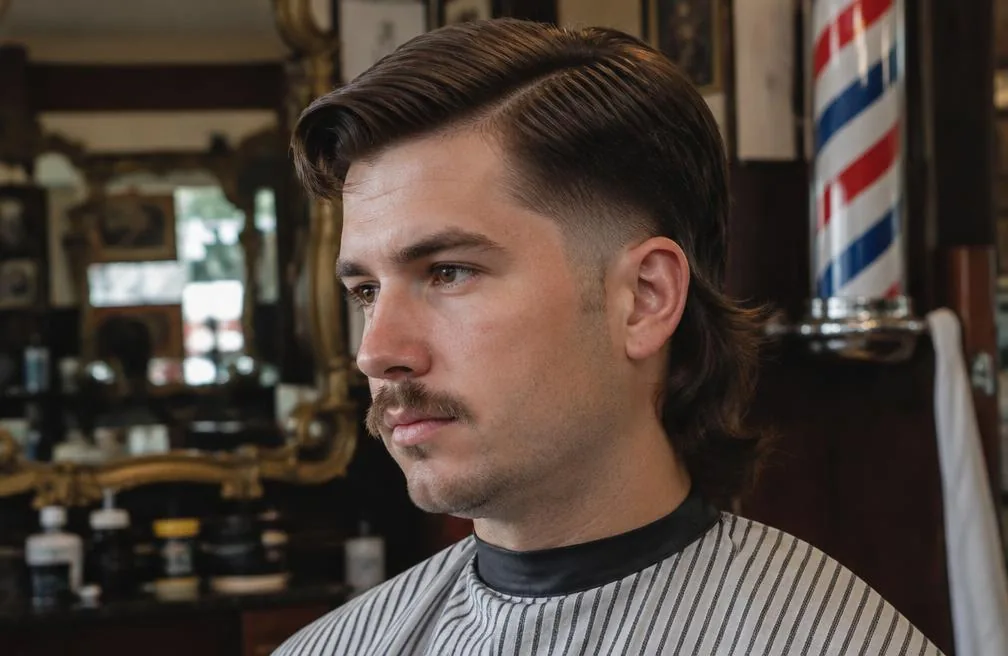
A side part adds structure. The top is combed or swept to one side, which gives the cut a neat, slightly classic feel without losing the mullet shape.It works best on straight or lightly wavy hair and suits office settings. Use a light pomade and comb. Ask the barber to cut a natural part where your hair already falls.
13. Mullet Low Taper Fade with Middle Part
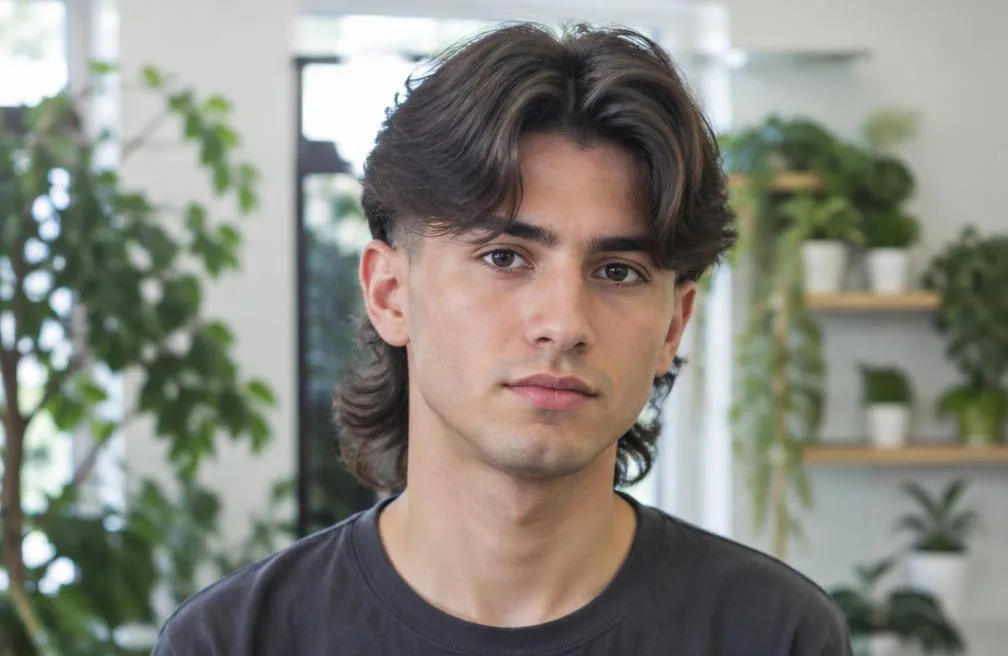
The middle part gives a relaxed, curtain-like look, especially popular with wavy hair. The hair frames the face and flows toward the longer back.It works best on oval and oblong faces, and on hair that holds its shape well. Ask for longer layers at the front so the curtains fall evenly.
14. Slick Back Mullet Low Taper Fade
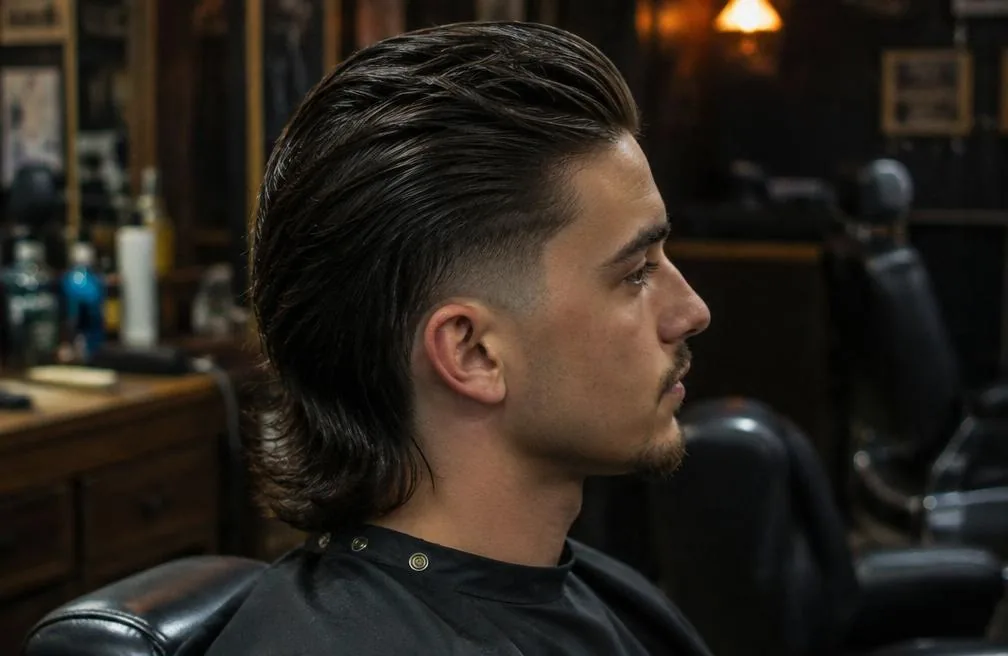
The top is brushed back, and the longer hair at the back flows into it. The taper keeps the sides tight, which makes the slicked look appear intentional and polished.Use a medium-hold pomade or a light wax. This style suits thick, straight or wavy hair and works well for more formal settings.
15. Fluffy Mullet Low Taper Fade
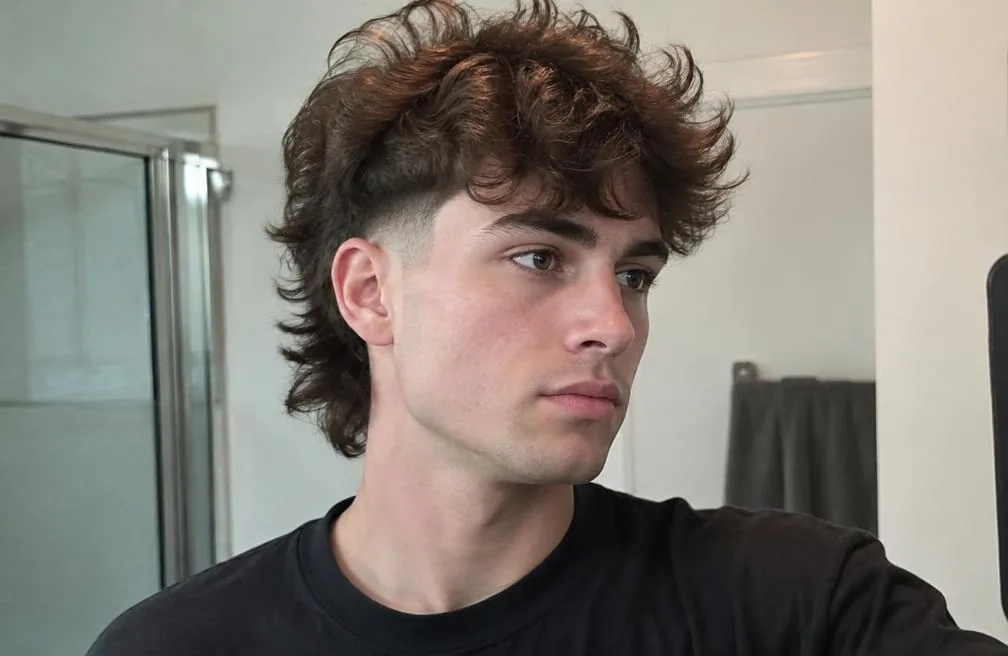
Soft, airy and full of volume. The hair is layered to create lift, and the taper keeps the outline neat so the fluff doesn’t look messy.It works well on fine or thin hair because it adds body. Blow-dry with a round brush or use a light texture powder. Ask for layers rather than heavy thinning.
16. Layered Mullet Low Taper Fade
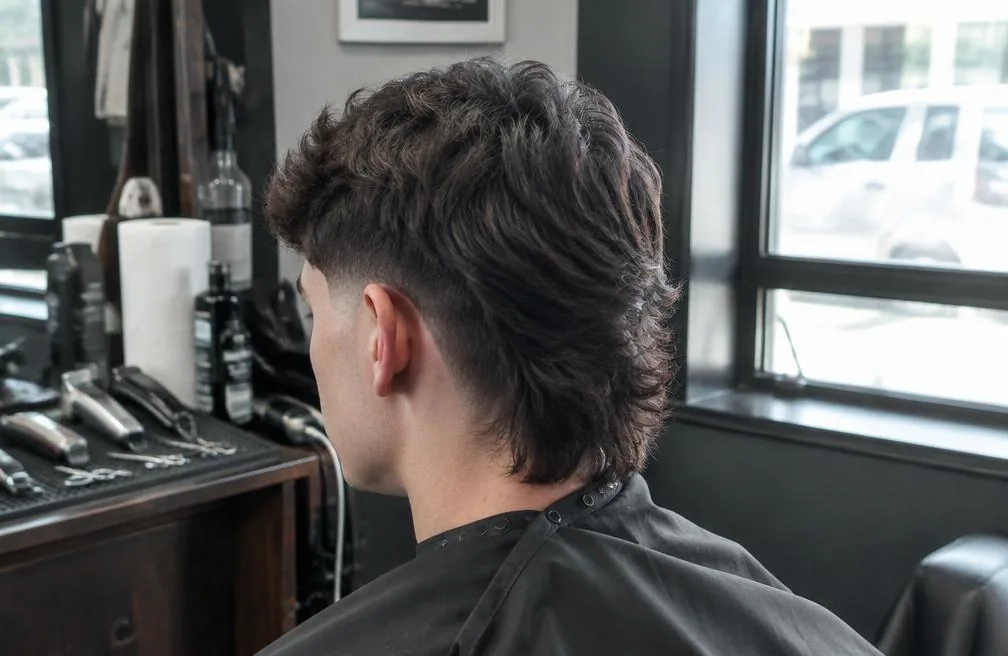
Layers are the star here. Multiple lengths run from the crown to the back, which creates movement and a soft transition into the taper.It suits almost every hair type, particularly thick hair that needs weight removed. Tell your barber to layer both the top and the back so the shape stays even.
17. Korean Mullet Low Taper Fade
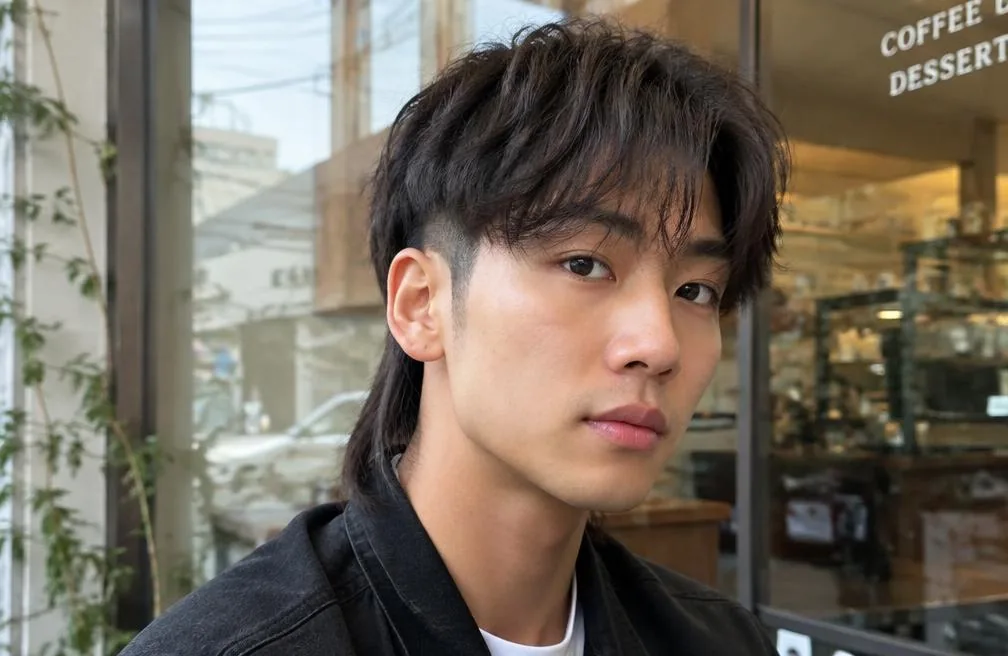
This version is soft, light and often features a gently curled or wavy top with a see-through fringe. The sides are tapered neatly, and the back is shorter and more controlled than a Western mullet.It’s popular for straight, slightly thick hair that is permed or styled for light movement. Ask for a soft perm or blow-dry styling and a light, airy fringe.
18. Asian Mullet Low Taper Fade
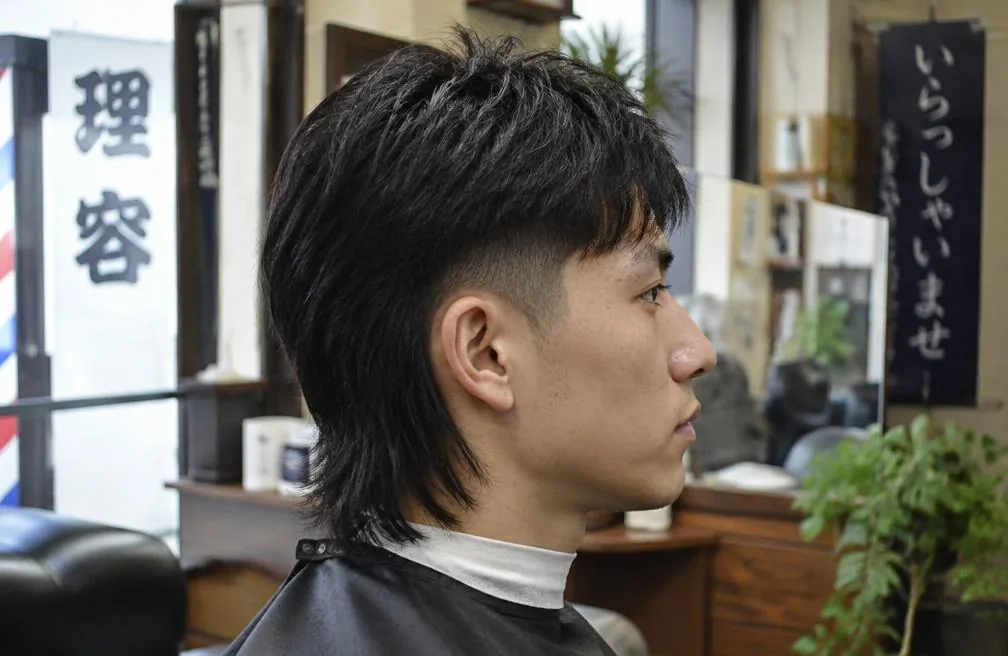
Asian hair is often straight and thick, which gives the cut a lot of natural shape. This style usually relies on texture and strategic layering to avoid heaviness.Ask your barber to remove weight with texturizing and keep the taper clean. A matte product helps the hair hold its shape without looking greasy.
19. Mullet Low Taper Fade with Beard
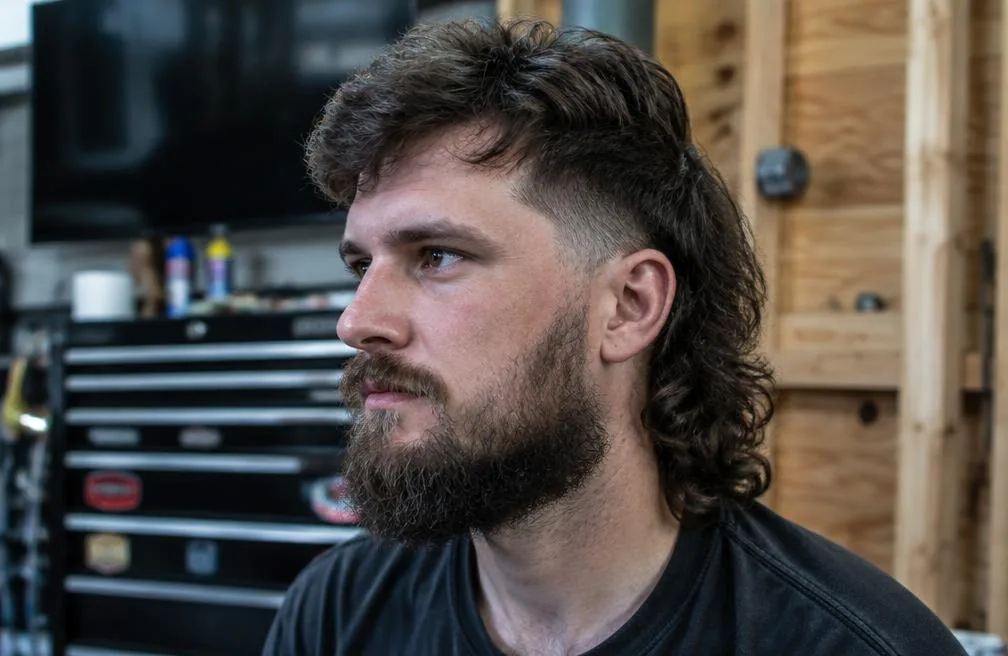
A beard and a mullet balance each other well. The longer back adds length, and a tapered beard that blends with the sideburns keeps the whole look connected.Ask for the beard to fade into the sideburn taper. A neat, medium-length beard suits most face shapes and helps soften a strong jawline.
20. Mullet Low Taper Fade for Thick Hair
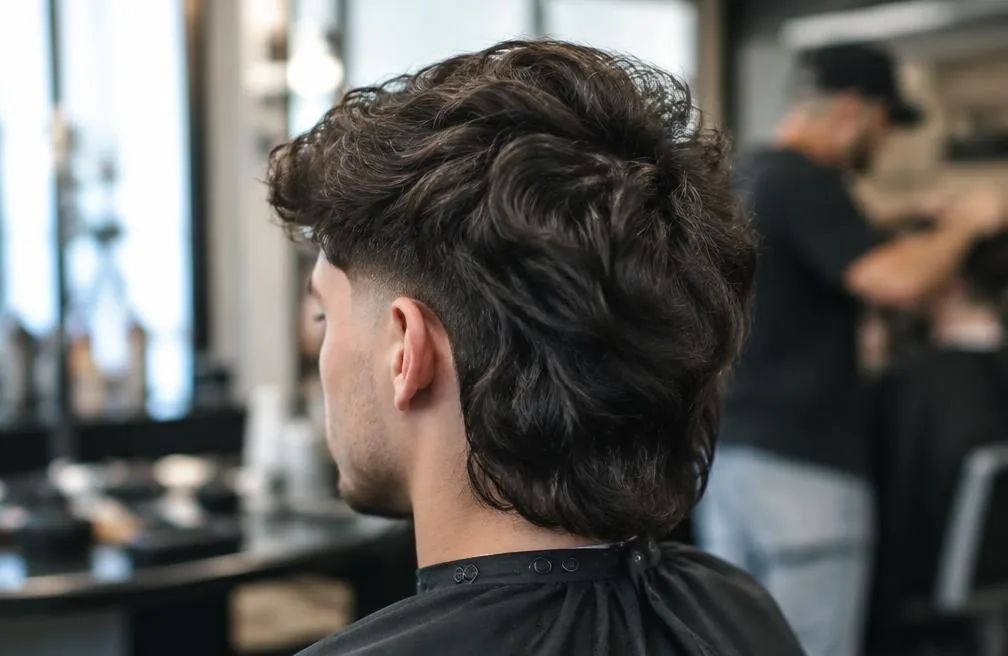
Thick hair needs thoughtful cutting. Without layers, a mullet can feel heavy and look bulky. With the right technique, it looks full and dynamic.Ask for internal layering and texturizing, plus a clean taper. Use lighter products so the hair doesn’t weigh down.
21. Mullet Low Taper Fade for Thin Hair
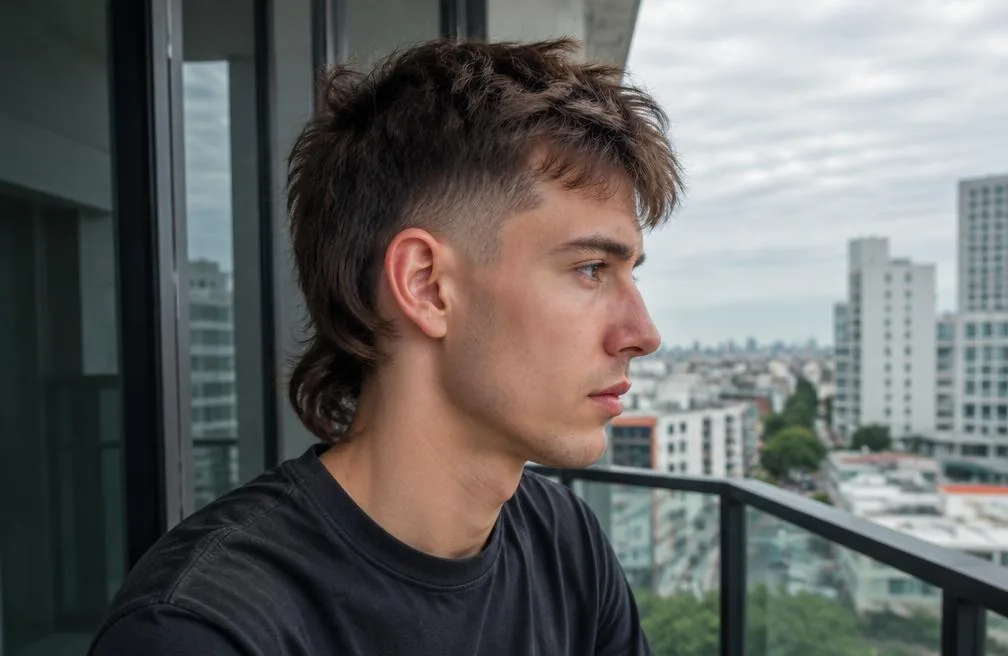
Thin hair can absolutely pull off a mullet. The trick is keeping the cut shorter and more compact, with soft layers to create the illusion of volume.Avoid very long backs, which can look stringy. Texture powder and a blow-dry add lift. Ask for a “short, textured mullet” and a clean low taper.
22. Teen Boy Mullet Low Taper Fade
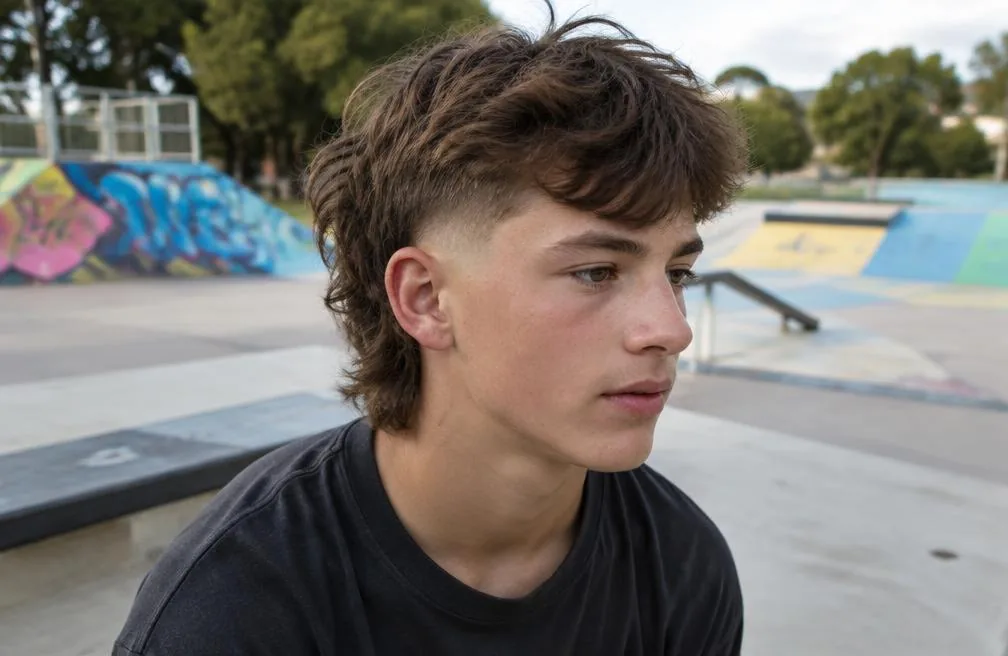
For teens, the focus is on easy styling and neatness. A shorter mullet with a low taper looks current and stays school-friendly.Choose a back that sits just past the collar and keep the top manageable. Check the school’s hair policy first, then ask for a “short mullet with a clean taper.”
23. Professional Mullet Low Taper Fade
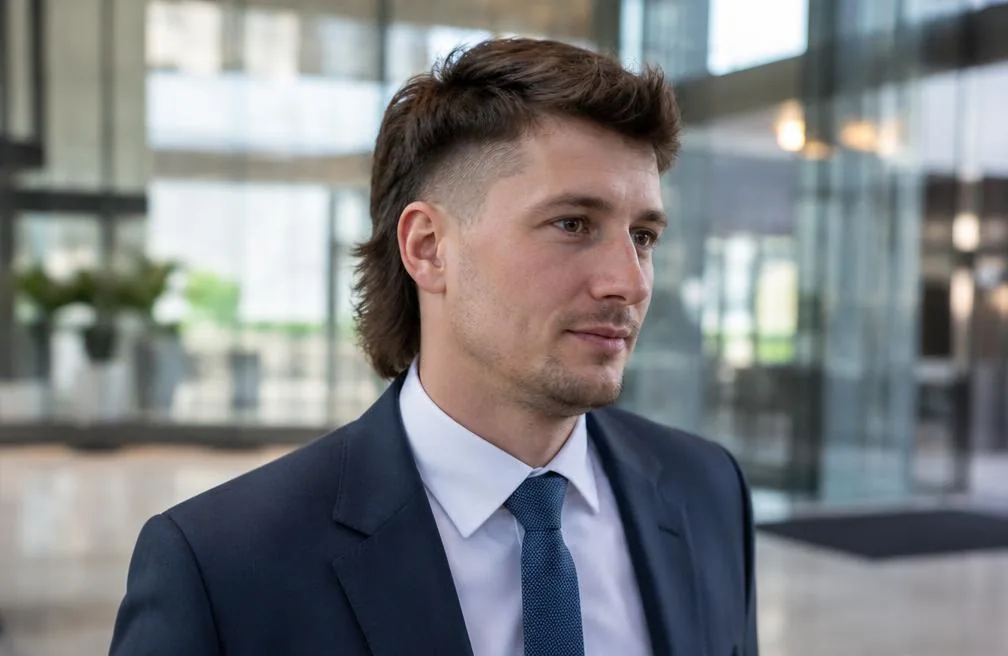
Yes, you can wear a mullet at work. A professional version keeps the back short, the top neat and the taper subtle.A side part or slicked-back top makes the style look more formal. Ask for a conservative back length and a clean, low taper that looks polished.
24. Mullet Low Taper Fade with Hair Design
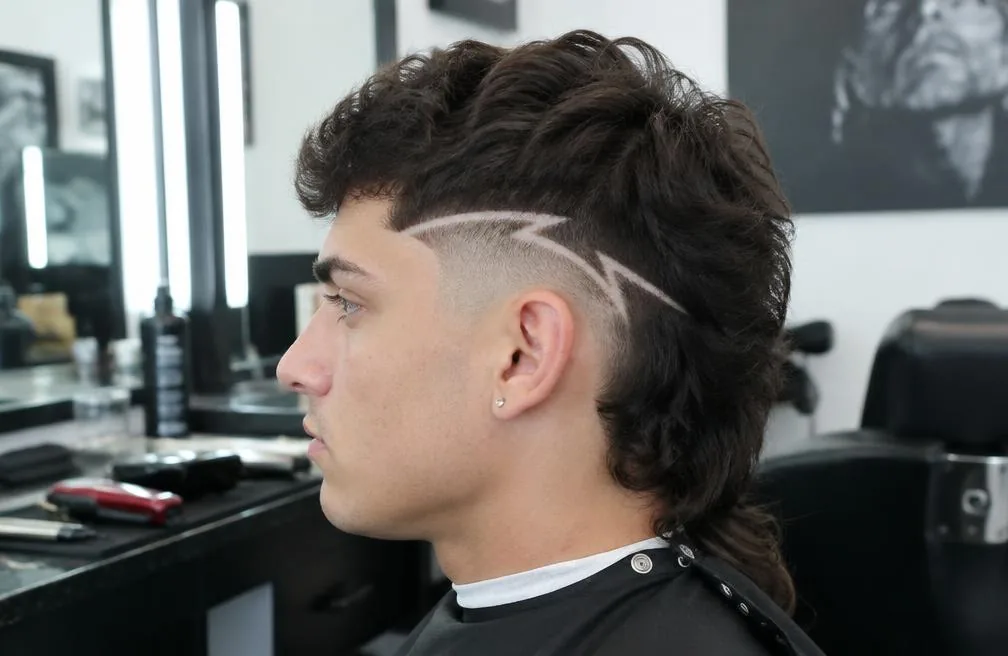
Hair designs, such as small lines, shapes or parting cuts, add personality to the taper area. The low fade gives a clean canvas for sharp detail.Keep the design simple so it doesn’t overpower the mullet. Ask for a design only if your barber has experience with line work, and show a reference photo.
25. Wolf Cut Mullet with Low Taper Fade
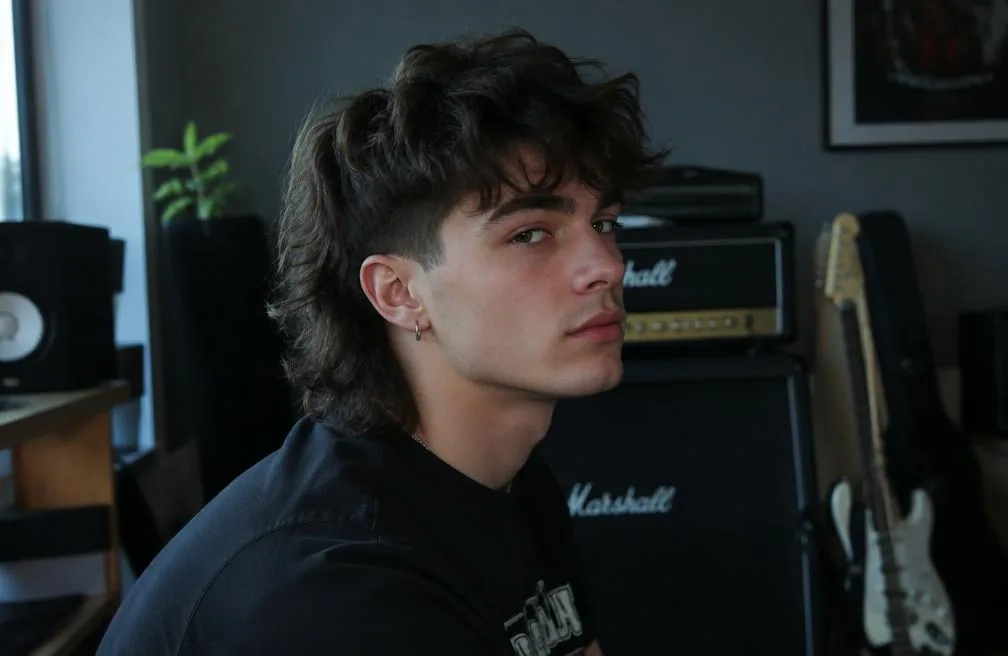
This hybrid blends the heavy layers of a wolf cut with the shape of a mullet. It’s shaggy, voluminous and full of movement, while the low taper keeps the edges clean.It works best on thick or wavy hair. Ask for a wolf cut with a mullet back and a low taper, and expect plenty of layering.
26. Spiky Mullet Low Taper Fade
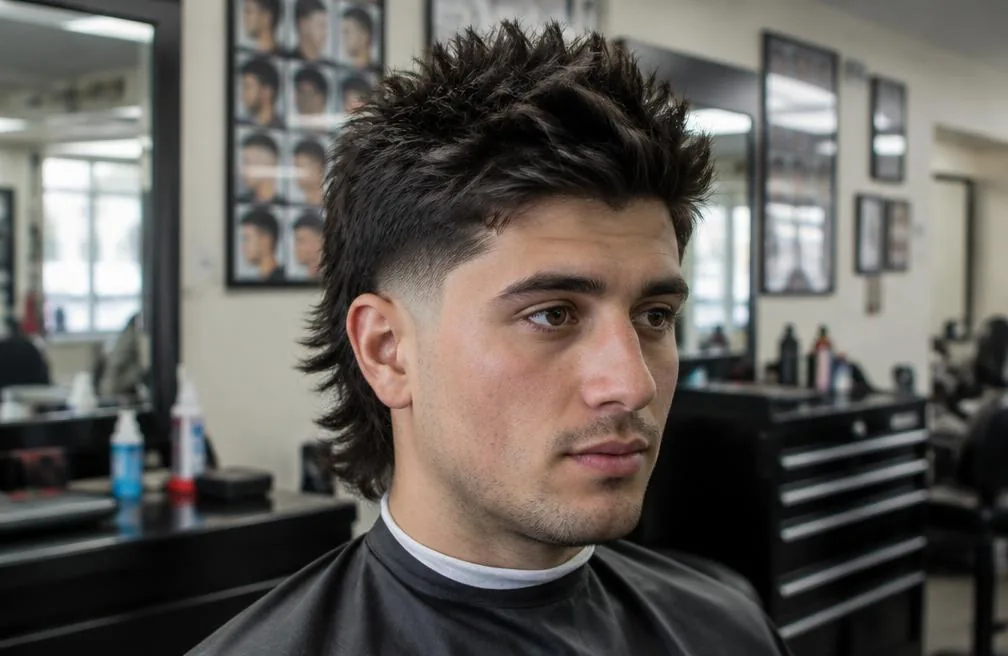
Spiky texture gives a bold, energetic look. The top is styled upward with clay or paste, while the longer back adds contrast.It suits thicker straight hair that holds shape. Use a strong-hold product and style with your fingers. Ask for a short, choppy top so the spikes look sharp, not stiff.
How to Ask Your Barber for a Mullet Low Taper Fade
Bringing a photo helps more than any description. Still, a few clear details make sure your barber understands what you want.
Start with the structure: “I’d like a mullet with a low taper fade, shorter on top and sides, with length kept at the back.” Then add specifics about length, texture and neckline.
What Clipper Guard Number Should You Choose?
For a standard low taper, many barbers start around a #1 to #2 guard at the shortest point, then blend upward into a #3 or #4 before switching to scissors. Taper fades are usually less aggressive than skin fades, so you don’t need to go to zero.
Guard numbers vary by clipper brand, so use them as a starting point. Tell your barber how short you want the shortest point to look, and let them adjust.
How Short Should the Sides and Neckline Be?
The sides should be short enough to look neat, but long enough to blend with the top. A low taper only affects the area around the ears and nape, so the upper sides keep more length.
For the neckline, you can choose a natural, tapered or squared finish. A tapered neckline blends best with a mullet and grows out more gracefully.
How Long Should the Top and Back Be?
The top is usually 2 to 4 inches, depending on your hair type and how much volume you want. The back typically ranges from collar length for a subtle look to shoulder length for a bold one.
If you’re unsure, start shorter. You can always grow it out, but you can’t glue it back on.
What Should You Tell Your Barber About the Fringe?
Fringe changes the whole feel of the cut. Tell your barber whether you want it short and choppy, long and swept, or parted. Mention if you often push your hair back, since that affects how they cut the front.
Also mention cowlicks or hairline quirks. A good barber will work with them instead of fighting them.
Best Face Shapes for a Mullet Low Taper Fade
The mullet works across face shapes, but small adjustments make it more flattering.
Mullet Low Taper Fade for Oval Faces
Oval faces are balanced, so almost any version works. You can experiment with fringe length, part style and back length without worrying about proportions.
Mullet Low Taper Fade for Round Faces
Add height on top and keep the sides tapered tight to create length. A textured fringe or side part helps avoid emphasizing width. Skip very fluffy sides.
Mullet Low Taper Fade for Square Faces
Square faces already have strong angles. Softer layers and a textured fringe balance the jawline. A slightly longer back adds flow without making the face look boxy.
Mullet Low Taper Fade for Diamond Faces
Diamond faces are widest at the cheekbones. A fringe that covers part of the forehead and some volume at the sides of the top helps balance the proportions.
Mullet Low Taper Fade for Heart-Shaped Faces
A wider forehead and narrower chin respond well to a side-swept fringe and some fullness at the back. Avoid heavy volume at the very top.
Mullet Low Taper Fade for Oblong Faces
Aim to reduce the appearance of length. A fuller fringe, a middle or side part and a shorter back all help. Avoid excessive height on top.
Best Hair Types for a Mullet Low Taper Fade
Your natural texture decides how the cut sits, so work with it.
Straight Hair
Straight hair gives a sleek, defined shape. Ask for layers so it doesn’t look flat, and use texture spray for grip.
Wavy Hair
Wavy hair is the sweet spot. It naturally creates volume and movement, so styling is usually quick.
Curly Hair
Curls bring volume and personality. Keep the layers soft and avoid over-thinning, which can lead to frizz.
Thick Hair
Thick hair needs weight removal. Layering and texturizing keep the mullet from feeling heavy.
Thin and Fine Hair
Keep it shorter and more compact. Soft layers and a light texture powder add body.
Coarse Hair
Coarse hair holds shape well but can feel stiff. Use moisturizing products and ask for layers to soften the movement.
Pros and Cons of a Mullet Low Taper Fade
Every haircut is a trade-off. Here’s an honest look.
Benefits of the Mullet Low Taper Fade
- It looks modern and intentional, not messy.
- It suits many hair types and face shapes.
- It can be dressed up or down.
- The low taper keeps the neckline and ears tidy.
- It grows out reasonably well because the taper is subtle.
Disadvantages of the Mullet Low Taper Fade
- It needs regular trims to keep the taper sharp.
- The back can be harder to manage in hot or humid weather.
- It may not suit strict dress codes without adjustments.
- Very fine hair may need extra styling effort.
How to Style a Mullet Low Taper Fade
Styling doesn’t need to be complicated. A few simple habits make a big difference.
Simple Everyday Styling Steps
- Wash with a gentle shampoo and condition the ends, especially the back.
- Towel dry lightly so hair is damp, not dripping.
- Apply a small amount of product, such as cream or sea salt spray, to damp hair.
- Blow-dry the top for lift, then let the back air dry or dry on low.
- Finish with a dab of clay or wax, worked through with your fingers.
How to Add Volume and Texture
Blow-dry the top upward and backward, using your fingers or a vent brush. Add a pinch of texture powder at the roots for lift. For extra texture, mist sea salt spray through the mid-lengths and scrunch lightly.
How to Style a Curly or Wavy Mullet
Apply a curl cream to damp hair, scrunch upward and let it dry naturally or with a diffuser. Avoid brushing once dry, since it can break up curl patterns. Refresh with a light water mist in the morning.
Best Products for Styling a Mullet Low Taper Fade
The right product depends on your hair type and the finish you want.
Matte Clay
Matte clay gives strong hold and a natural, dry finish. It’s great for textured and messy styles, and for thick hair.
Texture Powder
Texture powder adds lift and grip, especially for fine or thin hair. A tiny amount goes a long way.
Sea Salt Spray
Sea salt spray creates beachy texture and works well on wavy hair. Use it on damp hair for the best effect.
Hair Wax
Wax offers flexible hold with a slight sheen. It’s useful for shaping the fringe and defining pieces at the back.
Pomade
Pomade gives a sleek finish, perfect for slick-back or side-part mullets. Choose a water-based version if you want easier washout.
Styling Cream
Styling cream adds softness and light control. It’s ideal for curls, waves and anyone who wants a natural look without stiffness.
How to Maintain a Mullet Low Taper Fade
Good maintenance is what keeps this haircut looking modern instead of overgrown.
How Often Should You Get a Trim?
Most men do best with a trim every 3 to 5 weeks. The taper loses its sharpness first, so if you like it crisp, aim for the shorter end. If you’re happy with a softer, grown-in look, you can stretch it a bit.
How to Maintain the Longer Hair at the Back
Trim the ends every couple of months to prevent split ends. Condition regularly and detangle gently, starting from the ends and working upward. A leave-in conditioner helps with dryness.
How to Prevent Frizz and Dryness
Avoid very hot water and use a moisturizing shampoo. Pat your hair dry instead of rubbing, and use a small amount of leave-in product or oil on the ends. Sleeping on a silk or satin pillowcase can also reduce friction.
How to Keep Your Low Taper Fade Fresh
Between barber visits, ask if you can maintain the neckline at home with a trimmer, or book quick cleanup visits. Keep the area around your ears tidy, since that’s where regrowth shows first.
Low Fade Mullet vs. Low Taper Fade Mullet
These two get mixed up often. A low fade usually goes shorter, sometimes down to the skin, and creates a more noticeable contrast. A low taper fade is gentler, leaving a little length and focusing mainly on the sideburns and neckline.
Choose a low fade mullet if you want a sharper, bolder look. Choose a low taper fade mullet if you want something softer, more natural and easier to grow out.
Mullet Low Taper Fade vs. Classic Mullet
A classic mullet tends to be rougher, with less blending between sections. The taper fade version is cleaner, with controlled edges and often more texture on top.
If you like a retro, unpolished feel, the classic cut fits. If you want something that works in more everyday settings, the taper fade is usually the safer pick.
Mullet Low Taper Fade vs. Burst Fade Mullet
A low taper fade runs along the ear and neckline. A burst fade curves around the ear in a semicircle and leaves more length at the back.
Burst fades look edgier and suit people who want a visible shape around the ear. A low taper is more understated and fits more situations.
Mullet Low Taper Fade vs. Wolf Cut
A wolf cut is built on heavy layering throughout, giving a shaggy, voluminous look. A mullet low taper fade is shorter and tidier on the sides, with length concentrated at the back.
Pick a wolf cut if you want maximum volume and movement. Pick a mullet low taper fade if you want a clean outline and a more structured shape.
Celebrity-Inspired Mullet Low Taper Fade Hairstyles
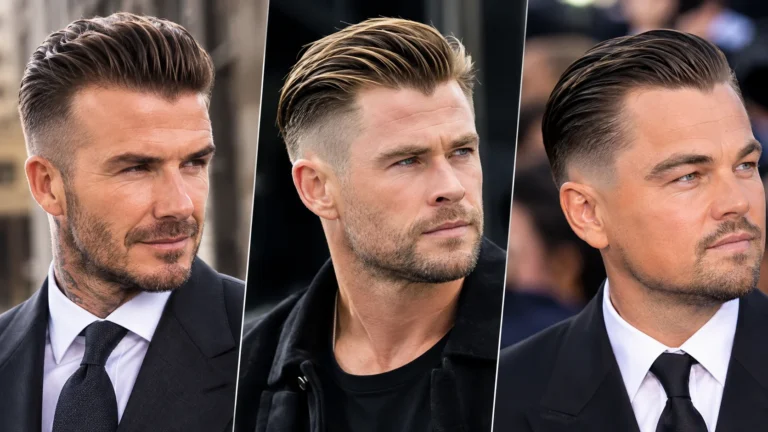
Celebrities often shape what barbers get asked for. Use these as inspiration, not as exact templates, since your hair type and face shape matter more than any photo.
Morgan Wallen-Inspired Modern Mullet
This look usually pairs a shorter, tidy top with a longer, flowing back. It’s a good reference if you want a country-style mullet that feels polished but still relaxed. A low taper keeps the sides neat.
Korean-Inspired Fluffy Mullet
Soft, airy and lightly curled, this style relies on a see-through fringe and gentle layers. It suits straight, thicker hair and works well with a perm or careful blow-dry.
Wavy and Textured Celebrity Mullet
Think loose waves, visible texture and a casual, slightly undone shape. It’s a good model if your hair already has natural bend, since you can lean into it instead of fighting it.
Common Mullet Low Taper Fade Mistakes to Avoid
A few small errors can turn a great cut into a disappointing one.
Choosing the Wrong Back Length
Too long and it looks unplanned. Too short and it loses the mullet effect. Start with a length you’re comfortable with and adjust over time.
Making the Fade Too High
A high fade changes the whole character of the cut. If you want a low taper, be clear that the fade should stay low and subtle.
Using Too Much Styling Product
Heavy product weighs hair down and makes it look greasy. Start with a pea-sized amount and add more only if needed.
Skipping Regular Trims
Even a great mullet falls apart when it grows out unevenly. Regular trims keep the taper crisp and the back healthy.
Ignoring Your Natural Hair Texture
Fighting your texture rarely works. Choose a style that suits your natural wave, curl or straightness, and your daily routine will be much easier.
Frequently Asked Questions About Mullet Low Taper Fade
Final Thoughts on the Mullet Low Taper Fade
The mullet low taper fade works because it solves the old mullet’s biggest problem. You still get length and personality at the back, but the sides and neckline stay clean. That balance is what makes the cut feel modern.
The best version for you depends on your hair type, face shape and how much time you want to spend styling. Wavy and thick hair gives you the most freedom, while straight or fine hair does well with layers and a shorter back.
Conclusion
If you’re new to mullets, start with a short or classic version and a subtle low taper. You can always grow the back longer later. Bring reference photos, explain how you style your hair day to day, and ask your barber to keep the fade low and soft.
Once you have the cut, keep it fresh with regular trims, a little conditioning for the back and a product that suits your texture. Do that, and a mullet low taper fade will look sharp, confident and easy to wear all year.