16 Bold V Fade Haircut Styles & Ideas for Men (2026)
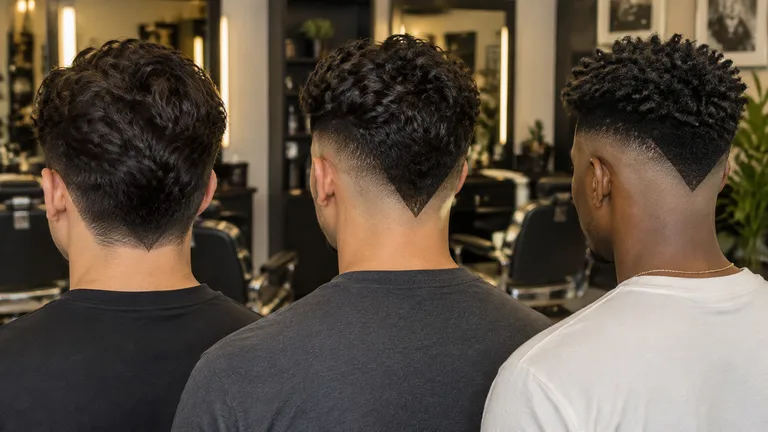
If you’ve spent any time scrolling barber shop Instagram pages lately, you’ve probably noticed a haircut where the hairline at the back tapers down into a sharp point, almost like an arrow pointing toward the spine. That’s the V fade haircut, and it’s one of the more distinctive neckline designs a barber can create.
Unlike a standard Fade Haircut that just blends hair length gradually from top to bottom, the V fade adds a deliberate shape at the nape of the neck. It’s subtle from the front, but from the back, it’s unmistakable. This guide walks through everything you need to know: what the cut actually is, sixteen ways to wear it, how barbers execute it, and how to keep it sharp between visits.
What is a V Fade Haircut?
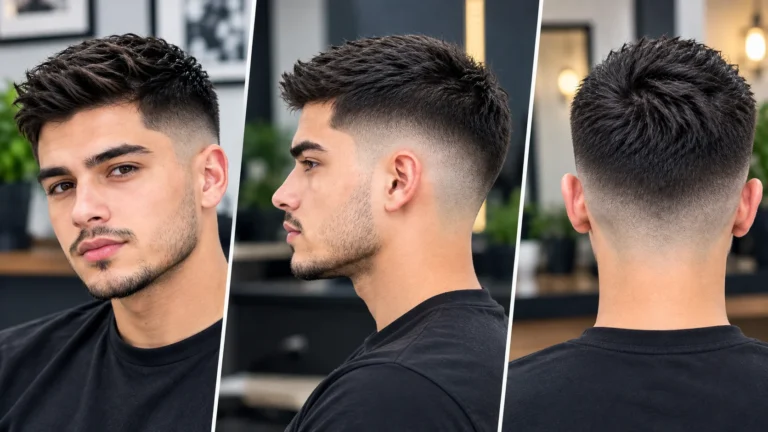
A V fade haircut is a fade where the hair at the back of the neck is cut into a V-shaped point instead of a straight or rounded line. The fade itself — the gradual shortening of hair as it moves down toward the skin — can be high, mid, low, or skin level. The V shape is the detail added specifically at the neckline, usually with the edge of the clippers or a trimmer, once the fade blending is finished.
Most people notice it more on close-cropped or shorter styles, since the neckline is more visible when hair is trimmed short. It works with almost any top style, from a textured crop to slicked-back hair, because the V detail lives at the back of the head and doesn’t interfere with how the top is styled.
Barbers sometimes call this a “V-shaped neckline” or “V-cut nape” rather than a full haircut name, because technically it’s a finishing detail applied on top of a chosen fade type. That’s an important distinction: when you ask for a V fade, you’re really asking for two things — a fade height/style, and a V-shaped neckline instead of the default straight or curved one.
V Shape vs Box Fade vs Round Neckline — Which Neckline Design Suits You?
Barbers generally offer three main neckline shapes once the fade is blended:
- V shape — the hairline comes to a point in the center of the neck. It draws the eye downward and tends to look sharper and more angular.
- Box fade (square neckline) — the hairline is cut straight across, giving a cleaner, more uniform edge. It’s a safer, more classic look.
- Round neckline — the natural curve of the neck is followed without any hard shaping. This is the lowest-maintenance option since it grows out without an obvious harsh edge.
The V shape tends to suit people who want their haircut to look intentional and edgy, especially with shorter fades where the neckline is on full display. A box neckline reads a bit more traditional and pairs well with structured, professional looks. A round neckline is the most forgiving between barber visits because there’s no sharp line to grow out awkwardly.
If you’re unsure which one fits you, a good rule of thumb: V shapes tend to suit thinner or average neck widths well, since the point elongates the area slightly. Box necklines suit broader or shorter necks better because the straight line doesn’t add extra visual length.
Why the V Shape Has Stayed Popular Since It First Trended
The V fade isn’t a brand-new invention — it’s been a barbershop staple for years, popularized heavily through social media where the back-of-head reveal became its own mini trend. What’s kept it relevant isn’t just the visual, though. It’s versatility.
Because the V detail sits independently of the top style, it hasn’t gone out of fashion the way some full haircuts do. It’s been paired with buzz cuts, curly tops, slicked styles, and mohawks without ever looking dated. Heading into 2026, the V fade remains popular for the same reason: it’s a small, precise detail that upgrades a fairly simple haircut into something that looks custom-tailored.
16 Best V Fade Haircut Styles for 2026
Below are sixteen ways to wear the V fade, grouped by fade height, fade type, hair texture, and top style, so you can find the combination that actually fits your hair and lifestyle rather than just copying a photo.
V Fade by Height
High V Fade Haircut

The High Fade Haircut starts the fade well above the ears, close to the temple area, leaving a shorter overall silhouette. It’s the most dramatic version of the cut since more of the head is faded, making the V point at the back stand out sharply against the shaved sides.This works best for people with strong bone structure, since a high fade leaves less hair to soften the jawline and cheekbones. It suits straight or wavy hair types especially well, since the contrast between long top hair and closely faded sides is more pronounced. Maintenance is on the higher end — expect to visit the barber every two to three weeks to keep the fade line crisp.
Low V Fade Haircut

The low V fade keeps the fading close to the hairline, just above the ears and around the neck, leaving more length through the mid-section of the head. It’s a subtler, more everyday-friendly version of the cut.This is a solid pick if you want the V detail without a dramatic change in overall hair volume, and it tends to suit rounder face shapes well since it doesn’t shave away as much hair around the temples. It also grows out more gracefully than a high fade, so you can stretch appointments a little longer.
Mid Fade Haircut V Shape

Sitting between the two, the mid fade starts around the middle of the side of the head. It’s often described as the most balanced option because it works across nearly every face shape and hair texture.If you’re getting a V fade for the first time and aren’t sure which height to pick, mid is usually the safest starting point. It gives enough contrast to make the V shape visible without committing to the higher-maintenance upkeep of a high fade.
V Fade by Fade Type
V Drop Fade Haircut

A drop fade curves downward behind the ear instead of following a straight line up the side of the head. Combined with a V neckline, this creates a look with two intentional curves — one behind the ear, one at the nape — which reads as more sculpted overall.The drop fade V combo suits people with straight or slightly wavy hair, since curly or coily textures can make the drop’s curve harder to see clearly. It’s a good option if you want a fade that looks a little more custom than a straightforward vertical fade.
V Taper Fade Haircut

A taper fade is a gentler, slower blend than a full fade — hair gets shorter gradually without dropping all the way to skin. Pairing this with a V neckline gives a softer overall finish, since there’s less contrast between the shortest and longest sections.This is a great choice for workplaces with more conservative dress expectations, since a taper reads as neat and low-key rather than edgy. It also tends to need less frequent touch-ups than a skin fade, since the blend is subtler and less obvious as it grows.
Skin V Fade Haircut

The skin fade takes the sides all the way down to bare skin before blending upward into longer hair. Adding the V shape at the back turns this into one of the sharpest, most attention-grabbing versions of the cut.Because there’s zero hair at the shortest point, any unevenness is very visible, so this style needs a skilled barber and fairly frequent maintenance — usually every two weeks. It suits thicker, denser hair types well, since the contrast against the bare skin is more striking.
Bald V Fade Haircut

Slightly different from a skin fade, a bald fade refers to when the fade blends into a very short, buzzed top rather than longer hair. With the V neckline added, this becomes one of the lowest-maintenance overall looks on this list, since there’s minimal length anywhere to style.This suits people who want a clean, no-fuss haircut but still like a bit of detail at the back. It works with virtually any hair texture since there’s so little length involved.
Burst Fade Haircut V Cut

A burst fade fades in a semicircle around the ear rather than running in a straight line across the whole side of the head. Combined with a V neckline, you get two separate design elements: the curved burst around the ear, and the pointed V at the back.This tends to suit people with longer hair on top who still want short, faded sides, like those wearing a curly fringe or textured quiff. It’s a slightly more complex cut for a barber to execute cleanly, so it’s worth going to someone experienced with burst fades specifically.
V Fade by Hair Texture
V Shape Fade Haircut Straight Hair

Straight hair shows off fade lines and the V point with the most clarity, since there’s no natural texture disrupting the visual line. If you have straight hair, nearly any fade height or type will display the V shape well.The main consideration is styling the top: straight hair tends to need a bit of product to hold shape, especially with longer top styles like a comb over or slick back.
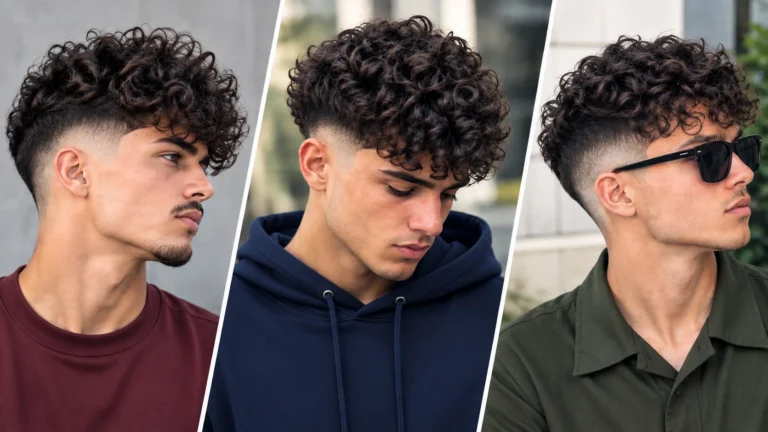
Curly Hair V Fade Haircut

Curly hair adds volume and texture up top while the sides stay faded, creating a strong contrast that a lot of people like. The V shape itself is still achievable on curly hair, though the fade lines may look slightly softer due to the natural texture around the perimeter.Barbers often recommend a slightly lower fade height for curly hair, since curls can shrink upward and make a high fade look higher than intended once it dries. Ask your barber to check the fade height on dry, unstretched curls before finishing.
V Fade Paired with a Top Style
Comb Over V Fade Haircut

The comb over keeps longer hair on top swept to one side, contrasting with faded sides and a V-pointed back. It’s a classic, versatile combination that works in both casual and professional settings.This pairs especially well with straight or wavy hair, since curly hair can be harder to keep combed in one direction throughout the day without product.
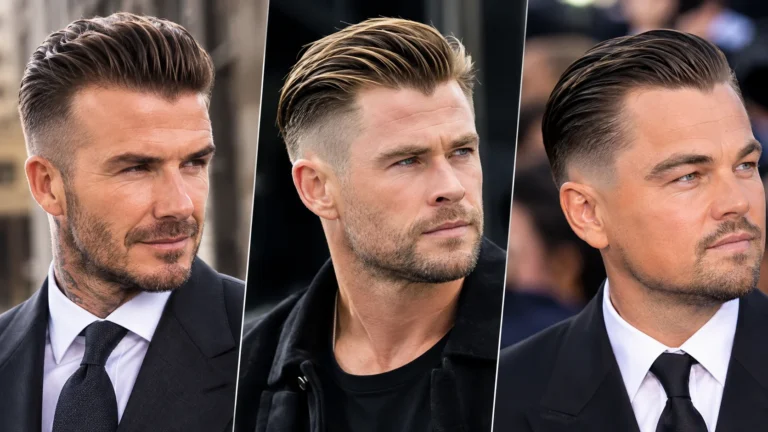
Slick Back V Fade Haircut

Here, the top is styled backward rather than to the side, usually with some kind of pomade or gel for hold and shine. The V fade at the back complements this well because the slicked style already draws attention toward the back of the head.This look tends to suit medium-to-long top hair the best, since there needs to be enough length to slick back cleanly.
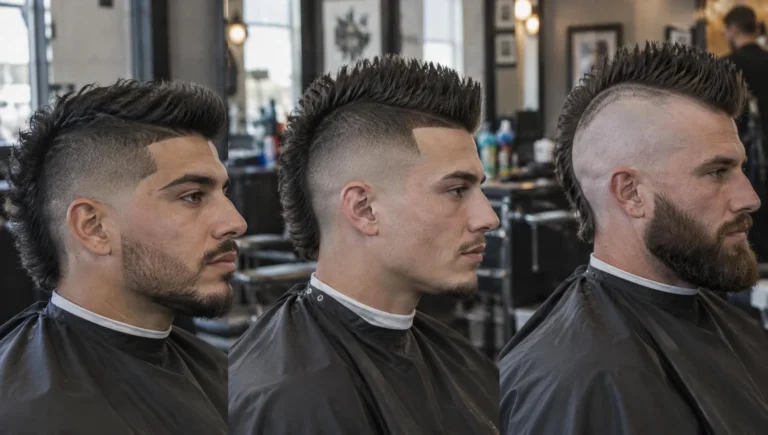
V Fade Mohawk Haircut

A mohawk keeps a strip of longer hair down the center of the head while the sides are faded completely. Adding a V shape at the neckline continues that bold, structured theme all the way to the back.This is one of the higher-maintenance combinations on this list, since both the mohawk strip and the fade need regular attention to stay sharp.
V Fade with Facial Hair
V Fade Haircut With Beard

Pairing a V fade with a well-maintained beard is one of the most requested combinations at barbershops, because a beard blend ties the sides of the fade into the beard for a seamless transition rather than a hard line where hair meets beard.This combination generally suits most face shapes, since a beard adds definition to the jaw while the fade keeps the sides clean. It does require more frequent trims to keep both the beard line and the fade looking fresh together.
New Additions
V Fade Haircut for Thin/Fine Hair

Thin or fine hair can still carry a V fade well, but the fade height matters more here than with thicker hair. A high or mid fade tends to look better on fine hair because it reduces the amount of visibly sparse hair on top, while a low fade might expose thinning more than intended.Textured, slightly longer styles on top (rather than very short cuts) also help fine hair look fuller when paired with a V fade.
V Fade Haircut for Gray Hair

Gray or graying hair actually highlights the fade lines and V shape more than darker hair, since the lighter color contrasts against the skin at the fade’s shortest point. Many men with gray hair choose a V fade specifically because it looks clean and sharp rather than aging.A lower or mid fade height often works better here, since it keeps the transition from gray hair to skin more gradual and less stark.
V Fade Haircut by Face Shape
Round Face
A high or mid V fade with more height and volume on top helps elongate a round face. Avoid very low fades that keep hair fuller around the sides, since that can emphasize width.
Square Face
Square face shapes generally suit almost any fade height, since the jawline is already well-defined. A V fade with a beard blend works particularly well here, softening the strong jaw slightly while keeping the overall look sharp.
Oval Face
Oval faces are considered the most versatile for hairstyles in general, and the V fade is no exception — nearly every variation on this list, from low to high, from taper to skin, tends to suit an oval face shape well.
Fade Height Comparison — Low, Mid, High & Skin
| Fade Height | Maintenance Level | Best For |
| Low | Low | Round faces, workplace-friendly looks |
| Mid | Medium | Most face shapes and hair types |
| High | High | Strong bone structure, bold styling |
| Skin | High | Maximum contrast, thicker hair |
How Barbers Create the V Shape
Setting & Mapping the Guidelines
A barber typically starts by mapping out the fade lines with clippers before touching the neckline. This includes deciding where the fade begins and how far it will blend upward, based on the height you’ve asked for.
Building the Fade with Guards
Using a series of clipper guards from shortest to longest, the barber blends the hair gradually so there’s no visible line between sections. This part of the process is the same regardless of whether the final neckline will be V-shaped, boxed, or rounded.
Cutting the Precise V Detail
Once the fade is blended, the barber switches to a smaller trimmer or the edge of the clippers to carve the V point at the center of the neck. This is a freehand detail, so precision and a steady hand matter — it’s worth choosing a barber who’s comfortable with this specific cut rather than assuming every barber does it the same way.
Finishing with a Foil Shaver
Many barbers finish by going over the shaved areas with a foil shaver, which removes any remaining stubble the clippers missed and sharpens the edges of the V shape even further.
Doing a V Fade at Home (DIY Guide)
Tools & Guards You’ll Need
You’ll want a clipper set with multiple guard sizes, a separate trimmer for detail work (a full-size clipper is too bulky for the V point), two mirrors so you can see the back of your head clearly, and a bit of patience.
DIY Step-by-Step
- Start with the longest guard you plan to use and work from the top down, blending gradually to shorter guards as you move toward the neckline.
- Use the two-mirror setup to check the back of your head frequently as you go.
- Once the fade is blended, switch to the trimmer without a guard and carefully carve a shallow V at the center of your neckline, working in small strokes rather than one long cut.
- Clean up any stray hairs around the edges with the trimmer’s edger blade.
Common DIY Mistakes to Avoid
The most common mistake is cutting the V too deep on the first attempt — it’s much easier to deepen a point than to fix one that’s gone too far. Go shallow first, check it in the mirror, then adjust. Uneven fade blending is another frequent issue; take your time with the guard transitions rather than rushing to the neckline detail.
Styling & Daily Care
Product Choice by Hair Type
Straight hair generally styles well with a light pomade or styling cream. Curly hair benefits more from a curl-defining cream that controls frizz without weighing curls down. Fine hair does best with lightweight volumizing products rather than heavy waxes that can flatten it.
Quick Daily Routine
A quick rinse or light restyle in the morning is usually all a V fade needs day to day, since the shorter sides don’t require much attention. Focus most of your styling effort on the top section, where the length and shape actually show.
Talking to Your Barber
Explaining Fade Height & V Sharpness
Bring a reference photo if you can, and be specific about height (“mid fade, starting around ear level”) and sharpness (“a subtle V” versus “a deep, pointed V”). Barbers appreciate clear direction rather than vague requests, especially for a detail cut like this.
Requesting a Beard Blend
If you have facial hair, mention upfront that you want the fade blended into your beard rather than cut as two separate sections. This avoids an awkward hard line where the haircut ends and the beard begins.
V Fade Haircut Cost Guide
Barbershop vs Salon Pricing
Traditional barbershops that specialize in fades and detail work typically charge a bit more for a V fade than a standard haircut, since it requires extra time for the neckline detail. Salons that aren’t specifically barber-focused may charge less but might not offer the V shaping as a standard option, so it’s worth confirming beforehand. Prices vary significantly by location and barber experience, so it’s best to check with shops in your area directly.
Maintenance & Longevity
Touch-Up Schedule
Higher fades and skin fades need touch-ups roughly every two weeks to stay crisp. Lower fades and tapers can often stretch to three or four weeks before the line starts to soften noticeably.
How Long Does the V Shape Stay Sharp?
The V point itself tends to soften faster than the fade around it, since it’s a fine detail. Most people notice the point rounding out within one to two weeks of regrowth, even if the rest of the fade still looks fine.
Growing It Out Without Losing the Design
If you’re growing your hair out but want to keep some structure, ask your barber to soften the fade gradually over a few appointments rather than letting it grow out unevenly. Keeping the neckline trimmed even as the rest grows out helps maintain a clean look for longer.
Common Mistakes to Avoid with a V Fade
A few things tend to trip people up: choosing a fade height that doesn’t suit your face shape, skipping touch-ups until the whole shape has grown out and needs to be recut from scratch, and not communicating clearly with a new barber about how deep or subtle you want the V point. It’s also worth avoiding an overly deep V if you have a shorter or thicker neck, since it can look disproportionate.
V Fade Haircut FAQs
Final Verdict: Choosing Your V Fade Haircut
If you’re picking a V fade for the first time, start with two decisions: how much contrast you want (which determines fade height and type) and how sharp you want the V point to be. A mid fade with a moderate V is the safest starting point for most people, while a skin fade with a deep V suits those who want a bolder, more attention-grabbing look.
From there, factor in your hair texture and face shape using the guidance above, and don’t be afraid to bring a reference photo to your barber. This is a detail cut, and small communication upfront saves you from an uneven result.
Conclusion
The V fade haircut has stuck around because it’s a small, precise detail that makes an otherwise ordinary fade look deliberately styled. Whether you go high or low, skin or taper, straight-haired or curly, there’s a version of this cut that fits your hair, your face shape, and how much upkeep you’re willing to commit to. The best approach is to start simple — pick a fade height and sharpness that suits you — and build from there with your barber’s input. Once you find the right combination, it’s an easy style to maintain and one that consistently looks intentional rather than accidental.