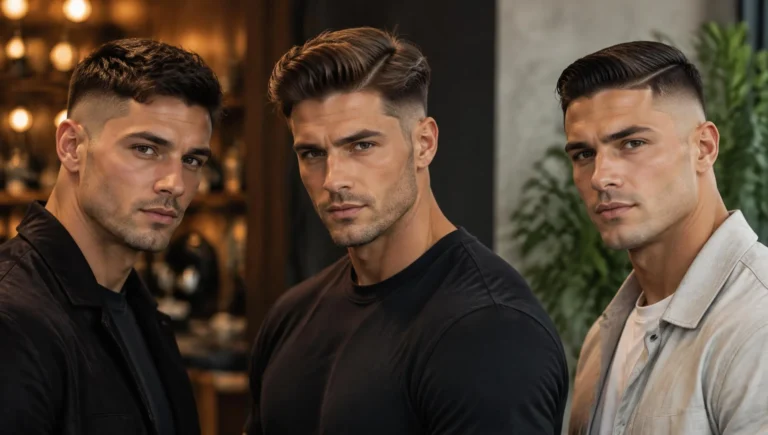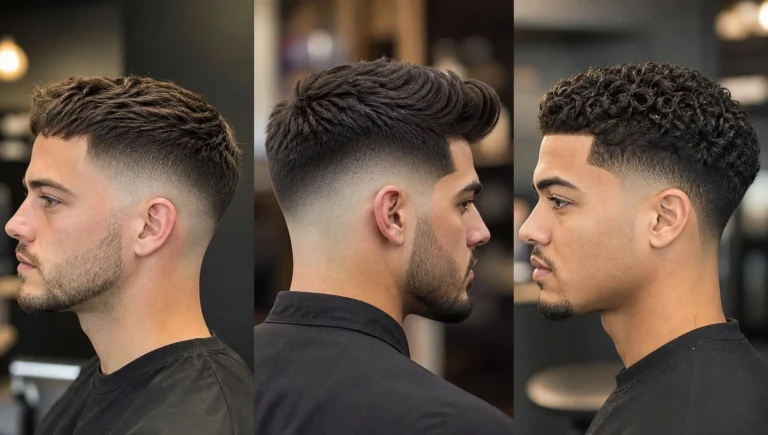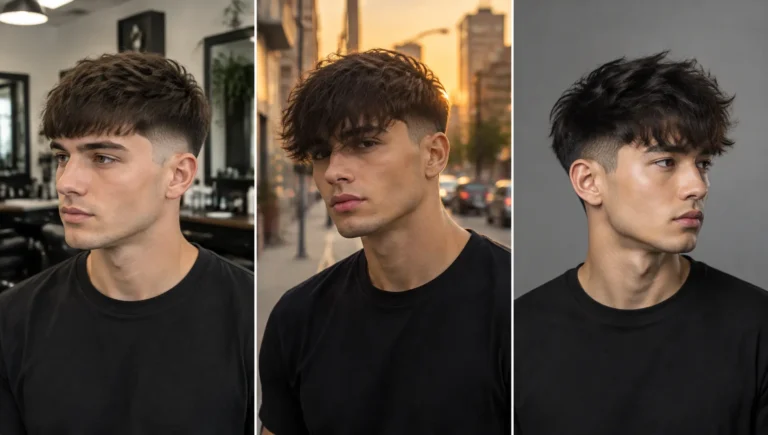
Low Taper Fade Straight Hair: 31 Best Hairstyles for Men in 2026

Straight hair has a reputation for being easy, but anyone with it knows the truth. It can fall flat, show every uneven line, and refuse to hold shape. A well-cut low taper fade solves a lot of that. It keeps the sides neat, leaves the top free to do whatever you like, and grows out without looking awkward.
This guide covers what the cut is, who it suits, 31 style ideas, exactly what to say to your barber, and how to style and maintain it at home. Use it as a menu: skim the styles, pick two or three you like, and bring them to your next appointment.
What Is a Low Taper Fade for Straight Hair?
A low taper fade is a haircut where the hair gets gradually shorter as it moves down toward the ears and the nape of the neck. The key word is “low.” The shortening starts just above the ear and follows the natural hairline around the back, so most of the sides stay on the longer side.
It sits between two ideas that people often mix up:
- A taper blends the length smoothly, usually down to a very short edge or a light shadow of hair.
- A fade blends all the way down to skin or very close to it.
A low taper fade combines both. You get a clean, soft blend at the bottom edge without the dramatic bald look of a high fade.
On straight hair, this matters more than on curly or coily textures. Straight strands lie flat, so any harsh line or patchy blend is easy to spot. A low taper gives a forgiving, gradual transition that looks tidy on day one and still looks decent three weeks later.
Why Is Low Taper Fade Straight Hair So Popular?
There are a few simple reasons.
First, it works almost anywhere. You can wear it in an office, at a wedding, at the gym or on a night out. It looks sharp without looking like you tried too hard.
Second, it pairs with nearly every top style. Fringes, side parts, slick backs, quiffs and mullets all sit comfortably on top of a low taper. Barbers love it because it is a reliable base. Clients love it because they can change the top without changing the whole cut.
Third, it suits the current mood in men’s hair. Over the last few years, trends have moved toward softer, more natural shapes with texture and movement, rather than hard skin fades with heavy contrast. A low taper fits that shift well.
Who Should Get a Low Taper Fade with Straight Hair?
This cut suits a wide range of men, but it is especially good for:
- Students and young professionals who want a haircut that works in more than one setting.
- Men who prefer a subtle look and find high fades too bold.
- Anyone with a conservative dress code at work, since the sides stay neat but not shaved.
- Men growing out their hair who still want to look put together during the awkward stages.
- Guys with a receding or thinning hairline who want a trimmed edge that does not draw attention to it.
It may not be ideal if you want a dramatic skin-bald contrast or a very military look. In that case, a mid or high fade will do more.
Benefits of Low Taper Fade Straight Hair
The practical benefits are what make this cut stick around:
- Flexible styling. One base cut, many looks on top.
- Cleaner neckline. A tapered nape makes the cut look fresh even when the top is messy.
- Gentler grow-out. Because the sides are not shaved down, there is no sharp “overgrown” moment.
- Lower contrast. It looks natural rather than harsh, which many men find easier to wear every day.
- Easy upkeep at home. You do not need much product or time once the top is cut well.
31 Best Low Taper Fade Straight Hair Hairstyles
Each style below has a different feel and a different set of use cases. Read the maintenance notes, because some need a barber visit every three weeks and others will happily go five or six.
Classic Low Taper Fade Straight Hair

This is the foundation. The sides are tapered neatly around the ears and neckline, and the top is kept about 3 to 4 cm, combed or brushed to one side. It is clean, balanced and almost impossible to get wrong.It suits most face shapes and hair thicknesses. Ask for a natural taper with scissor blending on top so it does not look boxy. Use a light matte product and you are done in two minutes.
Low Taper Fade with Textured Fringe Straight Hair

Here the top is cut slightly longer at the front and chopped into the ends with a razor or point cutting. That breaks up the weight so straight hair does not hang like a curtain.It is a great choice if you want a relaxed look with some edge. Ask for a “textured fringe, cut with some movement,” and finish with texture powder or a matte paste.
Blowout Low Taper Fade Straight Hair

The blowout is all about volume. The top is cut longer, about 6 to 9 cm, then blow-dried up and back for a full, soft shape. The low taper keeps the sides tight so the volume looks intentional.This works best on medium to thick straight hair. You will need a hairdryer and a bit of sea salt spray. Fine hair can still manage it with a volumizing prep product.
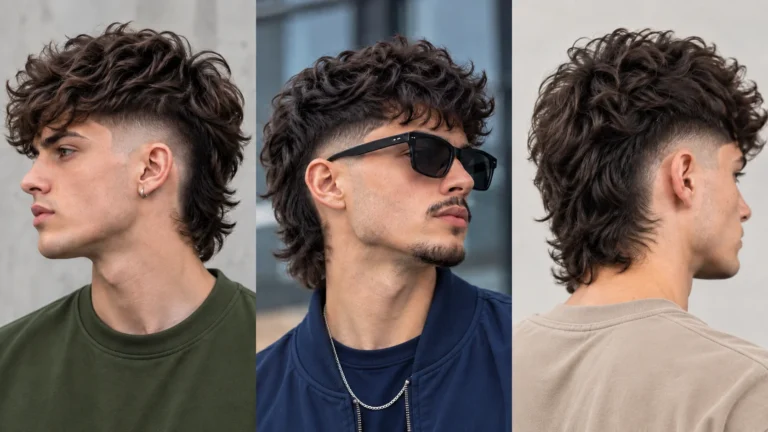
Low Taper Fade Mullet Straight Hair

Short on the sides, longer at the back, tidy around the ears. The modern take on the mullet is softer than the 1980s version, and straight hair gives it a sleek, flowing line.Ask for a “low taper with a short, textured mullet” and be clear about how long you want the back to go. Expect to trim the back every four to six weeks to keep the shape.
Blonde Low Taper Fade Straight Hair

Bleached or naturally light hair makes the taper look softer, because the contrast between top and sides is lower. It also shows texture beautifully.The trade-off is care. Bleach dries straight hair out, so use a purple shampoo occasionally and a good conditioner. Tell your barber you have coloured hair so they can plan the cut around it.
Short Low Taper Fade Straight Hair

For a minimalist approach, the top is kept to roughly 2 to 3 cm. It is a clean, low-effort cut that pairs well with a beard.You can style it forward, up, or just let it fall naturally. Because it is short, it needs a trim every three weeks to hold its shape.
Thin Low Taper Fade Straight Hair

If your hair is thin, the goal is to create the look of fullness. Keep the top at a medium length so the strands have weight, and avoid cutting it too short where the scalp may show through.Ask for a soft taper rather than a very tight one. Use a light volumizing powder instead of a heavy wax, which can clump and expose the scalp.
Low Taper Fade Straight Hair for Asian Men

Many Asian men have naturally straight, thick, dark hair that grows downward. A low taper helps control the sides, which can flare out if left alone.Popular versions include the two-block style with a long top, the soft fringe, and the comma shape. Ask your barber to thin out the density on top so it does not look heavy. A light clay will keep the shape.
Low Taper Fade Middle Part Straight Hair

The middle part has returned in a big way, and it looks especially clean on a taper. The hair splits down the center and falls to each side, with the sides tapered neatly.It needs hair that is at least 7 to 10 cm on top. It suits oval and square faces best. A little cream or sea salt spray keeps the strands in place without a stiff look.
Burst Low Taper Fade Straight Hair

A burst fade curves around the ear, creating a semicircle of short hair that “bursts” outward, while the back stays longer. It pairs well with a mullet or longer back.On straight hair, the shape is easy to see, so it must be cut precisely. Ask for a “low burst taper” and point to the curve around the ear in a photo.
Fluffy Low Taper Fade Straight Hair

Think soft, airy and a little bit boyish. The top is cut with layers and dried with a round brush or fingers for lift.It works on fine to medium hair and photographs well. Avoid heavy wax. A blast of cool air from the dryer will set the volume.
Long Low Taper Fade Straight Hair

Here the top goes long, past the ears or even to the chin, while the low taper keeps the sides and neck tidy. It is a nice option for men who want length but not a shaggy mess.Use a leave-in conditioner and a wide-tooth comb. Plan to see your barber every six weeks to remove split ends and clean up the neckline.
Messy Fringe Low Taper Fade Straight Hair

This is the “I just woke up like this” version, with a choppy, uneven fringe. It works because the taper below keeps everything looking deliberate.Ask for lots of texture and point cutting. Style with texture powder and a little sea salt spray. Do not comb it neatly, because the mess is the point.
Low Taper Fade Long on Top Straight Hair

Slightly different from the long style above, this one keeps the top about 8 to 12 cm for versatility. You can push it back, part it, or let it fall forward.It rewards patience, because the top will need time to grow. A matte clay gives hold without shine.
Low Taper Fade Straight Hair Front Style

This version is about how the hair sits at the front: a clean hairline, a tidy temple taper, and a top that is styled forward or slightly up. When someone looks at you head-on, the shape is balanced.Ask for the taper to follow your natural temple line so it does not look pushed back. Sideburns should be tidy and even.
White Men’s Low Taper Fade Straight Hair

Many white men have fine to medium straight hair, which can look limp without good cutting. A low taper with some texture and a slightly longer top adds body.Classic options include the side part, the quiff and the textured crop. Look for a barber who will thin out the top slightly and use a salt spray or powder for grip.
Low Taper Fade Straight Hair with Design

A hair design adds a shaved line, a part, or a small pattern into the taper. It can be a simple razor part or a more detailed shape.Because straight hair shows lines clearly, the design pops. Ask for a “hard part” with a thin line, and expect to return every two to three weeks to keep it crisp.
Messy Top Low Taper Fade Straight Hair

Similar to the messy fringe, but the mess is all over the top rather than concentrated at the front. It is loose, relaxed and low maintenance in the morning.Ask for choppy layers and keep the length around 5 to 7 cm. Scrunch in a pea-sized amount of paste and leave it alone.
Slick Back Low Taper Fade Straight Hair

Straight hair slicks back beautifully, giving a polished, almost classic look. The taper keeps the sides smooth so the top stands out.You need at least 6 to 8 cm on top. Use a light pomade for shine or a cream for a natural finish, and comb it back with a fine-tooth comb while the hair is slightly damp.
Mid-Low Taper Fade Straight Hair

This is a compromise between a low and a mid taper. The blend starts slightly above the ear, so it is a bit more visible than a pure low taper but not as bold as a mid fade.It is a good option if you want a hint more contrast. Tell your barber, “somewhere between low and mid,” and show a photo.
Hispanic Low Taper Fade Straight Hair

Many Hispanic men have thick, straight to slightly wavy hair, which suits a low taper well. A tapered neckline and sharp edges give a polished finish.Popular looks include the brush-up, the slick back and the textured fringe. Ask for a sharp lineup, but keep the top thick enough to style.
Wavy Style with Low Taper Fade Straight Hair

If your straight hair has a slight bend, you can encourage it into loose waves. Keep the top medium to long, apply sea salt spray, and let it air-dry or diffuse it gently.This is more of a styling choice than a cut, which means a regular low taper works as the base. Do not expect tight curls. Think soft movement.
Modern Mullet Low Taper Fade Straight Hair

This is the cleaner, more refined cousin of number four. The back is only slightly longer, the top has shape, and the taper is subtle.It suits men who like the mullet idea but do not want to be too dramatic. Ask for “just a hint of length in the back” and a neat nape.
Front View Low Taper Fade Straight Hair

Some men care most about how the haircut looks from the front, especially for photos and video calls. This version focuses on a balanced hairline, even temples and a top that frames the face.Ask your barber to check symmetry from the front, not only from the side. A small asymmetry that you cannot see in the mirror can stand out on camera.
Edgar Low Taper Fade Straight Hair

The Edgar cut, also called the Takuache, has a blunt, straight fringe cut across the forehead and a taper or fade at the sides. It became popular in Latino communities and spread widely online.It needs thick, straight hair to look right. Ask for a straight horizontal fringe and a low taper. Expect a trim every three to four weeks to keep the line sharp.
Low Taper Fade Straight Thick Hair

Thick hair is powerful but heavy. A low taper helps reduce bulk at the sides so the head does not look too wide.Ask your barber to remove weight with thinning shears or point cutting. A good cut here means you can use less product, because the hair already sits well.
Brush Up Low Taper Fade Straight Hair

The top is brushed upward and slightly back, creating height. It is a confident look that suits square and round faces, since the height adds length.Dry your hair upward with a dryer and a small brush, then set with clay. Keep the top around 5 to 7 cm for easy brushing.
Side Part Low Taper Fade Straight Hair

A timeless pairing. The part is on one side, either defined with a razor line or soft and natural. The taper keeps everything tidy.It works for office settings, weddings and everyday wear. Find your natural part by brushing your hair back and noticing where it falls.
Modern Low Taper Fade Straight Hair

This is a catch-all for a contemporary, slightly textured top with a clean low taper. Think natural movement, a soft shape and no hard lines.It is the best choice if you do not want to commit to a named style. Tell your barber, “something modern, low maintenance, with a bit of texture,” and let them suggest the top.
Low Taper Fade Straight Hair with Quiff

The quiff lifts the front of the hair up and back, adding height at the hairline. On straight hair, it looks sleek and bold.You need about 7 to 10 cm at the front. Blow-dry upward, use clay or light pomade, and finish with a spritz of light hairspray if your hair is slippery.
How to Ask Your Barber for a Low Taper Fade Straight Haircut
The best way to avoid a bad haircut is to be specific. Bring one or two photos, and describe these four things: where the taper starts, how short it goes at the bottom, how long the top should be, and how you want the top finished.
A simple script: “I would like a low taper fade, starting just above the ear and following my hairline around the back. Keep the top about 5 centimeters, textured, with a side part. I want it natural, not too tight.”
Recommended Clipper Guard Numbers
Barbers vary, but a typical low taper uses:
- #0 or #1 at the very bottom, around the ear and neckline.
- #2 in the middle of the blend.
- #3 or #4 at the top of the taper, where it meets the longer hair.
You do not have to remember the numbers. If you do want to give guidance, say “blend to about a number 1 at the bottom.” For a softer look, ask the barber to leave a little shadow instead of going to skin.
Best Fade Height for Straight Hair
A low fade is usually the safest option for straight hair. It looks natural and forgives small mistakes. A mid taper adds contrast, which suits men with thick hair or square faces. A high fade shows the most skin and can look too severe on fine, straight hair, since the top often lies flat against the head.
Best Hair Length on Top
The right length depends on the style you want:
- 2 to 4 cm: short, clean and low effort.
- 5 to 7 cm: the most versatile range. Good for side parts, textured fringes and brush ups.
- 8 to 12 cm: blowouts, quiffs, middle parts and slick backs.
- Past 12 cm: long styles and mullet shapes.
Best Face Shapes for Low Taper Fade Straight Hair
The shape of your face does not rule anything out, but it changes which top styles look best.
Low Taper Fade Straight Hair for Oval Faces
Oval faces are balanced, so almost anything works. A side part, a textured fringe or a slick back all look good. Keep the sides clean and avoid anything that hides the face entirely.
Low Taper Fade Straight Hair for Square Faces
A square jaw is already strong. Soften it with a textured top and a slightly rounded shape, such as a messy fringe or a brush up. A mid-low taper adds definition without making the face look harsher.
Low Taper Fade Straight Hair for Round Faces
Add height and keep the sides tight. A quiff, a brush up or a pompadour-style top lengthens the face. Avoid a heavy fringe that cuts straight across, which can make the face look wider.
Low Taper Fade Straight Hair for Diamond Faces
Diamond faces have wide cheekbones and a narrow forehead and chin. A fringe or a messy top adds width at the forehead and balances the shape. Keep the sides from being too tight at the cheekbones.
Low Taper Fade Straight Hair for Heart-Shaped Faces
With a wide forehead and a narrow chin, a side-swept fringe or a textured top softens the upper face. A low taper keeps the lower half looking fuller, and a bit of beard can balance the chin.
Best Hair Types for a Low Taper Fade
Low Taper Fade for Thick Straight Hair
Thick hair holds shape well, but it can look bulky. Ask for thinning or texturizing, and a taper that is clean but not too tight. Slick backs, side parts and brush ups all work.
Low Taper Fade for Thin Straight Hair
Keep the top at a medium length and avoid very short cuts that show the scalp. Light powders and sea salt spray give grip and volume. Avoid greasy products, which weigh the hair down.
Low Taper Fade for Fine Hair
Fine hair behaves similarly to thin hair, but the issue is strand width rather than number of strands. It can feel soft and slippery, so texture products help a lot. Ask for blunt-cut ends to make the hair look thicker.
Low Taper Fade for Medium-Length Straight Hair
This is the sweet spot. Medium length, around 5 to 8 cm on top, gives you the most styling options without much effort. It is also the easiest length to maintain between haircuts.
Pros and Cons of Low Taper Fade Straight Hair
| Pros | Cons |
| Works for most face shapes and hair types | Needs a trim every 3 to 4 weeks to stay sharp |
| Flexible top styling | Poor blending by an inexperienced barber is very obvious on straight hair |
| Professional and casual | Less dramatic than a high fade |
| Grows out gracefully | Fine hair may need styling help to avoid looking flat |
| Easy to style at home | Regular barber visits add up in cost |
Overall, the pros outweigh the cons, as long as you find a barber who is comfortable with fades.
Best Styling Products for Straight Hair with a Low Taper Fade
Straight hair is smooth, so it needs products that add grip and texture rather than just hold.
Matte Clay
Clay gives strong hold with no shine. It is great for textured fringes, brush ups and anyone who wants a natural look. Warm a small amount between your palms and work it through dry hair.
Texture Powder
Texture powder is ideal for fine and thin hair. It adds lift and grip without weight. Sprinkle at the roots, then tousle with your fingers.
Sea Salt Spray
Spray it on damp hair before blow-drying to add body and a beachy feel. It works well for fluffy, wavy and messy styles. Use it sparingly, because too much can leave hair feeling dry.
Hair Wax
Wax offers flexible hold and a little shine. It suits shorter styles and men who like to restyle during the day. Use a small amount, since straight hair can look greasy fast.
Light Pomade
Pomade is the classic choice for slick backs and side parts. Water-based versions wash out easily. Choose a light formula if your hair is fine.
How to Style Low Taper Fade Straight Hair Step by Step
Step 1: Wash and Condition Your Hair
Start with clean hair. Use a gentle shampoo and always follow with conditioner, focusing on the ends. Clean hair holds styles better than greasy hair.
Step 2: Towel-Dry Your Hair
Pat your hair dry rather than rubbing it. Rough rubbing causes frizz and breakage. Leave it slightly damp, not soaking.
Step 3: Blow-Dry in Your Desired Direction
Use medium heat and point the dryer in the direction you want the hair to go. For a quiff, dry upward. For a fringe, dry forward. A small brush or your fingers can guide the shape.
Step 4: Apply a Suitable Styling Product
Pick a product that matches your goal and hair type. Start with a pea-sized amount, rub it between your palms and work it from back to front. You can always add more.
Step 5: Create Texture and Volume
Use your fingers or a comb to shape the hair. Pinch and twist the ends for texture. For volume, lift at the roots while the hair is still warm.
Step 6: Finish and Set Your Hairstyle
Use a cool blast from the dryer to lock the shape. If you need extra hold, finish with a light mist of hairspray. Check the side view in a mirror before leaving.
How to Maintain Low Taper Fade Straight Hair
How Often Should You Get a Trim?
Plan on every three to four weeks for a sharp look. If you do not mind a softer, grown-in taper, you can stretch it to five or six weeks. Longer styles, such as mullets, can wait a little longer, but the neckline will still need attention.
Best Hair-Washing Routine
Wash two to four times a week, depending on how oily your scalp gets. Straight hair tends to look greasy faster because oil travels down the smooth strand. Do not over-wash, because stripped hair produces even more oil.
How to Keep Straight Hair Healthy
Condition regularly, trim split ends, and protect your hair from heat. Use a heat protectant spray if you blow-dry often. A weekly conditioning mask helps if your hair is dry or coloured.
How to Prevent Flat or Greasy Hair
Use a clarifying shampoo once every couple of weeks to remove product build-up. Apply styling products to damp or dry hair in small amounts. Texture powder at the roots gives lasting lift on flat days.
Low Taper Fade Straight Hair vs. Textured Crop
These two are often mentioned together, but they are not the same thing. A textured crop is a style for the top of the head: short, choppy and forward-brushed. A low taper fade describes the sides and back.
In practice, many textured crops are cut with a low taper. The question is really about the top: do you want a short, forward crop, or something longer and more flexible? A crop is shorter, more casual and needs less styling. A low taper with a longer top gives you more options but demands more time.
Low Taper Fade vs. Mid Taper Fade for Straight Hair
| Feature | Low Taper Fade | Mid Taper Fade |
| Starting point | Just above the ear and nape | Around the temple level |
| Contrast | Soft, subtle | Moderate |
| Best for | Everyday, professional looks | Men who want a sharper, more defined cut |
| Grow-out | Very gentle | Slightly more noticeable |
| Works well with | Longer tops, fringes, side parts | Quiffs, slick backs, shorter tops |
Choose a low taper if you want a refined, understated look. Choose a mid taper if you want a bit more edge. If you cannot decide, the mid-low option in style 21 is a good compromise.
Celebrity Inspiration for Low Taper Fade Straight Hair
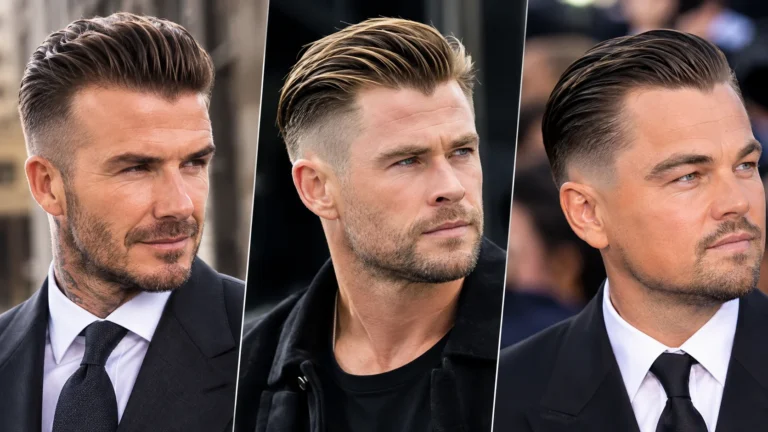
You do not need to copy a specific person, but it helps to look at how different public figures wear this kind of cut. Actors often go for a neat side part or a slightly textured quiff on a low taper for red carpet events. Musicians and K-pop idols tend to lean toward soft fringes, middle parts and blowouts. Footballers and athletes often choose short, textured tops with a clean taper that holds up during sport.
A smart way to use this: search for photos of someone with similar hair thickness, face shape and colouring to yours. Save two or three images and show them to your barber. Photos of people with a different hair type can mislead you, so choose references carefully.
Common Mistakes to Avoid with Low Taper Fade Straight Hair
Waiting Too Long Between Haircuts
A taper loses its shape quickly. Once the sides grow out, the blend turns fuzzy and the top starts to feel heavy. Book your next appointment before you leave the chair.
Using Too Much Styling Product
Straight hair does not need much. Too much product makes it look greasy, stiff or flaky. Start small and build up.
Skipping Conditioner
Straight hair may look healthy, but the ends dry out. Conditioner keeps them smooth and helps the hair move naturally.
Choosing the Wrong Hairstyle for Your Face Shape
A style that looks great on someone else can look off on you. Check the face shape section above, and ask your barber for an honest opinion.
Using Excessive Heat
Hot dryers and straighteners damage hair over time. Use medium heat, keep the dryer moving, and use a heat protectant.
Ignoring Your Hair Type
Thin hair, thick hair and fine hair behave differently. Ask for a cut that works with your natural texture rather than fighting it.
Frequently Asked Questions About Low Taper Fade Straight Hair
Conclusion
A low taper fade is one of the most practical haircuts a man with straight hair can ask for. It keeps the sides neat, gives your top style room to breathe, and grows out without drama. From the classic side part to the modern mullet, the options are wide enough to suit almost any taste.
When choosing, start with your hair type and face shape, then decide how much time you want to spend styling. Thick hair loves slick backs and brush ups. Thin or fine hair does better with medium lengths and texture. Round faces benefit from height, while square faces look good with softer tops.
If you are still unsure, go with a classic low taper, keep about 5 to 7 cm on top, and ask for light texture. It is hard to regret, easy to style, and a solid starting point for experimenting with the other 30 ideas. Take two reference photos to your barber, be clear about where you want the taper to start, and book your next trim before you leave.