Low Fade Haircuts: 40+ Best Styles & Styling Tips (2026)
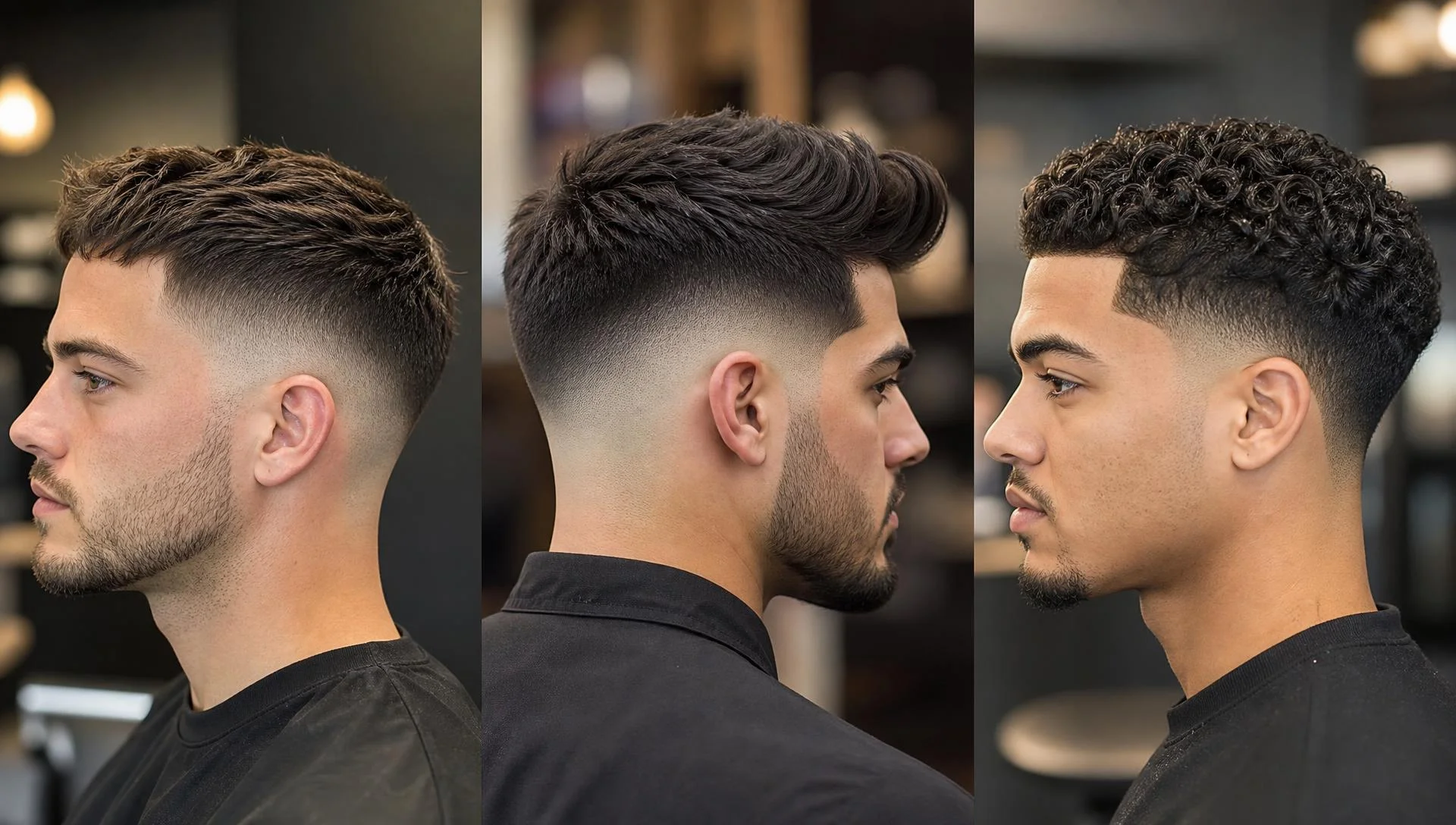
If you’ve been scrolling through barbershop photos or Instagram reels lately, chances are you’ve noticed one style showing up everywhere: the low fade haircut. It’s become the go-to choice for men who want something sharp but not over the top — a cut that works just as well in a business meeting as it does on a weekend out.
Unlike more dramatic fades that shave right up to the temples, the low fade keeps things subtle. The fading starts close to the ears and neckline, so most of your hair stays intact while the sides taper down smoothly. This clean and balanced Fade Haircut style is exactly why it’s stayed one of the most requested cuts year after year, and why it’s still dominating in 2026.
This guide covers everything — what a low fade actually is, more than 40 style variations to try, how to style it at home, what it costs, how to ask your barber for it, and the maintenance routine that keeps it looking fresh. Whether you’re getting one for the first time or just want new inspiration, you’ll find it here.
What is a Low Fade Haircut?
A low fade haircut is a style where the hair gradually shortens starting from a point just above the ears and around the back of the neckline, blending into the longer hair on top. The “low” simply refers to where the fade begins on your head — near the bottom, rather than higher up near the temples or crown.
Because the fade starts so low, most of the sides keep a bit of length before they taper down. This creates a softer, more gradual transition compared to other fade styles, which is part of why it reads as clean and professional rather than flashy.
The top can be styled in almost any way you like — short and textured, long and swept back, curly, or slicked down. That flexibility is one of the biggest reasons barbers recommend it to first-timers who aren’t sure what they want yet.
Low Fade vs Other Fade Types (Quick Overview)
Before going further, it helps to understand where the low fade sits compared to its cousins:
- Low fade – fading starts near the ears/neckline, minimal hair removed
- Mid fade – fading starts around the middle of the head, roughly at temple height
- High fade – fading starts near the top of the head, close to the crown
- Taper fade – a gentler version that doesn’t go as short at the bottom, often blended with any of the above
Think of it as a scale of boldness. Low fades are the most subtle, high fades are the most dramatic, and mid fades sit somewhere in between. None of them is objectively “better” — it comes down to how much contrast you want and what fits your lifestyle.
Why Men Choose a Low Fade Haircut
There are a few practical reasons this cut keeps winning people over:
It’s versatile enough to suit almost any hair type, from straight to curly to coily. It also grows out more gracefully than higher fades, so you’re not stuck making weekly barbershop trips just to keep it looking sharp. And because it doesn’t draw too much attention to the sides, it tends to work well in more conservative or formal environments — offices, interviews, weddings — while still looking current.
It’s also just an easy cut to live with. You don’t need a complicated routine to keep it looking good, and it pairs with almost any top style, which makes it a safe bet if you’re not ready to commit to something more extreme.
Low Fade vs High Fade vs Mid Fade Haircut
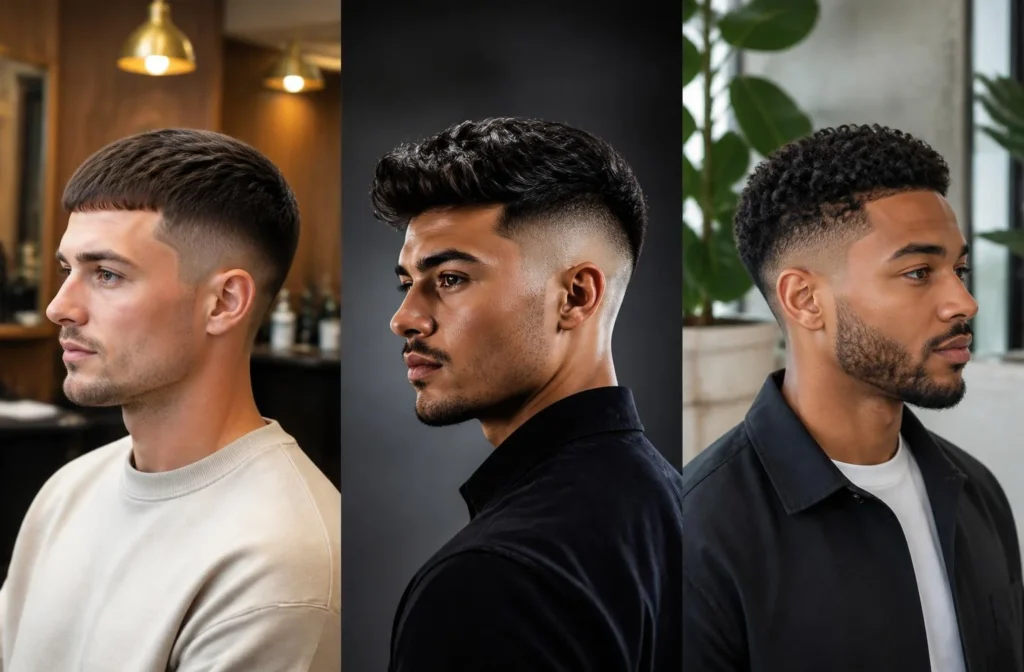
Choosing between these three often comes down to how much contrast you want and how much upkeep you’re willing to commit to. Here’s a closer look at each.
Low Fade Haircut – Pros & Cons
Pros: Subtle and professional-looking, works for almost every face shape, grows out without looking messy, lower maintenance since the fade line is less noticeable as hair grows, suits formal and casual settings equally well.
Cons: Less dramatic contrast if you’re after a bold, statement-making look. Not as eye-catching as higher fades if that’s what you’re going for.
High Fade Haircut – Pros & Cons
Pros: Bold, sharp contrast that draws attention to cheekbones and jawline, makes a strong style statement, pairs well with modern textured tops.
Cons: Grows out faster and needs more frequent touch-ups (usually every 1–2 weeks), can look untidy quickly if neglected, not always ideal for conservative workplaces.
Mid Fade Haircut – Pros & Cons
Pros: A nice middle ground — more noticeable than a low fade but not as intense as a high fade, works well with a wide range of top lengths, still fairly low maintenance.
Cons: Can be tricky for barbers to get perfectly even, may not suit very round or square face shapes as well as a low fade does.
Comparison Table: Low vs Mid vs High Fade
| Feature | Low Fade | Mid Fade | High Fade |
| Fade starting point | Above ears/neckline | Mid-temple area | Near crown/temple top |
| Contrast level | Subtle | Moderate | Bold |
| Maintenance frequency | Every 3–4 weeks | Every 2–3 weeks | Every 1–2 weeks |
| Best for | Formal & everyday wear | Balanced, versatile look | Statement, trendy styles |
| Grows out gracefully | Yes | Somewhat | No |
40+ Best Low Fade Haircut Styles for 2026
Here’s where things get fun. Below are the most popular low fade variations men are asking for this year, along with who each one suits best and how to keep it looking sharp.
Low Taper Fade Haircut
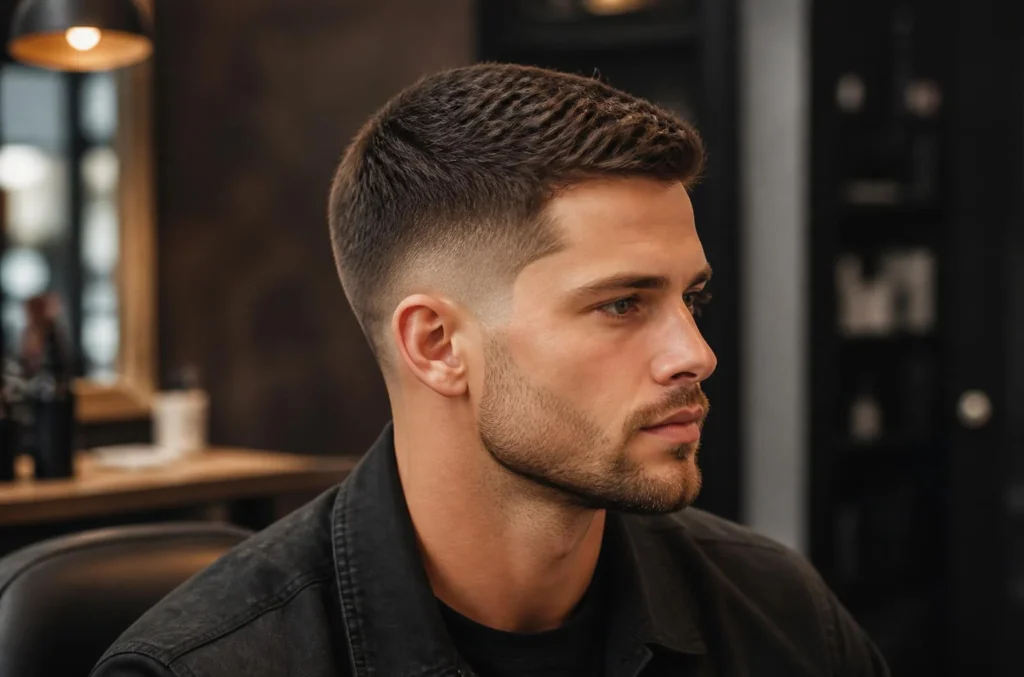
This is the most requested version of the low fade, and for good reason. The taper blends smoothly into the neckline without going all the way down to the skin, giving a soft, natural finish. It suits pretty much every hair type and face shape, which is why so many first-time fade clients start here. Maintenance is easy — a touch-up every 3 to 4 weeks keeps it looking fresh. Ask your barber for a “low taper, no skin, natural blend.”
Low Fade Curly Hair
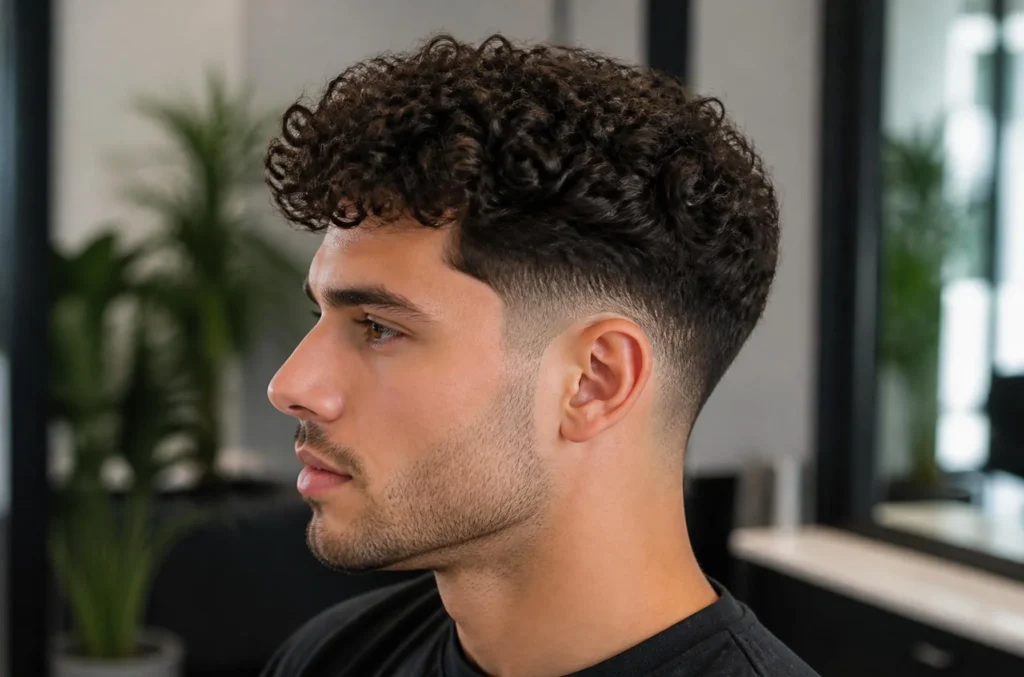
Curly hair and a low fade are a great match because the fade gives your curls room to breathe without overwhelming your face. The sides stay tidy while your curls keep their shape and bounce on top. It works best on medium-to-thick curls and suits round, oval, and square face shapes well. Keep curls hydrated with a curl cream to prevent frizz, and expect to trim every 3 weeks or so since curly hair can hide fade lines longer than straight hair.
Low Fade Haircut for Black Men
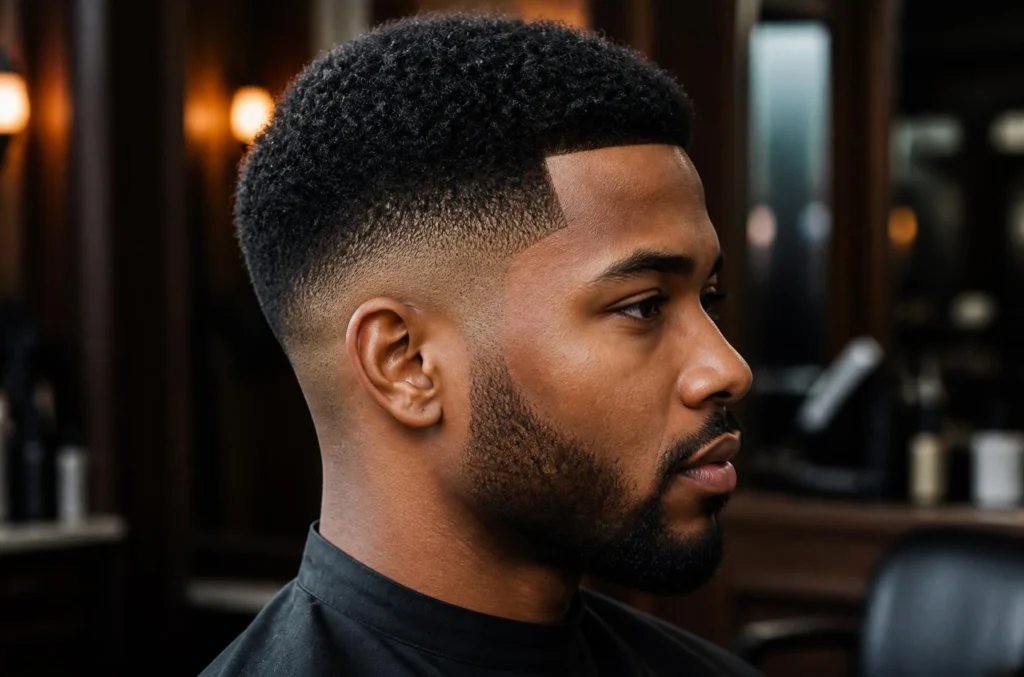
This version leans into sharp, clean lines paired with a low fade, often finished with a crisp lineup along the forehead. It’s a classic in barbershop culture and works exceptionally well with coily and tightly curled hair textures. The bold lineup is the real star here, so ask your barber to focus extra attention on sharpening the edges. Weekly lineup touch-ups keep the style looking fresh even between full haircuts.
Low Skin Fade Haircut
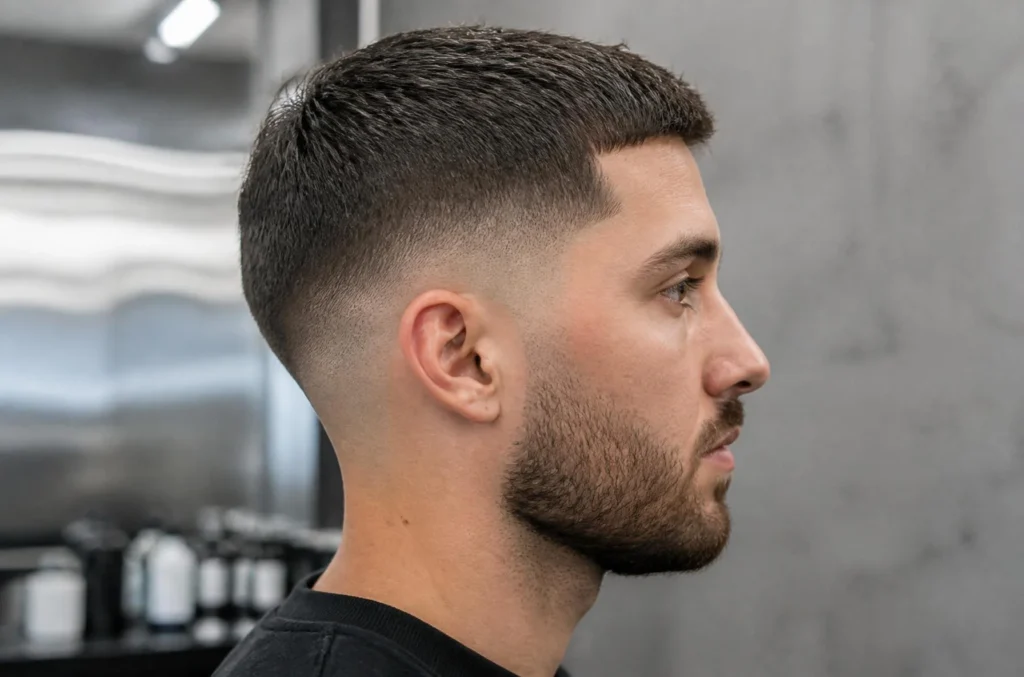
Unlike the taper, a skin fade goes all the way down to bare skin at the bottom, creating a much sharper contrast against the top. It’s a bolder take on the low fade while still keeping the fade positioned low on the head. This one suits thicker hair types especially well, since the contrast against thick top hair looks more defined. It does need slightly more frequent maintenance than a taper — every 2 to 3 weeks — since the skin grows back visibly faster than tapered hair.
Military Low Fade Haircut
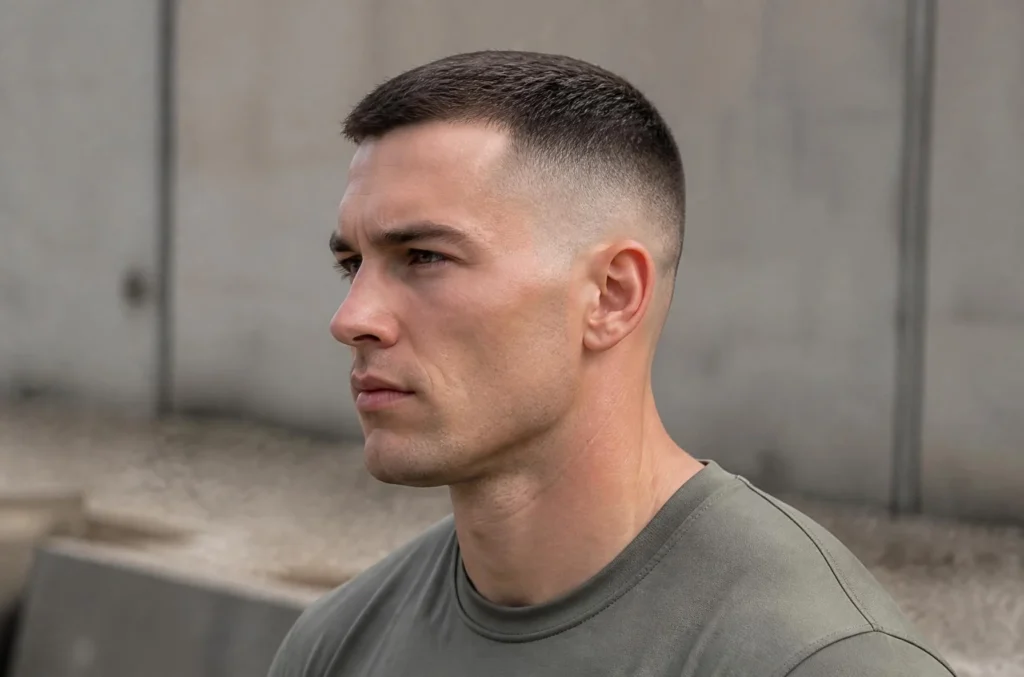
Clean, disciplined, and about as low-maintenance as fades get. The sides are kept very short and fade low, while the top stays modest in length — usually under two inches. It’s a favorite among men in professional or service-oriented jobs where a neat, no-fuss look matters. There’s barely any styling required beyond a comb-through, and regular trims every 3 to 4 weeks keep it sharp.
Undercut Low Fade Haircut
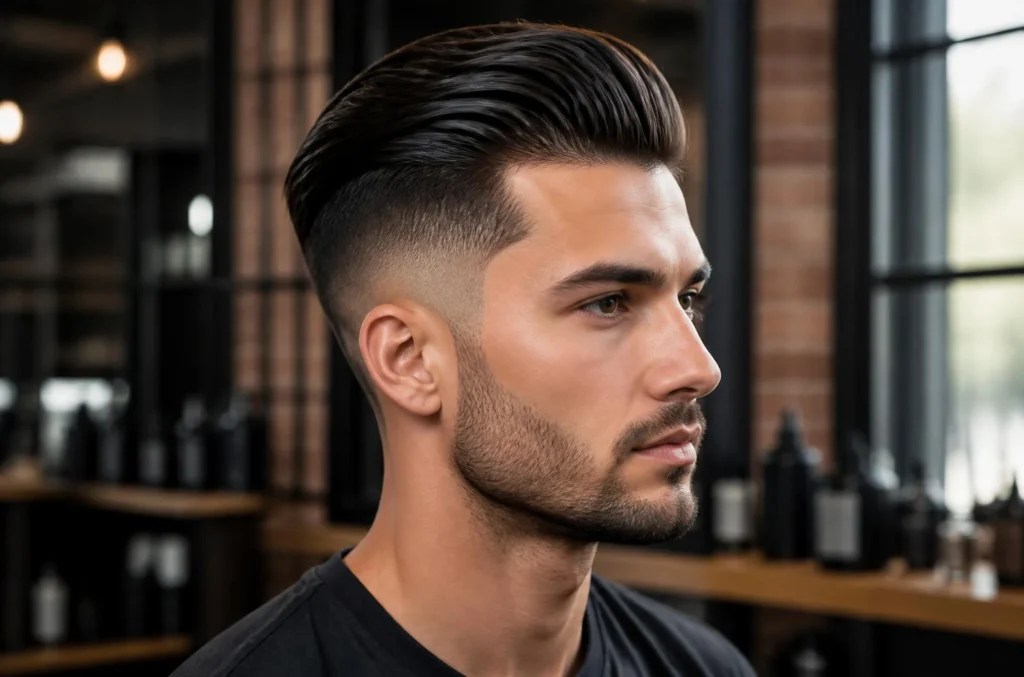
This combines a disconnected undercut with a low fade underneath, so the sides are noticeably shorter than the top, which stays long enough to style in different directions. It gives you more flexibility than a standard fade — you can slick it back, push it forward, or leave it textured. Works well with straight to wavy hair. A strong-hold pomade or gel is your best friend for keeping the top in place through the day.
Low Fade for Straight Hair
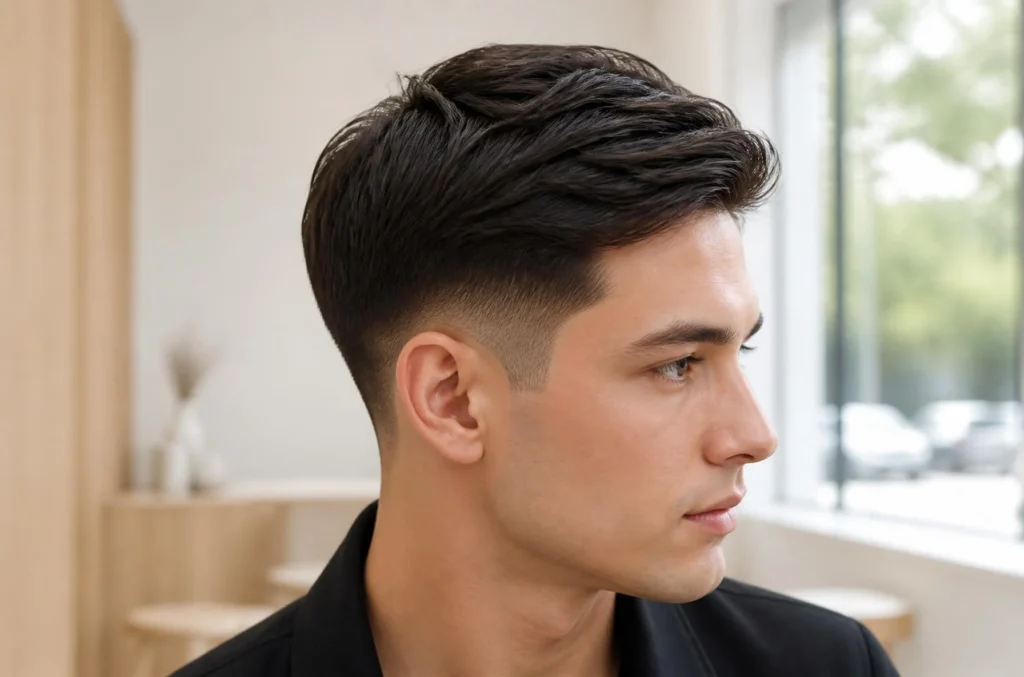
Straight hair naturally lies flat and smooth, which makes the transition from the fade to the top look extra clean and polished. This version tends to suit oval and heart-shaped faces particularly well, since the sleekness elongates the face slightly. A lightweight wax is enough to keep it neat without flattening the natural shine straight hair already has.
Low Bald Fade Haircut
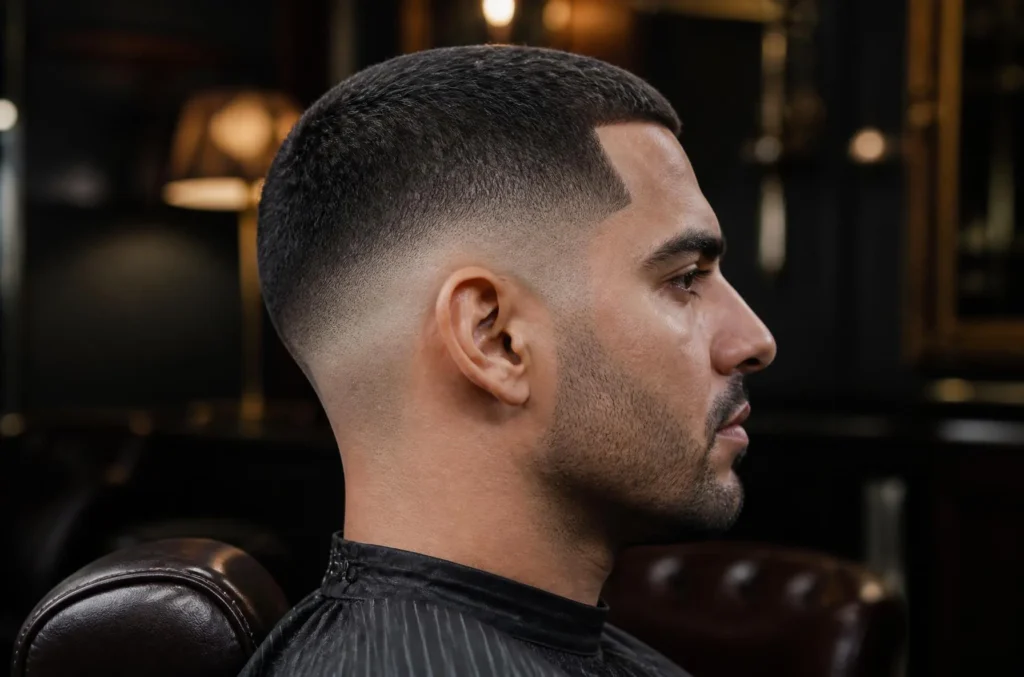
Sometimes called a “skin fade” as well, this pushes the fade all the way to the skin at the very bottom while keeping the transition point low on the head. It’s bold without being loud, since only a thin strip near the neckline actually goes bare. Thick and coarse hair types show this off best. Keep the edges lined up weekly for the cleanest look.
Low Drop Fade Haircut
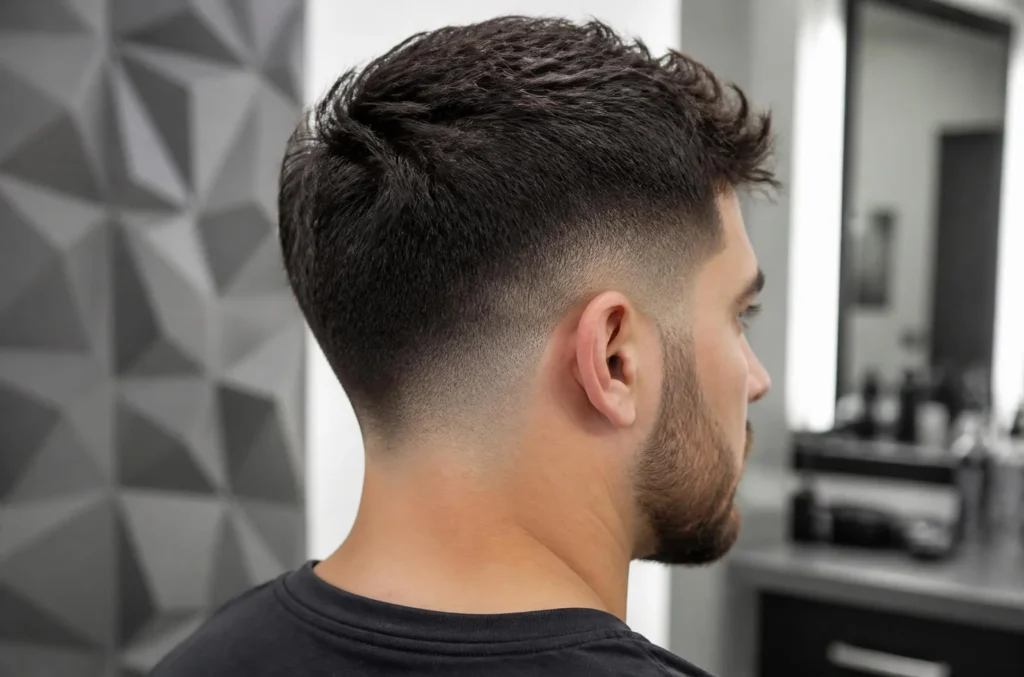
The fade curves downward slightly behind the ear instead of running in a straight line, adding a bit of visual interest to an otherwise classic cut. It works particularly well with textured or slightly longer top styles, since the curve draws the eye naturally around the head. This is a good option if you want something a little different without straying too far from a traditional low fade.
Low Fade Comb Over
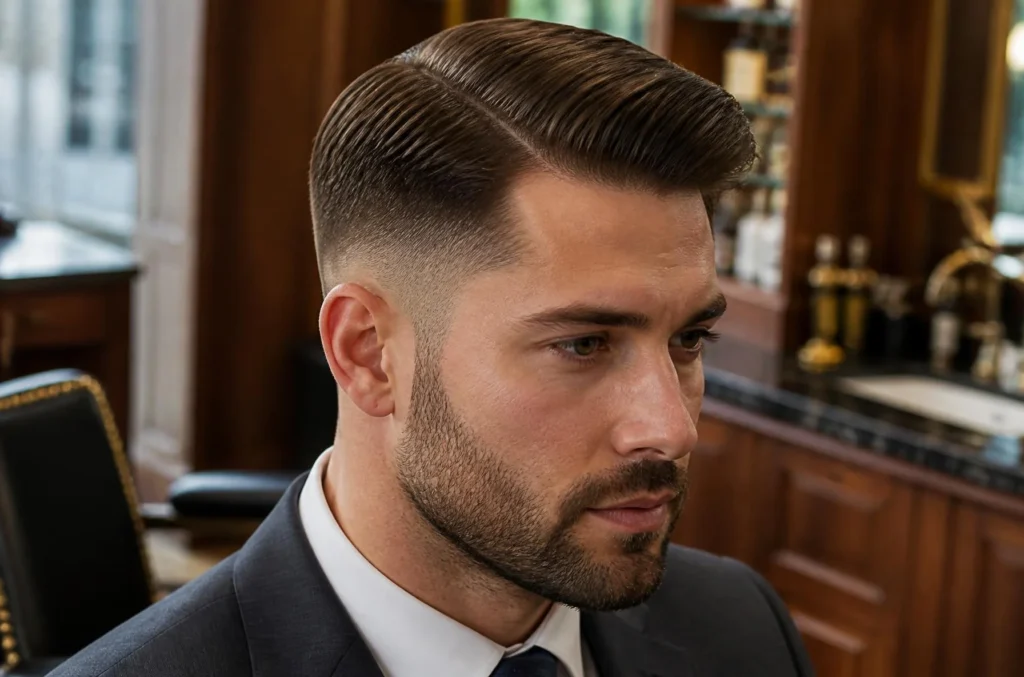
A longer top styled to one side, paired with a low fade underneath for contrast. It reads as polished and put-together, which is why it’s a favorite for office environments and formal events. Oval and square face shapes tend to suit it best. A medium-hold pomade gives you that classic comb-over shine without looking greasy.
Medium Length Low Fade
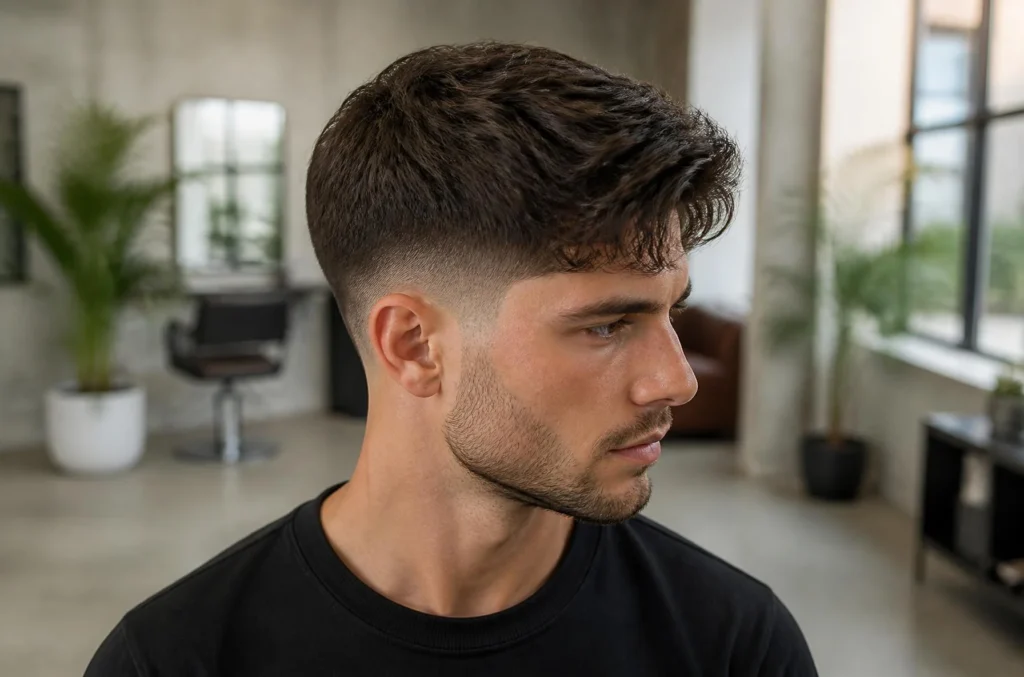
If you’re not ready to commit to a short top, this version keeps a few inches of length up top while fading the sides low. It gives you room to experiment — slicked back one day, textured and messy the next. Thick, straight hair holds this style especially well. A round brush and blow dryer can add lift if you want extra volume.
Low Fade with Long Hair
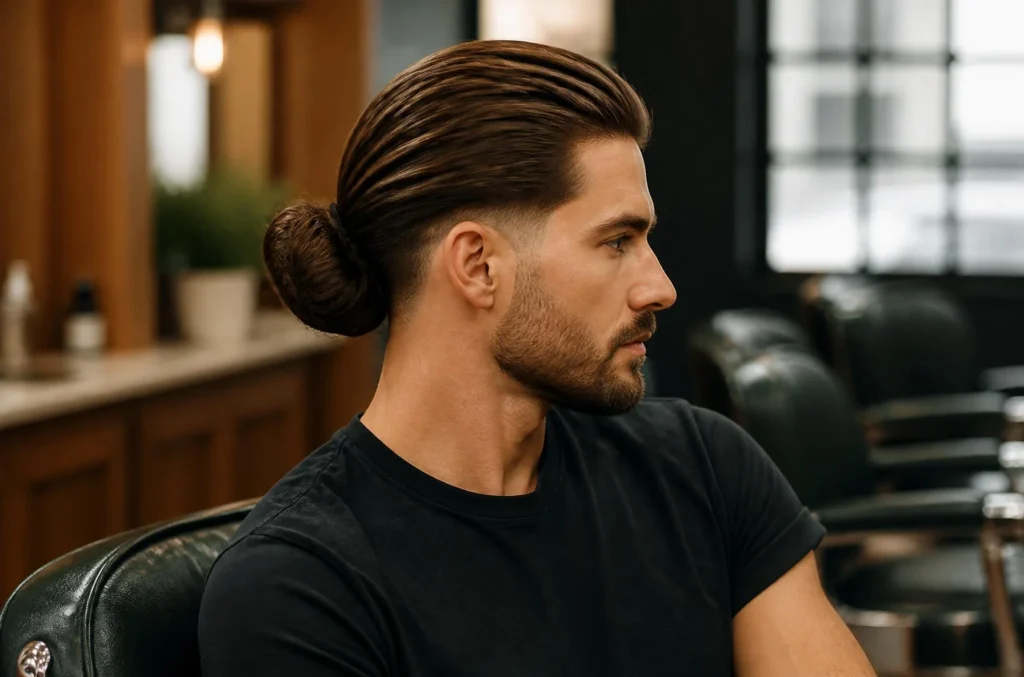
For men who don’t want to sacrifice length at all, this pairs a noticeably longer top — think three inches or more — with a low fade on the sides only. The contrast between the long top and tapered sides is what makes this style stand out. It works with straight, wavy, and curly hair alike, and can even be tied back into a small ponytail or bun on days you want it out of your face.
Low Fade Buzz Cut
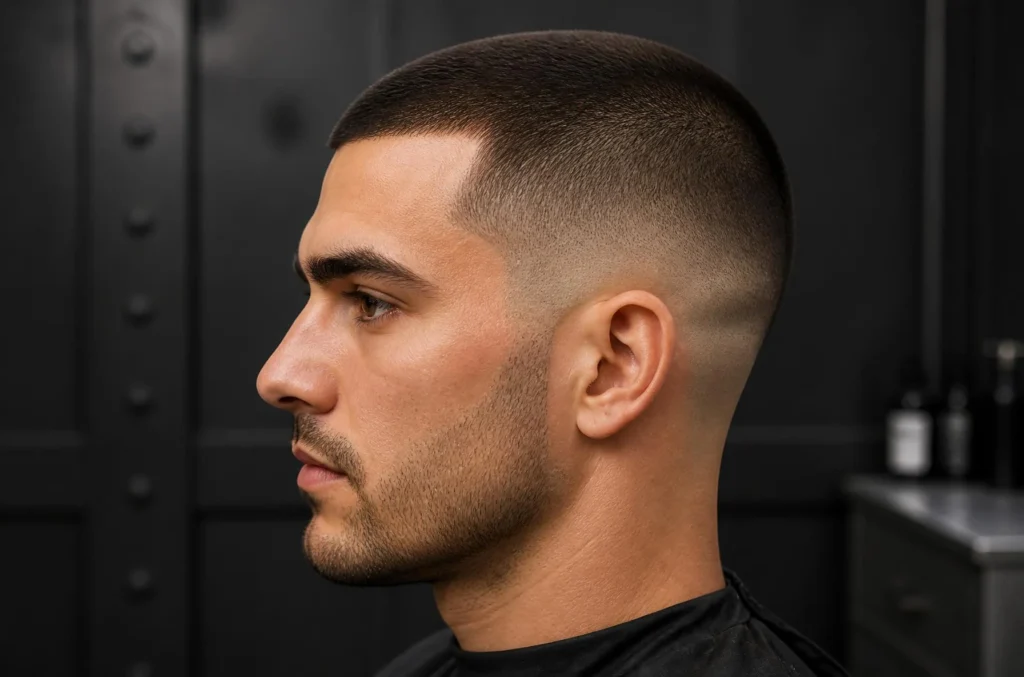
About as simple as it gets — a very short, even buzz on top with the sides fading low. It’s ideal if you want something that requires almost zero daily styling. Great for hot climates or active lifestyles where sweat and humidity make longer styles impractical. Just keep the edges maintained every 2 to 3 weeks and you’re set.
Crew Cut Low Fade
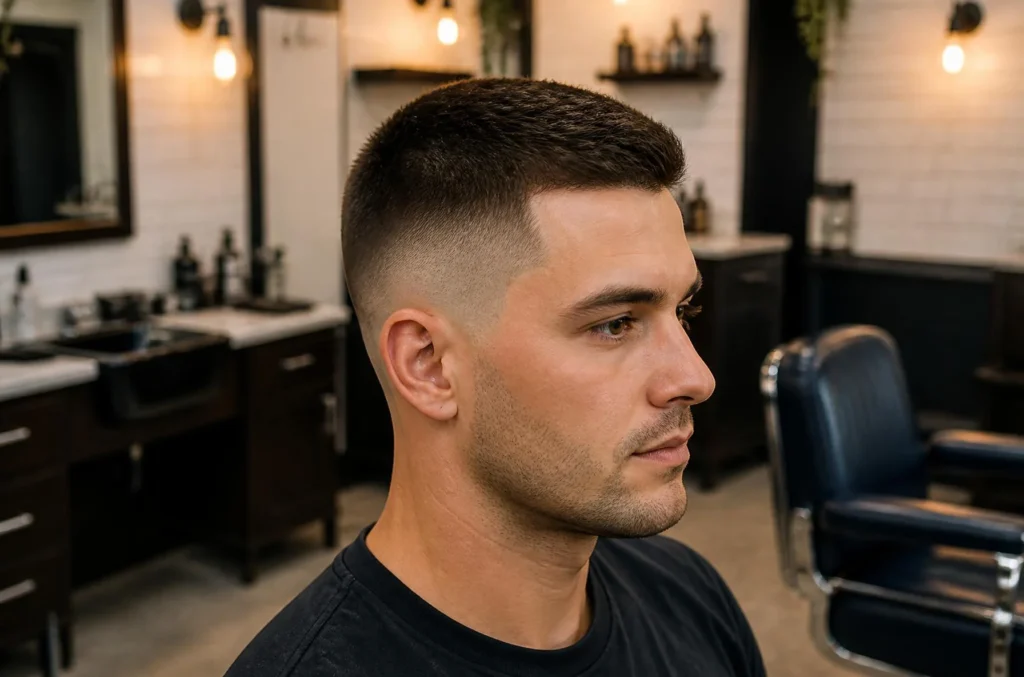
The crew cut keeps a little more length on top than a buzz cut, tapering shorter toward the front, and pairs it with a low fade on the sides. It’s a timeless combination that works in almost any professional setting. Suits nearly every face shape and hair type, and needs minimal product — just a light matte paste if you want to add texture.
Classic Low Fade Haircut
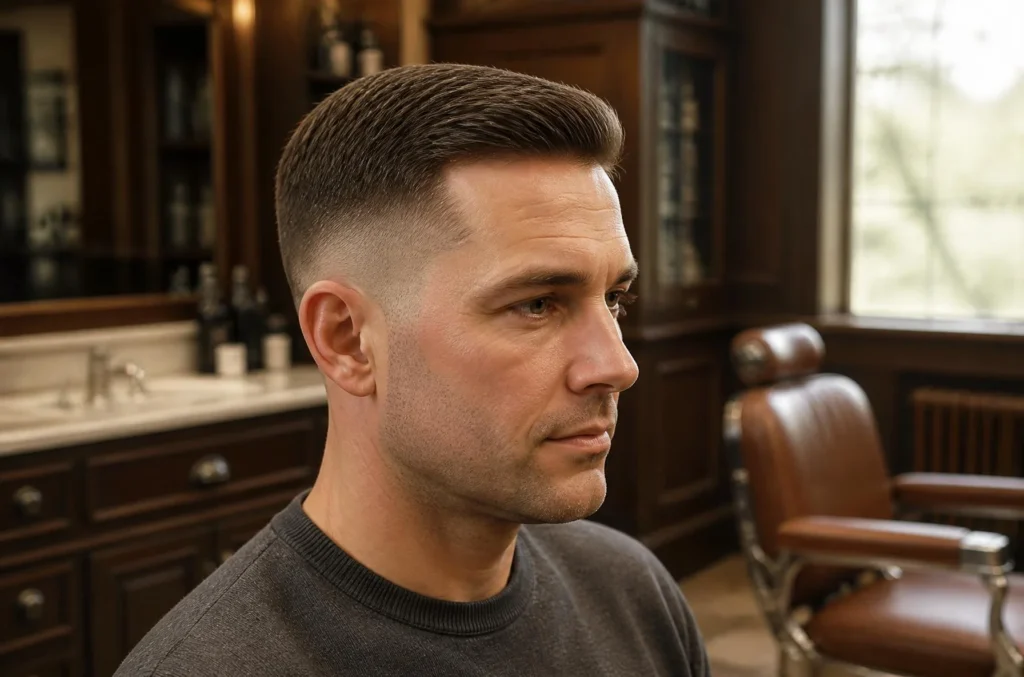
This is the traditional, no-frills version — a smooth, even fade from sides to top with no dramatic curves, patterns, or exaggerated length differences. It’s the safest choice if you’re unsure what you want and just need something clean that will always look appropriate. Works with any hair type and rarely goes out of style.
Low Fade Circle Haircut
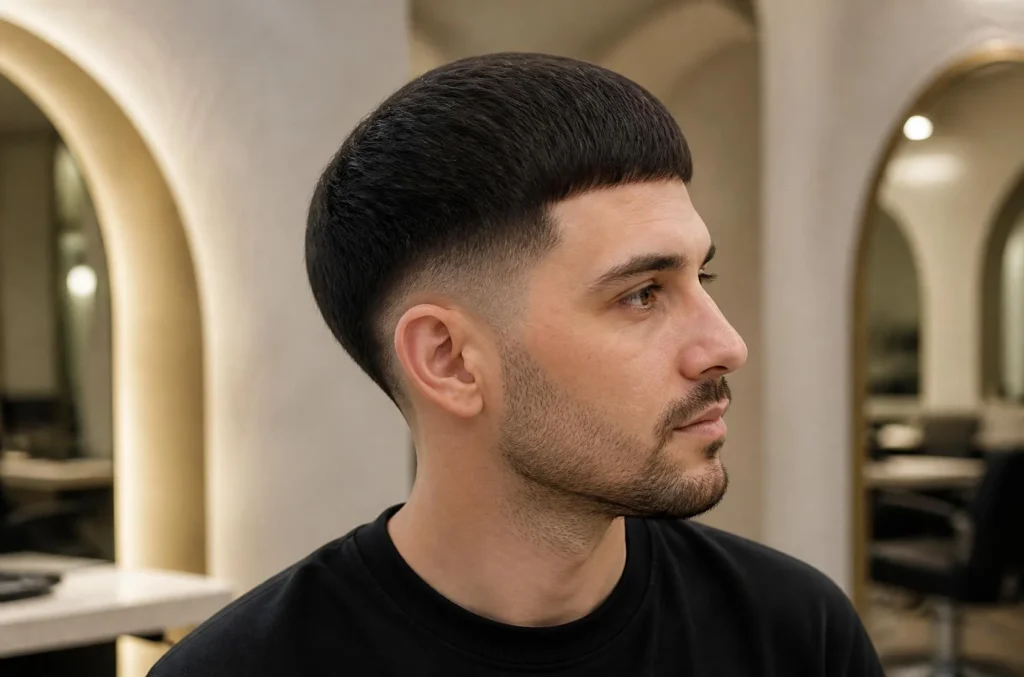
A more unusual take where the fade line follows a subtle circular pattern around the head rather than a straight taper. It adds a bit of visual flow and works especially well with textured or wavy top styles. This one takes a more skilled barber to execute well, so it’s worth asking to see examples of their previous work first.
Low Fade for Round Face
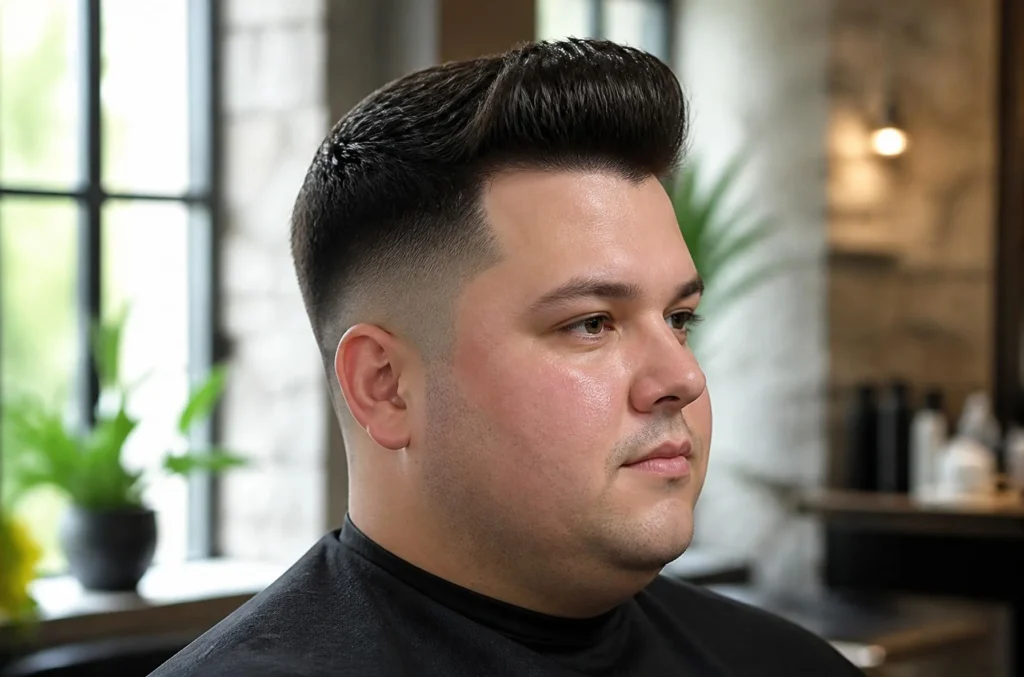
For rounder face shapes, the goal is to add height and angles rather than emphasize width. This version keeps a bit more length on top — enough to add vertical lift — while the low fade keeps the sides from adding extra bulk. The added height helps the face appear more balanced and slightly elongated.
Low Fade Side Part
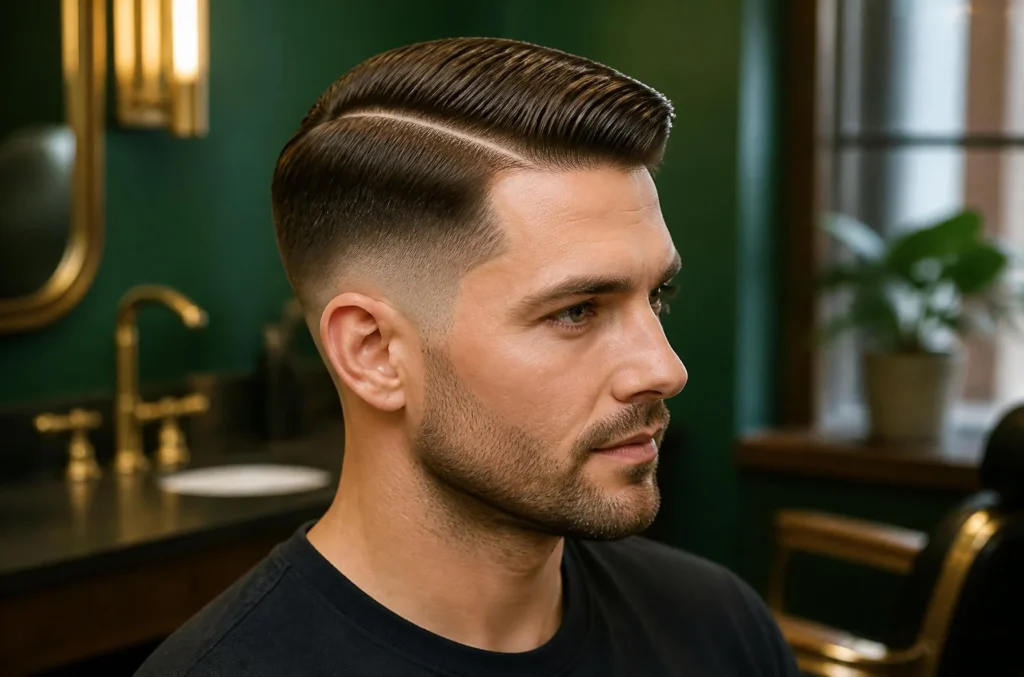
A defined side part combined with a low fade gives an elegant, put-together look that leans more formal than most fade styles. It’s a strong option for weddings, interviews, or any setting where you want to look sharp without trying too hard. Works best with straight or only slightly wavy hair, styled using a fine-tooth comb and light-hold product.
Low Fade V-Shape
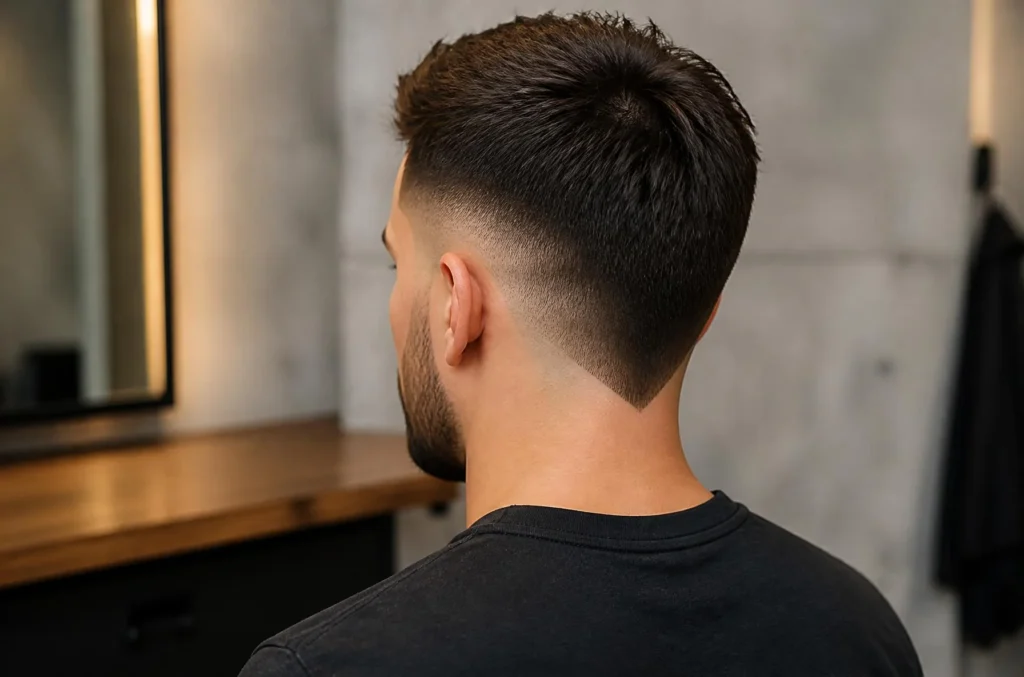
Instead of a straight or rounded line at the neckline, this version tapers into a subtle V-shape at the back of the head. It’s a small detail, but it adds a distinctive touch to an otherwise classic fade. Requires slightly more frequent neckline touch-ups to keep the V shape crisp as hair grows.
Blowout Low Fade Haircut
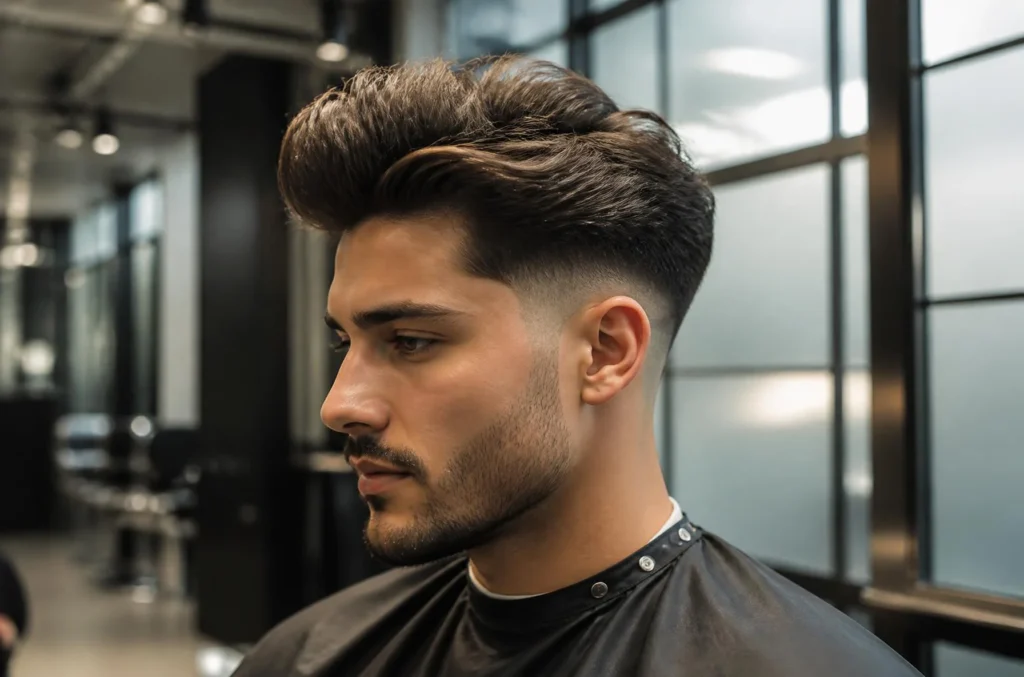
This pairs serious volume on top — usually achieved with a blow dryer and round brush — with a low fade underneath for contrast. It’s a bold, lifted look that works particularly well with thick, straight, or wavy hair that holds volume naturally. Not the lowest-maintenance option on this list, since it does require daily blow-drying to maintain the lift.
Fringe Undercut Low Fade
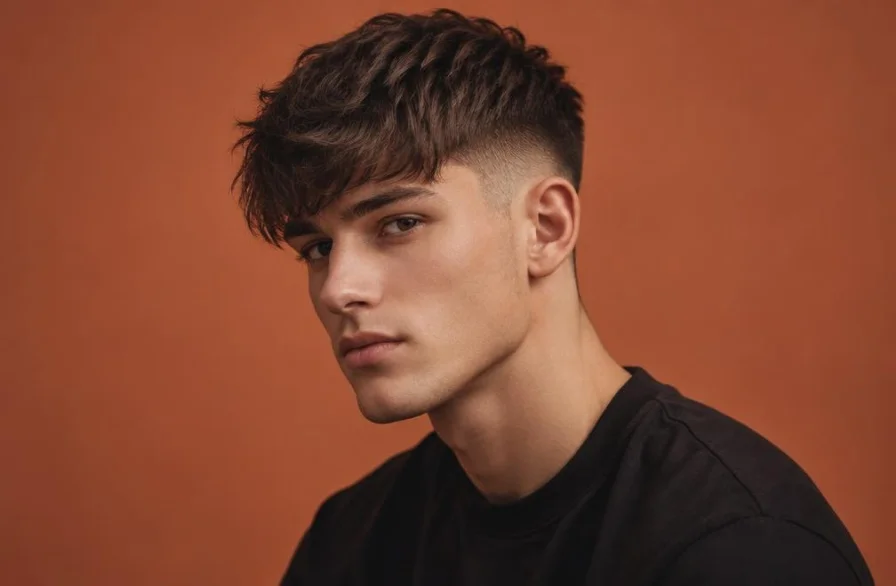
A textured fringe falls forward over the forehead while the sides fade low, creating a youthful, slightly edgy look. Works well with straight or gently wavy hair and suits younger faces especially well. A light texturizing product keeps the fringe looking deliberately messy rather than flat.
Low Fade for Oval Face
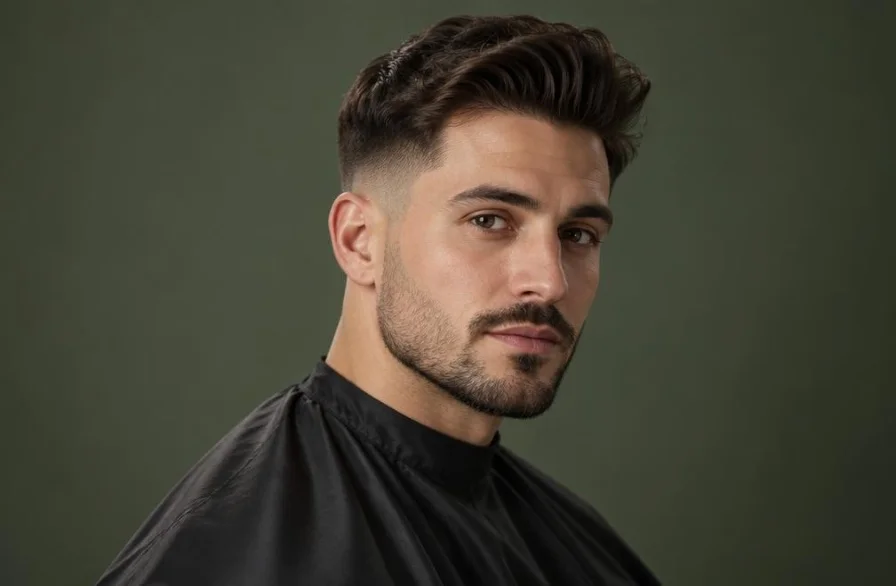
Oval faces are often considered the most versatile for fades, and this version proves it — nearly any top length or style works here, from slicked back to messy and textured. Because oval faces are naturally balanced, the low fade simply enhances that symmetry rather than needing to correct anything.
Low Fade Slick Back
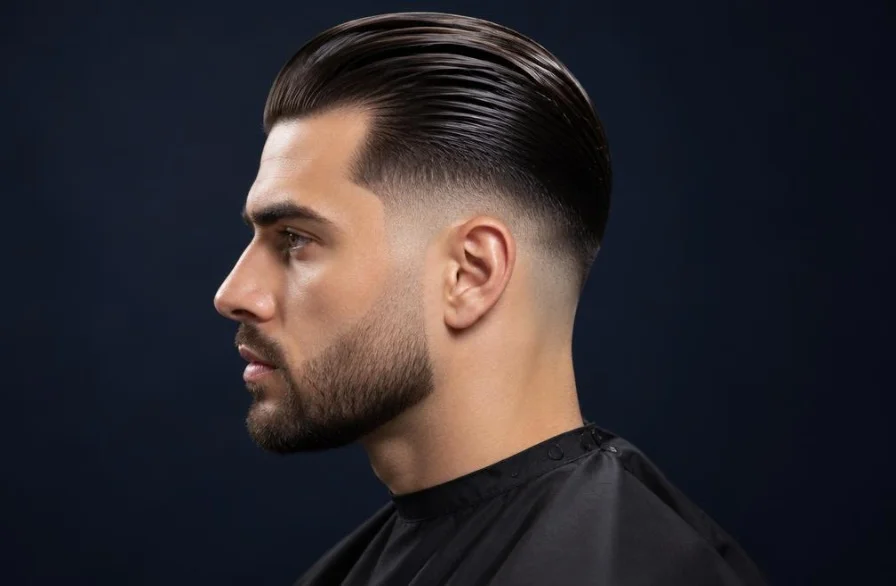
Hair combed straight back and held in place, paired with a low fade for contrast along the sides. It reads as classy and polished, which makes it a go-to for formal occasions. Best suited to straight or only slightly wavy hair, since curlier textures can be harder to slick down smoothly. A high-hold pomade is essential here.
Low Fade Man Bun
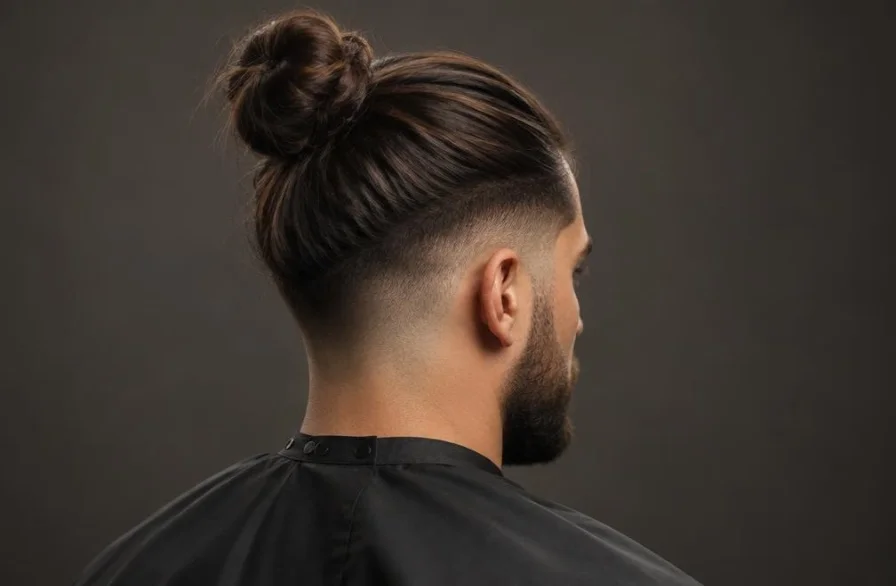
Long hair on top tied into a bun, with the sides faded low for contrast underneath. It’s a distinctive combination that works well for men who don’t want to cut their hair short but still want a clean, groomed appearance around the sides. Suits straight, wavy, and slightly curly hair types.
Low Fade Two Block (Korean Style)
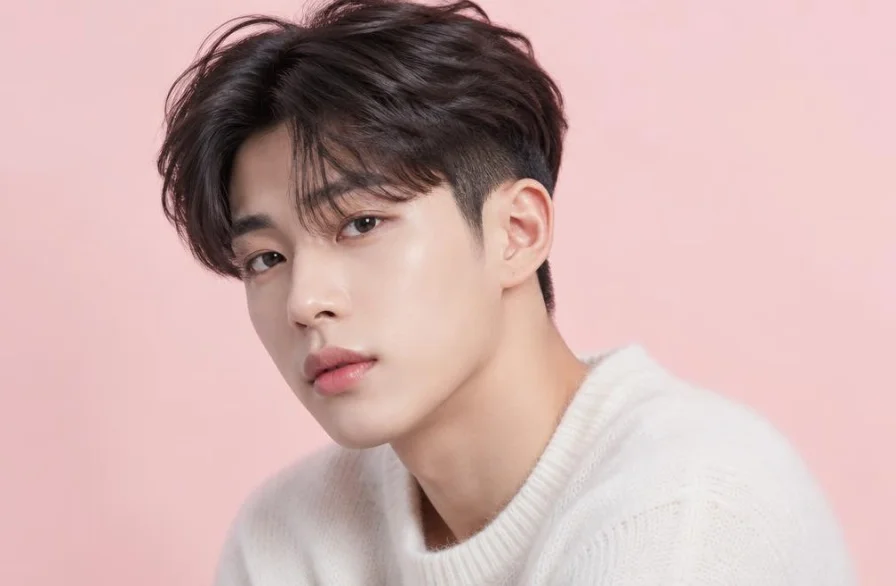
Popularized by Korean hairstyle trends, this keeps the top notably longer while the sides fade low and short, creating a strong visual contrast. It allows for a lot of creative styling on top — swept to the side, pushed forward, or left naturally textured. Works particularly well with straight to wavy hair.
Low Fade Faux Hawk
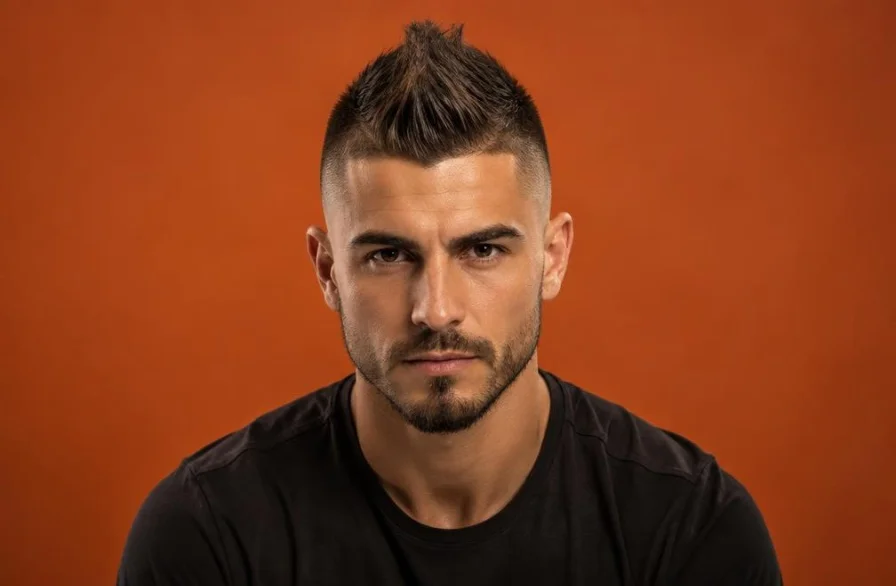
Hair is styled upward and toward the center on top, tapering sharply on the sides via the low fade. It’s a bold, youthful look best suited to thicker or coarser hair that can hold its shape through the day. A strong-hold gel or wax is necessary to keep the center section standing.
Low Fade for Kids
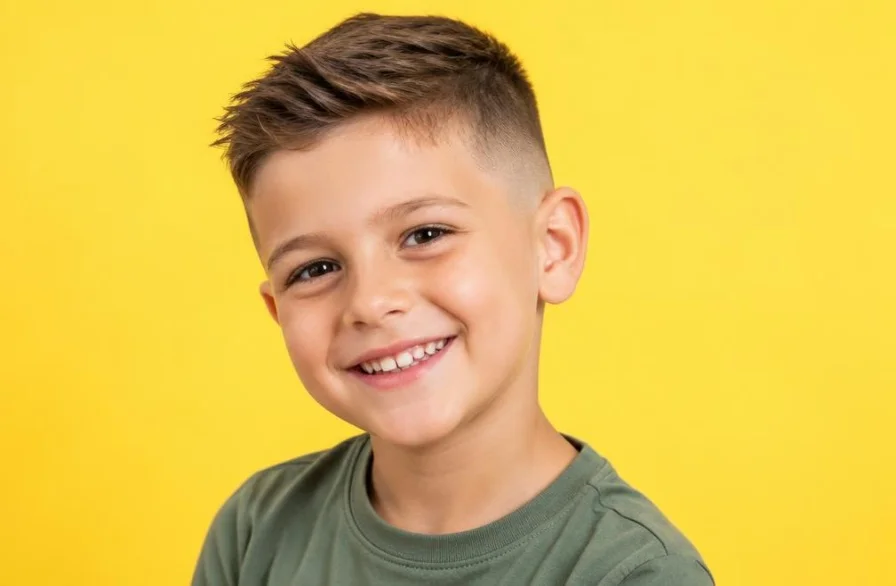
Kids can absolutely wear a low fade too, and it’s actually one of the most practical choices for younger boys since it’s low-maintenance and grows out without looking unkempt between cuts. Barbers typically keep the fade a little softer and less aggressive than they would for adults, since children’s hair and scalp can be more sensitive. It’s worth mentioning your child’s age and hair thickness to the barber so they can adjust the clipper guards accordingly.
Low Fade for Women
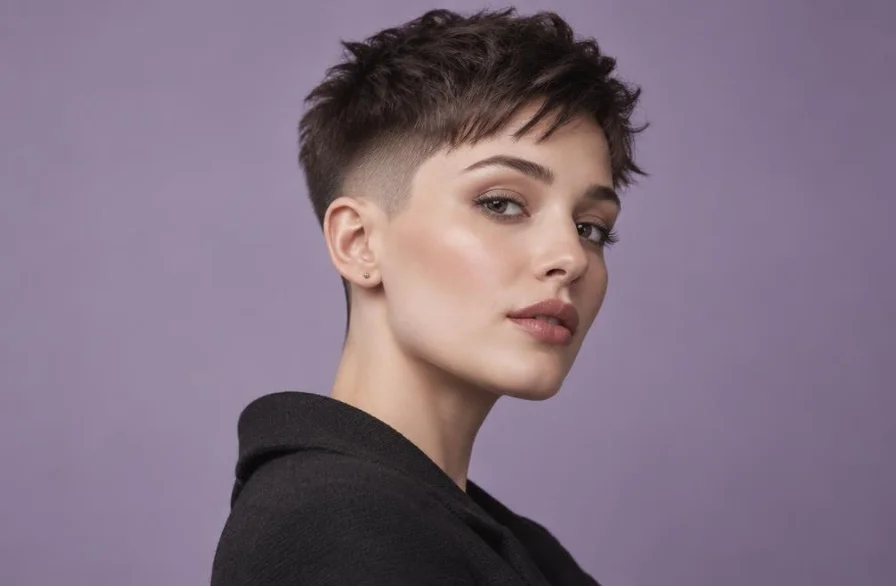
Low fades aren’t exclusive to men — plenty of women are choosing this style too, particularly paired with a longer top that can be styled in braids, twists, or natural curls. It works especially well for women wanting a bold undercut-style look without going as extreme as a high shave. As with kids’ cuts, it’s worth discussing hair density and scalp sensitivity with your stylist beforehand, since techniques can vary slightly from a standard men’s fade.
Low Fade for Thin/Fine Hair
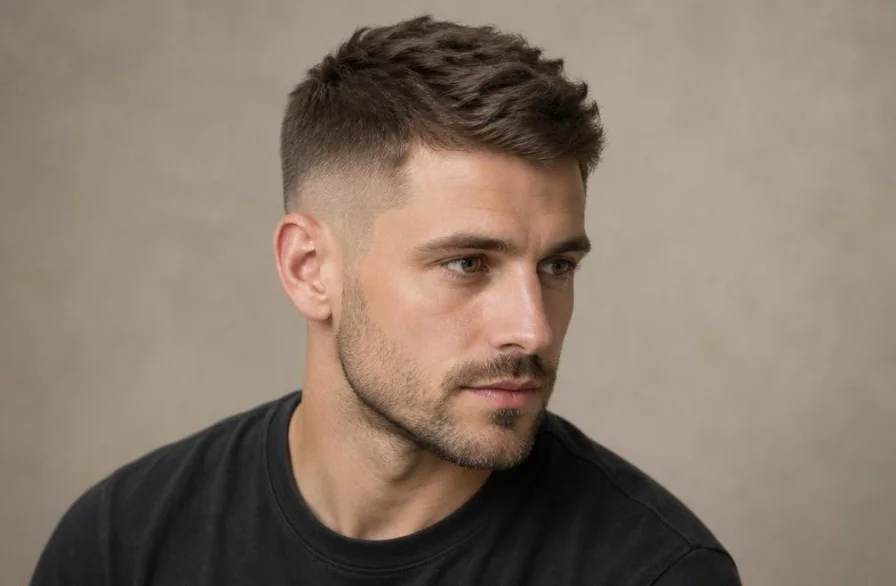
Thin hair can actually benefit a lot from a low fade, since the tapered sides create the illusion of more volume on top by contrast. The key is keeping the top slightly longer rather than very short, since very short lengths can make thin hair look sparse. A lightweight volumizing product, rather than a heavy pomade, works best here — heavy products tend to weigh fine hair down.
Low Fade for Gray/Salt-and-Pepper Hair
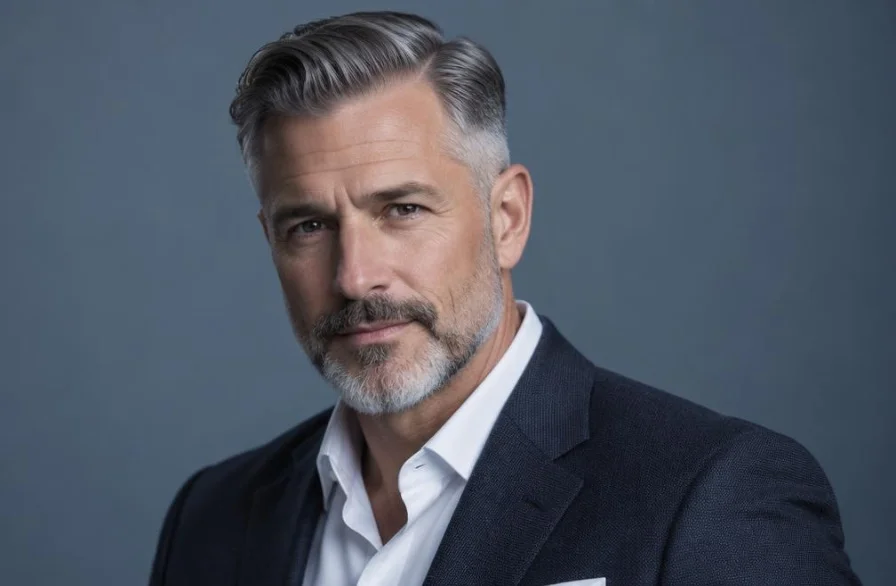
Gray and salt-and-pepper hair actually shows off a low fade beautifully, since the gradual color transition between the grays and darker tones adds natural depth to the fade itself. This style tends to suit mature faces very well and reads as distinguished rather than aging. Regular trims matter more here, since gray hair can sometimes have a slightly different texture that shows growth more visibly.
How to Style a Low Fade Haircut (Step-by-Step)
Getting the cut is only half the job — styling it properly is what makes it look intentional day to day.
Tools You’ll Need Before Styling
A few basics cover almost every low fade style: a wide-tooth comb for detangling, a fine-tooth comb for precision parts, a blow dryer if you want volume, and a styling product suited to your hair type (wax, gel, pomade, or cream). A small amount of hairspray can help lock the style in place if you’re dealing with humidity or a long day ahead.
Step-by-Step Styling Guide
Start with clean, towel-dried hair — not soaking wet, just damp. Comb it in the direction you want it to sit, working from the roots outward. If you want volume, blow-dry the top while lifting with a round brush or your fingers, aiming the airflow at the roots rather than the ends. Apply a small amount of your chosen product, rubbing it between your palms first so it distributes evenly rather than clumping in one spot. Shape the top with your hands or a comb, and finish with a light mist of hairspray if you need extra hold through the day.
Best Products for Low Fade (By Hair Type)
Straight hair usually does best with a light wax or matte paste that adds texture without weighing it down. Curly hair benefits more from a curl cream or light mousse that defines curls without stiffness. Thick or coarse hair can handle a stronger-hold pomade or gel, since it needs more product to stay in place. Fine or thin hair should stick to lightweight, volumizing products — anything too heavy will flatten it.
How to Get a Low Fade Haircut (Barber Technique)
If you’re curious what actually happens in the chair, here’s a simplified breakdown of how most barbers approach a low fade.
Step 1–5: Preparing the Baseline
The barber starts by lightly dampening the hair to make it easier to section and control. They’ll clip the top section out of the way, then use a trimmer to set a clean baseline around the head — this defines exactly where the fade will begin. Everything below that baseline gets cleared first with a clipper, and any remaining bulk near the transition zone is thinned out using a higher guard, usually a #3 or #4.
Step 6–10: Building the Fade
From there, the barber builds the fade gradually rather than jumping straight to short guards. They’ll typically start with the clipper lever open for a soft first guideline, then move to shorter guards like #1 or #1.5, using quick flicking motions to blend rather than harsh straight passes. A clipper-over-comb technique connects the faded section smoothly into the longer top hair, and any visible dark spots or lines get gone over again for a seamless finish.
Step 11–15: Finishing the Top & Style
Once the fade is blended, attention shifts to the top — trimmed with scissors to the desired length and shape. Some texturizing may be added to reduce bulk and give the hair better movement. From there, styling products go in, the hair gets shaped or blow-dried depending on the look, and the barber finishes by cleaning up the edges and lineup for a sharp, polished result.
How to Do a Low Fade at Home (DIY Guide)
Not everyone has easy access to a barber, and plenty of people prefer maintaining their fade themselves between full cuts.
Trimmer Guards You Need
At minimum, you’ll want guards ranging from a #0 or #0.5 (for the very bottom near the skin, if going for a skin fade) up through #3 or #4 for blending into the top. A separate detail trimmer or edger is worth having too, since it makes lining up the neckline and edges far more precise than a standard clipper.
DIY Low Fade Step-by-Step
Work in good lighting with two mirrors so you can see the back and sides clearly. Start with the longest guard you plan to use and work your way down gradually — never jump straight to the shortest guard, since that’s the fastest way to create an uneven, patchy fade. Move the clipper in small upward flicking motions rather than long straight strokes, blending as you go. Take breaks to step back and check both sides match. Finish with the edger around the ears and neckline for clean lines.
Common DIY Mistakes to Avoid
The most common mistake is rushing the blend and jumping too quickly between guard sizes, which leaves visible lines instead of a smooth gradient. Another is using too much pressure, which can cause uneven cutting depth. Skipping the mirror checks is another big one — what looks even from one angle can be noticeably off from another. And don’t attempt a first-time DIY skin fade right before an important event — practice on a less noticeable trim first.
How to Ask Your Barber for a Low Fade Haircut
Clear communication makes a huge difference in getting the result you actually want.
Key Terms to Use (Skin Fade vs Shadow Fade)
Tell your barber specifically that you want a “low fade” so they know the fade should start near the ears and neckline rather than higher up. Then specify whether you want a skin fade (faded all the way down to bare skin) or a shadow fade (a softer, more gradual fade that never quite reaches the skin). This single detail changes the whole look, so it’s worth being specific.
Length, Line-Up & Beard Blend Requests
Let them know how much length you want on top — in inches if you can, since “short” or “medium” can mean different things to different barbers. If you want sharp, defined edges around your hairline, ask for a lineup. And if you have a beard, mention whether you’d like it blended into the fade for a seamless transition between your hair and facial hair.
Low Fade Haircut Cost & Price Guide
Average Barbershop Price by City/Country
Pricing varies a lot depending on where you live and the type of shop you visit. In smaller towns or budget barbershops, a low fade typically runs on the more affordable end, while barbershops in major cities or upscale grooming lounges tend to charge more, especially if the service includes a beard trim, hot towel, or styling consultation. It’s always worth calling ahead or checking a shop’s website for current pricing, since it can shift based on location and demand.
Salon vs Barbershop Pricing
Traditional barbershops generally price fades more affordably since it’s their specialty and they move through clients efficiently. Salons, on the other hand, often charge more for the same service, partly because the experience usually includes extras like a wash, conditioning treatment, or a longer consultation. Neither is objectively better — it depends on whether you want a quick, no-frills cut or a more relaxed grooming experience.
Low Fade Haircut Maintenance Guide
How Often Should You Get a Touch-Up?
Most low fades hold up well for about 3 to 4 weeks before they start looking noticeably grown out. If you’ve gone with a skin fade specifically, you might want a touch-up slightly sooner — around 2 to 3 weeks — since the bare skin grows back visibly faster than the tapered sections.
How to Maintain the Fade Between Visits
Between full haircuts, you can keep things looking sharp by lining up your neckline and edges yourself with a detail trimmer, especially around the ears where hair grows fastest. Regular washing and conditioning also keeps the hair healthy, which makes the fade line look cleaner overall.
How Long Does a Low Fade Last?
On average, a low fade stays sharp-looking for around 3 to 5 weeks depending on how fast your hair grows and which version you got. Skin fades fade out of their crisp look the fastest, while softer taper fades tend to hold their shape a bit longer since there’s less contrast to begin with.
Growing Out a Low Fade: What to Expect
One of the biggest advantages of a low fade over higher fades is how gracefully it grows out. Because the fade starts low to begin with, there’s less dramatic contrast to lose as hair grows back in. You’ll likely notice the fade softening gradually rather than looking suddenly patchy or uneven, which gives you more flexibility if you need to stretch time between barber visits.
Common Mistakes to Avoid with a Low Fade
A few things trip people up when getting or maintaining this cut. Going in without a clear reference photo is a common one — “low fade” means different things to different barbers, so bringing a picture avoids miscommunication. Waiting too long between touch-ups is another, since even a low-maintenance fade eventually loses its clean line. Using the wrong styling product for your hair type — heavy pomade on fine hair, for instance — can also undo an otherwise great cut. And skipping regular trims around the neckline and ears lets those areas grow out faster than the rest, throwing off the overall balance.
FAQs
Final Thoughts: Which Low Fade Style Should You Choose?
With more than 40 variations to choose from, picking the right low fade really comes down to three things: your hair type, your face shape, and how much daily maintenance you’re willing to put in.
If you want something safe and universally flattering, a classic low taper fade is hard to beat. If you’ve got curls you want to show off, lean into a curly low fade rather than fighting your natural texture. And if you’re after more of a statement without going all the way to a high fade, options like the low drop fade or two-block style give you that extra edge while still keeping things manageable.
Whatever direction you go, the best approach is bringing a clear reference photo to your barber and being specific about length, fade type, and any edge or beard work you want done. A low fade is forgiving enough to suit almost anyone — it’s really just a matter of finding the version that fits your style and your routine.