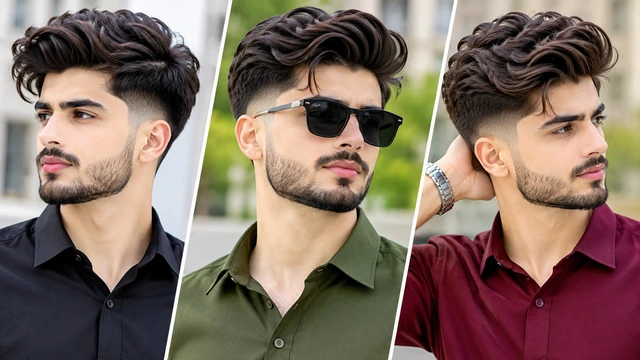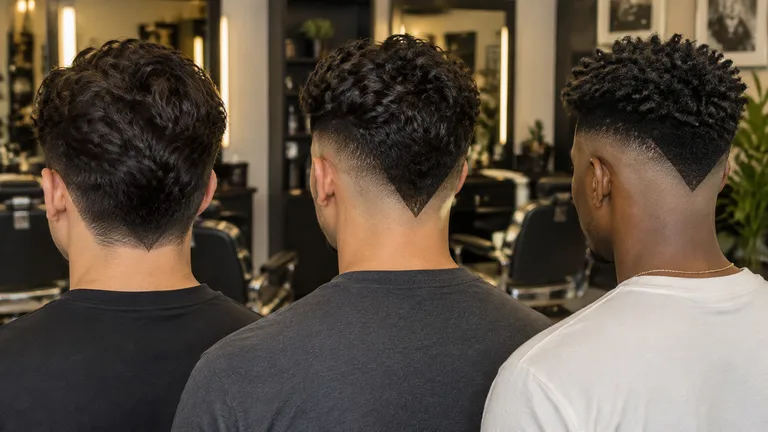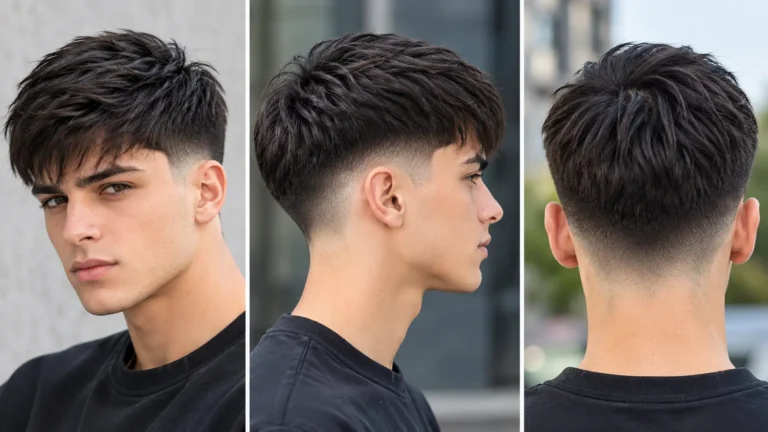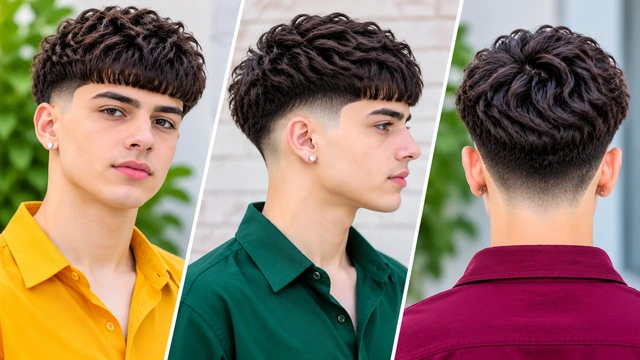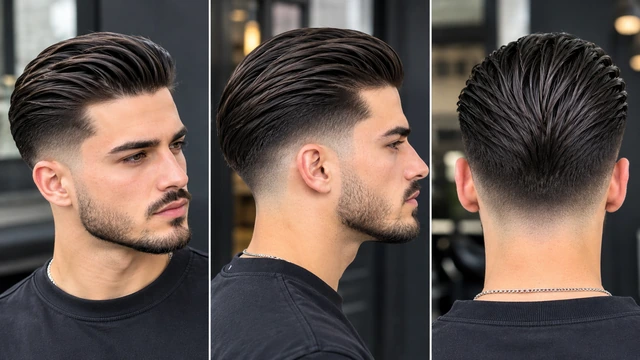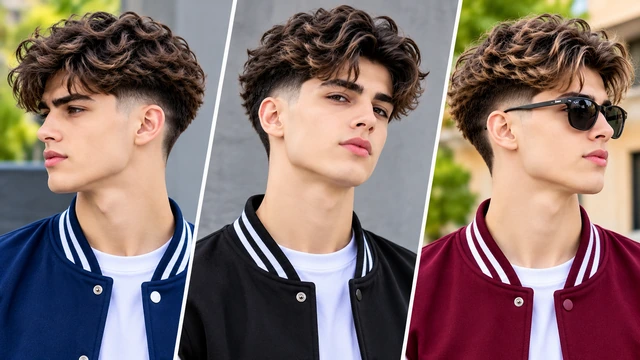


Low Taper Fade Comb Over: 22 Best Styles for Men in 2026
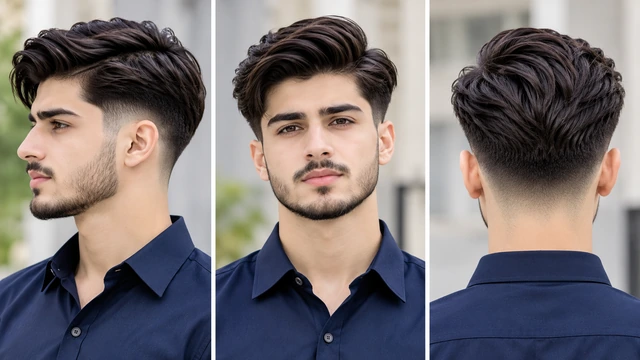
A low taper fade comb over is a haircut with a gentle taper around the ears and neckline, and a longer top that’s swept to one side. Clean edges below. Direction on top.
It’s one of the easiest cuts to wear to work, school or a wedding, as long as you get the part and the top length right. This guide starts with finding your part, then walks through 22 styles sorted by length, plus barber scripts, styling steps and upkeep.
What Is a Low Taper Fade Comb Over?
A low taper fade comb over is a haircut where the hair shortens gradually around the sideburns, ears and back of the neck, while the top is left longer and combed or swept to one side. The taper starts low and stays low, so the sides keep most of their length. The top gives the cut its shape and direction.
What Is a Comb Over, and Why It’s Back
“Comb over” used to mean one thing: long strands dragged across a bald spot. That version gave the word a bad name, and rightly so.
The modern comb over is a different haircut. It’s a side-swept top with a clear shape, usually paired with a fade, and it’s meant to look like a style, not a cover-up. Think of it as a side part with more movement and more control.
Why a Low Taper Works Underneath
A comb over lives on the top, so the sides need to stay quiet. A low taper does that. It cleans up the sideburns and neckline without pulling the eye away from the top.
It also grows out in a softer way than a high fade. You keep a tidy outline for longer, which matters on a style that depends on neat edges.
Pros and Cons
| Pros | Cons |
| Looks neat at work, school and events | Needs a trim every 2 to 3 weeks |
| Works with many hair types and top lengths | The part has to match your natural growth |
| Quick to style once you know your part | Cowlicks can fight the direction |
| Low taper keeps the sides subtle | Too short on top and it won’t sweep |
Who Should Think Twice?
If you have a strong cowlick right at the front hairline and you hate styling, this cut can be annoying. The hair won’t stay where you put it.
It’s also a poor match for very short hair, under about an inch. There’s nothing to sweep. And if you want a style you can ignore for six weeks, look at a crop or buzz cut instead.
Find Your Part Before You Choose a Style
Most comb over problems start with the part. Choose the wrong side and the hair fights you all day. Get it right and the style almost looks after itself.
How to Find Your Natural Part
Wet your hair, then brush it straight back. Now push it forward with your fingers and watch where it splits. That line is your natural part.
Don’t force a straight line if your hair doesn’t want one. The natural split is where the comb over will sit most easily.
Which Side Should You Comb To?
Go with the way your hair already grows. Look at the front hairline and check which direction the hair leans when it dries without styling.
If it leans left, comb left. If you fight it, you’ll need more product and more time. Tell your barber which side you prefer, but let them check the growth pattern before they cut.
What to Do With a Cowlick
A cowlick is a patch of hair that grows in a swirl instead of lying flat. At the front hairline, it’s the main reason a comb over refuses to behave.
Dry the hair while it’s wet, pushing it in the direction you want it to go. Blow-dry with low heat, then finish with a cool shot to set it. Ask your barber to leave the front slightly longer so the weight helps hold it down.
Short Comb Overs (1 to 2 Inches)
Short tops need very little upkeep, and they dry fast. The trade-off is less room to style, so a clean cut matters more.
1. Short Classic Comb Over
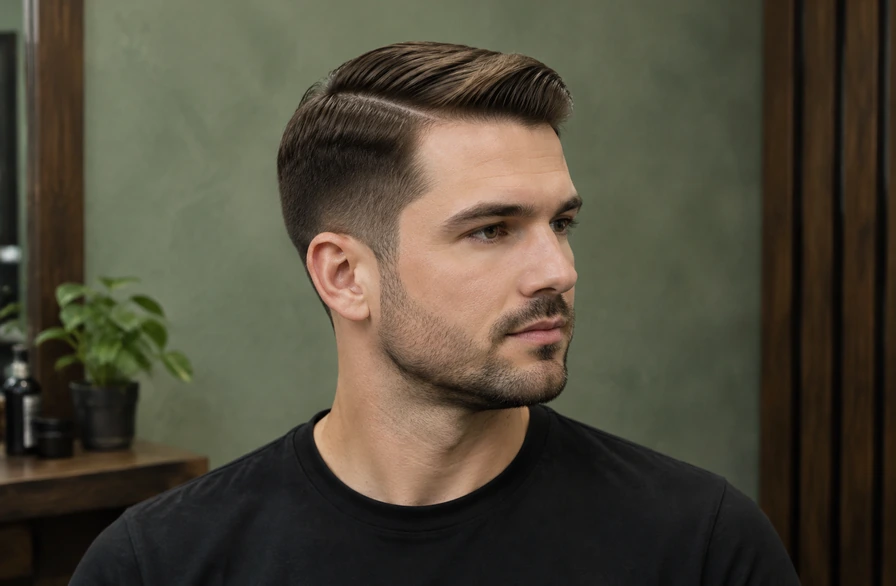
Start here if you’ve never worn a comb over. Ask for about 1.5 to 2 inches on top, a low taper with a number 1 or 2 guard at the bottom, and a clean side-swept shape.A small amount of cream or light pomade does the job. Comb it to the side while the hair is slightly damp, and you’re done in a minute.
2. Short Textured Comb Over
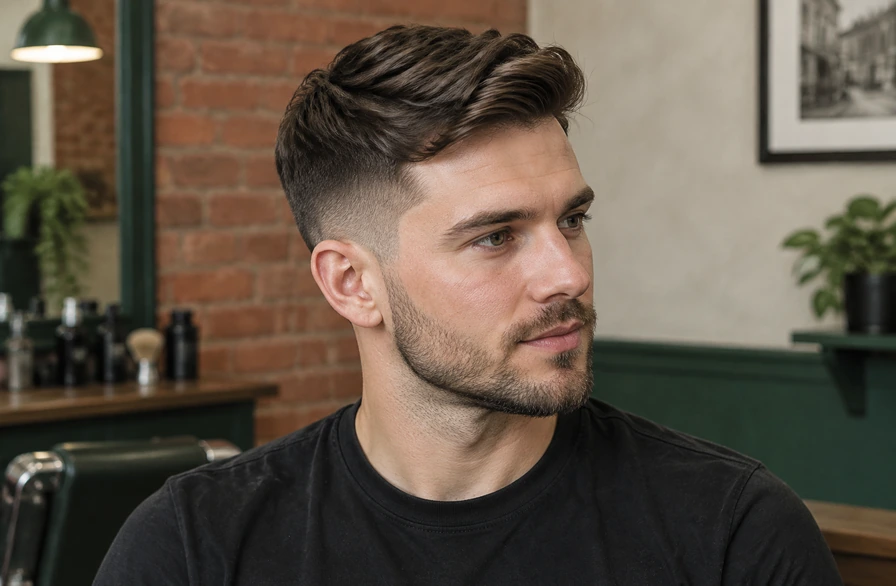
Short hair can look flat and stiff. Point cutting solves that by breaking up the ends so the hair has some movement.Use matte clay on dry hair and push it sideways with your fingers. It works on thick and straight hair best.
3. Hard Part Comb Over
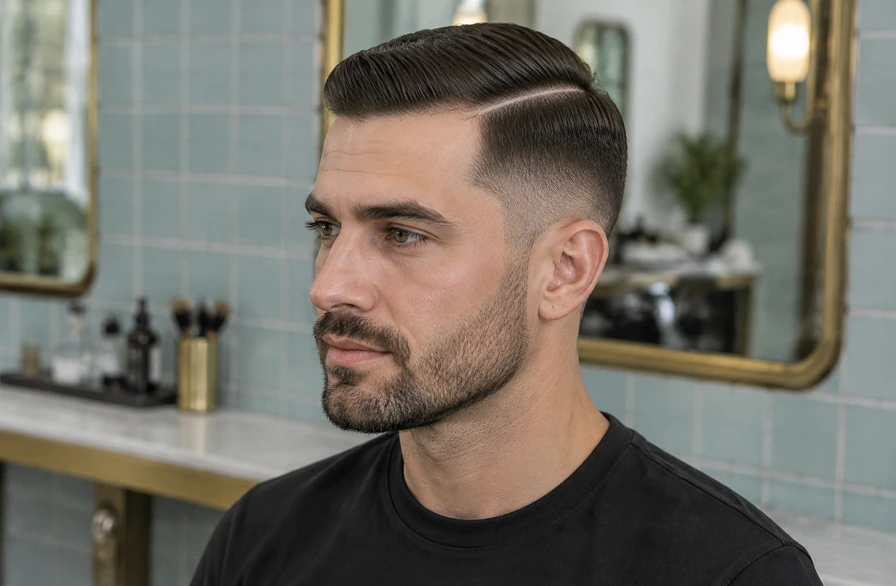
A hard part is a thin line shaved into the scalp to mark where the part sits. It makes the comb over look sharp, almost drawn on.The catch is upkeep. The line fades in a week or two, so plan a touch-up every 1 to 2 weeks. If you don’t want to book that often, skip it.
Medium Comb Overs (2 to 4 Inches)
This is the sweet spot. You have enough length to shape the hair, but not so much that styling takes ages.
4. Classic Comb Over
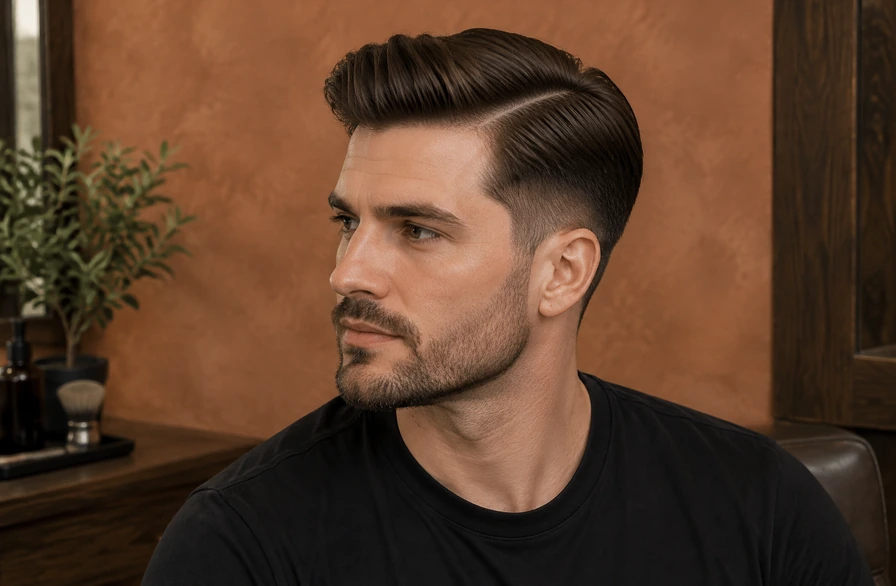
The traditional version. Hair is parted, combed to the side and finished with a light-to-medium pomade for a tidy, structured shape.A fine-tooth comb helps. Use it on damp hair, and keep the product light, since too much makes it look greasy.
5. Modern Natural Comb Over
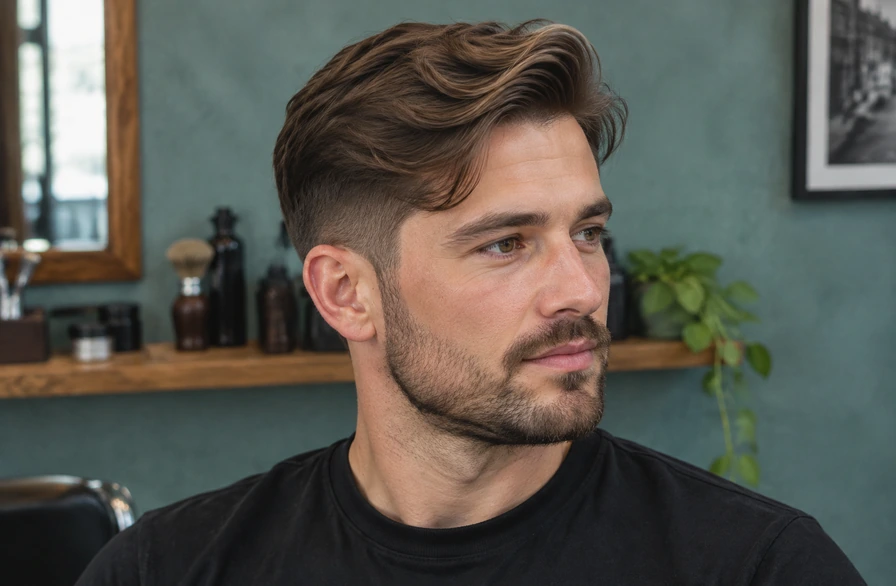
This one is for guys who want the shape without the polish. The taper is soft, the top is matte, and you style it with your fingers instead of a comb.It’s also the version you’ll see most in 2026, because it looks relaxed and takes less effort. Blow-dry to the side on low heat, then rub a little clay through the hair.
6. Textured Comb Over
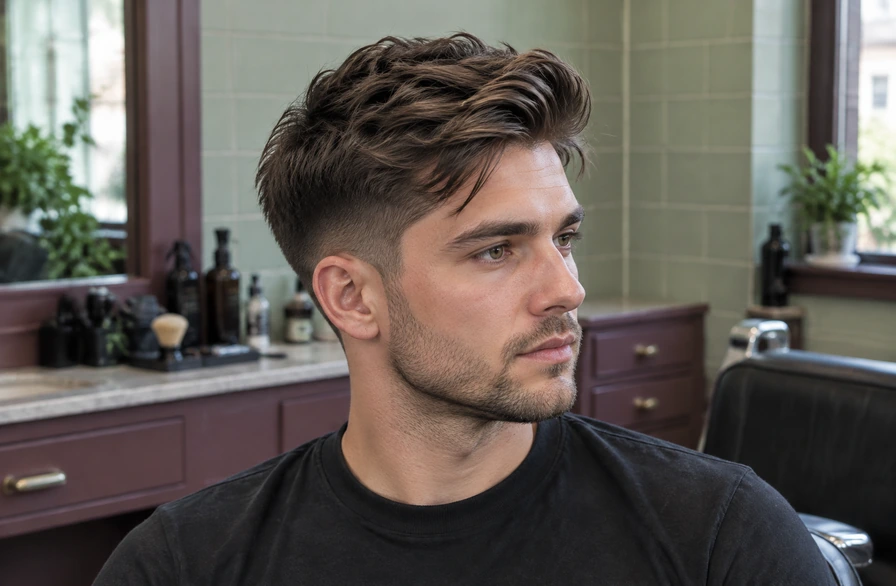
Thick hair can lie in a heavy sheet. Texturizing shears or point cutting remove weight, so the top separates into pieces and sits lighter.Ask your barber for layers on top and a low taper. Dust texture powder on dry roots for grip.
7. Side Part Comb Over
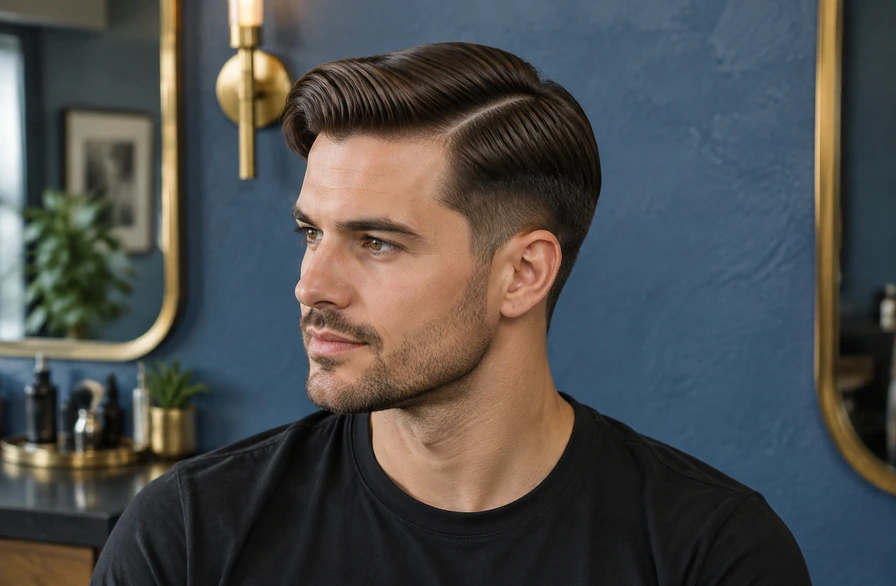
Compare it with a plain side part and the difference is movement. A side part is a defined line. This version adds a little sweep and softness around it.It suits school, interviews and office jobs. Have your barber mark the part line, and trace it with a comb while the hair is damp.
8. Messy Comb Over
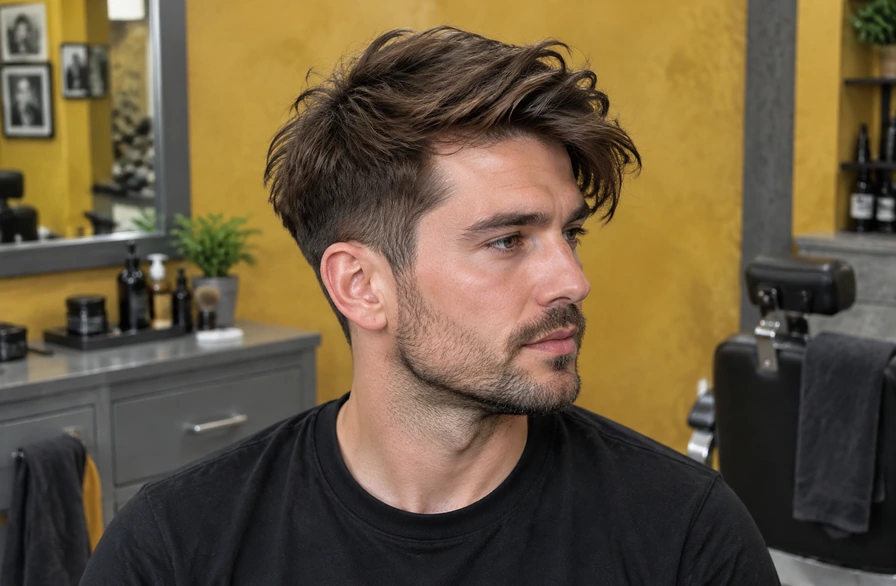
Not every comb over needs to be neat. The messy version has loose, piecey sections that look slept-in, but the low taper keeps the sides tidy.It works on wavy and thick hair. Use paste or clay, and run your fingers through it in quick sweeping motions.
9. Comb Over with Fringe
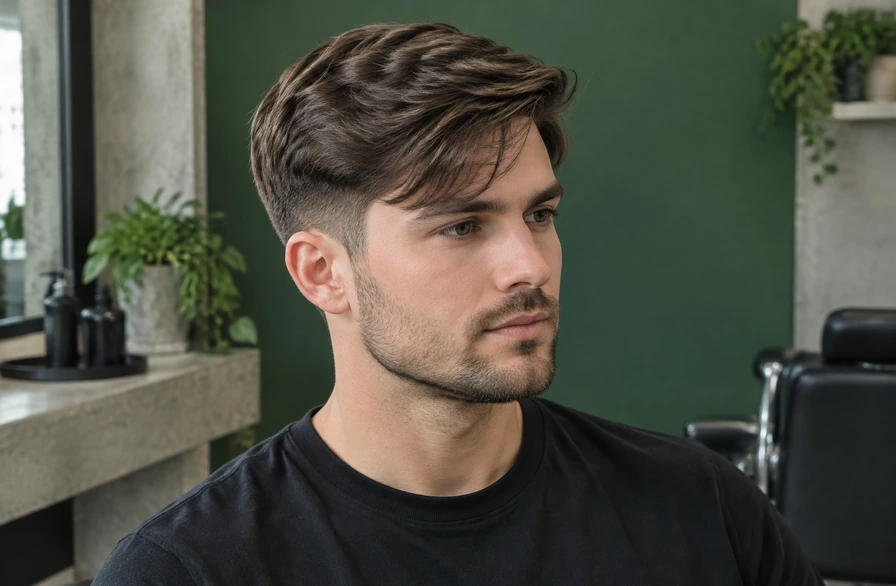
A few strands fall forward over the forehead while the rest sweeps to the side. It softens the front, which helps if your forehead is high.Ask your barber to leave the front a little longer, and style it with a light cream. Pull a few pieces forward with your fingertips.
10. Slick Back Comb Over
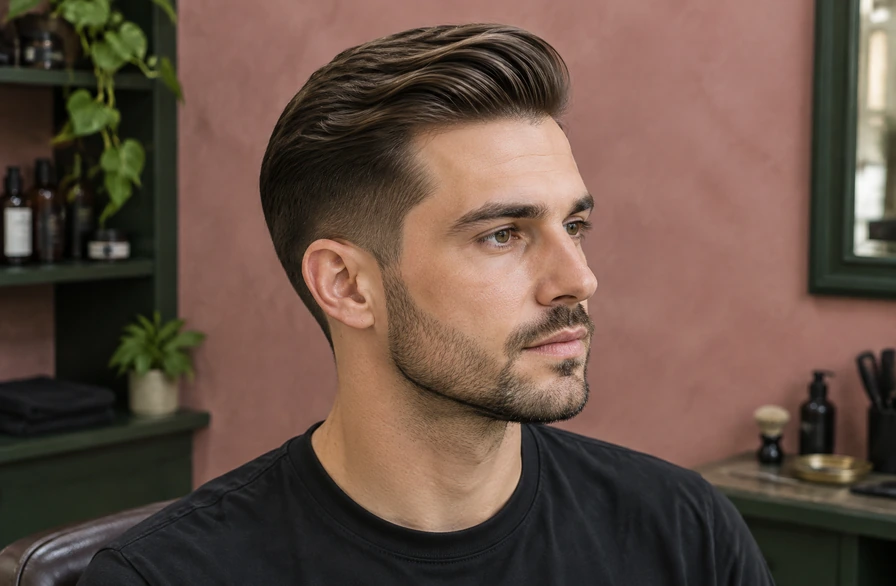
Here the hair goes diagonally back and across, a mix of slick back and comb over. The taper keeps the temples short so the top flows toward the crown.Use a medium-hold pomade on damp hair and comb it in one direction. It looks best on thick or straight hair.
11. Quiff Comb Over
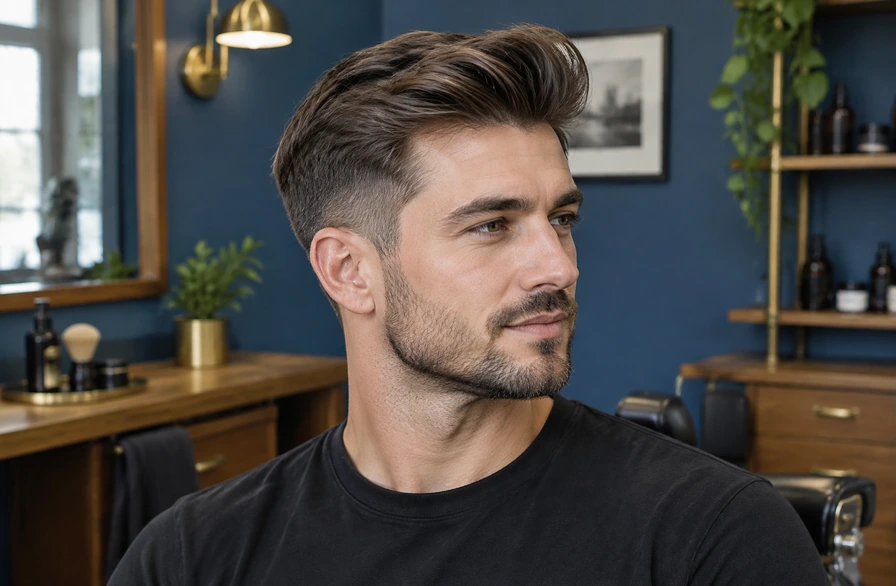
Add height at the front before sweeping the hair to the side. It gives the cut more volume, and a longer face shape benefits from keeping it modest.Blow-dry the front upward with a round brush, then sweep the sides and hold with paste. Round faces like the added length.
Long Comb Overs (4 to 6 Inches)
Longer hair gives you flow, but it also asks for more time, more conditioner and more patience.
12. Long Comb Over
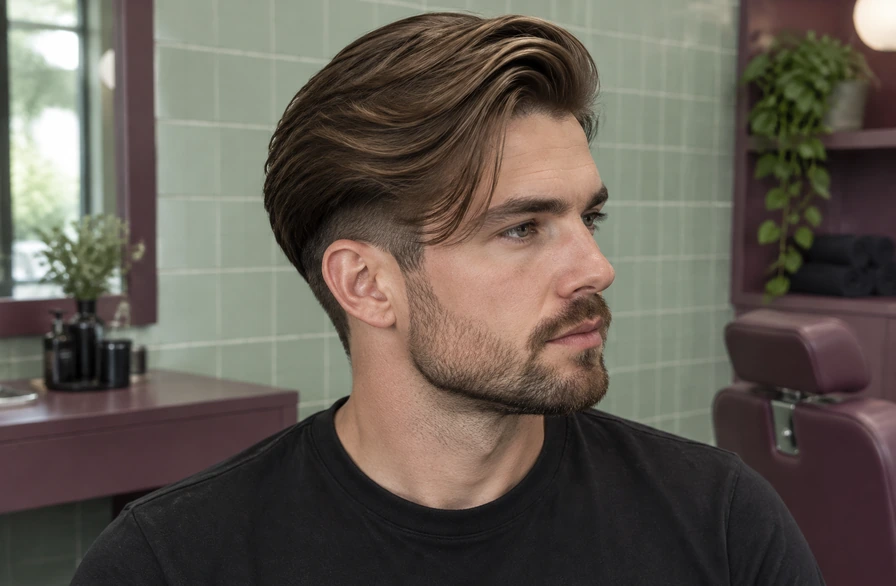
At this length, the top can move freely. The low taper keeps the ears and neck clean, so the long hair looks intentional.Use a blow-dryer and a round brush to guide the hair up and across. Trim the ends every 4 weeks or so to avoid split ends.
13. Pompadour Comb Over
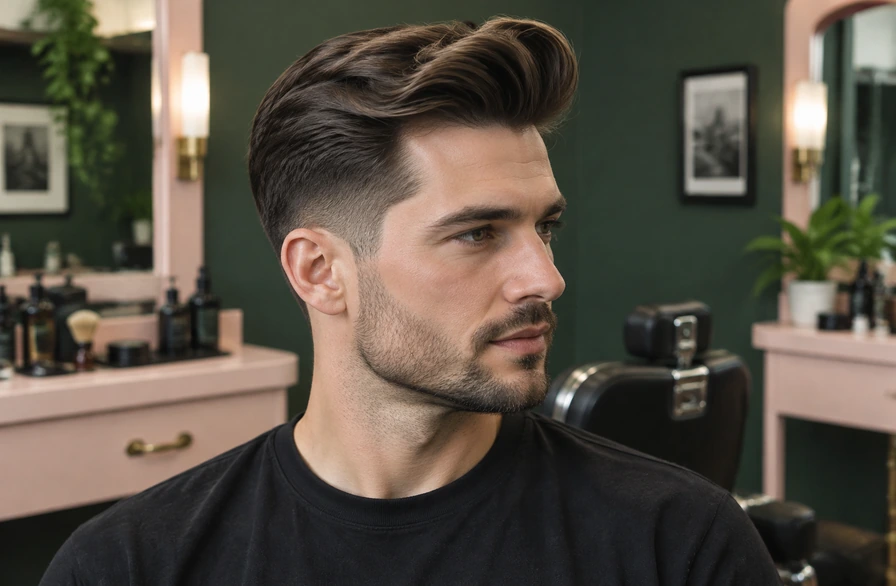
A pompadour lifts the hair at the front and rolls it back, and this version sweeps it to one side. You need at least 4 inches on top.It takes real effort to style. If you don’t want to blow-dry every morning, choose a flatter style.
14. Long Wavy Comb Over
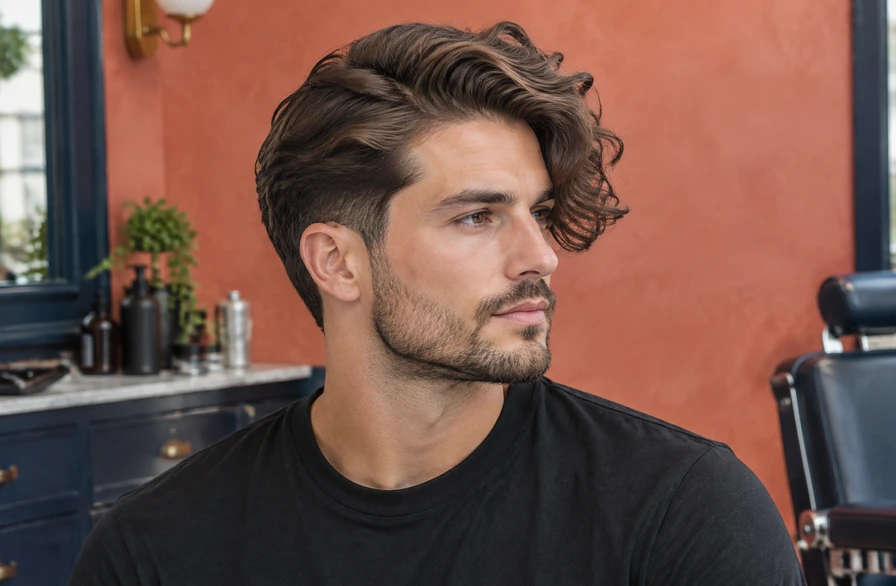
Waves look good swept sideways because they add natural movement. A light cream on damp hair is usually enough.Scrunch the hair, guide it to the side and let it dry. Avoid brushing, since it breaks up the wave pattern.
15. Curly Comb Over
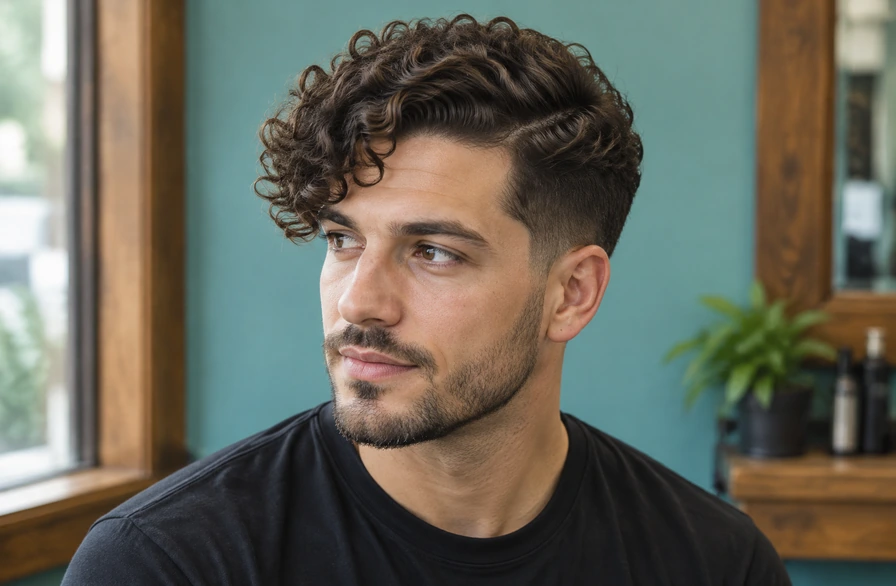
Curls can be swept to the side too, as long as you keep the shape. Leave enough length for the curls to form, around 3 to 4 inches or more.Ask your barber to cut the curls dry so they see the real pattern. Use curl cream on damp hair and let it air-dry or use a diffuser.
Comb Overs for Special Cases and Details
Some cuts depend on your hair situation or on what you pair them with. These are the extras.
16. Comb Over for Thinning Hair or a Receding Hairline
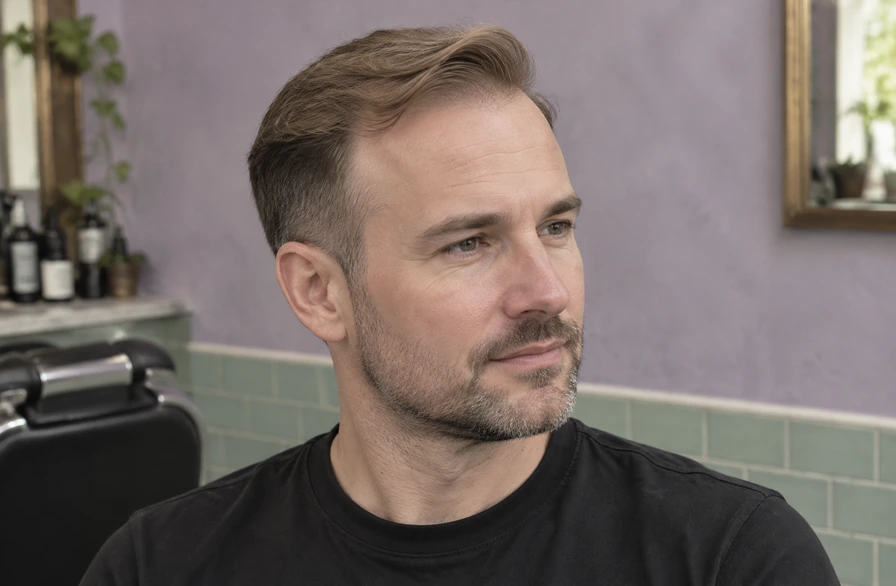
Let’s be honest. A comb over doesn’t regrow hair, and dragging long strands across a bald patch usually draws more attention to it.What works better is a shorter, textured top with a soft sweep and a low taper that keeps density on the sides. Keep the top around 2 to 3 inches, and use volume instead of flattening the hair. A short, soft fringe at the front can also help.
17. Comb Over with Beard
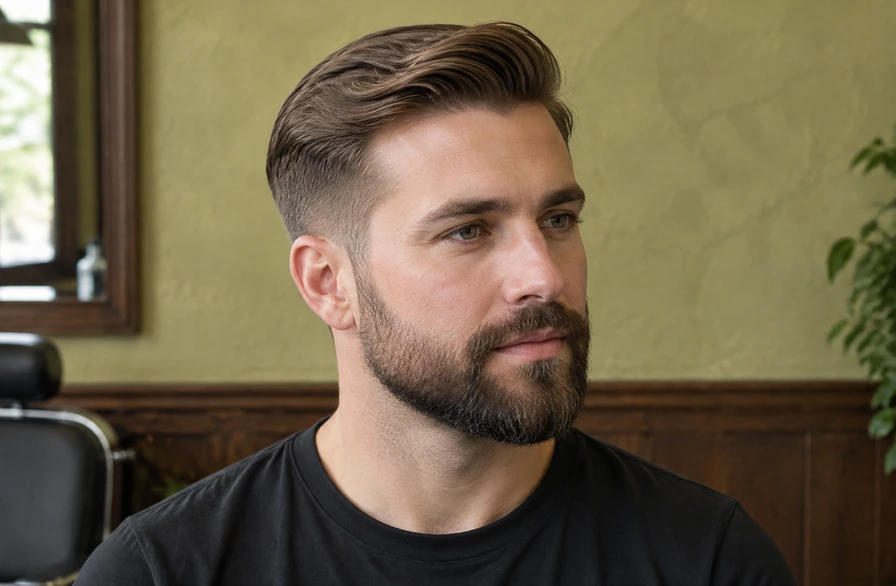
The low taper runs down the sideburn and blends into the beard. It makes the hair and beard look like one design. For more detail, read our low taper fade with beard guide.Keep the beard tidy and the length proportional. A neat short beard fits a comb over well.
18. Comb Over with Line Up
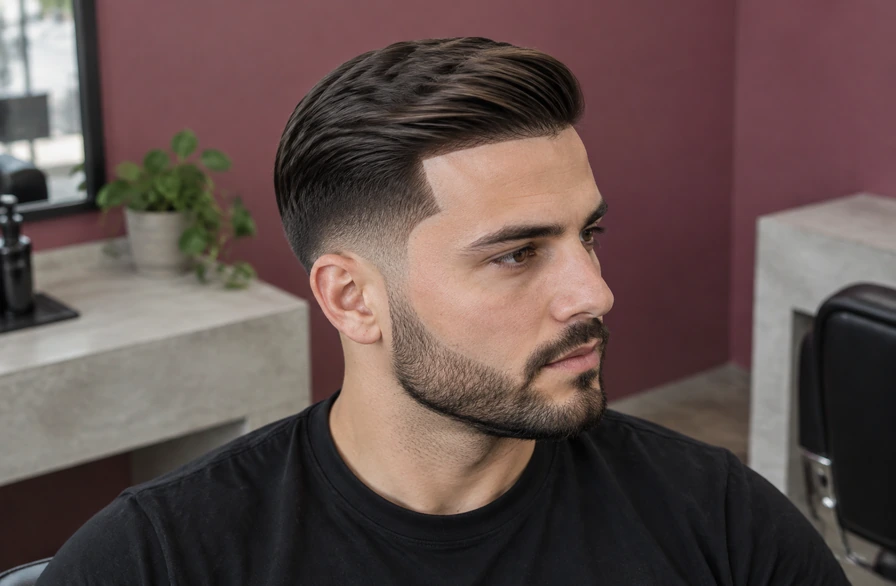
A line up is a crisp edge along the forehead and temples. With a comb over, it frames the part and makes the whole cut look sharper.Plan a touch-up every 1 to 2 weeks. It looks best on thick, coarse or straight hair.
19. Blonde Comb Over
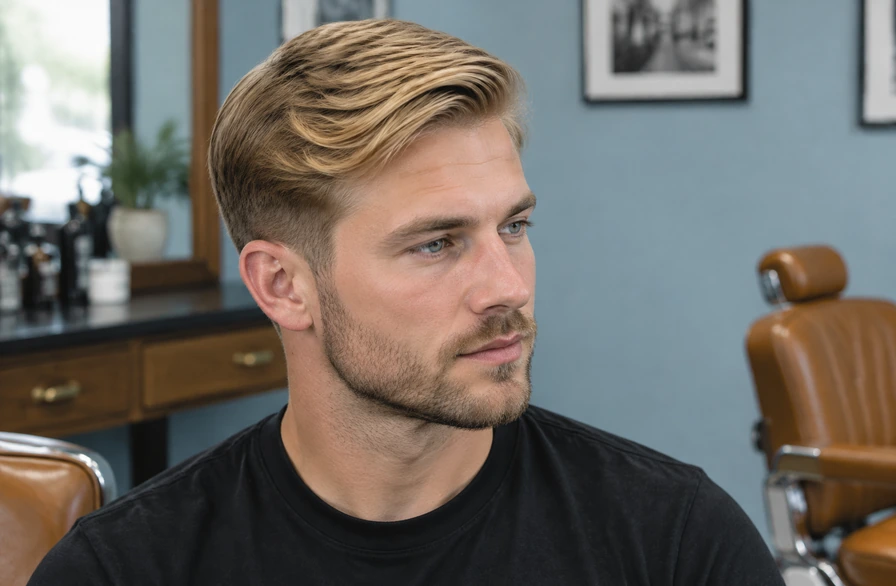
Light hair shows the sweep and texture clearly, which means a messy comb over looks soft and a neat one looks precise. Keep products light, since heavy pomade turns blonde hair dark and clumpy. For more on color, see our low taper fade blonde hair guide.Bleached hair needs extra moisture and gentle handling.
20. Comb Over for Black Men
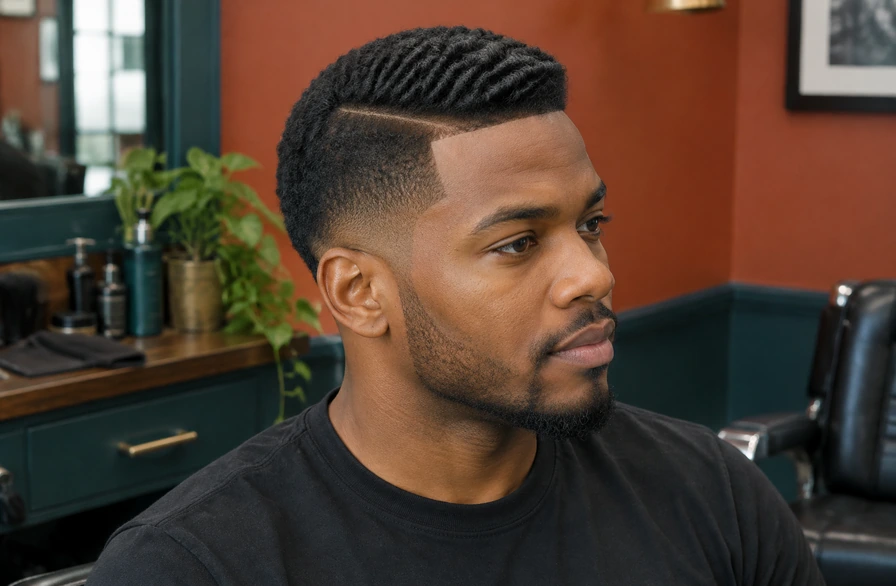
For tightly curled or coily hair, a comb over can be built from a shaped top with a clean part and a sharp low taper. Waves and textured hair both work, and a line up adds definition.Keep the hair moisturized with a leave-in conditioner or light oil. Ask a barber who has experience with your hair type, and show reference photos on hair like yours.
21. Comb Over for Asian Hair
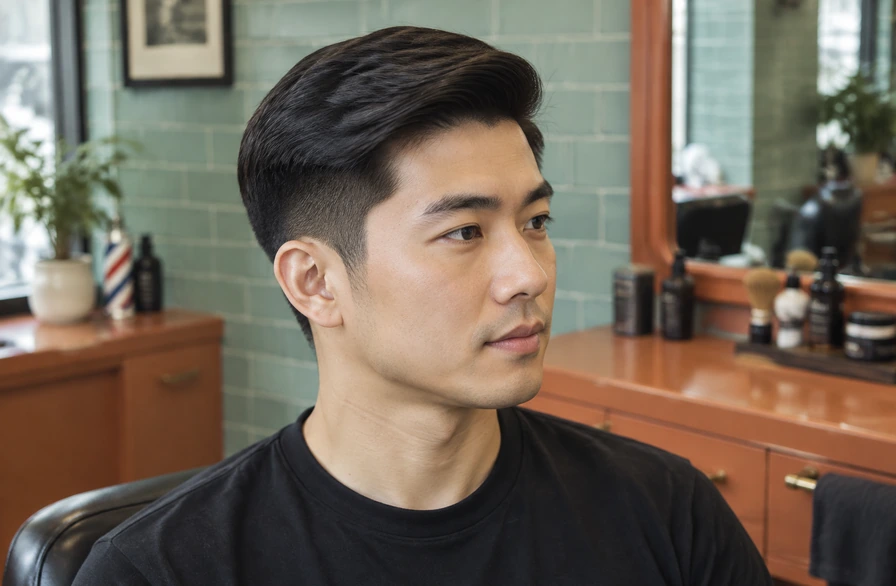
Thick, straight hair can stick out when it’s cut too short at the sides, so a gradual low taper helps. The top takes heavy texturing well.Use matte clay or paste to hold the direction. A medium length of 3 to 4 inches gives you room to sweep and shape.
22. Comb Over for Work and Weddings
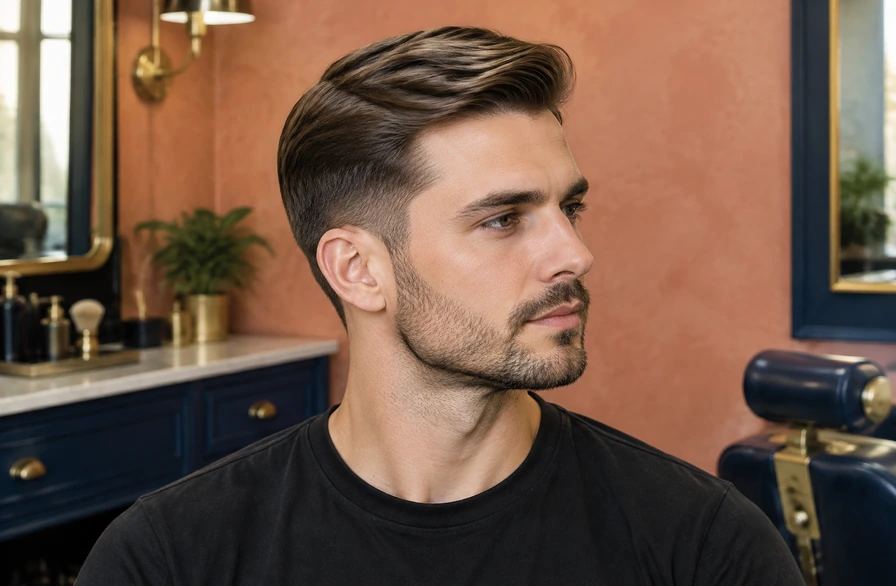
For a formal setting, keep it neat and low-key. A 2 to 3 inch top, a clear part and a light pomade give a tidy finish without too much shine.Choose a clean taper and skip dramatic details like a hard part, unless you can keep it sharp. Get the cut a few days before the event so the edges settle.
Comb Over by Hair Type
Your hair type decides how easily it will sweep and hold. Here’s a quick guide.
| Hair type | Main problem | Quick fix |
| Straight | Falls flat | Texture powder or light volume |
| Wavy | Frizz | Light cream, no brushing |
| Curly and coily | Dryness | Curl cream, leave-in conditioner |
| Thick | Bulk | Texturizing, firm clay |
| Fine or thin | Looks sparse | Mousse and light products |
Straight Hair
Straight hair makes the cleanest part and the sharpest direction. The downside is it can lie too flat.
Use texture powder at the roots, and ask for light layering so the top has some body.
Wavy Hair
Waves give a comb over natural movement. They also bring frizz, especially in humid weather.
A light cream on damp hair controls it. Let the hair dry mostly on its own.
Curly and Coily Hair
Curly and coily hair needs length and moisture. Keep the top long enough for the curl pattern to show, then shape it to one side.
Avoid brushing it dry. Use a leave-in conditioner or curl cream.
Thick Hair
Thick hair holds shape well, but it can look heavy. Ask your barber to thin the top.
A firm clay or wax holds the direction without much shine.
Fine or Thin Hair
Fine hair needs lift. Heavy pomade makes it clump and shows the scalp.
Use mousse on damp hair, blow-dry for volume and finish with a light spray or powder.
Best Face Shapes for a Low Taper Fade Comb Over
Face shape is a guide, not a rule. It helps you decide how much height and sweep to use.
Oval Face
Almost anything works. A medium length and a natural part are a safe starting point.
Round Face
Add height at the front to lengthen the face, and keep the sides tight with the low taper.
Square Face
A softer, textured top balances a strong jaw. Avoid a very stiff, flat comb over.
Diamond Face
A moderate side volume softens wide cheekbones. A little fringe at the front adds width to the forehead.
Heart Face
A side part with a soft fringe balances a broad forehead. Keep the volume at a moderate level.
Oblong Face
Skip a tall front. Keep the top closer to the scalp so the face doesn’t look longer.
How to Ask Your Barber for a Low Taper Fade Comb Over
A comb over depends on small details, so a clear request pays off.
Copy-Paste Barber Script
Try this, word for word:
“I’d like a low taper fade starting at the sideburns and back of the neck, nothing higher than the ear. Leave about [length] on top, and cut it so it combs over to the [left/right]. Add some texture so it’s easy to style.”
Fill in the brackets, and show a photo if you have one.
Top Length and Taper Height to Request
For the taper, ask for a number 0 or 1 guard at the bottom, blending into a number 2 or 3. For the top, 2 to 4 inches is the most flexible range. Under 2 inches is harder to sweep, and over 4 inches needs more styling.
How to Show Your Part and Cowlick
Come in with your hair slightly damp and unstyled. Show your barber where it naturally splits and where any cowlick sits.
Point to the side you want to comb toward. A barber who sees the growth pattern can cut the top so the hair falls the right way.
What to Avoid Saying
“Just a trim” or “short on the sides” can mean very different things. Skip them.
Name the taper height, the top length and the side you want to comb to. Bring a photo.
How to Style a Low Taper Fade Comb Over at Home
Once the cut is right, styling is quick. You’re mostly guiding the hair into the part it already wants.
Five-Minute Styling Routine
- Wash your hair and towel-dry until damp.
- Rub a pea-sized amount of product between your palms.
- Find your part with a comb or your fingers.
- Sweep the top across in the direction of the part.
- Set the front with your fingers and check the sides.
How to Blow-Dry a Comb Over
Blow-drying sets the direction and gives you control. Dry the hair in the direction you want it to lie, using low to medium heat.
Lift the roots at the front with a brush if you want height. Finish with a cool shot to lock the shape, and use a heat protectant first.
Best Products for a Comb Over
| Product | What it does | Best for |
| Matte clay | Firm hold, no shine | Modern, textured looks |
| Hair wax | Flexible hold | Thick or messy styles |
| Styling cream | Light hold and moisture | Fine, wavy or thin hair |
| Pomade | Smooth control, some shine | Classic and formal styles |
| Sea salt spray | Grip and light volume | Wavy and messy looks |
| Volumizing mousse | Root lift | Fine and thin hair |
| Texture powder | Instant lift and matte grip | Flat or fine hair |
Matte or Shine: Choosing Your Finish
Matte looks natural and works for daily wear. Shine looks sharper and more formal, which suits weddings and interviews.
If you’re not sure, go matte. It’s more forgiving, and it hides small flaws better.
How to Maintain a Low Taper Fade Comb Over
A comb over looks good when the taper is clean and the part is clear. Both fade with time.
Barber Visit Schedule
- Taper: every 2 to 3 weeks.
- Hard part or line up: every 1 to 2 weeks.
- Top length: every 4 to 6 weeks, depending on how long you wear it.
How the Cut Grows Out
Hair grows roughly half an inch a month [VERIFY]. In week one, the shape is sharp. By week two, the neckline starts to fill in.
By week three or four, the taper softens and the top loses its direction. That’s the point where most guys book a trim.
Neck and Sideburn Touch-Ups at Home
You can clean the back of the neck with a small trimmer between visits. Keep it to stray hairs only.
Don’t reshape the taper or sideburn blend unless you’ve done it before. It’s easy to take off too much.
Low Taper Fade Comb Over vs Other Haircuts
These cuts overlap a lot, so here’s how they differ.
| Cut | Direction | Top length | Styling effort |
| Comb over | Swept to one side | 2 to 4 inches | Low to medium |
| Side part | Defined line, flat | 2 to 3 inches | Low |
| Slick back | Straight back | 4 inches or more | Medium |
| Quiff | Up and back | 3 inches or more | Medium to high |
| Undercut | Any, with a disconnected side | Varies | Medium |
vs Side Part
A side part is a defined line with the hair combed flat on each side. A comb over adds sweep and movement across the head.
If you want a neat, formal look, a side part is simpler. If you want a bit more shape, choose the comb over.
vs Slick Back
A slick back goes straight back from the forehead, while a comb over goes sideways. The slick back usually needs more length and a stronger product.
Choose the slick back for a bold look and the comb over for a softer, everyday one.
vs Quiff
A quiff lifts the front hair upward. A comb over sweeps it across. You can combine them, but the base idea is different.
The quiff needs blow-drying for height. The comb over is quicker to style.
vs Undercut
An undercut has a sharp, disconnected line between the sides and the top. A low taper blends gradually, so there’s no hard break.
The undercut looks bolder. The low taper looks softer and grows out more gracefully. If you want more on the fade side, read our low taper skin fade guide.
vs Mid or High Fade Comb Over
A mid or high fade starts higher on the sides, so the contrast with the top is stronger. It looks sharper, but it removes more hair and needs more frequent trims.
The low taper keeps more hair on the sides and suits conservative settings better.
Common Comb Over Mistakes to Avoid
A few errors cause most disappointing results.
Fighting Your Natural Part
Forcing the hair against its growth makes it stand up or flip. Check your natural part before you choose a side.
Letting the Taper Go Too High
If you don’t say “low,” your barber might choose a height. Say nothing higher than the ear.
Cutting the Top Too Short
Under about 2 inches, the hair won’t sweep. Leave enough length to shape.
Combing Thin Hair Flat
Flattening thin hair against the scalp makes it look thinner. Use volume and texture instead.
Using Too Much Product
Too much product turns hair greasy and heavy. A pea-sized amount is usually enough.
Skipping Regular Trims
The cut loses its shape after about four weeks. Book your next trim before you leave the chair.
Low Taper Fade Comb Over FAQs
Conclusion
Start with your part. If you find it and follow it, most comb over problems disappear. Then choose a length that suits your routine: short for low effort, medium for flexibility and long if you don’t mind styling.
For hair type, straight and fine hair need volume, thick hair needs thinning, and curly or coily hair needs moisture and length. If your hair is thinning, keep the top short and textured instead of long and flat.
If you’re not sure where to begin, ask for a low taper, about 3 inches on top and a natural side part. It’s easy to style, forgiving between visits, and your barber can adjust it from there.

Daniel Carter
Hi, I’m Daniel Carter, the founder of The Fade Haircuts. I’m passionate about men’s hairstyles, modern fade cuts, and grooming trends. Through this website, I share hairstyle inspiration, detailed haircut guides, and practical grooming tips to help men find their perfect look.
Learn More About Us →