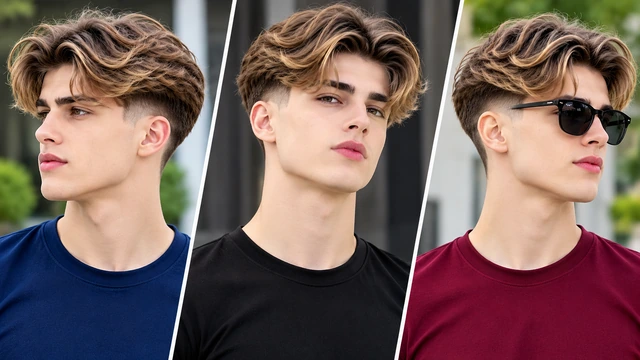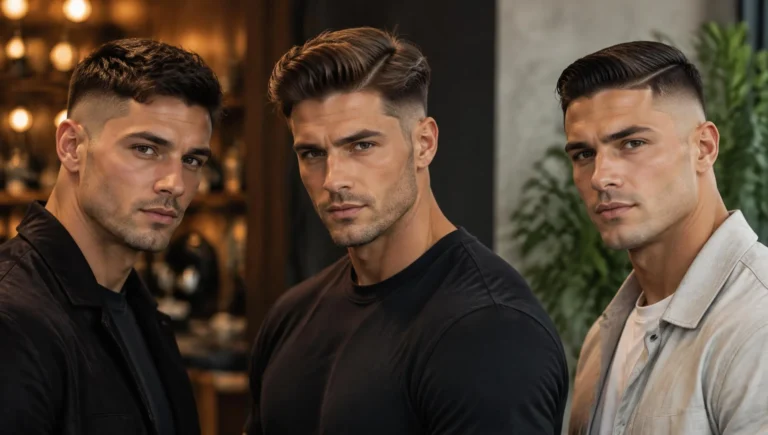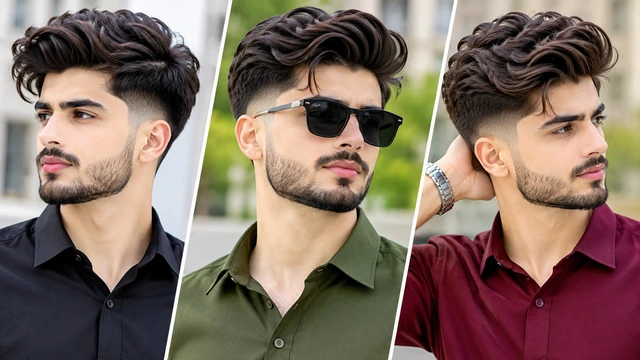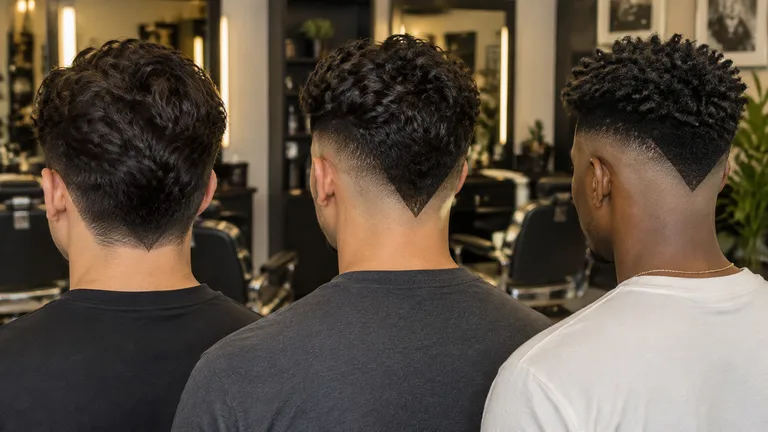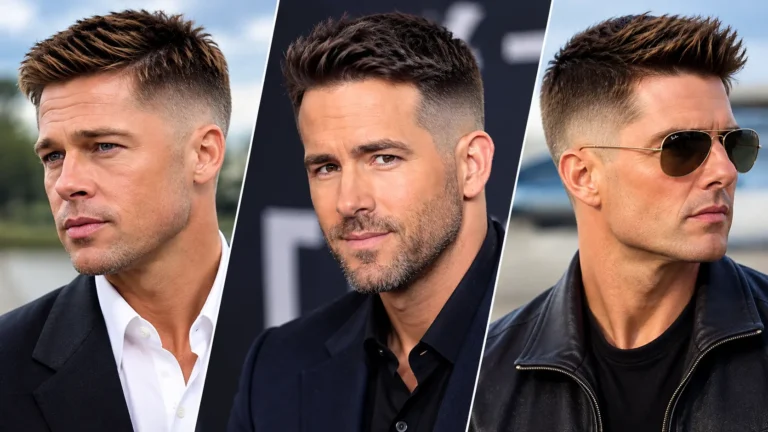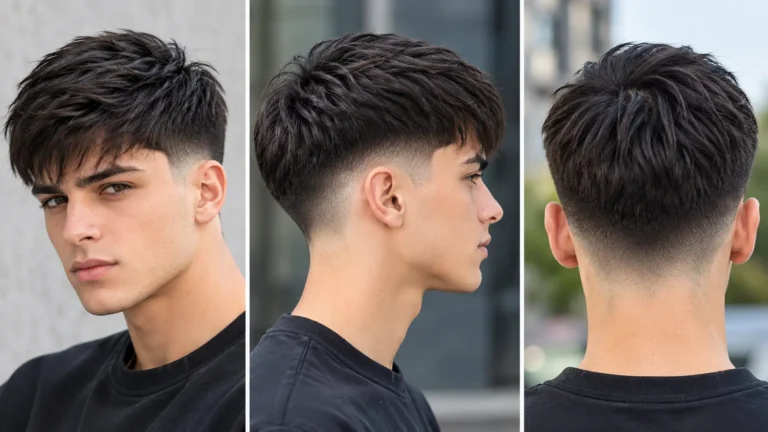


Low Taper Fade with Beard: 20 Best Looks for Men in 2026
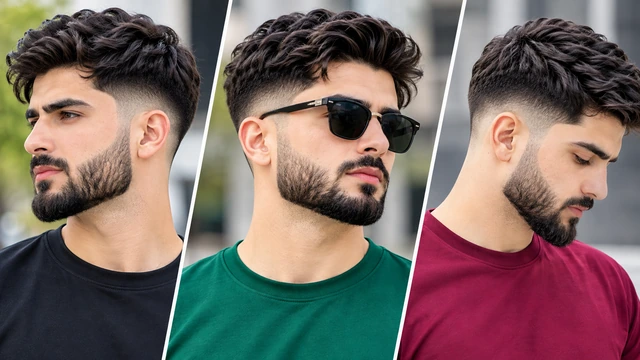
A low taper fade with beard is a haircut where the hair tightens up around your sideburns, ears and neckline, and the sideburn then runs straight into your beard. No harsh break. One continuous line from head to jaw.
That’s the appeal. The sides stay tidy, the beard looks planned, and the top is yours to style however you like. Below you’ll find 20 ways to wear it, a script for your barber, neckline rules and the upkeep most guys underestimate.
How a Low Taper Fade and Beard Work Together
A low taper fade with beard is a haircut where the hair shortens gradually around the sideburns, ears and back of the neck, then connects to a trimmed beard at the sideburn. The taper starts low and stays low, so the sides keep their natural length while the edges look clean. Your beard becomes part of the same shape.
Where the Sideburn Meets the Beard
The sideburn is the bridge. It’s the strip of hair in front of your ear, and it decides whether your haircut and beard look like one design or two separate ones.
There are two ways to handle it. In the connected version, the sideburn fades down and flows into the beard with no gap. In the disconnected version, there’s a bare patch of skin between them. Most guys look better connected, because it keeps the jawline smooth and the face looking lean.
If your beard grows in thin near the sideburn, tell your barber early. They can adjust the blend so you don’t end up with a visible hole.
Low Taper vs Beard Fade
These two get mixed up all the time. A taper is how your haircut blends at the edges, mainly around the sideburns and the neckline. A beard fade is how the beard itself shortens, running from fuller at the chin down to very short or skin near the cheeks and sideburns.
You can have a low taper and a full, untouched beard. You can also have both, which is the cleanest option. If you want the beard to blend into the sideburn, say “beard fade” out loud. Barbers can’t read it off a photo as easily as you’d think.
Pros and Cons
| Pros | Cons |
| Clean edges without a dramatic high fade | Needs a trim every 2 to 3 weeks to stay sharp |
| Beard and hair look like one shape | Beard lines need weekly attention |
| Keeps natural length on the sides | A thin or patchy beard can show the blend badly |
| Works with short, medium and long tops | Wrong taper height changes the whole look |
Who Should Skip This Combo?
If your beard grows in patchy near the sideburns, the connection point is where it shows. A very short beard or a regular, softer taper usually works better than a close, sharp blend.
Sensitive skin is the other warning sign. Close shaving at the neckline and cheek line can cause irritation or razor bumps on some skin types. If that’s you, ask for a regular low taper instead of a skin finish, and keep the beard a little longer so there’s less bare skin to deal with.
Pick Your Beard First: 8 Styles That Pair With a Low Taper
Start with the beard, because it’s the harder part to change quickly. You can’t grow a full beard before Friday. Once you know your length and shape, choosing the haircut is easy.
1. Heavy Stubble
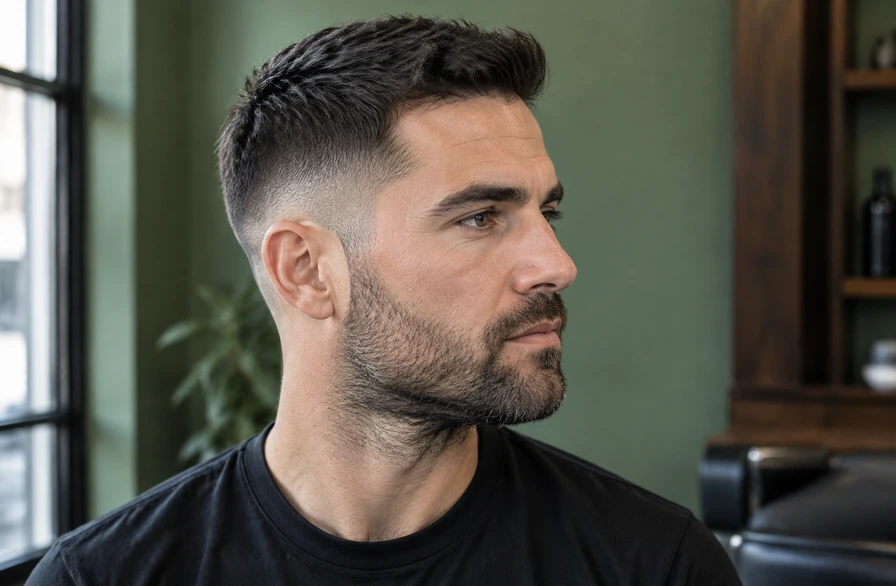
Three to five days of growth. That’s the whole recipe. It reads as relaxed and still looks tidy, especially when the neckline is shaved clean.A trimmer with a short guard, roughly a number 1 or 2, keeps the length even. Tidy the neck every few days, because stubble that creeps down your throat looks scruffy fast.
2. Short Boxed Beard
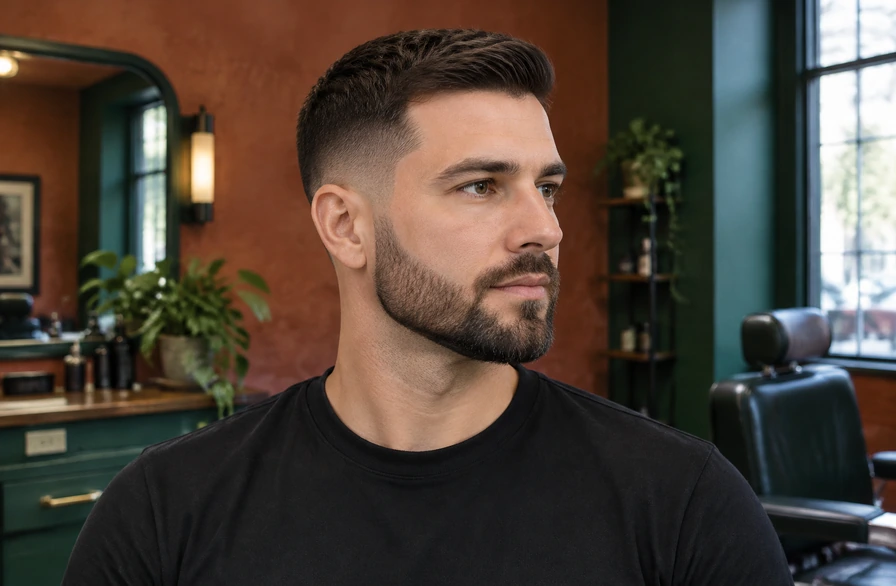
This is the sharpest option on the list. A boxed beard has a defined cheek line, a clean neckline and a squared outline along the jaw. Paired with a low taper, it looks like a deliberate uniform.It fits an office well. It also asks the most from you, since those crisp lines need shaving every day or two.
3. Short Natural Beard
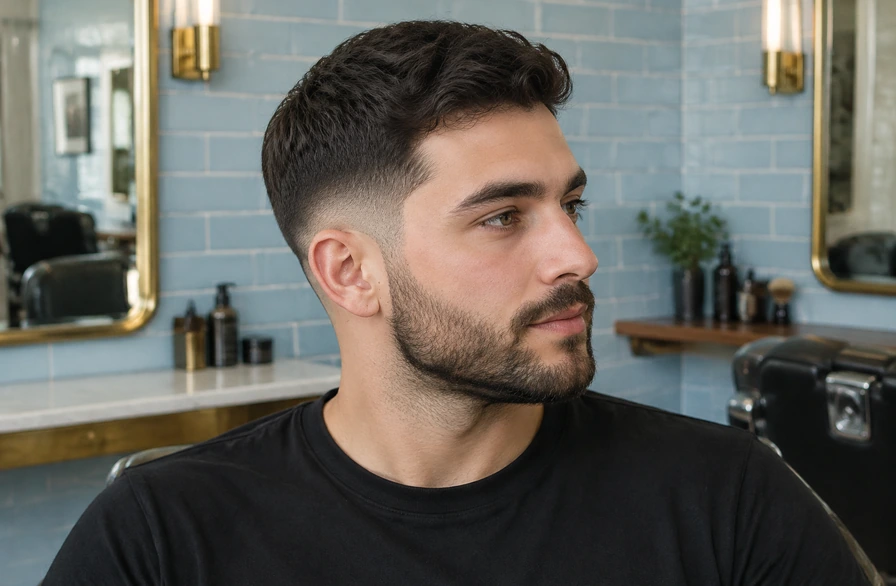
Think of it as the boxed beard’s softer sibling. The length is similar, about a half inch to an inch, but the edges follow your natural growth instead of a ruler.Because there’s no hard line to maintain, it looks fine on day 10 of a haircut cycle. Most guys who don’t want a daily shaving routine end up here.
4. Full Beard
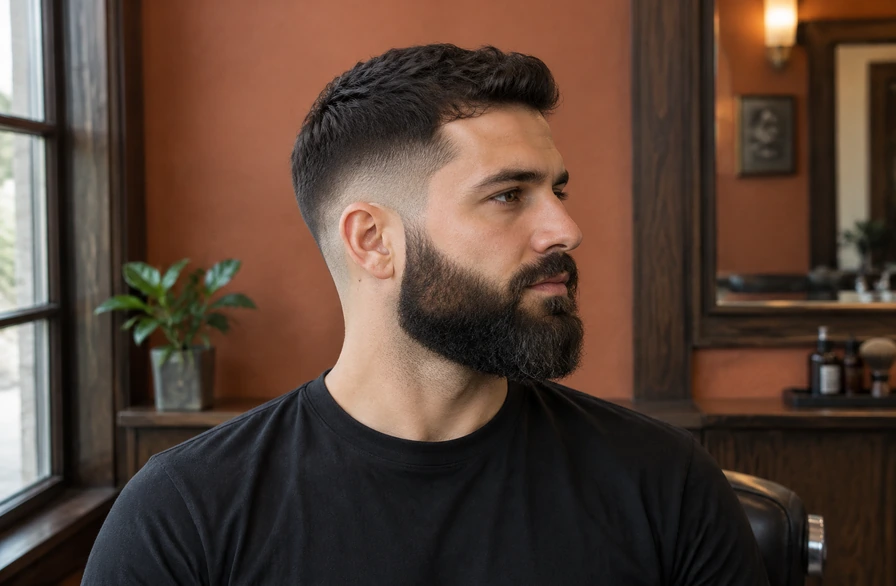
Thick facial hair brings bulk, and bulk needs control. The low taper does a lot of that work by cutting weight out of the sideburn area so the beard doesn’t merge into a big block around your face.Keep the cheek line natural and trim under the jaw. If the beard gets wider than it is long, it will make your face look rounder.
5. Long Beard
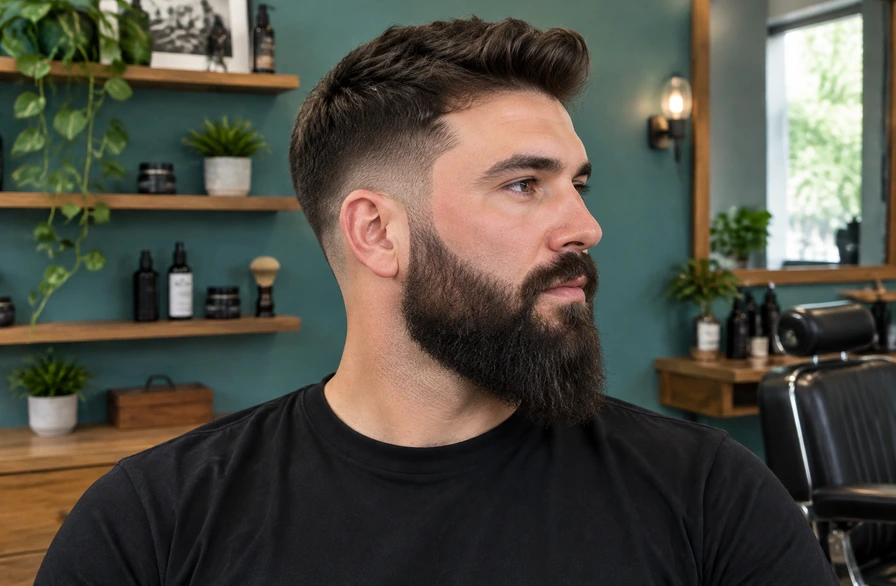
With a long beard, the danger is a head that looks wide at the sides. A low taper fixes that by slimming the area around your ears so the beard gets the attention.Long beards need regular washing and combing, and the ends need trimming to avoid a ragged bottom edge. Ask your barber to shape the bottom rather than leave it blunt.
6. Goatee and Van Dyke
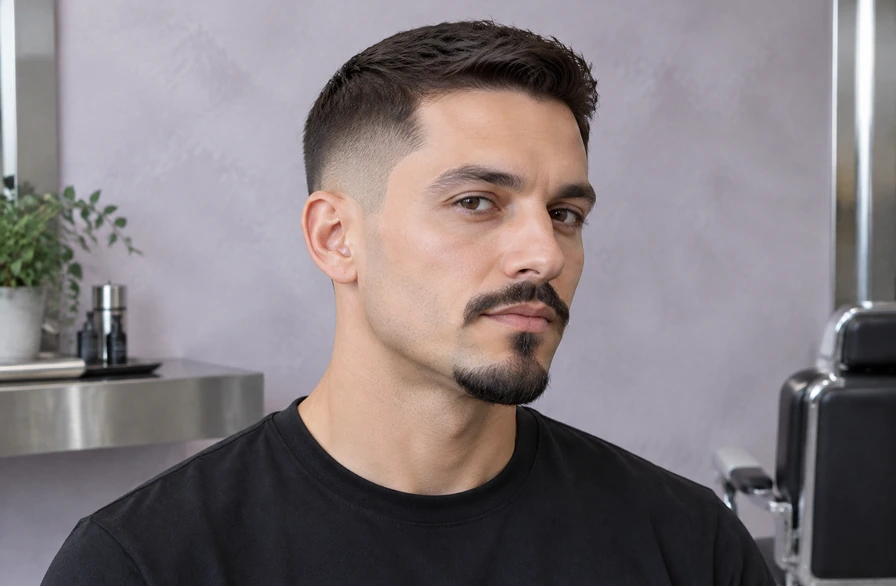
A goatee sits on the chin only. A Van Dyke adds a mustache, and the two parts stay separate. With either one, the cheeks are bare, so there’s nothing for the sideburn to connect to.That actually makes the taper easier. The haircut looks cleaner because there’s less going on at the sides. Keep the chin hair sharp so it doesn’t look like you forgot to shave.
7. Patchy Beard
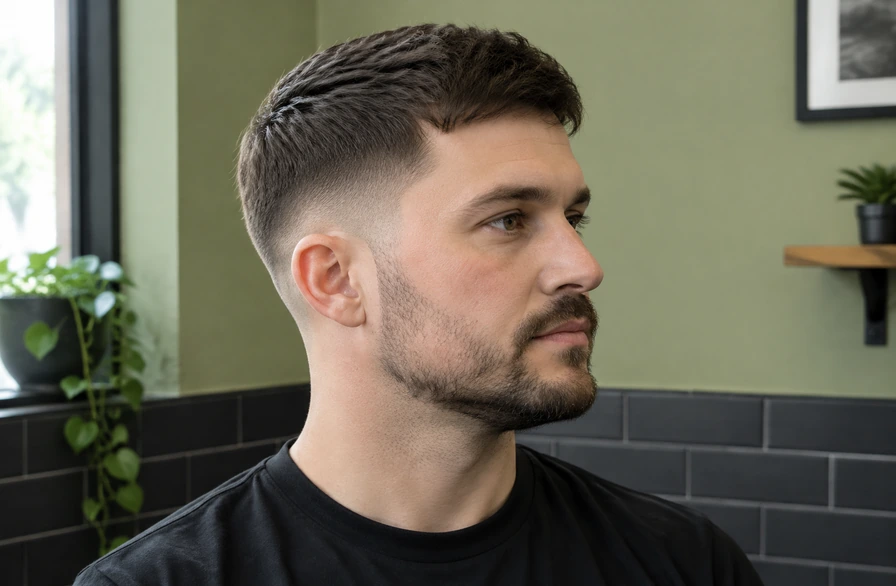
Be honest with your barber about where the gaps are. A shorter beard hides patches much better than a longer one, because longer hair around a patch makes the gap look bigger.Don’t chase symmetry too hard. Ask for an even, short length across the areas that fill in, and let the taper do the neat work around the ears. If a patch sits right at the sideburn, a regular low taper usually looks better than a skin finish.
8. Gray or Salt-and-Pepper Beard
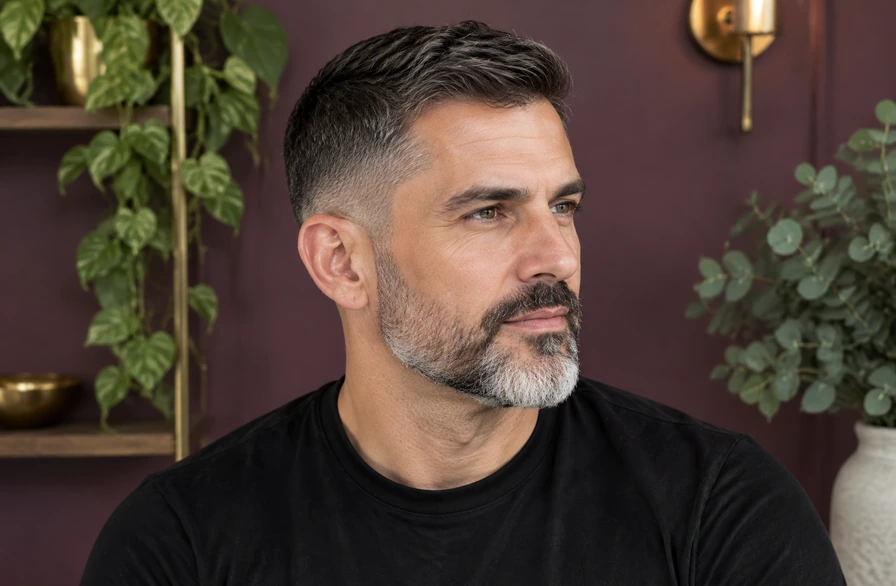
Gray hair in a beard tends to feel coarser and drier than the hair around it [VERIFY]. A beard oil or balm helps keep it from looking wiry.The contrast with a darker top can look sharp, but only if the edges are clean. Uneven gray reads as messy faster than dark hair does, so keep the neckline and cheek line tidy.
Then Choose Your Top Style: 12 Hairstyles That Match
Now the hair. For each one below, I’ve kept the barber instruction short so you can use it as is. Pick the top that fits your hair type, then ask for the low taper underneath.
9. Short Textured Crop
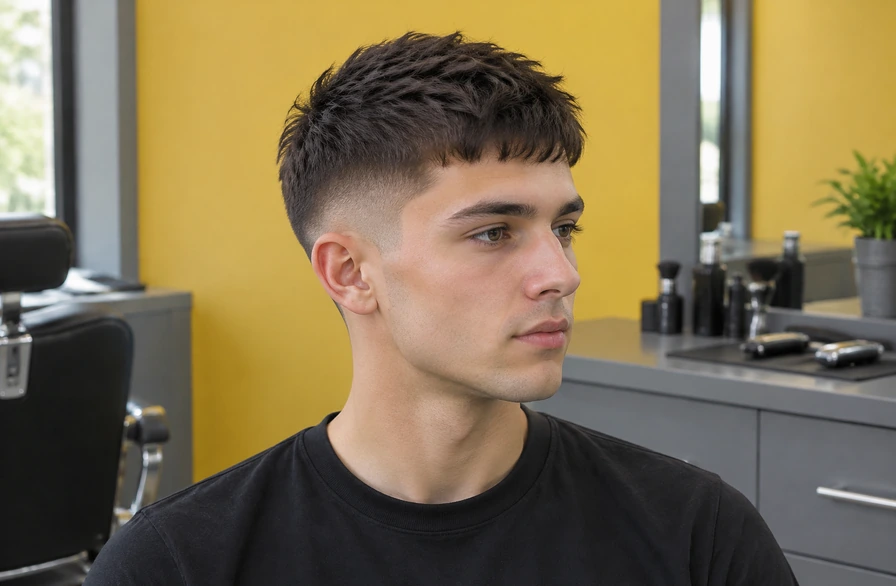
Flat tops are the usual complaint with short hair. The fix is point cutting, where your barber snips small notches into the ends so the hair separates instead of lying in a block.Ask for about 1 to 2 inches on top with texture. Rub matte clay between your palms and work it through dry hair with your fingers. It takes about two minutes.
10. Textured Fringe
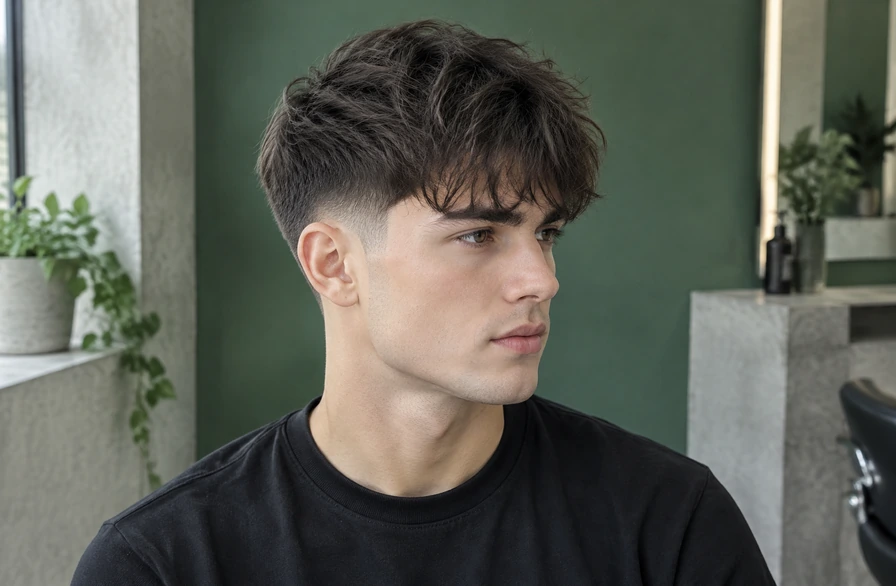
If your forehead is on the larger side, a fringe helps. The hair falls forward and breaks up the space, and a short beard balances it by adding weight lower on the face.Tell your barber where the fringe should land, whether just above the brows or lower. Texture at the ends keeps it from looking heavy.
11. French Crop
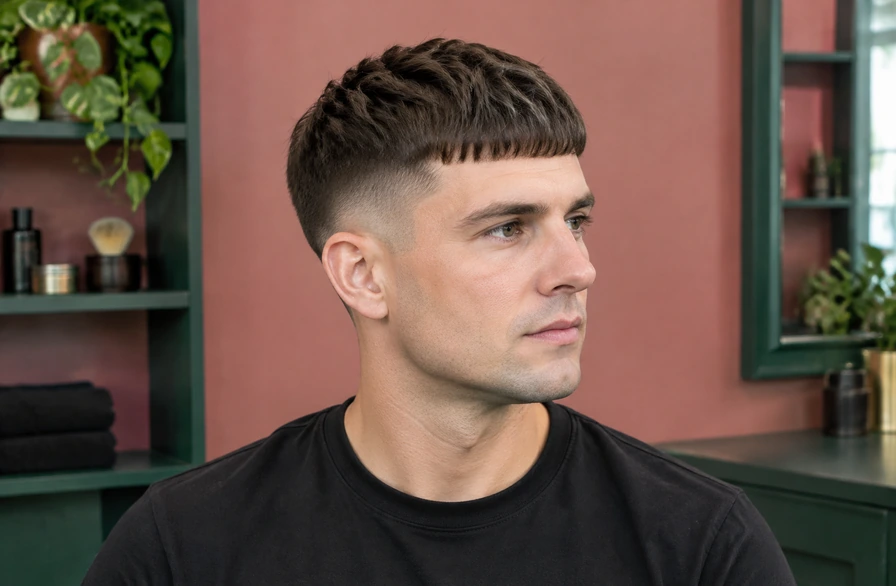
The French crop is a short, straight-cut fringe with a compact textured top. It’s easier to live with than a full Edgar fringe, and it works well with a short beard. If you like a blunter line, look at our guide to the low taper fade Edgar.It suits straight and wavy hair. It’s also a good option if your hairline is starting to recede, since the short fringe hides the front.
12. Quiff
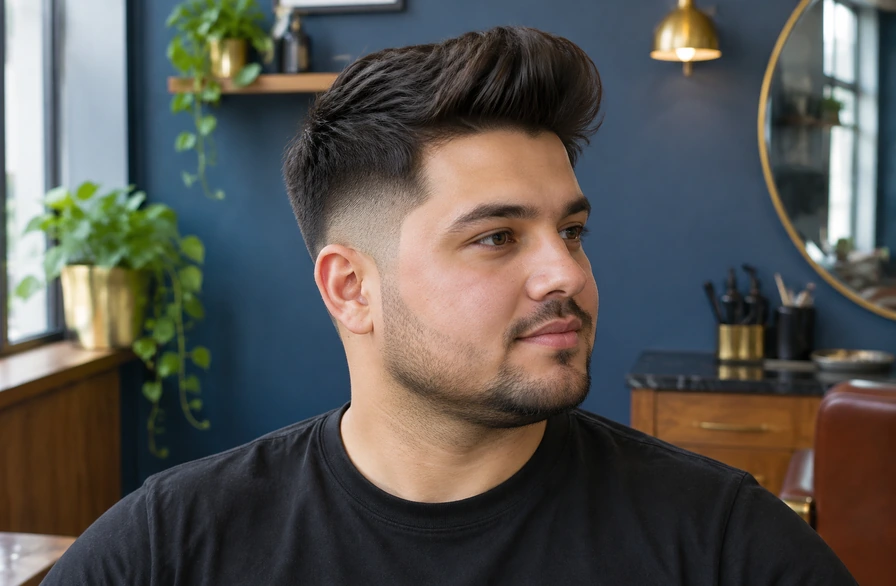
A quiff lifts the front hair up and slightly back. On a round face, that height makes the face look longer, and a beard that’s a bit longer at the chin adds to the effect.Blow-dry the front upward with a brush, then set it with a light-hold paste. Keep the sides short with the taper so the lift looks intentional.
13. Pompadour
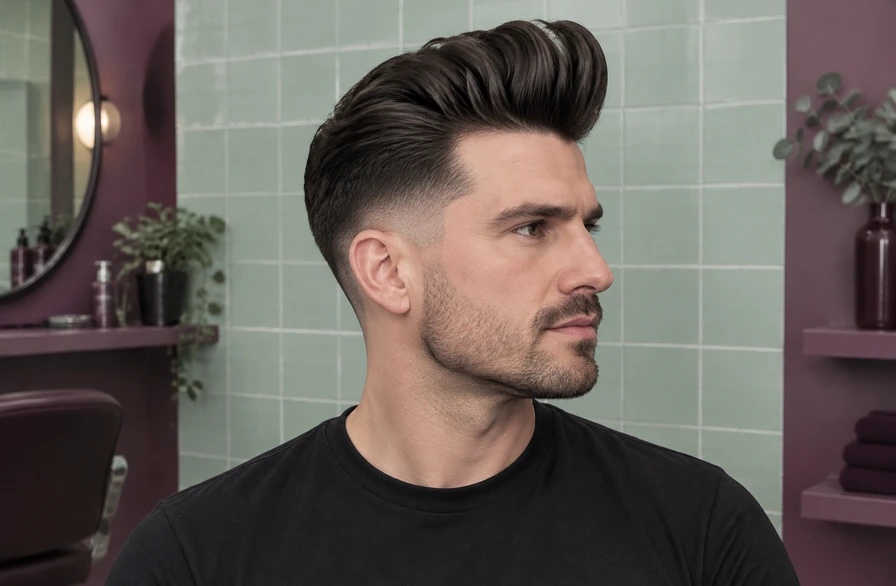
Think of the pompadour as the quiff with the volume turned up. You need around 4 inches on top, and you need a blow-dryer. If you’re not willing to dry your hair every morning, skip it.With a beard, the height balances the weight at the jaw. Ask your barber to leave the sides tight so the shape stays clean.
14. Slick Back
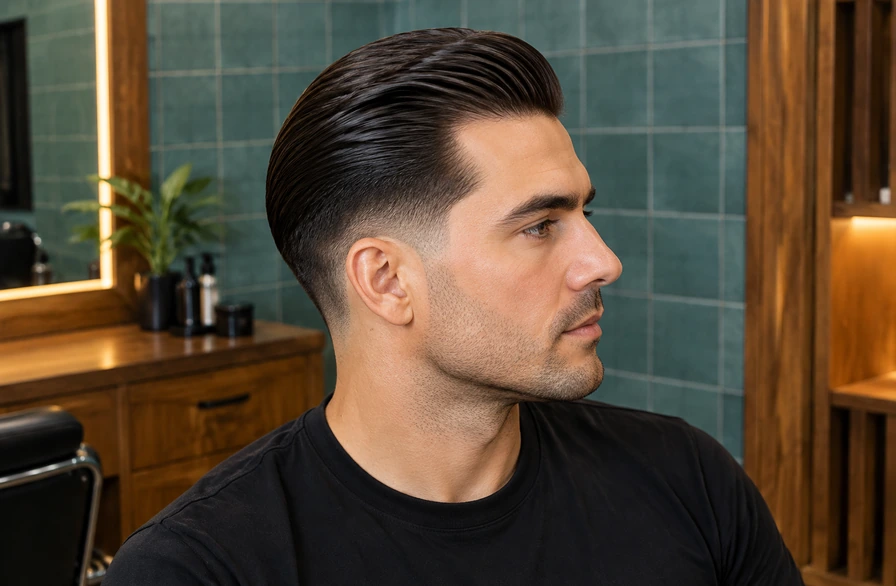
Slick backs work best on thick, straight hair, since that hair type holds a direction without a fight. Use a medium-hold pomade and comb it back while the hair is still damp.The low taper keeps the profile slim, and the beard gives the face some edge. Check your hairline first. A slick back pulls the hair off the forehead, and that can make a receding front more obvious.
15. Hard Part
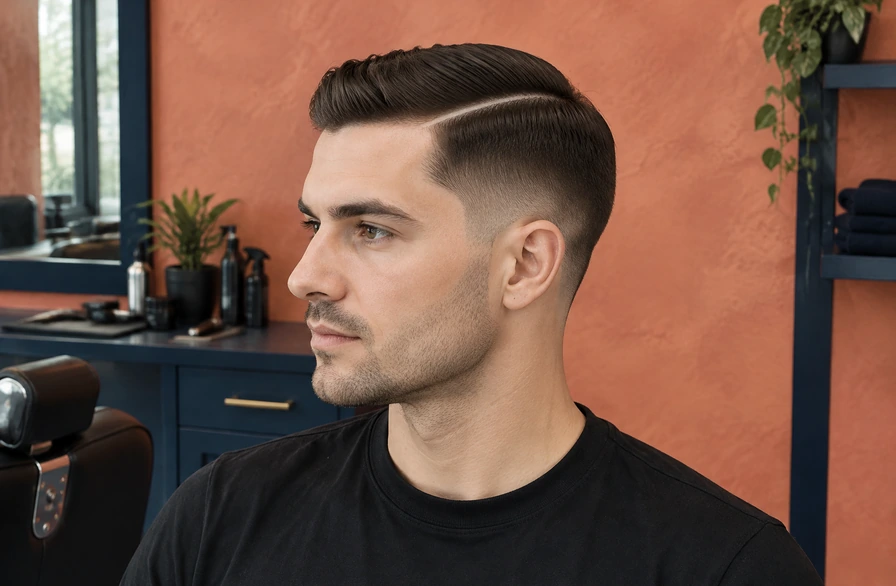
A hard part is a thin line shaved into the scalp to mark where your side part sits. It makes a classic side part look much sharper.The line fades quickly, so plan on a touch-up every 1 to 2 weeks. It also needs to match your beard. A crisp part next to a messy, soft beard looks off, so keep the beard lines tidy.
16. Messy Textured Top
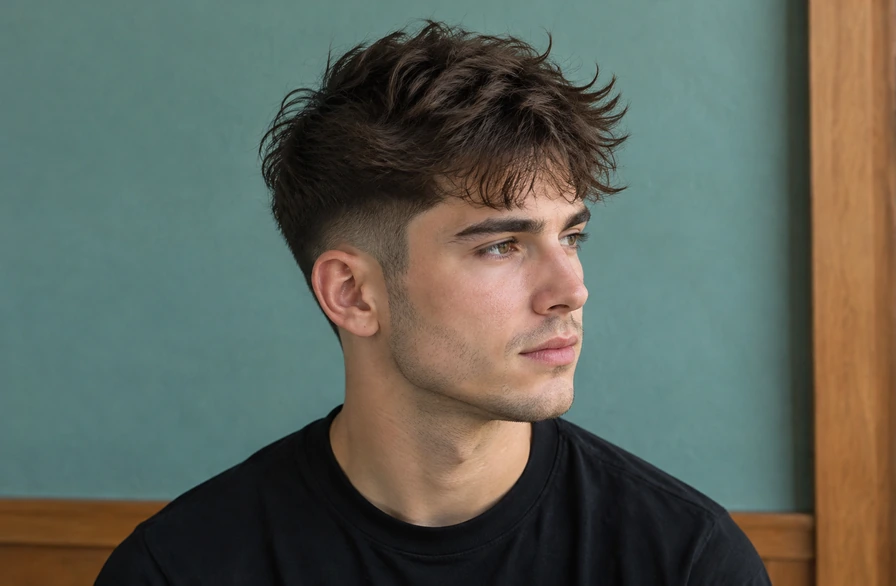
This is the relaxed one. The hair is cut with layers, styled with fingers and left a bit undone. It looks best with a short natural beard.Work a pea-sized amount of paste through dry hair and shake it out. If you comb it, you lose the effect.
17. Buzz Cut or Crew Cut
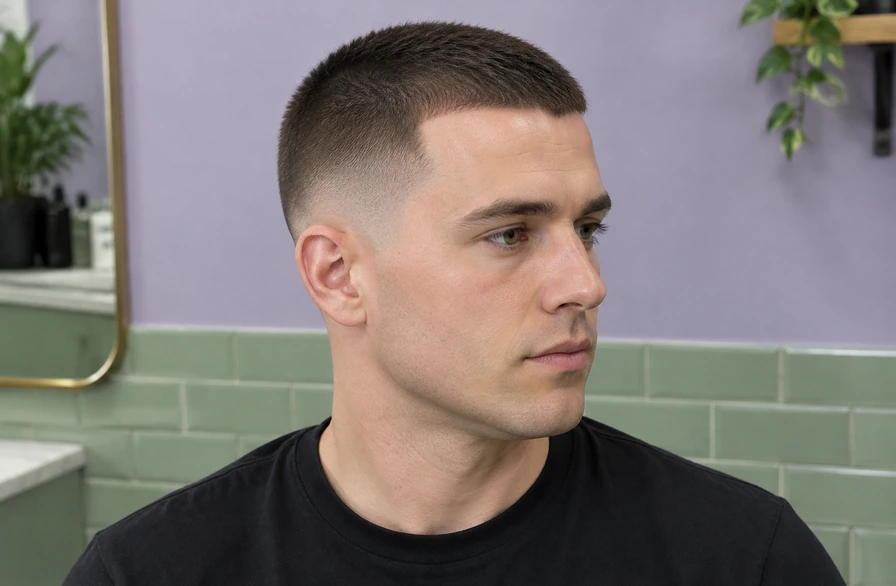
A buzz cut is one even length all over the top, usually a number 2 to 4 guard. A crew cut is slightly longer on top and shorter at the front. Both need almost no styling.Here the beard does the talking, so keep it neat. The low taper adds a little definition around the ears, which a flat buzz otherwise lacks.
18. Curly Top
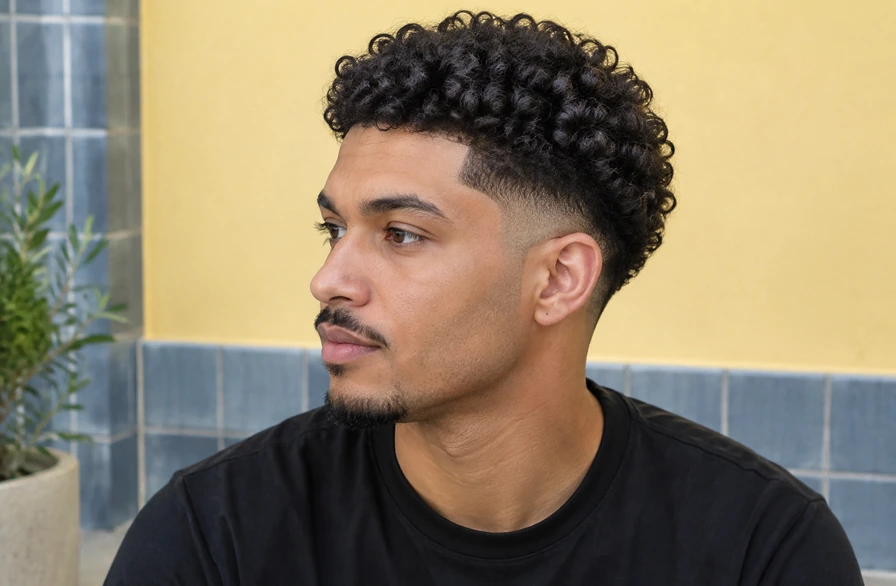
Curls and a low taper work well together because the clean sides stop the hair from flaring out. Keep the top around 3 to 4 inches so the curls have room to form.Ask your barber to cut the curls dry so they can see the real shape. Use a curl cream on damp hair and let it dry naturally or with a diffuser.
19. Waves
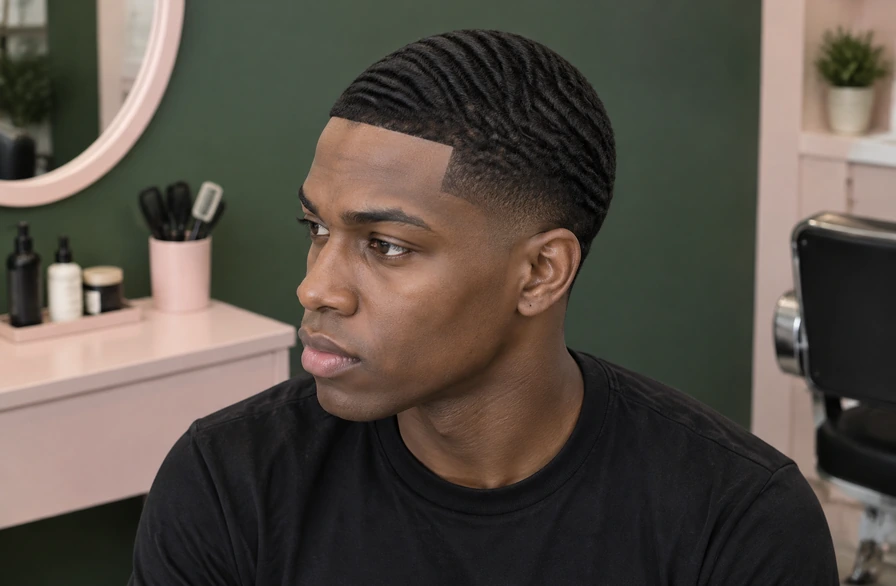
Natural waves add movement, and the taper keeps them looking controlled. A medium length on top shows the wave pattern best.A little sea salt spray or light cream on damp hair is enough. Scrunch it and leave it alone while it dries.
20. Afro, Coily Hair or Twists for Black Men

Coily hair holds a sharp line-up well, and a low taper keeps the sides neat while the top stays full. A line-up between the hairline and the beard makes the whole look cleaner, as long as the beard lines match.Twists need a neat base, and the taper gives them that. Keep the scalp and beard moisturized with a leave-in conditioner or a light oil, and avoid brushing dry hair. If you’re after a deeper breakdown for this hair type, we cover it in our Black haircut guide.
Best Combos by Face Shape
Face shape is a guide, not a rule. It helps you decide how long to keep the beard and how much height to put on top.
Oval Face
Almost anything works. A short to medium beard and a medium top is a safe starting point.
Round Face
Add height on top, like a quiff, and keep the beard a bit longer at the chin than at the sides. That lengthens the face.
Square Face
You already have a strong jaw. A short to medium beard and a soft, textured top keep it from looking too severe.
Diamond Face
A medium beard fills out the chin, and a fringe or textured top adds width at the forehead. Together they balance wide cheekbones.
Heart Face
A fuller beard adds weight to a narrow chin. A side-swept fringe softens a broad forehead.
Oblong Face
Skip tall tops. A short, fuller beard that’s wide rather than long keeps the face from looking stretched.
Hair Type Quick Fixes
Your hair type decides what problem you’ll run into, so here’s a fast guide before the details.
| Hair type | Main problem | Quick fix |
| Straight or fine | Falls flat | Layers and texture powder |
| Thick | Looks bulky | Thin the top, use matte clay |
| Thin or receding | Looks sparse | Short top, low taper, light products |
| Bald or shaved | No hair to taper | Focus on the beard fade |
Straight and Fine Hair
Straight, fine hair gets flat by lunch. Ask for light layers and use texture powder at the roots to give it grip. Heavy pomade makes it worse.
Thick Hair
Thick hair adds bulk, particularly around the ears. A low taper takes weight out of that area, and your barber can thin the top with shears. Matte clay holds it without shine.
Thin or Receding Hair
A low taper keeps density on the upper sides, so thin hair doesn’t look as sparse as it would with a high fade. A short, textured top and a short beard keep the focus balanced.
Avoid heavy waxes. They separate the strands and show the scalp.
Bald or Shaved Head with Beard
With no hair on top, the taper has a different job. If you shave your head, the beard becomes the main feature, so ask your barber for a beard fade that blends into the sideburn area.
Keep the beard at around 1 to 2 inches and the neckline clean. If you wear a close buzz, a number 1 guard with a clean edge around the ears gives you a tidy outline.
What to Tell Your Barber
Most bad results come from vague instructions. These tips remove the guessing.
Copy-Paste Barber Script
Try this, word for word:
“I’d like a low taper fade starting at the sideburns and the back of the neck, nothing higher than the ear. Keep my sideburns connected to my beard and blend it down. Leave about [length] on top with [texture/style]. Beard at [length], with a natural cheek line.”
Fill in the brackets with what you want. If you’ve got a photo, show it.
Where the Beard Neckline and Cheek Line Should Sit
The neckline should sit about one finger width above your Adam’s apple. Too high, and it creates an odd double-chin effect. Too low, and the beard looks like it’s creeping down your throat.
The cheek line should follow your natural growth pattern. A lot of guys ask for it too high and too straight, which makes the beard look thin and drawn on. Let your barber see where the hair actually grows, then trim just above it.
How to Blend the Sideburn into the Beard
Say it plainly: “Keep the sideburn connected and fade it into the beard.” Then point to where you want the change to happen, usually just in front of the ear.
Ask your barber to blend down gradually with a short guard, for example a number 1 or 2, rather than cutting a straight line. If you see a hard line in the mirror before you leave, say so.
What to Avoid Saying
Skip “just clean it up.” It means something different to every barber. “Same as last time” only works if you have a photo from last time.
Also skip “short on the sides,” which can end up as a high fade. Say how high the taper goes, how long the top is, and how long the beard is.
Daily Styling and Beard Care
A good cut makes styling quick. The beard takes a bit more thought.
Five-Minute Styling Routine
- Wash your hair and towel-dry it until it’s damp.
- Rub a pea-sized amount of product between your palms.
- Work it through your hair from the back to the front.
- Style the top with your fingers or a comb, depending on the look.
- Add a few drops of beard oil and comb the beard downward.
Best Products for Hair and Beard
| Product | What it does | Best for |
| Matte clay | Firm hold, no shine | Thick and textured tops |
| Hair wax | Flexible hold | Straight and wavy hair |
| Styling cream | Soft control and moisture | Curly and coily hair |
| Beard oil | Softens hair and moisturizes skin | Short to medium beards |
| Beard balm | Conditions and adds light hold | Longer or coarse beards |
| Beard brush | Smooths hair and spreads oil | Any beard length |
How to Stop Beard Itch and Dryness
Itch is common when a beard is growing in or when the skin underneath is dry. Wash the beard with a gentle shampoo or beard wash two or three times a week, not every day, since washing too often can dry the skin.
Add a few drops of beard oil right after a shower while the skin is still slightly damp. Moisturize the skin underneath if it feels tight. If the itching doesn’t improve or the skin looks red and irritated, see a dermatologist.
How to Maintain a Low Taper Fade with Beard
Maintenance is where this style costs you. The taper, the beard and the lines all age at different speeds.
Barber Visit Schedule
- Taper: every 2 to 3 weeks.
- Line-up: every 1 to 2 weeks if you have a sharp one.
- Beard shaping: every 2 to 4 weeks, depending on length.
If you’re on a budget, stretch the taper visit and keep the neckline clean at home.
How the Cut and Beard Grow Out
Hair grows roughly half an inch a month [VERIFY]. In week one, everything looks sharp. By week two, the neckline starts to show stubble and the sideburn blend softens.
By week three or four, the taper starts to look fuzzy and the beard outline loses its shape. That’s the point where most guys book the next visit.
Touch-Ups You Can Do at Home
Between visits, tidy the neckline with a trimmer and remove stray hairs from the cheeks. Don’t reshape the cheek line or the sideburn blend unless you’ve done it before. It’s easy to take off too much, and you can’t put it back.
Low Taper Fade with Beard vs Other Options
Here’s how this cut compares to a few common alternatives.
| Option | Fade height | Contrast | Upkeep |
| Low taper with beard | Low | Subtle | Every 2 to 3 weeks |
| Skin fade with beard | Mid to high | Bold | Every 1 to 2 weeks |
| Mid fade with beard | Mid | Medium | Every 2 to 3 weeks |
| Low taper without beard | Low | Subtle | Every 2 to 3 weeks |
| Bald fade with beard | High | Very bold | Every 1 to 2 weeks |
vs Skin Fade with Beard
A skin fade takes the hair down to bare skin and usually covers a larger area. It looks sharp and bold, but it needs more frequent touch-ups, and the skin can feel sensitive after a close finish. A low taper is softer and lasts longer. You can read more in our low taper skin fade guide.
vs Mid Fade with Beard
A mid fade starts around the temple, so the sides get shorter and the contrast with the top is stronger. It looks more defined, but it removes more hair. If you want the beard to be the focus, stay with the low taper.
vs Low Taper Without a Beard
Without a beard, the haircut does all the work, and the face is more exposed. With a beard, the jawline gets more definition and the taper has to connect with something. The cost is extra grooming, since you’re now maintaining both the hair and the beard.
vs Bald Fade with Beard
A bald fade goes to skin over a large area and often leaves a very short top. It’s high contrast and sharp. The low taper keeps more natural hair on the sides, so it suits conservative settings better.
Common Mistakes to Avoid
A few simple errors cause most bad results.
Letting the Taper Go Too High
If you don’t say “low,” your barber might choose the height. Use your ear as a reference point and tell them not to go above it.
Choosing a Beard Length That Fights Your Face Shape
A long, wide beard on an already round face adds more width. Match the length to your face shape, and ask your barber for an honest opinion before you commit.
Setting the Neckline Too High
A neckline that sits up on the jaw makes a double-chin look. Keep it about one finger above your Adam’s apple.
Over-Sharpening the Cheek Line
A cheek line cut too low makes the beard look thin and drawn on. Follow your natural growth and trim just above it.
Using Too Much Product
A pea-sized amount is usually enough. More than that makes hair greasy and flat, especially fine hair.
Skipping Regular Trims
After about four weeks, the taper loses its shape and the beard looks untidy. Book your next visit before you leave the chair.
Low Taper Fade with Beard FAQs
Conclusion
Start with your beard, then match the top. A short boxed beard suits an office and needs daily lines. A short natural beard is easier. Full and long beards need more control, and patchy beards do better with a shorter length and a regular taper.
For hair, straight and fine types need texture, thick hair needs weight taken out, and curls need length on top. If you’re thin or receding, keep the top short and the beard neat. If you shave your head, ask for a beard fade.
If you’re not sure where to begin, ask for a low taper, a short natural beard and a textured crop. It’s easy to style, it’s forgiving between visits, and your barber can adjust it from there.

Daniel Carter
Hi, I’m Daniel Carter, the founder of The Fade Haircuts. I’m passionate about men’s hairstyles, modern fade cuts, and grooming trends. Through this website, I share hairstyle inspiration, detailed haircut guides, and practical grooming tips to help men find their perfect look.
Learn More About Us →