
15 Best Mullet Fade Haircuts for Men (2026) | Styling Guide

The mullet fade haircut has gone from a joke to a genuine barbershop staple. Walk into any busy shop today and you’ll hear at least two people asking for short, tight sides with some weight left at the back. It’s no longer a costume. It’s just a good haircut.
What changed is the fade. The old mullet had heavy sides and a hard line where the length started. The modern version blends everything, so the transition looks deliberate instead of accidental. That single difference is why footballers, musicians and regular guys with office jobs are all wearing a version of it.
This guide covers 15 styles, who each one suits, what to say at the barbershop, how to cut it step by step, and what it takes to keep it looking sharp. If you’re trying to decide whether this cut works for your hair and your life, you’ll have an answer by the end.
What Is a Mullet Fade Haircut?
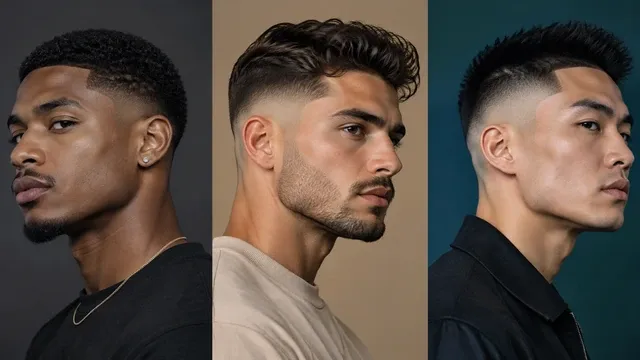
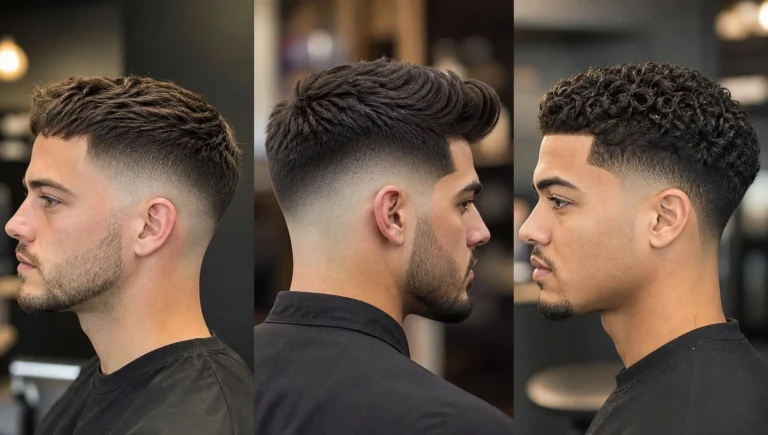
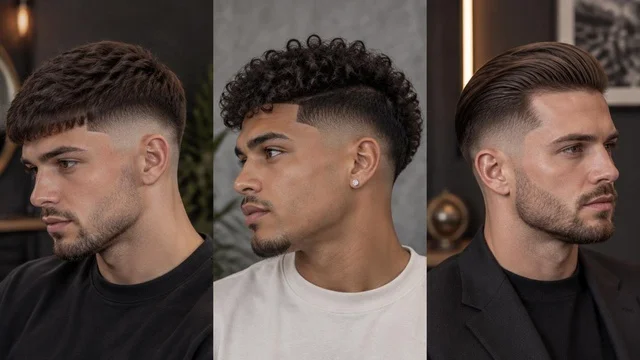
A mullet fade haircut keeps length at the back while the sides are cut short and blended upward into the longer hair. The fade can sit low near the ears, halfway up the head, or high near the temples, depending on how much contrast you want.
The top is usually medium length with texture. The back is the part that defines it, sitting anywhere from just past the collar line to well below it. The Fade Haircut is what stops the whole look from feeling dated. Instead of a sharp drop from short to long, you get a gradual shift that makes the style look intentional.
Barbers usually cut this in two stages: they shape the length first, then build the fade into it. Doing it the other way round is how people end up with a disconnected mess.
Mullet Fade vs Classic Mullet — What’s the Difference
The classic mullet from the 80s had bulk everywhere. The sides were scissor-cut and left thick, the top was often flat, and the back was heavy. There was no blending involved.
The mullet fade strips the sides right down with clippers and blends them. The weight is removed from the sides entirely, which makes the back length look like a design choice rather than neglect. Most modern versions also add texture through the top and crown so the hair moves instead of sitting flat.
In short: same silhouette from behind, completely different from the side.
Mullet Fade vs Wolf Cut vs Shag
These three get confused constantly, so here’s the simple version.
| Style | Sides | Back | Overall Feel |
| Mullet fade | Clipper faded, very short | Longest section, clearly separate | Sharp, structured |
| Wolf cut | Left long, layered | Long and shaggy | Soft, rock-inspired |
| Shag | Layered, no fade | Medium, heavily layered | Messy, retro |
The wolf cut is essentially a mullet crossed with a shag, with no clipper work at all. The shag is all about layers and fringe, with even length around the head. The mullet fade is the only one of the three that uses clippers to create contrast.
If you want something low-maintenance and soft, the wolf cut is easier. If you want something that looks freshly cut and crisp, the fade is the one.
Why Mullet Fade Is Trending in 2026
A few reasons, and none of them are complicated.Fades have dominated men’s hair for over a decade, so the technique is everywhere and every barber can do one. Adding length at the back gave guys a way to keep the fade they already liked while looking less like everyone else.Sports culture pushed it hard. Footballers and MMA fighters wearing versions of it put the look in front of millions of people every weekend.
And practically, it’s flexible. You can wear it subtle enough for a corporate office or bold enough for a night out, and the difference is mostly fade height. That range is rare in men’s hair.
How Much Hair Length Do You Need for a Mullet Fade?
This is the question that trips most people up. They book the appointment, sit down, and find out their hair isn’t long enough yet.
Minimum Back Length Required
You need roughly 3 to 4 inches at the back for a mullet fade to read properly. Below that, the length doesn’t clear the collar and the cut just looks like an uneven taper.
For the top, 2 to 3 inches is enough to create texture and height. The sides don’t matter since they’re getting clipped anyway.
If you’re currently sitting at 2 inches in the back, you’re around six to eight weeks away. Hair grows about half an inch per month for most people, though this varies.
Growing Out Timeline (Month by Month)
The awkward phase is real, but it’s shorter than people expect if you handle it properly.
Month 1 to 2: The back is between lengths and sits oddly on the neck. Ask your barber to clean the fade only and leave the back completely alone. Resist the urge to “tidy up” the back.
Month 3: The back starts clearing the collar. This is usually the first point where a barber can shape a proper mullet outline. You can get your first real mullet fade here.
Month 4 to 5: You’ve got enough length for texture and movement. This is where the cut starts looking like the reference photos.
Month 6 and beyond: Full length. From here it’s maintenance rather than growth, and you can push toward longer styles like the wolf mullet if you want.
The trick during growing out is keeping the sides tight. A clean fade makes the in-between stage look intentional rather than unkempt.
15 Best Mullet Fade Haircut Styles for Men in 2026
Each style below includes who it suits, what to ask for, and how much upkeep it needs.
Burst Fade Mullet Haircut

The burst fade curves around the ear in a semicircle, then releases upward into the length behind it. Because the fade follows the shape of the ear rather than cutting straight across, it leaves more hair at the back of the head, which flows naturally into the mullet section. This is the most popular version right now and probably the one you’ve seen most.The rounded shape is forgiving. It softens the jump from short to long, so the cut looks connected even when the back is quite long.
- Best For: Thick, wavy and curly hair
- Face Shape: Oval, square, diamond
- Clipper Guard: Skin or 0.5 at the ear, blending to a 2 behind it
- Maintenance Level: Medium, reshape every 3 weeks
- Styling Tip: Work sea salt spray into damp hair and scrunch upward, then air dry for natural separation
Low Taper Fade Mullet Haircut

Here the fade is restricted to the very bottom of the sideburn and around the nape, leaving the bulk of the side hair intact. From the front you barely notice any fade at all, which is exactly the point.This is the version to pick if you work somewhere conservative or you’re not sure you want to commit. The mullet reads as “slightly longer hair at the back” rather than a statement.
- Best For: Straight and fine hair
- Face Shape: Round, long, heart
- Clipper Guard: 1 at the base, blending to a 3 or 4
- Maintenance Level: Low, every 4 to 5 weeks
- Styling Tip: A light cream rather than clay keeps fine hair from separating into strands
Skin Fade Mullet Haircut

The Skin Fade Haircut takes the sides down to bare skin, usually with a foil shaver for the lowest section. The contrast against the longer hair at the back is as strong as it gets, making the mullet the undeniable focus of the cut. Be honest with yourself about upkeep before choosing this style. Skin fades show regrowth within days, and by week two, the effect is noticeably softer.
- Best For: Thick, dense hair with good coverage
- Face Shape: Oval, square
- Clipper Guard: Foil shaver to zero, blending through 0.5, 1 and 2
- Maintenance Level: High, every 10 to 14 days
- Styling Tip: Use a matte clay and leave the top slightly imperfect, since a rigid style fights the sharpness of the fade
Taper Fade Mullet Haircut

A taper fade shortens gradually around the hairline and neckline without exposing skin. It’s the most classic fade type and the most workplace-friendly.The difference between this and the low taper above is coverage. A standard taper carries a bit further up the side, giving slightly more shape while still staying subtle.
- Best For: Most hair types, especially medium thickness
- Face Shape: Square, oval, long
- Clipper Guard: 1 to 2 at the perimeter, blending to a 4
- Maintenance Level: Low to medium, every 4 weeks
- Styling Tip: Comb the top slightly back and to the side so the shape stays tidy without product build-up
Curly Mullet Fade Haircut

Curls do most of the work here. The fade removes bulk from the sides, and the curl pattern at the back and top provides volume without any styling effort.One thing barbers get wrong on curly hair is cutting it wet and taking off too much. Curls shrink significantly as they dry. A good barber will either cut dry or leave extra length to account for shrinkage.
- Best For: Curly and coily hair (3A to 4B patterns)
- Face Shape: Oval, square, heart
- Clipper Guard: 0.5 to 1 on the sides, with a burst or low shape
- Maintenance Level: Medium, fade every 3 weeks, length trimmed every 8 to 10 weeks
- Styling Tip: Curl cream on soaking wet hair, then diffuse on low heat. Touching curls while drying causes frizz
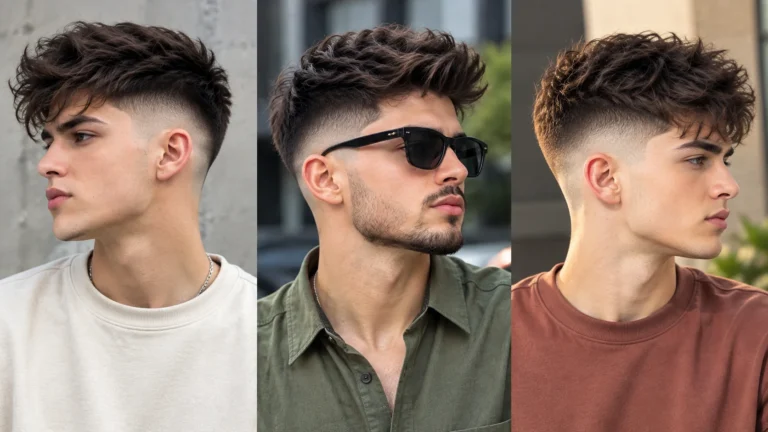
Mid Fade Mullet Haircut

The Mid Fade Haircut begins around the temple, roughly halfway between the ear and the top of the head. It’s the middle ground between the low and high versions and works for most people who aren’t sure which way to go. The mid fade suits guys who want visible contrast without the severity of a high fade. It also frames the face reasonably well without narrowing it too much.
- Best For: Straight and wavy hair of medium density
- Face Shape: Oval, square, diamond
- Clipper Guard: 0.5 or 1 at the bottom, blending to a 3 at the temple
- Maintenance Level: Medium, every 3 weeks
- Styling Tip: Medium-hold pomade keeps the top controlled while letting the back move freely
Drop Fade Mullet Haircut

The fade line dips downward behind the ear in a gentle arc, following the curve of the skull. It’s closely related to the burst fade but the drop is longer and flatter rather than circular.This one is excellent if you have a flatter back of the head, because the shape it creates adds visual roundness.
- Best For: Straight and wavy hair
- Face Shape: Long, oval, round
- Clipper Guard: 0.5 rising to a 2, following the drop line
- Maintenance Level: Medium to high, the drop line loses definition quickly
- Styling Tip: Ask your barber to keep the drop line visible rather than blending it flat, since the shape is the whole point
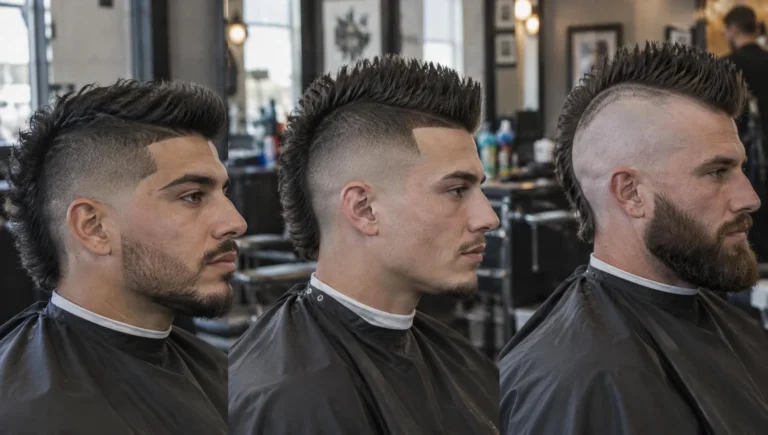
Mohawk Mullet Fade Haircut

The sides go very short while a defined strip of hair runs down the centre and continues into the mullet at the back. It’s the boldest style on this list and it doesn’t hide.Length matters here. Too short in the middle and it just looks like a faded crop. You want at least 3 inches through the centre to get the effect.
- Best For: Thick hair that holds height
- Face Shape: Oval, square (avoid if your face is very long)
- Clipper Guard: Skin or 0.5 on the sides, high fade placement
- Maintenance Level: High, both for the fade and for daily styling
- Styling Tip: Blow dry the centre strip straight up with a firm-hold product, then finish with hairspray
Low Fade Mullet Haircut

The Low Fade Haircut sits low and follows the natural hairline around the ears and nape. Unlike a taper, it uses shorter guards, so there’s a clearer short-to-long shift, just positioned lower on the head. It’s a good compromise if you want the fade to actually be visible but don’t want it dominating the cut.
- Best For: All hair types, particularly good for thinner hair
- Face Shape: Round, long, heart
- Clipper Guard: 0.5 at the base, blending to a 3
- Maintenance Level: Low to medium, every 3 to 4 weeks
- Styling Tip: Brush the top back and slightly to one side to add width where the fade removed it
High Fade Mullet Haircut

The fade climbs high, sometimes close to the crown, leaving a narrow band of length running back into the mullet. It’s dramatic and it’s sporty, which is why so many athletes wear it.Be aware that a high fade narrows the head visually. If your face is already long and narrow, this will exaggerate that.
- Best For: Thick, coarse hair
- Face Shape: Round, square (best for wider faces)
- Clipper Guard: Skin or 0.5 through most of the side, blending to a 2 near the crown
- Maintenance Level: High, every 2 weeks
- Styling Tip: Blow dry the front upward with a vent brush to add height and balance the narrow sides
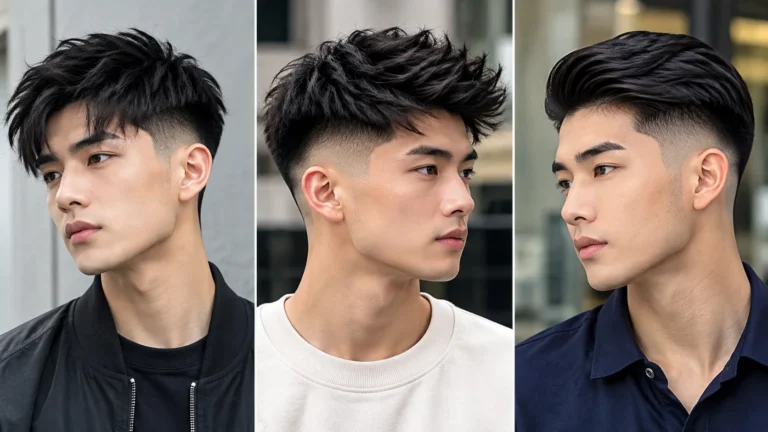
Burst Fade Mullet for Straight Hair

Straight hair behaves differently in a mullet, and pretending otherwise is why some people end up disappointed. It lies flat, it separates, and it shows every line. The upside is that it creates a very clean, sleek silhouette that curly hair can’t match.The burst fade works particularly well on straight hair because the rounded shape softens the flatness and stops the cut from looking two-dimensional.
- Best For: Straight hair, including fine and Asian hair types
- Face Shape: Oval, square, diamond
- Clipper Guard: 0.5 at the ear with a rounded burst, blending to a 2
- Maintenance Level: Medium, every 3 weeks
- Styling Tip: Blow dry with a round brush, lifting at the roots. Straight hair needs heat to get volume that product alone won’t create
Side Fade Mullet Haircut

The emphasis here is on the sides being noticeably shorter than everything else, with volume concentrated on the top and back. The side profile is what this cut is built around, which makes it good for photographs and for anyone who wants a strong outline.It differs from other entries in that the fade is less about gradual blending and more about creating a clear shape on the side of the head.
- Best For: Wavy and textured hair
- Face Shape: Oval, round, square
- Clipper Guard: 1 on the sides, blending to a 3 on top of the parietal ridge
- Maintenance Level: Medium, every 3 weeks
- Styling Tip: Texture spray on dry hair, then push the top upward and slightly back with your fingers
Short Fade Mullet Haircut

Everything is scaled down. The back sits just at or slightly past the collar, the top is shorter, and the whole cut is easier to manage. This is the practical option.It’s also the best starting point if you’re testing whether a mullet suits you. If you hate it, you’re three weeks from a normal haircut instead of three months.
- Best For: Fine and thinning hair, and anyone with limited styling time
- Face Shape: All face shapes
- Clipper Guard: 1 to 2 on the sides, blending to a 3
- Maintenance Level: Low, every 4 weeks
- Styling Tip: A small amount of clay rubbed between the palms and raked through is all this needs
Textured Wolf Mullet Fade

A newer hybrid that borrows heavy layering from the wolf cut and pairs it with a low fade. The top and crown are cut into aggressive layers so the hair falls in separated pieces rather than one solid mass, while the sides stay clipped.The result is softer and shaggier than a traditional mullet fade, with a slightly undone quality. It’s become popular with guys who like the mullet shape but find the sharper versions too formal.
- Best For: Wavy hair of medium to thick density
- Face Shape: Oval, square, heart
- Clipper Guard: 1 to 2, low fade placement only
- Maintenance Level: Low, every 5 to 6 weeks
- Styling Tip: Skip the blow dryer. Apply a light texturising cream to damp hair and let it dry naturally
Temple Fade Mullet with Line Design

A temple fade tightens the corners of the hairline specifically, creating clean edges at the temples while the rest of the side stays slightly longer. Add a razor line, either a single clean line above the fade or a small geometric detail, and you get a cut with a personal signature.Keep the design simple. One or two clean lines age well. Elaborate patterns look dated quickly and grow out awkwardly.
- Best For: Coarse, dense hair that holds a crisp line
- Face Shape: Round, square, oval
- Clipper Guard: Skin at the temple corners, blending to a 1 or 2
- Maintenance Level: High, lines fade visibly within 10 days
- Styling Tip: Keep styling minimal so the line work stays the focal point
How to Choose the Right Mullet Fade for You
By Face Shape (Round, Square, Oval, Long, Heart)
Round: Go for a high or mid fade. Removing width at the sides and adding height on top makes the face look longer and more angular. Avoid heavy volume at the sides.
Square: You can wear almost anything. A burst fade or mid fade complements a strong jaw without competing with it. Softer texture on top balances sharp features.
Oval: The most flexible shape. Any fade height works. Choose based on lifestyle rather than facial proportions.
Long: Stay low. A low fade or taper keeps some width at the sides, which stops the face looking stretched. Avoid high fades and tall styling on top.
Heart: A wider forehead with a narrow chin benefits from fullness lower down. A low or burst fade with texture around the jawline area helps balance the proportions. A beard helps a lot here too.
By Hair Texture (Straight, Wavy, Curly, Coily, Thin)
Straight: Skin fades, mid fades and burst fades all work. You’ll need heat styling for volume because straight hair won’t create it on its own.
Wavy: Arguably the ideal texture for this cut. Waves give natural movement in the back section with minimal effort. A low or mid fade suits best.
Curly: Burst and drop fades are your friends. They follow the natural round shape of curls. Make sure your barber accounts for shrinkage.
Coily: A skin fade or burst fade creates strong definition against dense coils. Keep the back well moisturised so the length stays defined rather than compacting.
Thin or fine: Go low. A low fade or short fade preserves the appearance of density. Avoid skin fades, which can make sparse areas more obvious. Use volumising powder instead of heavy waxes.
By Lifestyle and Workplace
If your workplace is formal, a low taper fade mullet with the back kept just above or at the collar reads as tidy. Most people won’t register it as a mullet at all.
Creative fields, trades, hospitality and student life all accommodate bolder versions comfortably. High fades, skin fades and line work are fine.
Consider your time realistically. A skin fade needs a barber visit every two weeks. If you can’t commit to that, a taper fade version will look better on week three than a neglected skin fade will.
If you train or play sport, length at the back gets sweaty and sticks to the neck. A short fade mullet or a slightly shorter back section handles this better.
By Age Group
Teens and early twenties: Anything goes. Burst fades, mohawk mullets and line designs all suit this age group and the styling time is usually available.
Mid twenties to thirties: Mid fades, burst fades and taper fades hit the balance between current and professional. This is the range where most guys land.
Forty and up: A low taper fade or short fade mullet works well and doesn’t look like you’re chasing a trend. Keep the back moderate and the top textured rather than spiky. Softer versions age far better than dramatic ones.
What to Ask Your Barber (Exact Script)
The Words to Use at the Barbershop
Being specific saves you from a haircut you didn’t want. Here’s a script you can adapt:
“I’d like a mullet fade. Can you do a [burst / low taper / mid] fade on the sides, starting around [the ear / the temple]. Keep the back long, around [X] inches, and please don’t take length off the back beyond cleaning up the shape. Leave the top textured, about [X] inches, and blend the fade into the back rather than disconnecting it.”
Then add one of these depending on your priority:
- “I’d rather it be too long than too short, I can always come back.”
- “I need it to look tidy for work, so keep the fade low.”
- “I want strong contrast, so take the sides right down.”
Always mention the back length explicitly. Barbers who don’t cut many mullets default to tidying the back, which removes exactly the length you’re trying to keep.
Clipper Guard Numbers Explained
Guards are numbered by the length they leave behind. Knowing these lets you describe what you want precisely.
| Guard | Length left |
| Zero / foil shave | Bare skin |
| 0.5 | About 1.5 mm |
| 1 | About 3 mm |
| 2 | About 6 mm |
| 3 | About 10 mm |
| 4 | About 13 mm |
A typical mid fade mullet runs a 0.5 at the bottom, a 1 above it, a 2 above that, and a 3 near the top of the fade, with the barber blending between each step. A low taper might start at a 1 and finish at a 4.
“Open lever” refers to adjusting the clipper lever to create in-between lengths, which is how barbers smooth the transitions between guards.
Reference Photos You Should Bring
Bring three photos, not one.
Take a side profile showing the fade height you want, a back view showing the length and shape, and a photo of someone with similar hair texture to yours. That last one matters most. A picture of a straight-haired mullet means very little if your hair is curly.
If you can, bring a photo of a haircut you didn’t like too. Knowing what to avoid is useful information for a barber.
Mullet Fade Haircut — Step-by-Step Tutorial
This is how a barber approaches the cut. Read it even if you’re not cutting it yourself, since knowing the order helps you understand what’s happening in the chair.
Step 1 — Wash, Dampen and Section the Hair
Start with clean, damp hair. Product residue makes hair behave unpredictably under clippers.
Section the hair into three: left side, right side, and the central panel running from the front hairline back through the crown. Clip the sections away. Clean sectioning is what keeps the cut symmetrical.
Step 2 — Debulk and Set the Fade Guideline
Before any detailed work, remove bulk from the sides with a 4 guard. This gives you a clear view of the head shape.
Then establish the guideline, the lowest and shortest line of the fade, using an open lever or a 0.5 depending on how tight you’re going. Set this near the temple for a high fade, at the top of the ear for a mid, and just above the hairline for a low. Getting this line right is the single most important part of the fade.
Step 3 — Cut the Top Section and Set Length Guide
Unclip the central panel. Take your first section at the front and cut it to the desired length, usually 2 to 3 inches. This becomes the guide for everything else on top.
Work backward toward the crown, pulling each section forward to the previous one so the length stays consistent. Point cutting into the ends here adds texture and keeps the top from looking blunt.
Step 4 — Shape the Fringe and Back Length
Comb the fringe forward and check it falls evenly across the forehead. Adjust with vertical point cuts rather than straight horizontal cuts, which look harsh.
Move to the back. Comb the length straight down and decide on the outline shape: square for a bold look, rounded or V-shaped for something softer. Remove only the ends. The back is the reason for the haircut, so restraint matters here.
Step 5 — Blend the Fade (Open Lever to Guard Two)
Work upward from the guideline in stages. Open lever first, then close the lever. Move to a 1, open lever, close. Then a 2. Each step should overlap the previous one slightly.
Use a flicking motion, lifting the clipper away from the head as you reach the top of each pass. Stopping flat against the scalp leaves a visible line. Check your work from multiple angles and in the mirror behind the chair.
Step 6 — Blow Dry and Define the Texture
Dry the hair before final detailing. Wet hair hides the true shape, and what looks even when damp can be uneven when dry.
Use a diffuser on curly hair, moving slowly and letting the curls set. For straight hair, a nozzle and round brush at the roots creates lift. Direct heat away from the scalp on the fade area since it isn’t needed there.
Step 7 — Detail with Clipper-Over-Comb and Thinning Shears
Now blend the fade into the longer hair. Clipper-over-comb through the transition zone removes any remaining step between short and long.
Thinning shears go into the top and the back to remove weight and create movement. Use them sparingly, working into the mid-lengths rather than the ends. Overusing thinning shears creates frizz and wispy ends that take months to grow out.
Step 8 — Line Up, Edge and Finish with Product
Use a trimmer to clean the perimeter around the ears and follow the natural arch. Don’t create new hairline where none exists, since it grows back as stubble and looks worse than the original line.
Clean the nape only where the fade is, leaving the mullet section untouched.
Finish with volumising powder at the roots for lift, then a small amount of matte clay through the mid-lengths. Style with fingers rather than a comb for a natural finish.
How to Style a Mullet Fade Haircut at Home
Best Products for Each Hair Type
Fine or thin hair: Volumising powder at the roots plus a light texturising spray. Avoid anything creamy or oil-based, which weighs hair down and exposes the scalp.
Medium and straight hair: Matte clay is the reliable choice. It gives hold without shine and can be restyled through the day.
Thick or coarse hair: A medium-hold pomade or fibre paste controls bulk better than clay, which can struggle against dense hair.
Wavy hair: Sea salt spray on damp hair, then a small amount of cream once dry to reduce frizz.
Curly and coily hair: Curl cream or leave-in conditioner applied to soaking wet hair. A light oil on the back section afterwards keeps the length defined.
You need two products at most. More than that and you’re overcomplicating it.
Blow Drying Technique for Volume
Start with hair around 70 percent dry. Soaking wet hair takes too long and drying it fully first defeats the purpose.
Point the dryer at the roots, not the ends. Use your fingers or a vent brush to lift hair away from the scalp while directing heat at the base. Work against the direction you want the hair to eventually sit, then let it fall back.
Finish with a blast of cool air. This sets the shape and is the step most people skip.
For the back section, dry it downward with a brush if you want it sleek, or scrunch it upward if you want texture.
Styling the Back Section Properly
The back is what people see when you walk away, and it’s the part most people ignore.Comb it out fully before applying anything. Tangles in the back section create lumps that show clearly.A light cream or leave-in keeps it smooth without making it greasy. If your back section is curly, use a curl product and avoid brushing once dry.Check it in a mirror using a hand mirror or your phone camera. It’s genuinely the only way to know what it looks like.
5-Minute Daily Routine
- Dampen the hair with water or a spray bottle. You don’t need to wash every day.
- Apply product to damp hair, working from the back forward.
- Blow dry the roots on the top for 90 seconds.
- Finger-style the top into shape.
- Comb the back section down and check it in a mirror.
That’s it. If your routine takes longer than this regularly, the cut isn’t right for your hair.
Mullet Fade Maintenance Schedule
How Often to Get a Touch-Up
Fade height determines frequency.
- Skin fade: Every 10 to 14 days
- High fade: Every 2 to 3 weeks
- Mid fade / burst fade: Every 3 weeks
- Low fade / taper: Every 4 to 5 weeks
The back length only needs shaping every 8 to 10 weeks, and sometimes less. Ask for a “fade only, leave the length” appointment in between. Most barbers offer these at a reduced rate and they take fifteen minutes.
Weekly Hair Care Routine
Wash two to three times a week rather than daily. Over-washing strips natural oils, which matters more when you have length to look after.Condition every wash, concentrating on the back section. That hair is older and more prone to dryness than the freshly cut sides.Use a deep conditioner or hair mask once a week if your hair is curly, coily or heat-styled often.Brush the back section before bed to prevent tangles forming overnight.
Heat Protection and Damage Prevention
If you blow dry more than twice a week, use a heat protectant spray. The back section is the most vulnerable because it’s the oldest hair on your head.Keep the dryer on medium heat rather than high. High heat dries faster but causes visible damage over a few months, and split ends in a mullet are obvious.Sleeping on a satin or silk pillowcase reduces friction and frizz, which makes a noticeable difference for longer hair.
Average Cost of a Mullet Fade (Barbershop vs Home)
Prices vary widely by location, so treat these as relative rather than absolute.A mullet fade typically costs slightly more than a standard fade because it takes longer, often 45 to 60 minutes rather than 30. Expect to pay somewhere between a standard cut and a premium cut at your usual shop.Fade-only touch-ups are generally cheaper and quicker.
Cutting at home requires a decent clipper set with multiple guards, a trimmer for edging, cutting shears and thinning shears. The equipment pays for itself within a handful of cuts, but fading is a genuine skill and the learning curve is steep. Most people do better letting a barber handle the fade and trimming the back themselves between visits.
Common Mullet Fade Mistakes to Avoid
Choosing the Wrong Fade Height
The most common mistake is picking a fade based on a photo rather than on your own head shape and face. A high fade on a long, narrow face makes the head look stretched. A low fade on a very round face adds width where you don’t want it.
Ask your barber what they’d recommend before committing. A good barber will tell you honestly, and you can always go higher next time. You can’t go back down.
Letting the Back Grow Uneven
Length grows at different rates across the back of the head, and after six or seven weeks the outline goes ragged. It’s subtle from the front and obvious from behind.Book a shape-up for the back every two months even if you’re keeping the length. It’s a five-minute job that keeps the cut looking deliberate.
Also avoid trimming the back yourself with regular scissors. It’s very hard to cut a straight line on the back of your own head, and uneven length there takes months to correct.
Using Too Much Product
More product doesn’t equal more hold. Past a certain point it just weighs hair down, and on a mullet that means a flat top and a greasy-looking back.Start with an amount the size of a pea. Warm it between your palms until it’s almost invisible, then apply. You can always add a little more. You can’t take it out without washing.
If your hair looks good in the morning and flat by lunchtime, the issue is usually too much product rather than too little.
Best Beard Styles to Pair with a Mullet Fade
A beard balances the weight at the back by adding weight at the front. It’s one of the easiest ways to make the cut look intentional.
Full beard with a fade blend: Ask your barber to fade the sideburn area straight into the beard. The continuous line from fade to beard looks seamless and works especially well with a skin fade or burst fade.
Medium stubble: The safest option and suits almost everyone. It adds definition along the jaw without competing with the hair.
Goatee or chin strap: Good for round faces since it draws the eye downward and lengthens the face. Pairs well with mid and high fades.
Clean shaven: Works best with softer versions like the low taper or wolf mullet. With a high fade and no beard, the face can look exposed, though if you have strong bone structure it looks sharp.
One thing to avoid: a heavy beard combined with a very high fade and a long mullet. That’s three bold elements competing, and one of them should be dialled back.
Pros and Cons of the Mullet Fade Haircut
Pros
- Highly adaptable, from subtle to bold depending on fade height
- Works with almost every hair texture
- Looks current without being a short-lived novelty
- The fade can be adjusted easily as your preferences change
- Hides a flat back of the head, which many short cuts expose
- Grows out into other styles like the wolf cut without an awkward phase
Cons
- Needs regular barber visits to look sharp
- Requires a barber who’s actually cut one before
- The growing-out period takes two to three months
- The back section needs attention that short cuts don’t
- Still divides opinion, so it’s not universally appreciated
- Higher fades can be limiting for very long or narrow faces
FAQs
Conclusion
The mullet fade works because it gives you two things at once: the clean, sharp look of a fade and the character of length at the back. How far you push either side of that balance is entirely up to you.
If you’re new to the style, start with a low taper fade mullet or a short fade mullet. Both are forgiving, low-maintenance, and easy to walk back from if you change your mind. If you already know you want the look and you have thick or curly hair, the burst fade mullet is the most reliable choice and the most flattering on the widest range of faces. If contrast is what you’re after and you’re happy visiting a barber fortnightly, the skin fade or high fade versions deliver it.
Match the fade height to your face shape, match the texture approach to your hair type, and be realistic about how often you’ll actually get it touched up. Those three decisions matter more than picking the perfect reference photo.
And when you sit down in the chair, say the back length out loud. That one sentence is the difference between the haircut you wanted and the one you’ll be growing out for the next two months.Want me to put this in a file for you, or adjust the tone or length of any section?


One Comment