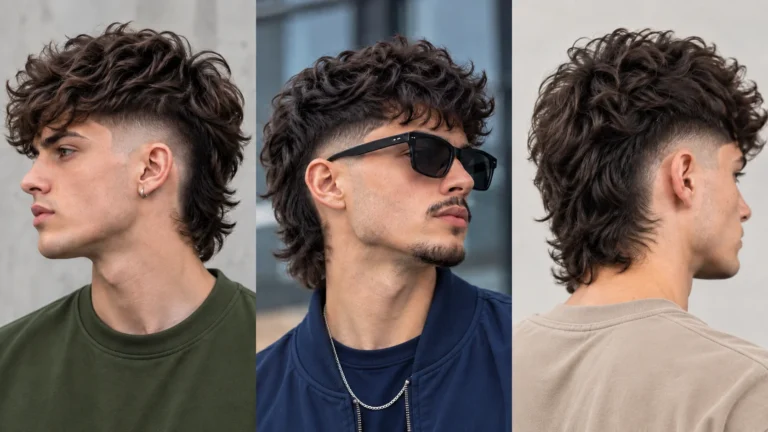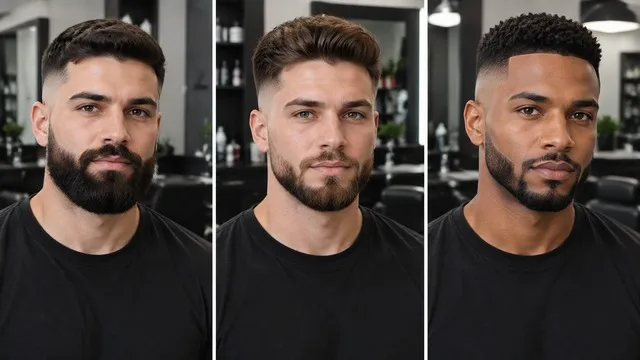
22 Stylish Fade Haircut Black Styles & Ideas for Men (2026)

A fade is the most requested cut in almost every Black barbershop, and for good reason. It’s clean, it flatters nearly every head shape, and it lets your natural texture do the talking on top. But “give me a fade” means about fifteen different things depending on who’s holding the clippers.
This guide breaks down what a fade actually is, the 22 versions worth knowing, how to describe the one you want, what it should cost, and how to keep it sharp between visits.
What is a Fade Haircut Black?
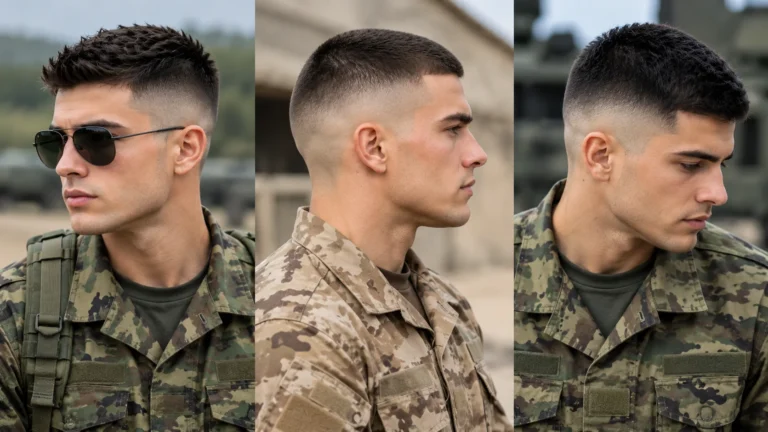
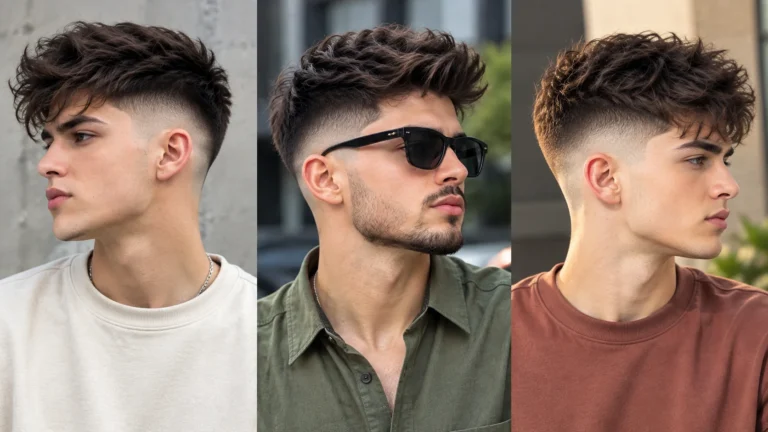
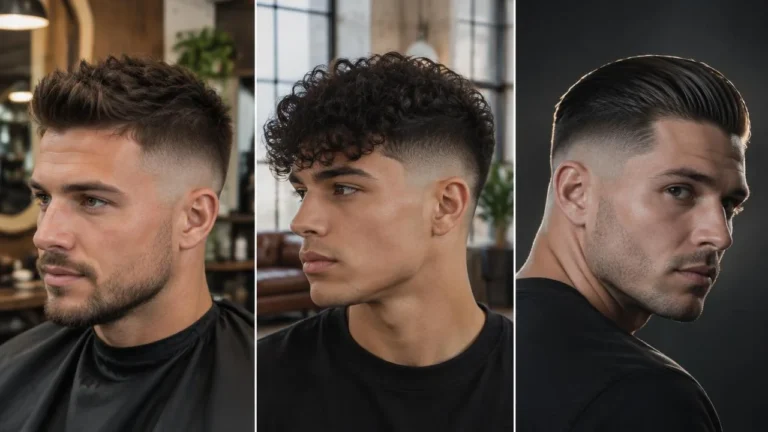
A fade is a gradual change in hair length along the sides and back, going from very short at the bottom to longer as it moves up toward the top. Done well, you shouldn’t be able to see where one length stops and the next begins. It just melts.
The word people use for that transition in a Fade Haircut is blend. A good blend has no visible lines, ridges, or patches. A bad one has “steps” you can spot from across the room.
Three things define any fade:
- Height — how far up the head the shortest part travels (low, mid, or high)
- Shortest length — whether it fades down to a short guard, a bare trimmer, or actual skin
- Shape — whether the fade line runs straight around, dips down, or curves with the hairline
Change any one of those and you get a different haircut. That’s why there are 22 styles below instead of three.
Regional Fade Names You’ll Hear — Philly Fade & Brooklyn/Temple Fade Explained
Some fades are named after cities because that’s where the style got popular first, and the name stuck.
The Philly fade is a low, tight fade with an extremely crisp lineup, usually paired with a short, even top that’s kept flat and dense. The signature is the front edge: sharp, square, and pushed slightly forward. It looks less “faded up the head” and more “boxed in clean.”
The Brooklyn fade, often used interchangeably with the temple fade or Blowout/Taper, focuses on fading the corners at the temples and around the ears while leaving the back fuller. It’s a shape-driven cut rather than a height-driven one.
If you use a regional name outside its home city, the barber may not know it. Say the name, then describe it. That combination always works.
Why This Cut Works So Well with Textured Hair
Coily and curly hair grows out and up rather than down. That means bulk gathers fast around the sides and the cut loses shape quickly. A fade removes that bulk exactly where it builds.
Texture also hides small imperfections. Because the hair doesn’t lie flat, a fade on 4C hair reads as a soft gradient rather than a hard line, which is more forgiving than fades on straight hair.
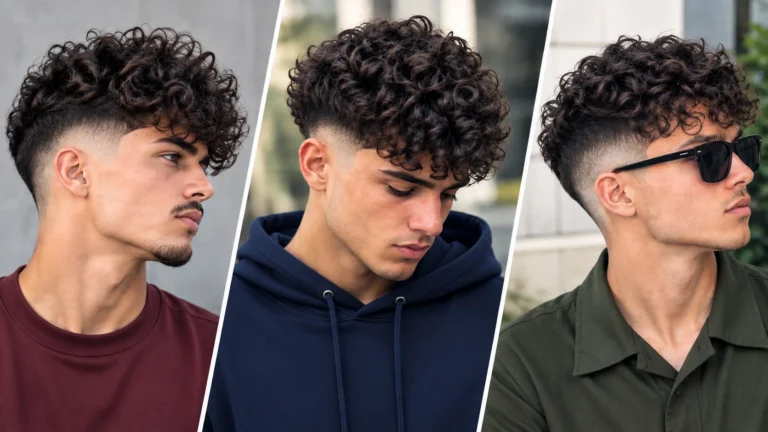
And a fade gives contrast. Short, tight sides make waves, curls, twists, or an afro look denser and more defined on top without adding a single product.
Black Hair Care Basics for a Fade
A fade is only half a haircut. The other half is the condition of your hair and scalp when you sit in the chair.
Moisture & Scalp Care Between Cuts
Freshly faded sides expose more scalp, which means more moisture loss and more visible dryness or flaking.
- Wash or co-wash every 4–7 days depending on how much product you use
- Use a lightweight leave-in on damp hair, not a heavy grease that sits on the scalp
- Apply oil (jojoba, argan, or a light scalp blend) to the scalp, not the hair strands
- If you flake, treat it properly with an anti-dandruff wash rather than oiling over it
Dry, ashy sides make even a perfect blend look rough. A quick mist of water plus leave-in each morning fixes that in ten seconds.
Caring for Waves, Curls, Coils & Twists Under a Fade
What sits on top changes your routine completely.
Waves: Brush daily in the direction of the pattern, moisturize first, and wear a durag to set the wave. Fades and waves work together because the tight sides make the wave pattern on top look deeper.
Curls: Define with a curl cream or light gel on damp hair. Avoid heavy butters that weigh curls down against a short fade, because flat curls plus short sides can look like nothing is happening.
Coils and afros: Pick out from the roots with a wide afro pick to build height. Moisturize the night before your cut so the barber is working with soft, evenly shaped hair.
Twists and locs: Keep the perimeter clean and let the barber fade around them rather than into them. Retwist a day or two before your appointment, not the same day, so the roots settle.
Nighttime Protection (Durag & Bonnet Routine)
Eight hours on a cotton pillowcase undoes a lot of work.
- Durag: best for waves and short tops. Tie flat, no bunching at the front, not so tight that it leaves a forehead line.
- Bonnet: better for afros, twists, longer curls, and anyone protecting volume.
- Satin pillowcase: the fallback if you can’t sleep in either.
This matters more than people expect. Consistent nighttime protection can stretch a fresh cut’s sharp look by several days.
22 Best Fade Haircut Black Styles for 2026
Fade Height Levels
Low Fade Haircut Black

The Low Fade Haircut starts just above the ear and stays within about an inch of the hairline. Most of the side hair keeps its length. It’s the safest fade there is. Because it barely climbs, it doesn’t change your head shape or expose much scalp, which makes it a good first fade and a good choice for conservative workplaces. It pairs with almost any top, from a short afro to twists.
Ask for: “Low fade, starting just above the ear, keep the sides full.”
Mid Fade Haircut Black

The Mid Fade Haircut transition begins around the temple, roughly halfway between the ear and the top corner of the head. This is the middle ground and probably the most requested height overall. It’s noticeable enough to look intentional and sharp, but not so high that it dominates the cut. It works especially well if you want your top texture and fade to feel equally important. Best for oval and square faces. On very round faces, mid fades can widen the middle of the head slightly.
Black High Fade Haircut

The fade climbs to the parietal ridge, the corner where the side of your head turns into the top. Sides are dramatically short, top is dramatically fuller.High fades create strong vertical contrast, which makes the face look longer and slimmer. That’s great for round or wide faces and less great for long, narrow ones.It’s the highest-maintenance of the three heights because the line sits in your eyeline. Two weeks and it’s already soft.
Black Skin Fade Haircut

Also called a bald fade. The bottom of the fade is taken all the way to bare skin with a foil shaver or the clipper lever fully closed, then blended upward.The result is the cleanest possible finish with maximum contrast. It photographs beautifully and makes any top texture pop.The trade-off is irritation risk. Repeated skin-level shaving on curly hair can cause razor bumps (pseudofolliculitis barbae). If you’re prone to them, ask for a “near-skin” finish instead, which uses a closed lever without the foil shave.
Bald Fade Haircut Black

Technically the same family as the skin fade, but the term usually describes a bald finish that wraps the entire perimeter including the nape, rather than only the bottom corners.Choose this when you want the sharpest, most graphic version of a fade and you’re willing to visit the barber every 7–10 days. It’s the cut that looks best on day one and fades fastest in appearance.
Taper Variations
Black Taper Fade Haircut

A taper is narrower than a fade. Instead of blending the whole side, it graduates only the edges: the sideburns, around the ears, and the nape.Everything above those corners stays at one length. The result is a shape-up with soft edges rather than a gradient across the whole head.This is the most workplace-neutral and most grow-out-friendly cut on this list. It’s also a favourite for men with locs, twists, or longer curls who don’t want bulk removed from the sides.
Lower Taper Fade Haircut Black

The taper drops below the standard line, hugging the very bottom of the hairline and the nape closely, often finishing at skin right at the base.It reads as “barely there” from the front and “very clean” from the back. This is the pick if you want almost no visible change to your silhouette but still want that fresh-from-the-chair feeling.Because so little hair is removed, it grows out gracefully and can stretch three to four weeks.
High Taper Fade Haircut Black

The tapered corners are pushed up toward the temple, creating a strong angled line from the front hairline back, while the mass of the sides and back stays fuller.It gives you the sharp, sculpted look of a high fade at the front without the full head being cut down. Popular with afros and high-top styles, because it keeps volume where you want it and removes it where the shape gets muddy.
Black Low Taper Fade Haircut

The most common everyday combination right now. The taper sits low, blends into a short guard rather than skin, and follows the natural curve of the hairline around the ear.The difference from the lower taper is subtle but real: a low taper blends upward a little further, so you get a visible gradient rather than just a clean edge.It suits every face shape and every hair type on this list. If you genuinely don’t know what to ask for, ask for this.
Mid Taper Fade Haircut Black

The taper corners rise to mid-height while the back stays tapered low. It creates an asymmetry between profile and rear view that looks sharper than a straight-around fade.Good for men who want the mid fade look but have a bump or flat spot at the back of the head they’d rather not expose.
Temple & Drop Fades
Temple Fade Haircut Black

Sometimes called the Blowout or Brooklyn fade. The fade is concentrated at the temples and front corners, tightening the frame around the face while the rest of the sides stay longer.It’s the best option for cleaning up a receding or uneven front hairline, because it draws the eye to a deliberate shape instead of a thinning corner. Pairs extremely well with a full afro or a sponge-twist top.
Drop Fade Haircut Black

The fade line doesn’t run straight around the head. It arcs downward behind the ear, dropping toward the nape like a curve.That curve follows the natural round of the skull, so it tends to look more sculptural and less mechanical than a straight fade. It’s a strong choice for men with a flatter back of the head, as the drop adds visual roundness.
Low Drop Fade Haircut Black

A drop fade kept at low height. You get the curved, flowing line behind the ear without the shortness climbing up the head.This is one of the most flattering options for round faces, because the curve pulls the eye down and back rather than out. It also grows out more evenly than a straight low fade, since there’s no hard horizontal line to soften.
Philly Fade Haircut Black

Low and tight, with a precision lineup that’s squared off at the front and carried straight down the temples. The top stays short and dense and is usually kept flat rather than picked out.What separates it from a standard low fade is emphasis: the Philly is all about the edge work. The lineup is the feature and the fade supports it.It demands a steady hand and a hairline that can take a crisp square. Very high maintenance, roughly weekly, because the lineup is the first thing to grow out.
Soft & Subtle Fades
Shadow Fade Haircut Black

The fade never reaches skin. The shortest point is a soft, slightly darker shade, like a shadow cast around the perimeter.It’s the gentlest-looking fade on the list. The contrast is quiet, the grow-out is nearly invisible, and there’s no irritation risk from close shaving. Ideal for anyone with a sensitive scalp, visible scalp scarring, or a preference for low contrast.It also suits men with thinner or greying hair, where a skin fade can look stark.
Bold & Design Fades
Black Mohawk Fade Haircut

Also called a Frohawk when worn with natural texture. The sides fade high and tight while a strip of length runs from the front hairline to the crown.The modern 2026 version is softer than the old spiked mohawk. The strip is usually left as natural coils or curls and the edges of the strip are blended rather than cut into a hard rectangle, so it reads as a shape rather than a costume.Ask the barber to keep the strip wider at the front and taper it toward the crown. Straight-sided strips can look severe.
Fade by Texture & Top Style
Afro Fade Haircut Black

Full, picked-out afro on top with the sides faded to control width. The magic is in the transition point, where the afro’s roundness meets the fade.The barber should cut the afro into a shape first using shears or an open clipper, then fade underneath it. If they fade first, the afro tends to end up flat on the sides.Pick out from the roots daily and moisturize the night before every cut so the shape is even.
Low Fade Haircut Curly Hair Black

Looser curl patterns, roughly 3A to 3C, with a low fade underneath. The goal here is different from coily hair: you want to remove weight without losing curl clumps.Ask for scissors or a clipper-over-comb on top rather than a guard, because guards flatten curl definition. Keep the top at least two inches so the curls can form properly against the short sides.Style with a light curl cream on damp hair and let it air dry. A diffuser helps if you have the time.
Low Skin Fade Haircut Black

A low fade taken to bare skin at the very bottom. You get maximum cleanliness at the hairline with minimal exposure overall.It’s a smart middle path for anyone who loves the crisp look of a skin fade but doesn’t want a large area of bare scalp. It’s also easier to touch up between full cuts, since the shaved area is small.
Everyday & Low-Maintenance
Short Fade Haircut Black

Short all over, with a fade that blends into a top kept at a low guard. Sometimes called a Caesar fade when a small fringe is left at the front.This is the practical choice: no styling time, no products, no bad hair days. It suits men with active jobs, athletes, and anyone dealing with thinning who wants an even, deliberate look.Because everything is short, the grow-out is uniform and forgiving. You can push it to four weeks.
New Additions
Fade Haircut Black for Kids

Kids’ fades should be gentler than adult versions. Skip skin fades on young children where the scalp is more sensitive, and ask for a low taper or low fade with a soft, rounded lineup rather than a sharp square.Keep enough length on top for texture to show. A short afro or a light sponge twist works well and doesn’t need daily styling.Practical tip: book the first appointment of the day. Quieter shop, shorter wait, calmer kid.
Fade Haircut Black for Women

Fades on women have moved firmly into everyday territory. The common versions are a low taper under longer natural curls, a side fade with a full coily top, and a full skin fade worn as a cropped statement cut.The most flattering option for most face shapes is a low or mid fade on one side or the perimeter only, leaving enough length on top to shape and style. It keeps softness at the front while showing the cut.Ask specifically for a rounded lineup rather than a squared one, which reads softer at the hairline.
Low, Mid & High Fade — Which One Should You Pick?
| Low Fade | Mid Fade | High Fade | |
|---|---|---|---|
| Contrast | Subtle | Balanced | Strong |
| Best faces | Round, oval | Oval, square | Round, wide |
| Touch-up | 3–4 weeks | 2–3 weeks | 1–2 weeks |
| Good for | First fades, office | Everyday default | Bold look, volume on top |
Simple rule: the higher the fade, the slimmer and taller your head looks, and the more often you’ll need to sit in the chair.
Choosing a Fade Haircut Black by Face Shape
Round Face
You want height and vertical lines. Go with a high fade or high taper, and keep some length on top. Avoid straight-across low fades that add width at the widest part of your face. A low drop fade is the exception, since its curve works with the shape.
Square Face
You already have strong angles, so you don’t need the cut to add more. A mid fade or mid taper works well, and a shadow fade softens things nicely. A soft, slightly rounded lineup keeps the jaw from looking harsh.
Oval Face
Nearly everything works. Pick based on lifestyle rather than shape. If you want low upkeep, take a low taper. If you want a sharp look, take a mid or high skin fade.
How Barbers Build a Fade on Textured Hair
Setting Guidelines on Coily or Curly Hair
Barbers start by establishing the baseline, the shortest point at the bottom, then a guideline where the fade will end. On coily hair, they work against the grain because coils don’t lie in one direction.
Good barbers cut dry. Wet coily hair stretches and springs back shorter than expected, which is how people end up with a fade that’s two guards tighter than they asked for.
Blending Without Losing Natural Texture
The blend happens with clipper-over-comb and lever play, opening and closing the clipper lever to create in-between lengths that guards can’t reach.
The key on textured hair is knowing when to stop. Over-blending flattens the top texture at the transition point and kills the contrast that makes the cut work. The top should still look like your hair, not like a guard number.
Lineup, Beard Blend & Finishing
The lineup (or shape-up) is the sharp edge cut along the front hairline and temples with a T-blade trimmer. It should follow your natural hairline, not an invented straight line. Cutting too far back to force symmetry permanently raises your hairline over time.
A beard blend connects the sideburn into the beard with no visible break. If you wear a beard, ask for this specifically, because a disconnected fade and beard is the most common thing that makes a good cut look unfinished.
Cutting a Fade Haircut Black at Home (DIY Guide)
Tools & Guards You’ll Need
- Clippers with an adjustable lever and a full guard set (#0.5 to #4)
- A T-blade trimmer for the lineup
- A handheld mirror plus a wall mirror, positioned so you can see the back
- A wide-tooth comb or afro pick
- A cape or old towel
DIY Step-by-Step for Textured Hair
- Start with clean, dry, detangled hair. Never cut wet.
- Cut the top first at your chosen length so you know what you’re blending to.
- Set your baseline with the shortest guard, stopping at the height you want.
- Move up one guard number and blend upward, going against the grain.
- Repeat with each successive guard, overlapping each pass slightly.
- Use the lever half-open on the transition lines to soften any steps.
- Line up last, lightly, and only along your existing hairline.
Common DIY Mistakes to Avoid
- Going too short too early. You can always take more off; you can’t put it back.
- Starting the fade too high on the first attempt.
- Cutting the lineup too deep, which raises the hairline permanently.
- Skipping the mirror check on the back, where most uneven blends hide.
- Pressing the clipper into the scalp instead of letting it glide.
If it goes wrong, the fix is usually to take the whole fade down one level and even it out, not to keep chasing the bad patch.
Talking to Your Barber
Explaining Fade Type & Height
Use three pieces of information and you’ll be understood anywhere:
- Height: low, mid, or high
- Shortest length: skin, bald, or a guard number
- Shape: straight around, drop, or temple
For example: “Mid drop fade, skin at the bottom, keep the lineup natural.” That’s a complete instruction.
Photos help, but bring two or three of the same cut from different angles rather than one. And be honest about how often you can return, because a barber will recommend differently for a two-week client than a four-week one.
Describing Your Top Texture Goals (Waves, Curls, Afro, Twists)
Say what you want the top to do, not just how long it should be.
- Waves: “Keep the top even for waves, don’t take the pattern out.”
- Curls: “Scissors on top, keep the curl clumps.”
- Afro: “Shape the afro round first, then fade under it.”
- Twists: “Fade around the twists, don’t cut into them.”
Maintenance & How Long a Fade Haircut Black Lasts
Touch-Up Schedule
| Style | Touch-up |
|---|---|
| Bald / skin fade | 7–10 days |
| Philly fade | 7–10 days |
| High fade | 10–14 days |
| Mid fade | 2–3 weeks |
| Low fade | 3–4 weeks |
| Taper / lower taper | 3–4 weeks |
| Shadow fade | 4 weeks |
Many shops offer a cheaper lineup-only visit between full cuts. That’s the single best value in barbering if your fade is high or bald.
How Long Does It Stay Sharp?
Hair grows roughly half an inch a month, so about an eighth of an inch a week. That’s enough to soften a skin fade within a week and a low taper within three.
Realistically: a fade looks fresh for 5–10 days, good for 2–3 weeks, and acceptable for up to 4 depending on how low it sits.
Growing It Out Without Losing Shape
If you’re growing out a fade into a fuller style, don’t just stop going to the barber.
- Keep the lineup and the nape clean while the sides grow
- Ask for the fade to be raised one level each visit so the line never becomes a hard ridge
- Expect an awkward two to four weeks where the sides push outward before they gain length
- Moisturize more, because growing sides tangle and dry out fast
Common Mistakes to Avoid with a Fade Haircut Black
- Choosing height by trend instead of face shape. A high fade on a long, narrow face makes it look longer.
- Booking a skin fade if you can only come every four weeks. You’ll spend three of them growing out.
- Cutting the lineup too far back repeatedly. This is the most common cause of a receding-looking hairline that isn’t actually recession.
- Ignoring the beard. An unblended beard undoes a clean fade.
- Heavy grease on a fresh fade. It clogs newly exposed follicles and can trigger bumps.
- Cutting soon after a fresh retwist or braid-out. Let the hair settle first so the barber sees its true shape.
- Not moisturizing the exposed scalp. Dry sides make a sharp blend look dull.
FAQs
Final Thoughts: Choosing Your Fade Haircut Black
The best fade for you comes down to three honest answers: how often you’ll realistically visit the barber, what your face shape needs, and what you want your natural texture to do on top.
If you’re new to fades or you want something you don’t have to think about, take a low taper fade. It suits every face shape, grows out gracefully, and gives you three to four weeks of looking put together.
If you want a clear, sharp look and you can make it in every two weeks, the mid fade is the strongest all-round choice in 2026. It balances contrast with wearability better than anything else on this list.
If you want maximum impact and you’re in the chair weekly, go for a skin or bald fade, or a drop fade if you’d rather have a shape that flows with your head than a line that circles it.
Whatever you choose, describe it in three parts (height, shortest length, shape), keep your scalp moisturized, protect your hair at night, and don’t let the lineup creep backward. A fade is only as good as the week after you get it.