
26+ Stylish Taper Fade Haircut Styles & Ideas for Men (2026)

Ask ten guys what a taper fade is and you’ll get ten slightly different answers. Some think it means short all over. Some think it’s the same thing as a skin fade. Some just point at a photo and hope for the best.
Here’s the real answer, plus 26 ways to wear a Fade Haircut, how to pick the right one for your face and hair, what it should cost, and how to keep it looking fresh between visits.
What is a Taper Fade Haircut?
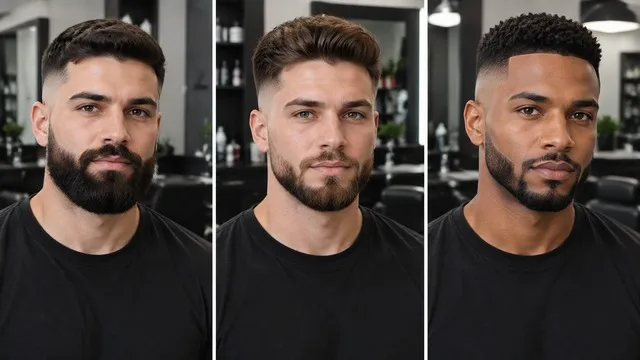
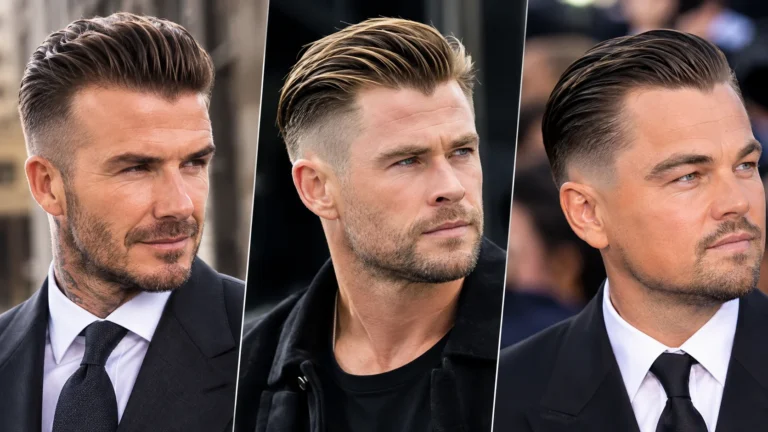
A taper fade haircut is a style where the hair gradually shortens around the sides, back, and neckline while the top stays longer. Unlike a full fade, which blends across the entire side of the head, a taper usually stays tighter to the hairline, ears, and nape, leaving more length above it.
The result is a clean, controlled look that never feels harsh. It works with almost any hair type and any top style, which is why it’s stayed one of the most requested cuts year after year.
Taper vs Fade — What’s Actually the Difference?
This is the question barbers get asked most, and the honest answer is that the line between the two has blurred over time.
A fade blends the entire side of the head, from a very short or bald bottom up toward the crown. A taper only blends the perimeter, meaning the sideburns, the area around the ears, and the neckline, while the rest of the side keeps a fairly consistent length.
Think of it this way: a fade changes the whole side of your head. A taper cleans up the edges of it. Many modern cuts, including several on this list, actually combine both, tapering the outer edge while fading the bulk underneath.
Why Barbers Recommend Tapers for a Natural, Grow-Out-Friendly Look
Barbers often steer first-timers toward a taper instead of a full fade for one simple reason: it grows out better.
Because a taper removes less hair overall, the line between short and long is softer to begin with. There’s no hard ridge to watch for as it grows, which means you can stretch two extra weeks between cuts without the haircut looking undone.
It also suits more hair types without extra risk. Thick, coarse, or curly hair can bulk out fast on the sides, and a taper controls that bulk without removing the texture that makes the top look full.
Low, Mid & High Taper Fade — Which One Should You Choose?
The height of the taper changes how dramatic the cut looks and how often you’ll need a touch-up.
| Low Taper | Mid Taper | High Taper | |
| Contrast | Subtle | Balanced | Strong |
| Touch-up | 3–4 weeks | 2–3 weeks | 1–2 weeks |
| Best face shape | Round, oval | Oval, square | Round, long |
| Good for | Office, first-timers | Everyday go-to | Bold, styled tops |
A low taper sits close to the ear and barely touches the sides, so it’s the safest option if you’re not sure what you want yet. A mid taper climbs a bit higher and gives a clear, sharp line without dominating the haircut. A high taper pushes the taper up toward the temple, creating strong contrast that pairs best with a fuller top style like a quiff, pompadour, or blowout.
Choosing a Taper Fade by Face Shape
Round Face
Height on top and vertical lines help balance a round face. A high taper fade paired with volume on top, like a blowout or comb-over, adds length visually. Avoid keeping the sides too full, since that widens the middle of the face.
Square Face
A square jaw already has strong structure, so the haircut doesn’t need to add more edges. A mid taper fade with a slightly textured or messy top softens the overall look without hiding the jawline.
Long Face
The goal here is width, not height. A low taper fade with fuller sides and a shorter top keeps proportions balanced. Skip high tapers and tall styles like pompadours, which stretch the face further.
Oval Face
Oval faces can wear almost anything. Choose based on your hair type and how much upkeep you want rather than trying to correct the shape. A low taper for low maintenance, a high taper for a bolder statement.
26 Best Taper Fade Haircuts for Men in 2026
Classic Heights
Low Taper Fade Haircut

The Low Taper Fade Haircut stays close to the ear and barely climbs, leaving most of the side length untouched. It’s the most versatile cut on this list because it works with any top length and any face shape. It suits straight, wavy, and curly hair equally well, and it’s the easiest cut to grow out gracefully. Ask for: “Low taper, just clean up around the ears and neckline.”
Lower Taper Fade Haircut

An even tighter version that hugs the very bottom of the hairline and nape, sometimes finishing at skin right at the base. From the front it barely looks touched; from the back it’s razor clean.This is the go-to for anyone who wants the smallest possible change to their overall silhouette. It also stretches the longest between visits, often three to four weeks.
Mid Taper Fade Haircut

The taper rises to around the middle of the side, giving a visible but balanced gradient. It’s the most commonly requested height because it looks intentional without needing constant upkeep.Works especially well with textured crops, comb-overs, and short natural styles. It’s the safe, sharp default if you genuinely can’t decide.
Bald Taper Fade Haircut

The bottom of the taper is cut down to bare skin, usually with a foil shaver, then blended upward into the taper. It creates the sharpest possible edge and photographs extremely well.Because the skin is exposed at the base, it needs the most frequent touch-ups, typically every 7 to 10 days, and can cause irritation for men prone to razor bumps. Ask for a near-skin finish instead if that’s a concern.
Skin Taper Fade Haircut

Similar to the bald version, the Skin Fade Haircut has skin-level blending that extends slightly further up before transitioning into the taper, giving a longer gradient rather than a sharp bald line at the very bottom. It suits men who want the clean look of a skin fade but a slightly softer, more gradual finish than a straight bald taper.
Low Bald Taper Fade Haircut

The Bald Fade Haircut combines the subtlety of a low taper with a small bald section right at the neckline and around the ears. You get a clean, fresh finish without a large area of exposed scalp. This is a smart middle ground: less irritation risk than a full bald fade, but sharper detail than a standard low taper.
By Hair Texture
Curly Taper Fade Haircut

Curls stay full and bouncy on top while the taper keeps the sides controlled. The key here is not cutting the curls too short on top, since curl patterns need enough length to form properly, usually two inches or more.Ask the barber to use scissors or clipper-over-comb on top instead of a guard, so the curl clumps aren’t flattened. Style with a curl cream or leave-in on damp hair.
Taper Fade Haircut Afro

A full, rounded afro sits above a tapered perimeter. The barber should shape the afro first with shears, then taper underneath and around it, never the other way, or the afro ends up flat on the sides.Pick out daily from the roots with a wide-tooth afro comb to maintain the shape between cuts.
Low Taper Fade Haircut Straight Hair

Straight hair takes a low taper especially well because there’s no texture to fight against; the line stays crisp with almost no effort. This pairs naturally with textured crops, side parts, and slightly messy finishes.A light sea salt spray gives straight hair some grip and movement without weighing it down.
Black Taper Fade Haircut

Built specifically around coily, curly, and wavy textures. It blends cleanly with waves, twists, sponge coils, or a short afro, and barbers usually cut it dry rather than wet, since coily hair springs back shorter once it dries.Moisturize the scalp regularly, since the taper exposes more skin around the edges than a full afro does.
By Top Length & Style
Long Taper Fade Haircut

Length is kept on top, sometimes several inches, while the sides stay neatly tapered underneath. It gives a strong contrast between flowing hair and clean edges.This style needs more daily styling time than shorter tapers, but it offers the most flexibility for switching looks day to day.
Taper Fade Haircut Long On Top

Similar to the long version but styled specifically for volume, think pompadours, slick backs, or deliberately messy textured looks. The taper keeps things from looking overgrown while the top does the styling work.Blow-drying with a round brush adds lift before applying product.
Low Taper Fade Haircut Long Hair

A gentler take that keeps the sides fuller and the taper subtle, so the long top doesn’t look disconnected from short, aggressive sides. It reads as relaxed rather than sharply cut.Good for men who want longer hair without it looking unkempt.
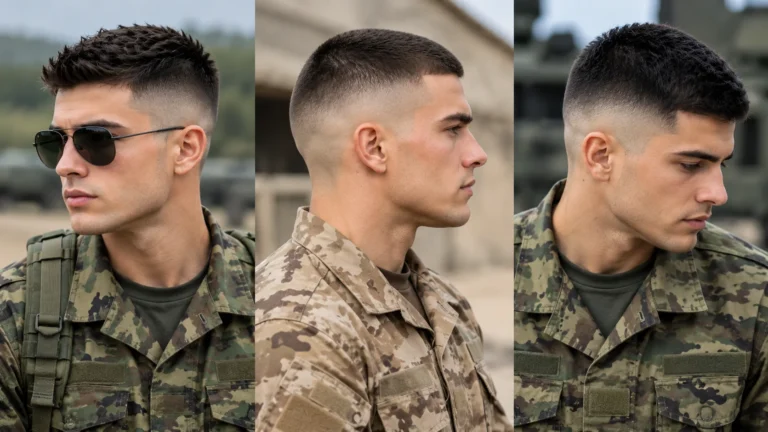
Short Taper Fade Haircut

Short and low-maintenance everywhere. The top is kept close, sometimes with a small fringe left at the front, and the taper is barely noticeable. No styling products required most days.This is the practical pick for active lifestyles, gym-goers, or anyone who wants a haircut that survives sweat and hats without losing shape.
Taper Fade Haircut Comb Over

The top is combed neatly to one side while the taper cleans up the sides underneath. It’s the most polished, business-appropriate option on this list.A medium-hold pomade with a slight shine gives the classic combed finish. Works best with straight to wavy hair.
Blowout Taper Fade Haircut

Focuses on height and volume at the front, achieved by blow-drying the top upward while the taper keeps the sides tight. It’s bold and youthful, and it photographs well from every angle.Needs a round brush and blow dryer as part of the regular routine, so it’s higher effort than most tapers on this list.
Slick Back Taper Fade Haircut

Hair is brushed straight back and held with a high-shine pomade, while the taper keeps the sides clean underneath. It’s formal enough for events but still reads as modern rather than old-fashioned.Best suited to straight or slightly wavy hair with enough length on top to brush back smoothly.
Face-Framing & Design
Temple Taper Fade Haircut

The taper concentrates specifically around the temples and front corners rather than the whole perimeter, drawing the eye to a clean, deliberate frame around the face.It’s a strong choice if you’re dealing with an uneven or slightly receding front hairline, since it creates intentional shape instead of drawing attention to thinning areas.
Fringe Taper Fade Haircut

A section of fringe or bangs is left at the front while the rest tapers down at the sides. It frames the face and adds a youthful, streetwear-friendly edge.Keep the fringe trimmed above the eyes so it doesn’t interfere with vision or look overgrown before your next cut.
Taper Fade Haircut With Line

A shaved line is added into the taper, usually running through the side or connecting to the lineup. It adds a graphic, personalized detail to an otherwise classic cut.This one needs the most frequent barber visits of any style here, since the line grows out and blurs faster than the surrounding taper.
V Taper Fade Haircut

The neckline is cut into a subtle V shape instead of a straight line, adding a sharper, more deliberate finish at the back of the head.It’s a small detail that makes a big difference from behind, and it’s worth specifically requesting since many barbers default to a straight neckline unless asked.
Trend & Culture Styles
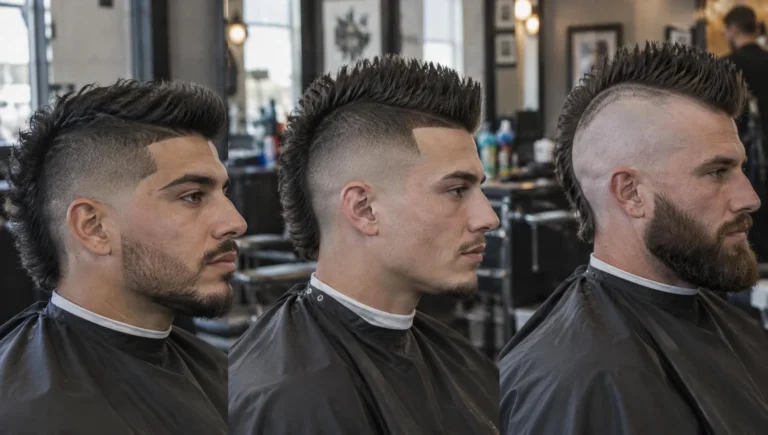
Taper Fade Haircut Mullet

A modern mullet keeps length at the back and crown while the sides and front taper down cleanly. Today’s version is far more tailored than the mullets of past decades, with a defined taper instead of shaggy, uneven sides.Works well with straight to wavy hair that has enough natural body to hold shape at the back.
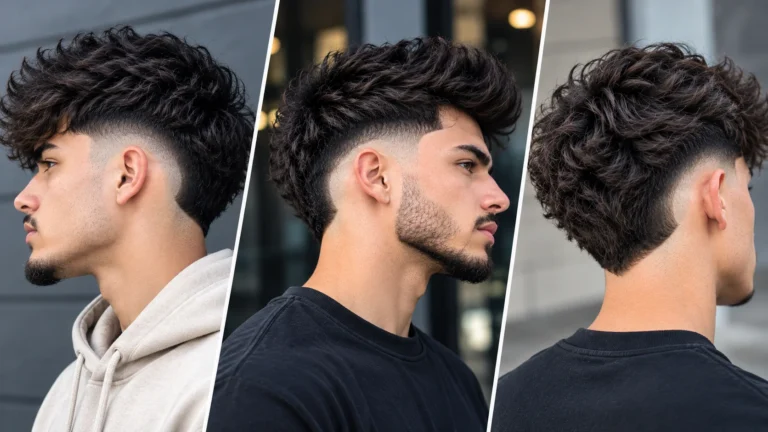
Taper Fade Haircut Fluffy Edgar Cut

Combines the blunt, rounded fringe of an Edgar cut with a tapered side. The top is left fuller and styled forward or upward for a soft, voluminous fringe rather than a flat one.Popular with younger men in 2026 for its bold, of-the-moment look. Needs blow-drying upward to keep the fluffiness from falling flat.
Messy Taper Fade Haircut

A relaxed, textured top sits above a neatly tapered side, creating contrast between “effortless” on top and “precise” underneath. It’s one of the lowest-effort styling routines on this list despite looking deliberately undone.A sea salt or texture spray on damp hair, scrunched rather than combed, gets the look.
Asian Taper Fade Haircut

Works especially well with thick, straight hair types common in East and Southeast Asian hair textures. The taper keeps the sides controlled while the top stays textured, often paired with a fringe or middle part.Texture powder helps add volume without making naturally straight, sometimes flat-lying hair look greasy.
Mexican Taper Fade Haircut

Often features textured tops, Edgar-style fringes, or a sharp squared lineup at the front, paired with a smooth, tight taper at the sides. The contrast between bold top texture and clean sides is the defining feature.Styling clay gives the firm hold and matte texture this look typically calls for.
New Additions
Taper Fade Haircut for Kids

Kids’ versions should stay gentle. A low or mid taper with a soft, slightly rounded lineup works better than a sharp squared edge or a skin-level finish, which can irritate a young scalp.Keep enough length on top for the hair’s natural texture to show, whether that’s straight, curly, or coily, so there’s minimal daily styling involved.
Taper Fade Haircut for Women

Tapers have become a common choice for women wanting a low-maintenance edge without a full haircut change. Common versions include a low taper on one side only, worn under longer hair on top, or a full taper with a short curly or coily crop.Ask specifically for a rounded, soft lineup rather than a squared one, since it tends to look more flattering against longer hair on top.
Blonde/Color Taper Fade Haircut

Lightened or fully blonde hair on top makes the taper’s texture and layering stand out more clearly, since color creates natural contrast between strands. Popular alongside textured crops and fringe styles.Purple shampoo helps maintain the tone between salon visits, and the scalp should be checked for dryness or sensitivity after bleaching, since lightened hair is more fragile.
Taper Fade Haircut Cost Guide
Barbershop vs Salon Pricing
Barbershop prices for a taper fade generally run lower than salon pricing, since barbershops are set up for quicker, standardized men’s cuts. Salons tend to charge more because the service often includes a consultation, wash, and styling as part of the price.Neither is objectively “better.” A barbershop is usually faster and more specialized in fades specifically, while a salon may offer more attention to color work or longer-hair styling if that’s part of your cut.
What Affects the Price (Skin Fade, Design Lines, Beard Blend)
A few add-ons typically raise the price above a standard taper:
- Skin or bald finishing usually costs more due to the extra time and the foil shaver step
- Shaved design lines are priced as an add-on almost everywhere
- Beard blending is often bundled with the haircut, but some shops charge it separately
- First-time client consultations at salons can add a flat fee
Ask when booking rather than assuming, since pricing structures vary a lot shop to shop.
How Barbers Cut a Taper Fade
Setting the Guideline
The barber starts by establishing a guideline, the point where the taper begins, usually just above the ear and along the neckline. This guideline sets the shape for everything that follows, so it’s the step where you should double-check the height matches what you asked for.
Blending Techniques (Clipper-Over-Comb, Lever Work)
Once the guideline is set, the barber blends it upward using clipper-over-comb technique or by adjusting the clipper lever between open and closed positions. This lever work is what removes any visible “steps” between guard lengths, turning a rough guideline into a smooth gradient.
On thicker or curlier hair, thinning shears are sometimes used afterward to remove bulk without shortening the length, keeping the top full while the taper stays flat against the head.
Lineup & Beard Blend Finishing
The lineup is the sharp edge cut along the front hairline, temples, and sideburns using a T-blade trimmer. It should follow your natural hairline rather than being pushed back to force symmetry, since repeated aggressive lineups can permanently raise the hairline over time.
If you wear a beard, always ask for a beard blend specifically. A sharp taper with a disconnected beard is one of the most common things that makes an otherwise good haircut look unfinished.
Cutting a Taper Fade at Home (DIY Guide)
Tools & Guards You’ll Need
- Clippers with an adjustable lever and full guard set (#0.5 to #4)
- A T-blade trimmer for lineup work
- Two mirrors, positioned so you can see the back of your head
- A comb and, for curly hair, a wide-tooth pick
- Clips to section longer top hair out of the way
Step-by-Step DIY Tutorial
- Start with clean, dry, detangled hair, since wet hair cuts shorter than it looks.
- Set your guideline first, just above the ear and along the neckline, with a low guard.
- Move up one guard size and blend upward using short upward flicks.
- Repeat with each guard size, slightly overlapping each pass into the last.
- Use the lever half-open on the transition points to soften any visible lines.
- Trim the lineup last and lightly, following your natural hairline.
- Check the back with a second mirror before calling it done.
Common DIY Mistakes to Avoid
- Cutting the guideline too high on the first attempt
- Skipping the back-of-head check, where uneven blends hide easiest
- Using too much pressure and pressing the clipper into the scalp
- Overcutting the lineup, which pushes the hairline back permanently
- Not sectioning off the top, leading to accidental length loss up there too
Hair Care by Type Under a Taper Fade
Curly & Coily Hair Care
Curly and coily hair needs moisture more than anything else. Use a leave-in conditioner on damp hair and a lightweight curl cream to define without weighing curls down. Detangle gently with fingers or a wide-tooth comb, never a fine one, to avoid breakage.
Straight & Thick Hair Care
Straight and thick hair usually needs texture rather than moisture. Sea salt spray, texture powder, or a light clay help create grip and movement that straight hair doesn’t naturally have. Avoid heavy oils, which can make thick straight hair look flat and greasy.
Nighttime Routine (Durag, Bonnet, Silk Pillowcase)
- Durag: best for waves and shorter tops, tied flat without bunching
- Bonnet: better for curls, coils, and anything with volume to protect
- Silk or satin pillowcase: the easiest fallback that reduces friction for any hair type
A few nights of proper protection can noticeably extend how long a fresh taper keeps its sharp look.
How to Style a Taper Fade Haircut
Best Products by Hair Type
- Curly hair: curl cream or leave-in conditioner for definition without frizz
- Straight hair: texture powder or sea salt spray for movement
- Thick hair: matte clay or paste for control without shine
- Fine hair: lightweight pomade that won’t weigh strands down
Everyday Styling Routine
Most taper fades only need a comb-through and a small amount of product each morning. Apply product to damp or slightly towel-dried hair for the most even distribution, and finish with a light-hold spray if you need the style to hold through a long day.
Talking to Your Barber
Exact Words to Describe Height, Length & Style
Give your barber three pieces of information and you’ll be understood clearly:
- Height: low, mid, or high taper
- Finish: skin, bald, or a specific guard number
- Detail: any line work, beard blend, or design you want included
For example: “Low taper fade, skin at the neckline, blend into my beard.” That’s a complete, unambiguous instruction.
Bringing Reference Photos the Right Way
Bring two or three photos of the same style from different angles, front, side, and back, rather than a single image. This gives the barber a full picture instead of guesswork about what the back or sides should look like.
Maintenance & How Long a Taper Fade Lasts
Touch-Up Schedule by Style
| Style | Touch-up |
| Bald / skin taper | 7–10 days |
| High taper | 10–14 days |
| Mid taper | 2–3 weeks |
| Low taper | 3–4 weeks |
| Lower taper | up to 4 weeks |
Many barbershops offer a cheaper lineup-only visit between full cuts, which is worth using if your taper is on the higher or skin-level end.
Growing It Out Without Losing Shape
If you’re letting a taper fade grow into a fuller style, keep visiting the barber rather than stopping altogether. Ask for the taper line to be raised slightly each visit so it never turns into a hard, visible ridge. Expect a few weeks where the sides look a bit wider before length starts showing, and moisturize more often since growing-out hair tends to dry out and tangle faster.
Common Mistakes to Avoid with a Taper Fade Haircut
- Choosing a high taper without considering your face shape first
- Booking a skin-level taper if you can only realistically visit every four weeks
- Letting the lineup get pushed back too far over repeated visits
- Skipping the beard blend if you have facial hair
- Using heavy, greasy products on a freshly cut taper, which can clog the scalp
- Cutting hair while it’s wet, especially with curly or coily textures, since it shrinks shorter once dry
Taper Fade Haircut FAQs
Final Thoughts: Which Taper Fade Haircut Should You Get?
The right taper fade comes down to three things: how much contrast you want, how often you can realistically get to the barber, and what your hair naturally wants to do on top.
If you want something safe and low-effort, a low taper fade is hard to beat. It suits nearly every face shape and hair type, and it grows out without ever looking messy.
If you want a sharper, more noticeable cut without committing to weekly visits, a mid taper fade is the strongest everyday option, especially paired with a textured or slightly longer top.
And if you’re ready for real contrast and don’t mind the upkeep, a high or skin-level taper paired with a bold top style, like a blowout, mullet, or Edgar cut, is where the biggest personality shows through.
Whichever height you land on, describe it clearly to your barber, take care of your scalp and hair type in between visits, and don’t let the lineup creep backward over time. A good taper fade should always look like it grew that way naturally, not like it was forced into shape.


One Comment