
32 Best Fade Haircuts for Men in 2026: Stylish & Trending
Walk into any barbershop in 2026 and you’ll hear the same word over and over: fade. It’s become the default answer for guys who want something sharp, low-maintenance, and easy to dress up or down. But “fade” isn’t one haircut — it’s a whole family of styles, and picking the wrong version can leave you with a cut that doesn’t match your hair type, face shape, or lifestyle.
This guide breaks down 32 of the best fade haircuts men are asking for right now, explains how each one is different, and walks you through choosing, styling, and maintaining your fade so it actually looks good between barber visits.
What Is a Fade Haircut?
A Fade Haircut is a technique where the hair gradually shortens from longer at the top to shorter, and eventually skin-close, near the sides and back. Instead of one uniform length all around (like a standard clipper cut), a fade blends several clipper guards together so there’s no hard line — just a smooth gradient from long to short.
The beauty of a fade is how flexible it is. It can be paired with almost any top style — slicked back, curly, buzzed, long, or textured — which is why it works for so many different hair types and personal styles. The main differences between fade styles usually come down to two things: where the fade starts on the head (low, mid, or high) and how short it gets at its shortest point (skin, bald, or shadow).
32 Best Fade Haircuts for Men in 2026
Low Fade Haircut
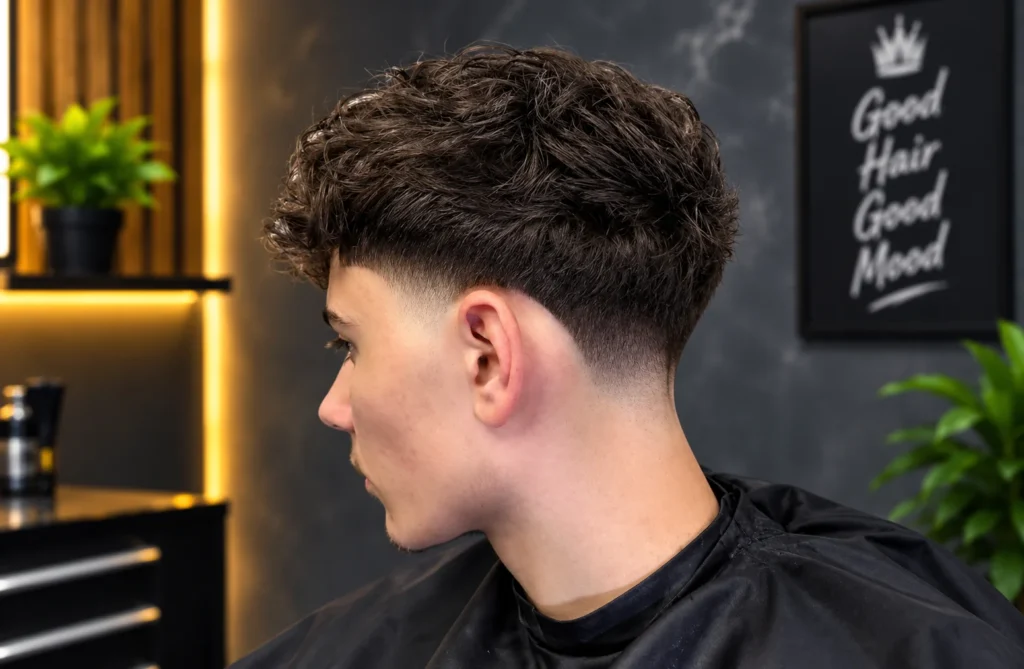
The low fade keeps the blending close to the ears and neckline, leaving most of the sides fuller and less dramatic. It’s the most conservative fade option, which makes it a favorite for office environments, formal settings, and guys who want a subtle transition rather than a bold style statement. It suits almost every hair type and face shape, and it’s easy to maintain since it grows out gracefully.
Styling Tip: Since the sides stay fuller, focus your styling effort on the top — a light matte cream keeps things looking neat without drawing attention away from the subtle fade line.
Mid Fade Haircut
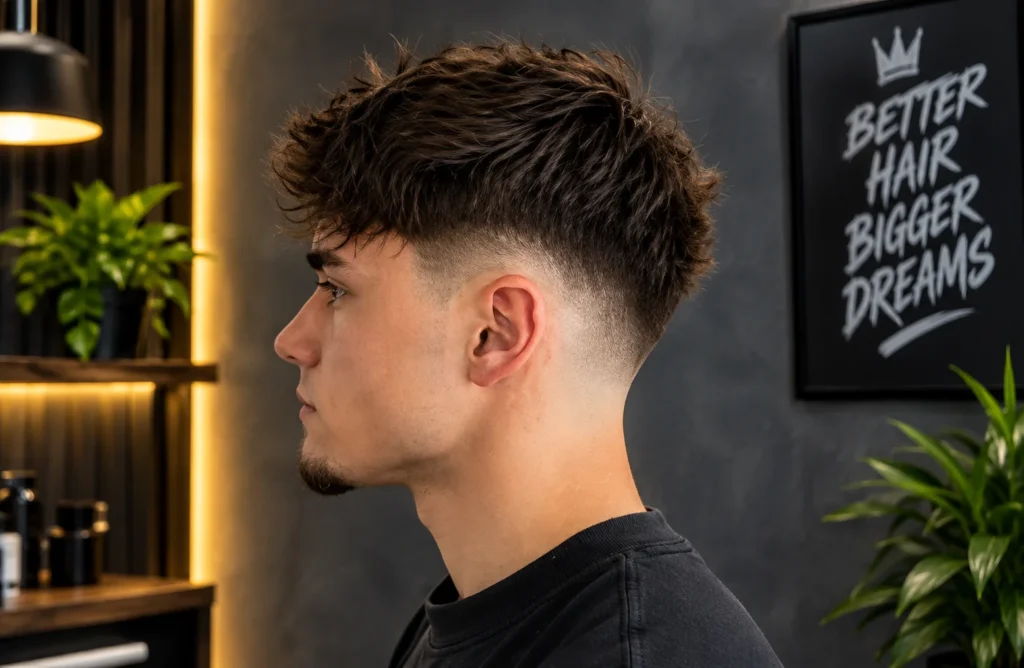
The Mid Fade Haircut starts around the temple area, roughly halfway up the side of the head, giving a balanced look that’s neither too flashy nor too plain. It’s become one of the most requested styles because it works with nearly any top length, from short crops to slicked-back styles. Round and square face shapes especially benefit from a mid fade, since the blending adds visual height without overwhelming the face.
Styling Tip: Comb product through while hair is slightly damp so the blend at the temple stays smooth instead of separating into visible clumps.
High Fade Haircut
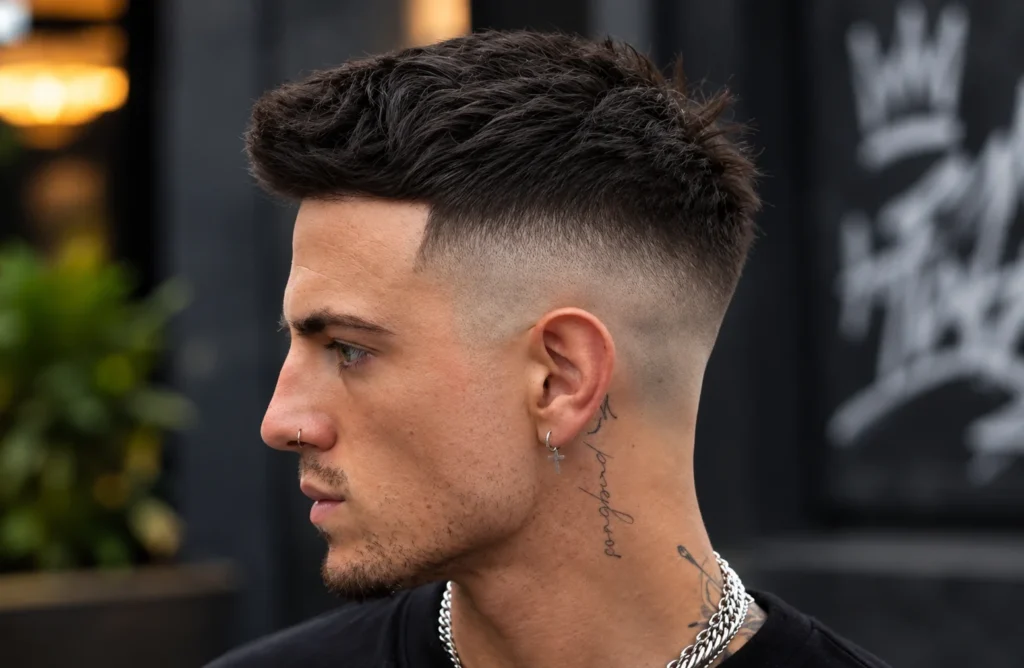
A high fade begins near the crown of the head, well above the ear, creating a much more dramatic contrast between the short sides and longer top. It’s bold, modern, and pairs especially well with textured or spiky top styles. Because so much skin or short hair is visible, a high fade needs more frequent touch-ups — usually every two to three weeks — to keep the sharp line intact.
Styling Tip: Use a small amount of matte clay worked from root to tip to create texture on top; this draws the eye upward and balances the boldness of the high contrast below.
Taper Fade Haircut
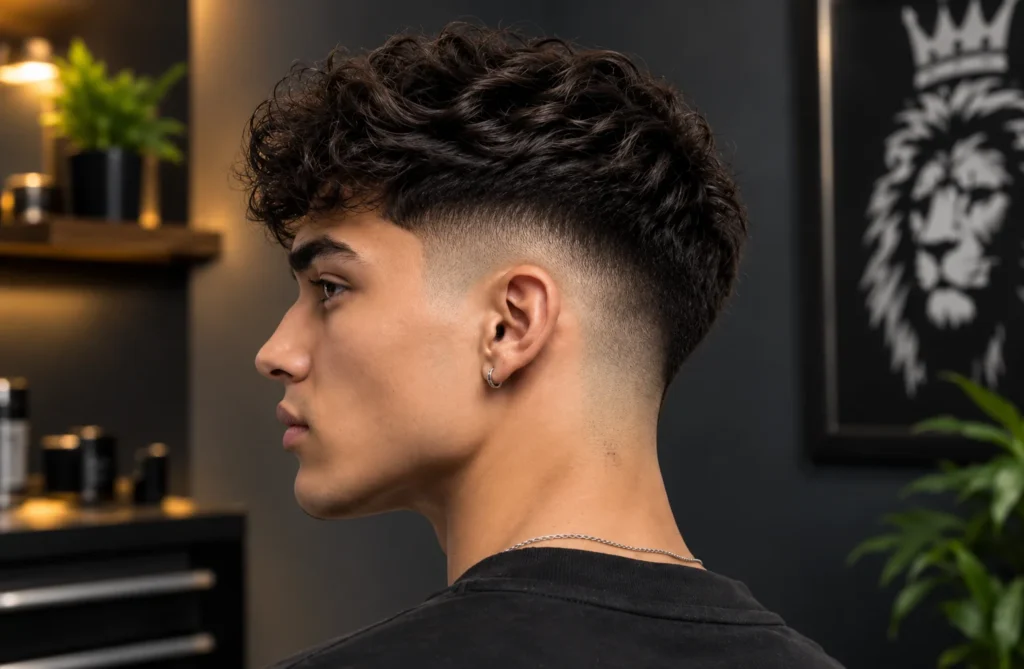
Often confused with a regular fade, the taper fade blends the hair down close to the skin only right at the hairline and around the ears, while the rest of the sides stay a bit longer and less dramatic. It’s a softer, more natural-looking transition, popular with guys who want a professional appearance without a stark contrast.
Styling Tip: A lightweight pomade rather than a heavy wax keeps the fuller sides looking groomed instead of stiff or overly styled.
Low Taper Fade Haircut
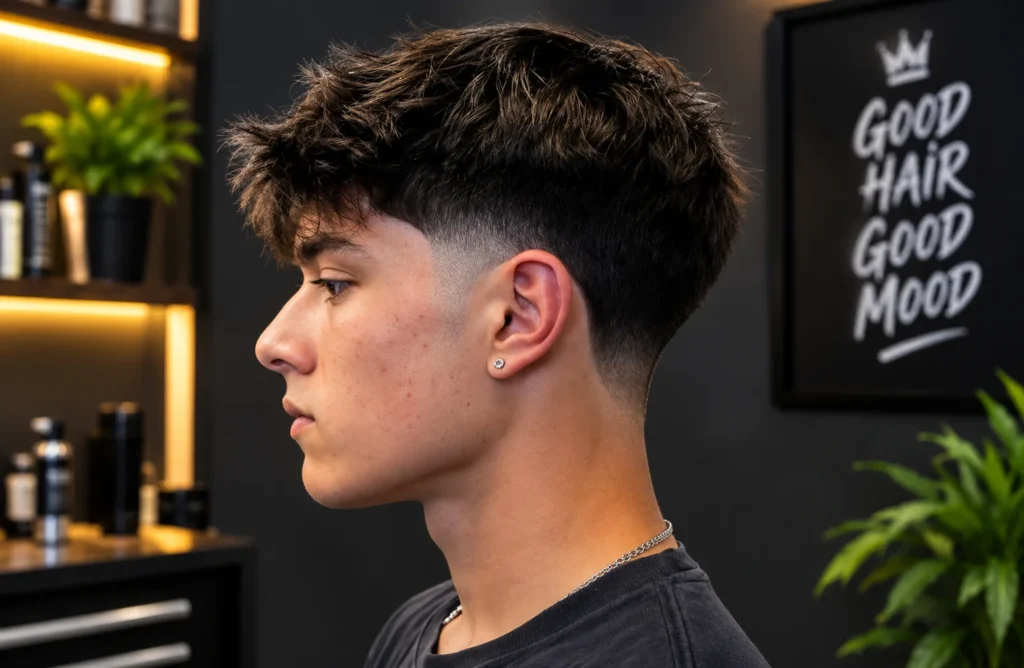
Combining the subtlety of a low fade with the gentle blend of a taper, the low taper fade is one of the most versatile and widely requested cuts today. The fading happens only right above the ears and at the neckline, keeping the rest of the head fuller. It’s ideal for business settings, works with any hair texture, and is forgiving as it grows out.
Styling Tip: This cut needs almost no daily maintenance — a quick comb-through with a bit of cream is usually all it takes to keep it office-ready.
Buzz Cut Fade
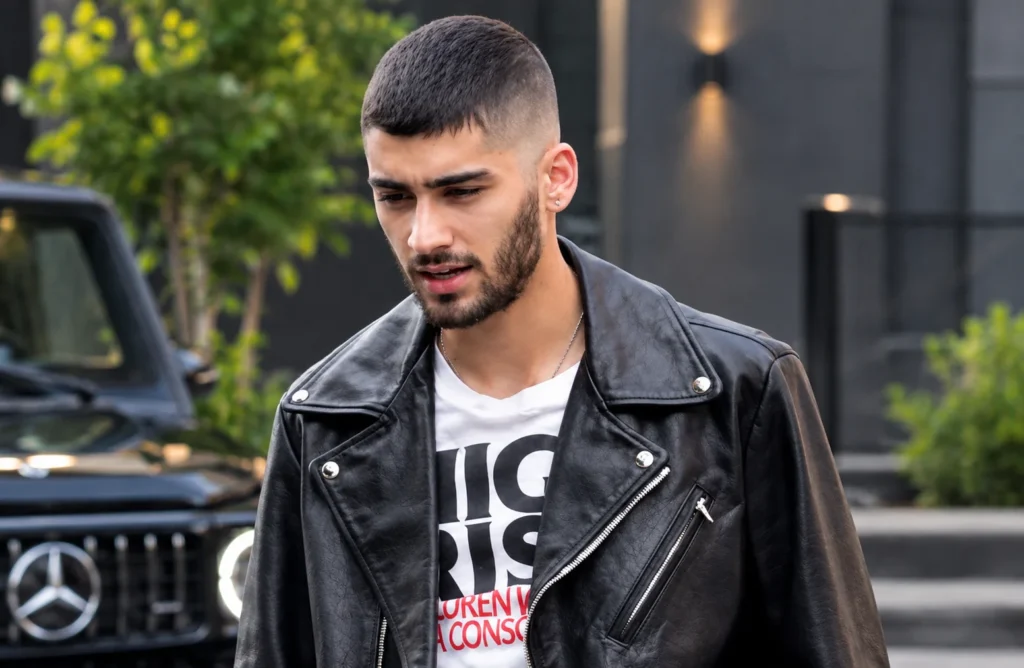
The buzz cut fade pairs an ultra-short, uniform top with a fade on the sides, rather than leaving noticeable length up top. It’s the lowest-maintenance option on this list, perfect for hot climates, active lifestyles, or guys dealing with thinning hair.
Styling Tip: Skip heavy product entirely — a small dab of matte balm or none at all keeps this style looking clean without any greasy shine.
Curly Fade Haircut
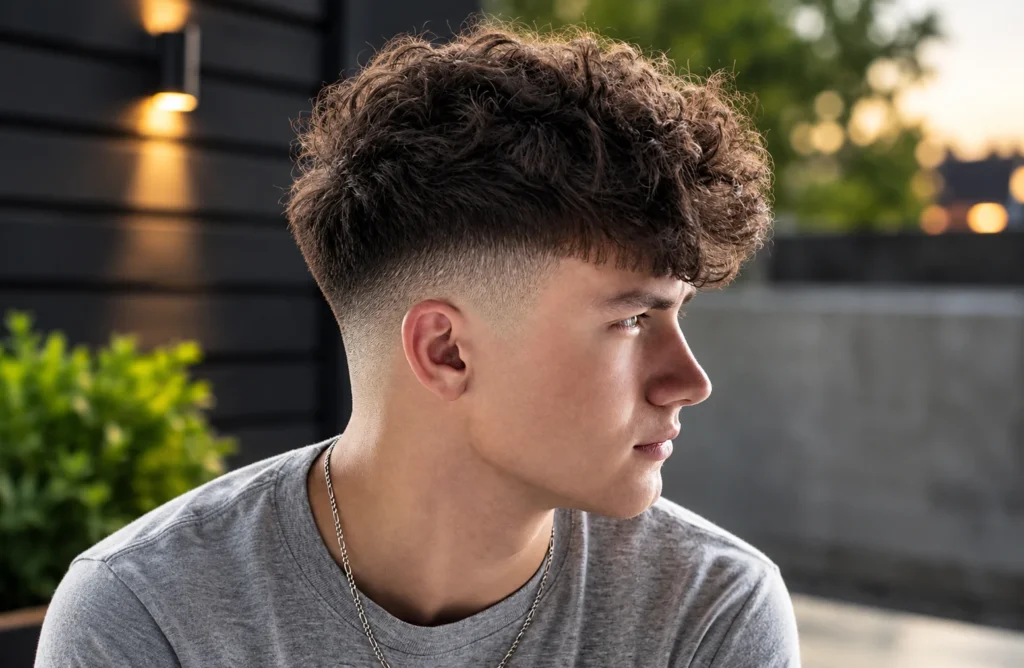
The curly fade keeps natural curls or coils intact on top while fading the sides and back for contrast. This style lets curl pattern do the styling work — minimal product is often needed beyond a curl cream or light gel to define shape.
Styling Tip: Apply curl cream to soaking wet hair rather than towel-dried hair, then let curls air-dry or diffuse on low heat to avoid frizz.
Mullet Fade Haircut
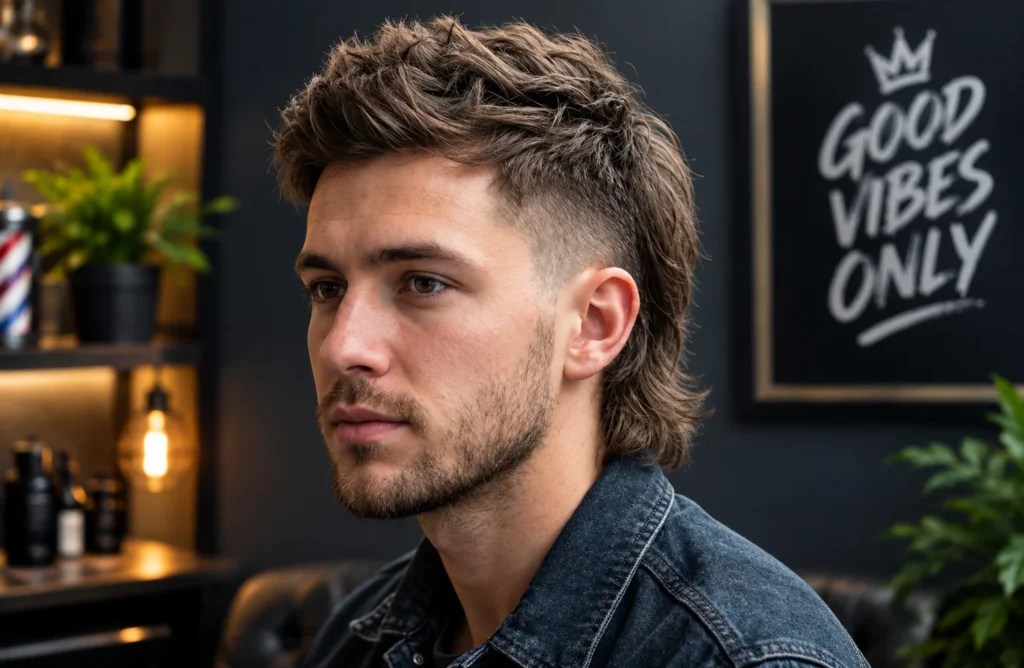
A modern twist on a retro classic, the mullet fade keeps length at the back while fading the sides short. It’s a statement cut that works best for guys who are comfortable standing out, and it pairs well with wavy or thick hair that holds shape at the back.
Styling Tip: A texturizing sea-salt spray on the back section adds movement and keeps the longer hair from looking flat or stringy.
Drop Fade Haircut
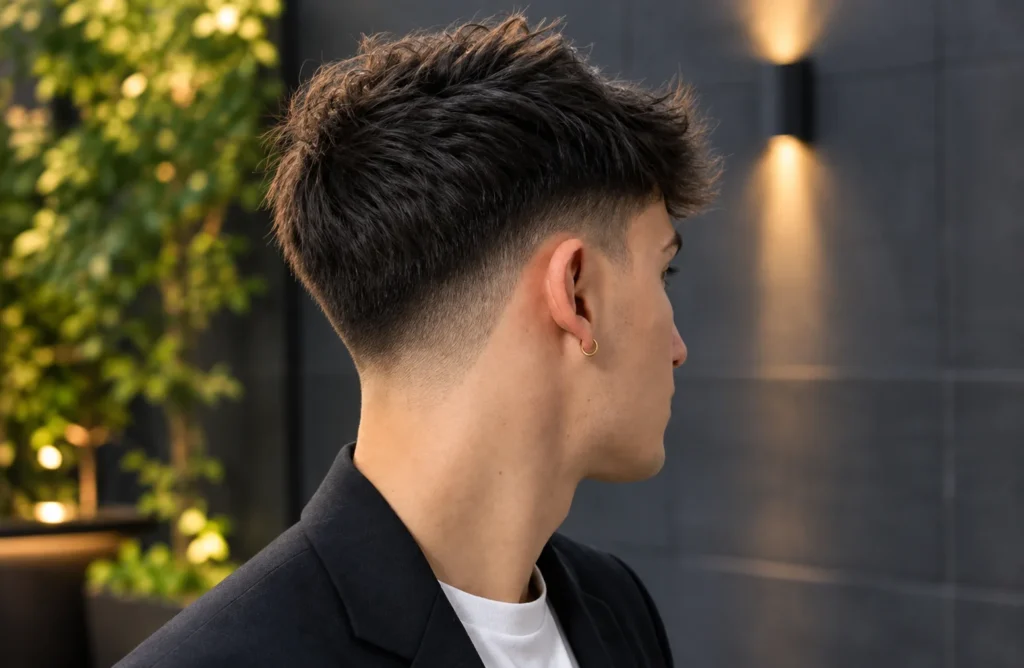
The drop fade curves downward behind the ear instead of following a straight horizontal line, dropping lower toward the nape of the neck. This creates a rounder, more natural-looking blend that flatters angular face shapes by softening sharp jawlines.
Styling Tip: Ask your barber to keep the curve gradual rather than sharp — a smoother drop blends more naturally with curly or textured tops.
Skin Fade Haircut
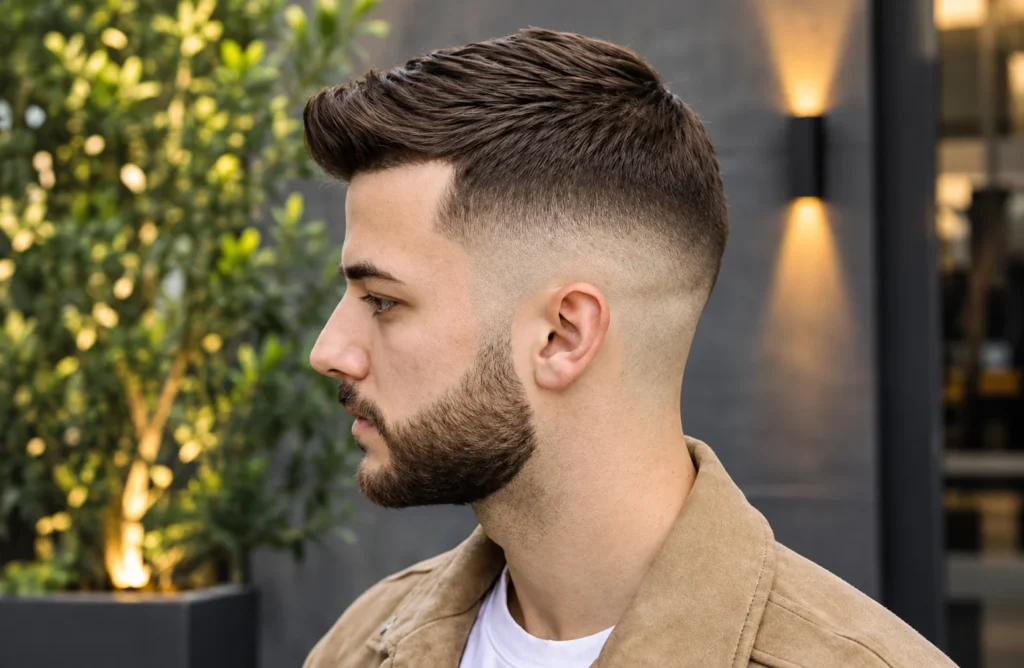
A skin fade takes the sides all the way down to bare skin at the shortest point, creating the highest possible contrast against the top length. It’s a striking, modern look that photographs well and pairs with virtually any top style, from slick styles to textured crops.
Styling Tip: Keep a bit of clear brow gel or light balm on hand to smooth any flyaway regrowth along the skin line between barber visits.
Burst Fade Haircut
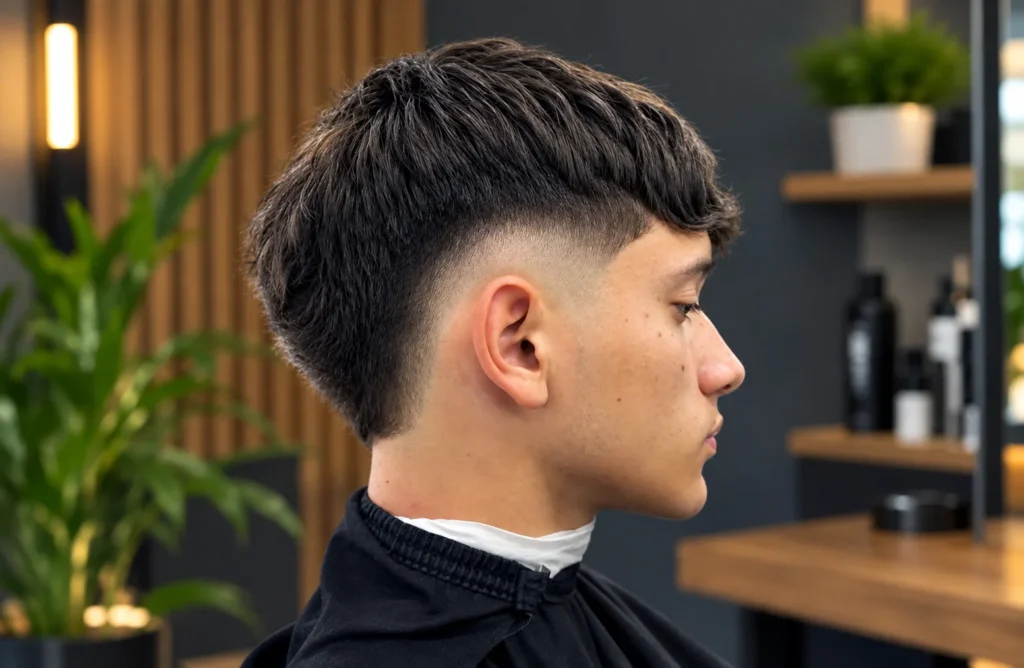
The burst fade curves around the ear in a semicircle rather than continuing in a straight line down the neck, leaving length at the back. It’s a favorite for guys with curly or coily hair who want a rounded, natural-looking fade that doesn’t create harsh geometric lines.
Styling Tip: Let the back grow slightly longer than the sides to emphasize the rounded burst shape rather than trimming everything to a uniform length.
Long Hair Fade
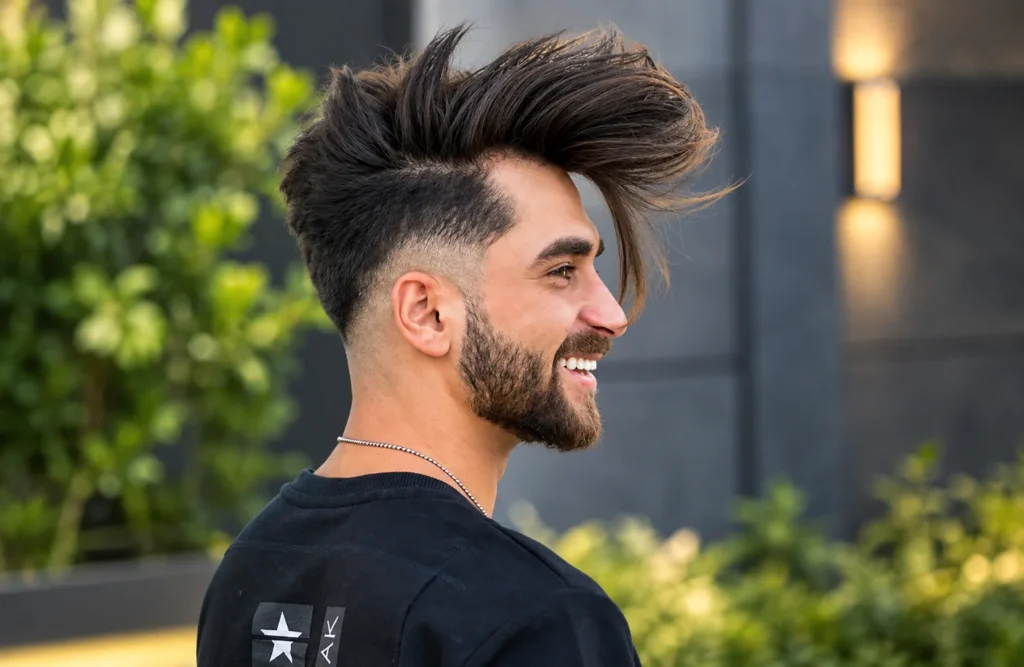
Pairing long, flowing hair on top with a faded side is one of the most eye-catching contrasts you can ask for. The long hair fade works particularly well with straight or wavy hair that has enough weight to fall naturally, and it requires more daily styling effort.
Styling Tip: Blow-dry with a paddle brush pulling hair in the direction you want it to fall, then set with a light-hold spray so it moves naturally instead of looking stiff.
Short Fade Haircut
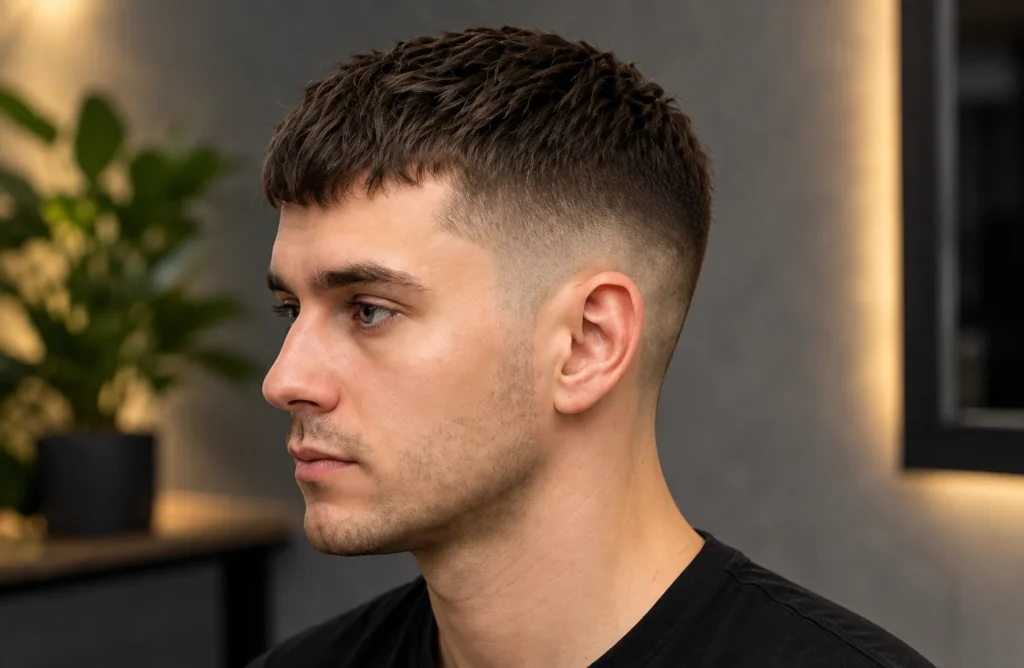
For guys who want something clean and fuss-free, the short fade keeps the top cropped close while fading the sides for a tidy, uniform look. It requires almost no daily styling and holds up well through humidity, sweat, and hats.
Styling Tip: A tiny amount of matte paste rubbed between palms and pressed (not combed) into the top adds texture without looking overworked.
Mexican Fade Haircut
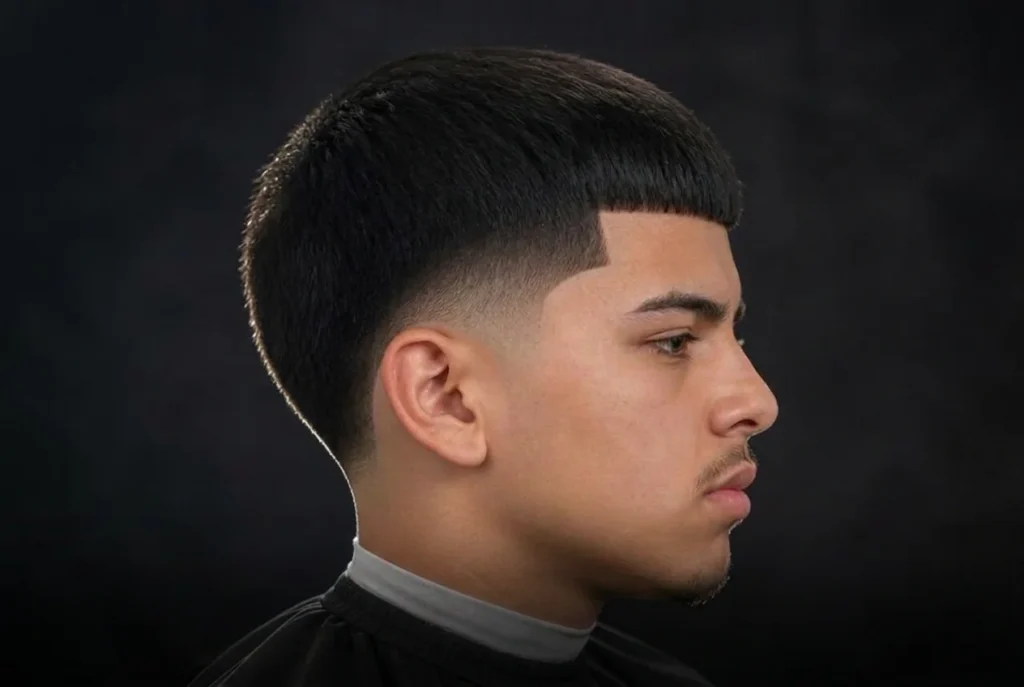
The Mexican fade, sometimes called a “chop fade,” combines a textured, choppy fringe on top with a fade on the sides. It’s become popular through skate and streetwear culture and works best with straight to slightly wavy hair that can hold a piece-y, textured finish.
Styling Tip: Dry the fringe forward with a diffuser or your fingers rather than a brush, then finish with clay to keep the choppy pieces separated.
High Top Fade
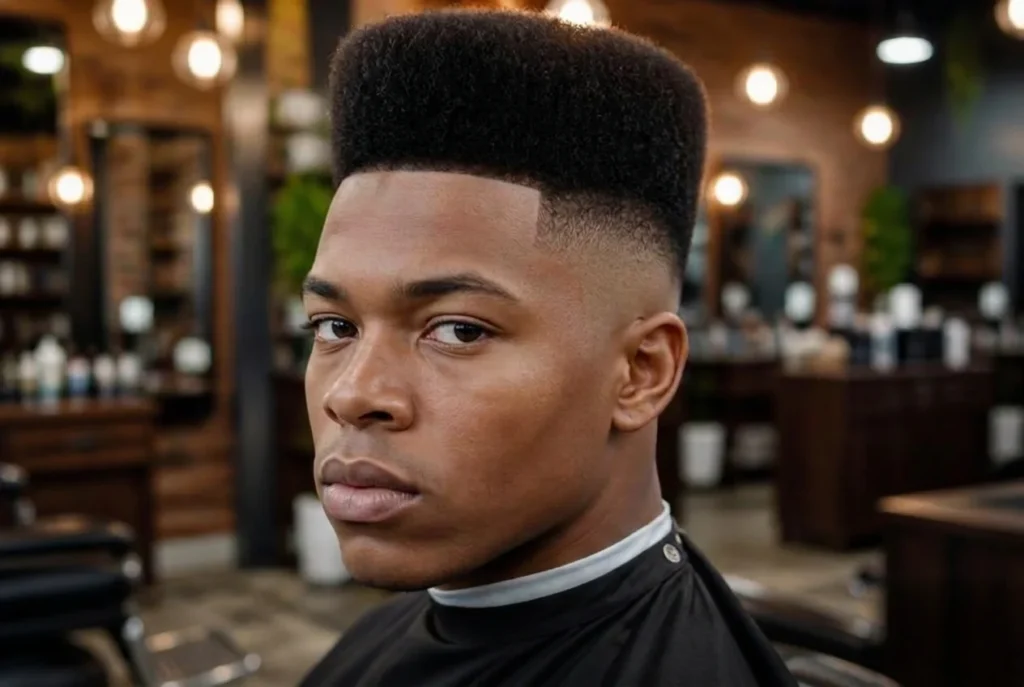
A callback to ’80s and ’90s style, the high top fade keeps significant height and volume on top — often styled flat across — while fading the sides sharply. It works best with coily or very curly hair types that naturally hold vertical shape.
Styling Tip: Use a wide-tooth pick to lift and shape the top while it’s damp, then set with a light hold spray so the height lasts through the day.
Bald Fade Haircut
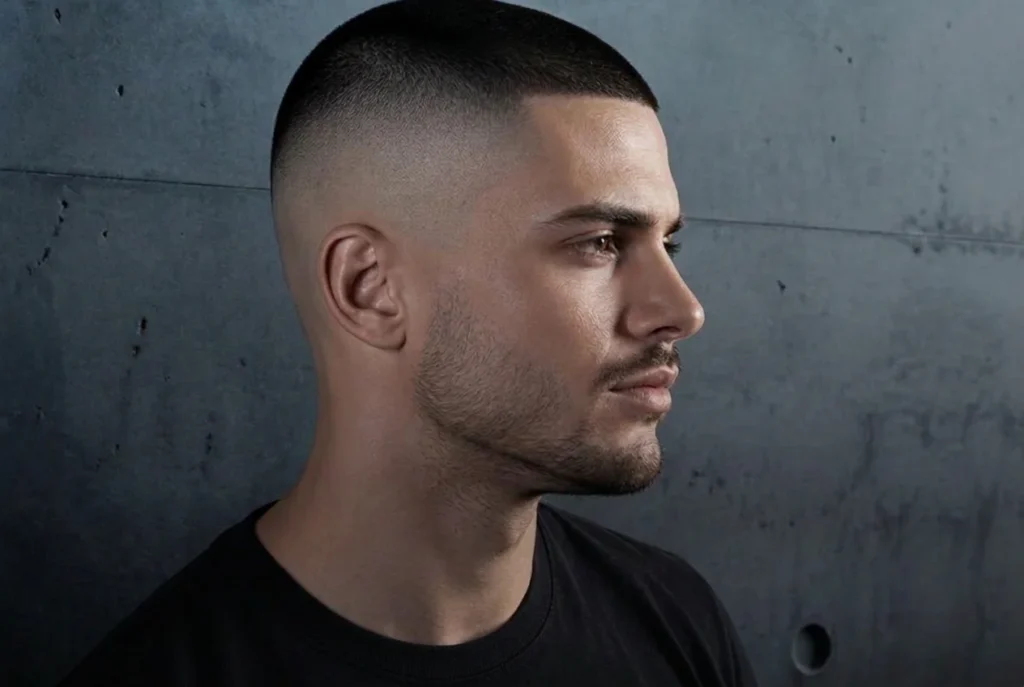
Similar to a skin fade but typically starting even higher and more aggressively, the bald fade haircut fades the sides down to completely bare skin, often reaching further up the head. It creates maximum contrast with any top length.
Styling Tip: Keep a personal edger at home for quick touch-ups on regrowth along the bare-skin section between barber appointments.
Temple Fade Haircut
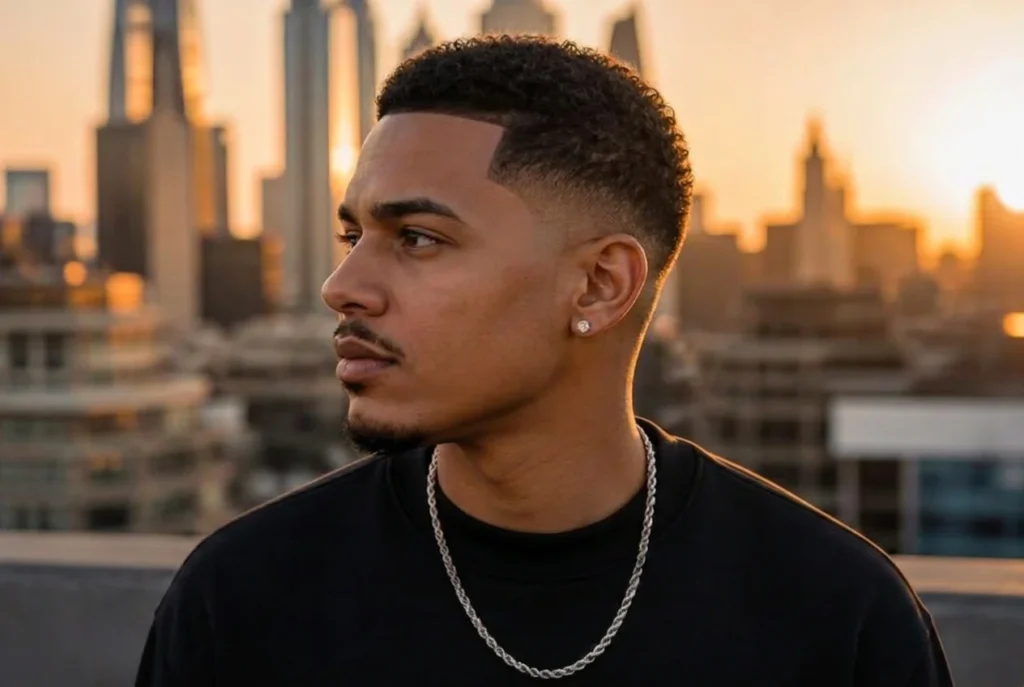
The Temple Fade Haircut focuses the blend specifically around the temple area, tapering the hair back from the forehead corners. It’s a subtle, often overlooked detail that many barbers add to sharpen an overall style, particularly for guys with a receding hairline.
Styling Tip: Keep the top styled away from the temples rather than over them, so the clean tapering detail actually stays visible.
Drop Low Fade
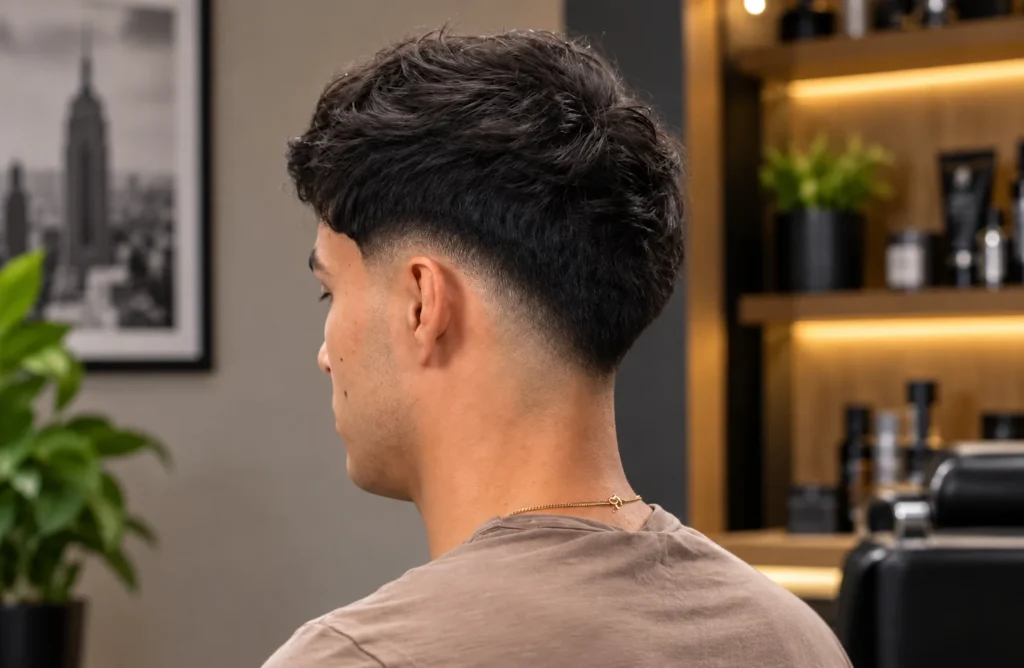
Combining a curved drop fade with a low starting point, the drop low fade stays subtle at the top of the ear before curving down toward the nape. It’s a great pick for guys who like the rounded, natural look of a drop fade but want to keep things understated.
Styling Tip: A light cream is usually enough here — this style is meant to look understated, so avoid heavy, high-shine products.
Boosie Fade Haircut
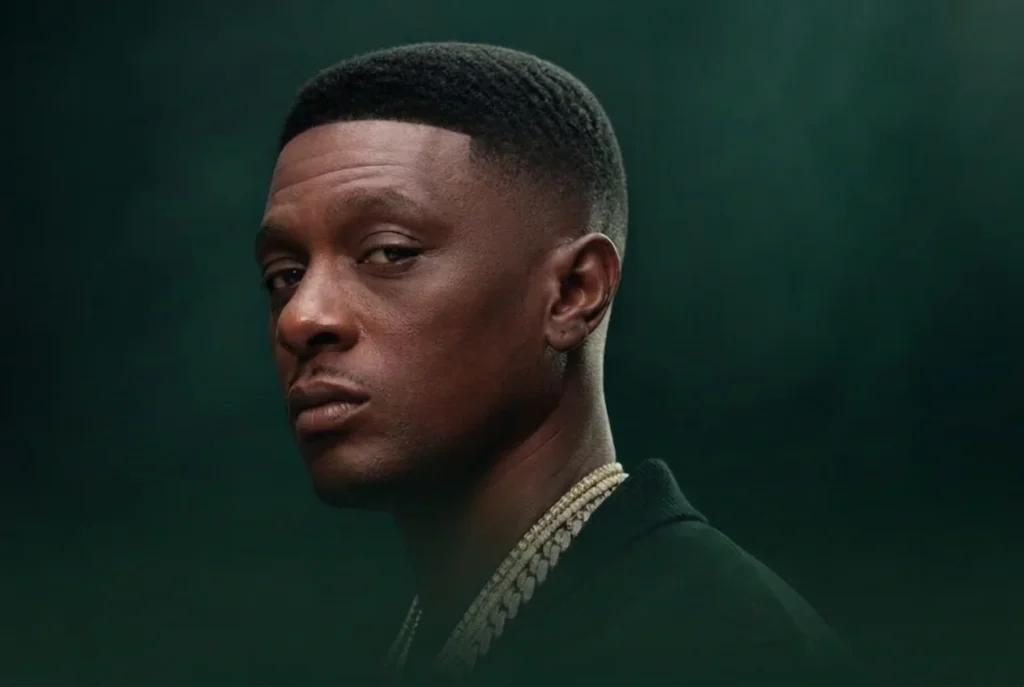
Named after the distinctive style popularized by rapper Boosie, this fade features a high, sharp contrast paired with braids, twists, or short natural hair on top. It’s especially popular in Black hairstyling culture and works beautifully with coily hair types.
Styling Tip: Apply edge control along the hairline after the cut to keep the line-up crisp for several extra days.
Long Top Fade Haircut
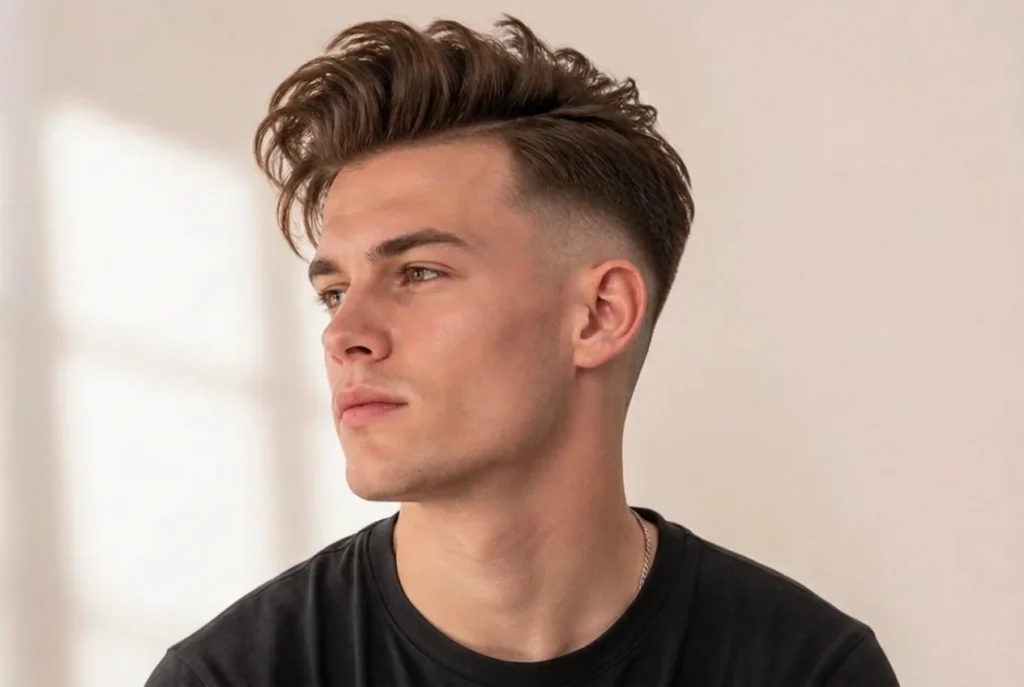
Different from a full long-hair fade, the long top fade haircut keeps moderate-to-long length concentrated at the crown and front, styled into a quiff, pompadour, or brushed-back look, while the sides fade sharply.
Styling Tip: Blow-dry the front section upward and back over a round brush before applying pomade, so the quiff has lift instead of falling flat.
Mid Drop Fade
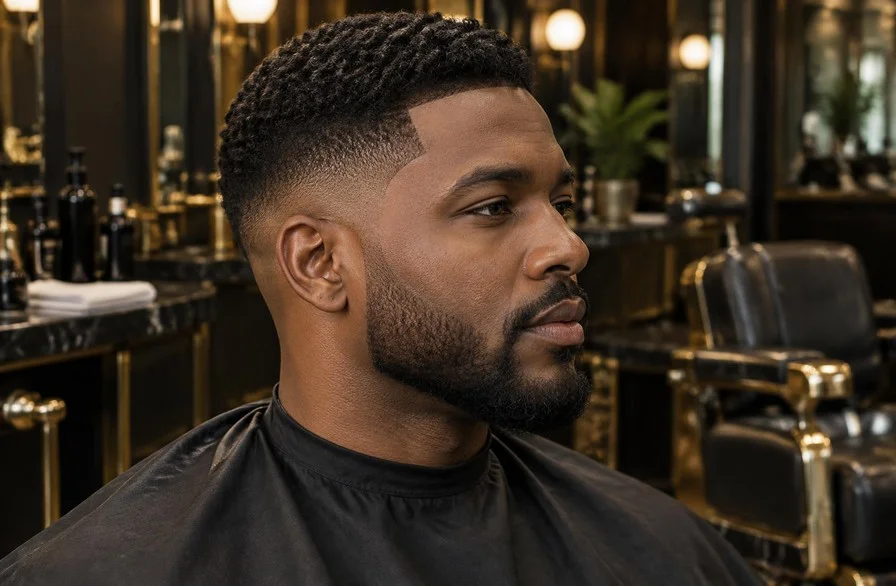
A hybrid style, the mid drop fade starts its blend at mid-height but curves downward behind the ear like a drop fade. It offers the balanced look of a mid fade with the softer, rounder line of a drop fade.
Styling Tip: Ask your barber to keep the drop curve subtle rather than exaggerated, so it reads as a mid fade with just a touch of extra softness.
Mohawk Fade Haircut
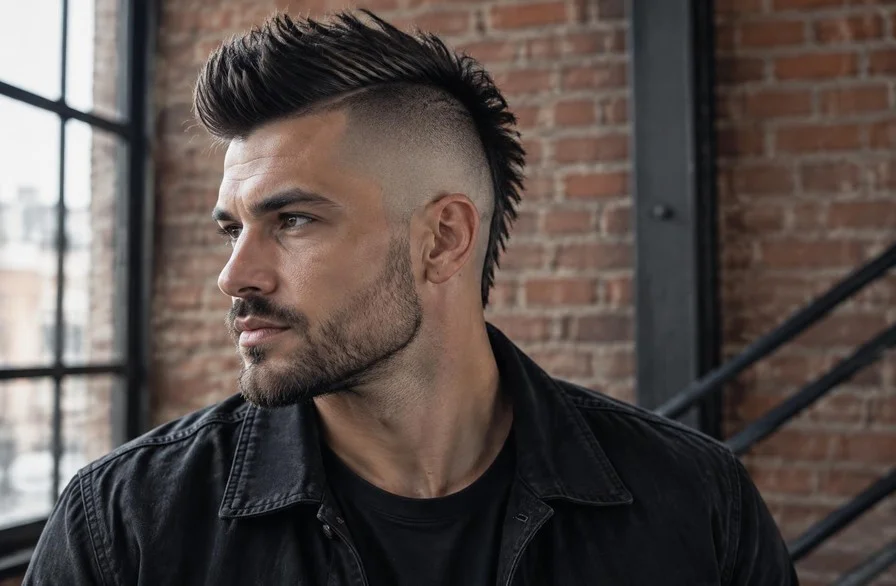
The mohawk fade pairs a strip of longer hair down the center of the head with fully faded sides, creating dramatic contrast. Modern versions are far more wearable than the classic spiked mohawk.
Styling Tip: Brush the center strip forward with a strong-hold gel for a modern, wearable look rather than spiking it straight up.
High Skin Fade
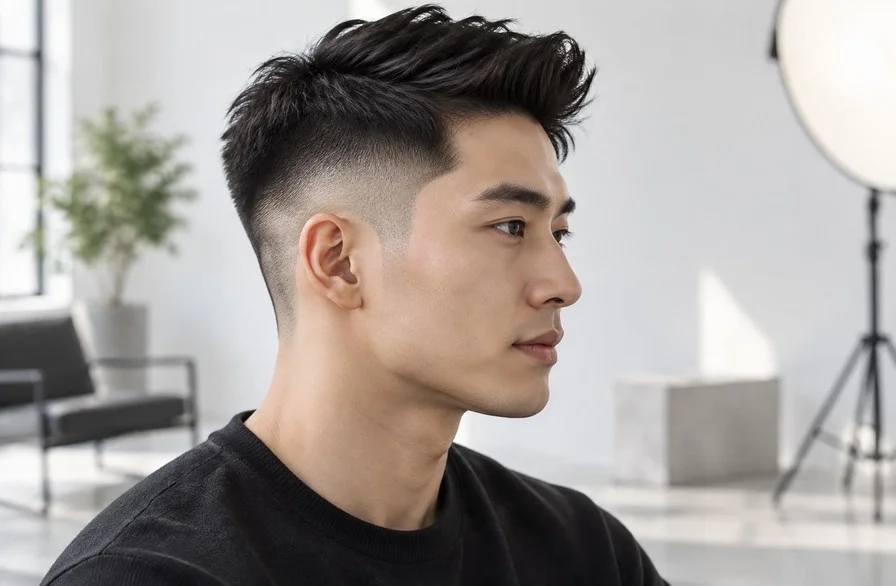
Combining the dramatic starting point of a high fade with the bare-skin finish of a skin fade, the high skin fade is one of the boldest options here. It suits guys with oval or long face shapes and works exceptionally well with short, textured, or spiky tops.
Styling Tip: Because contrast is so high, keep the top texture deliberate — messy, undone styling looks more intentional than a flat, combed-down top.
Mid Skin Fade
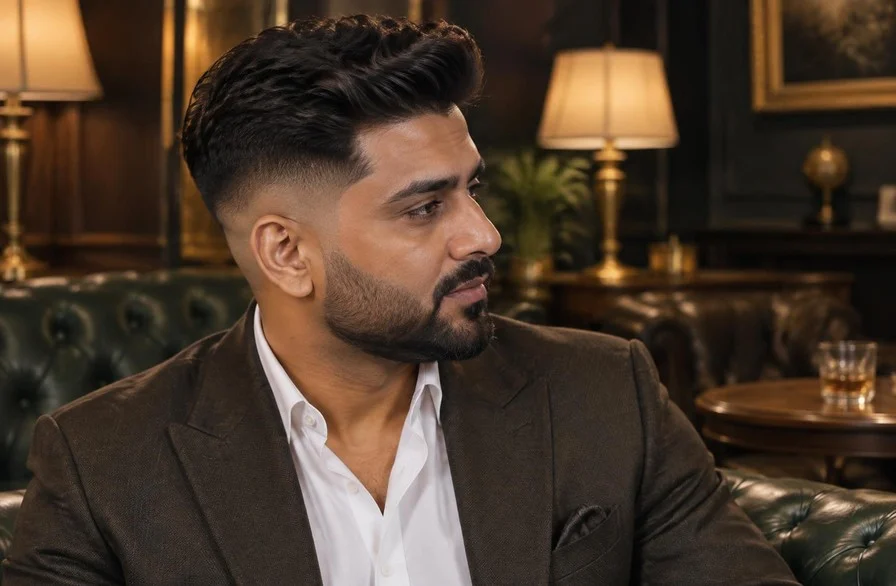
The mid skin fade blends starting from the temple down to bare skin, offering strong contrast without the extreme boldness of a high skin fade. It’s a popular everyday choice because it looks polished for work while still feeling current.
Styling Tip: A satin-finish pomade gives just enough shine to look polished for the office without veering into overly slick territory.
Low Skin Fade
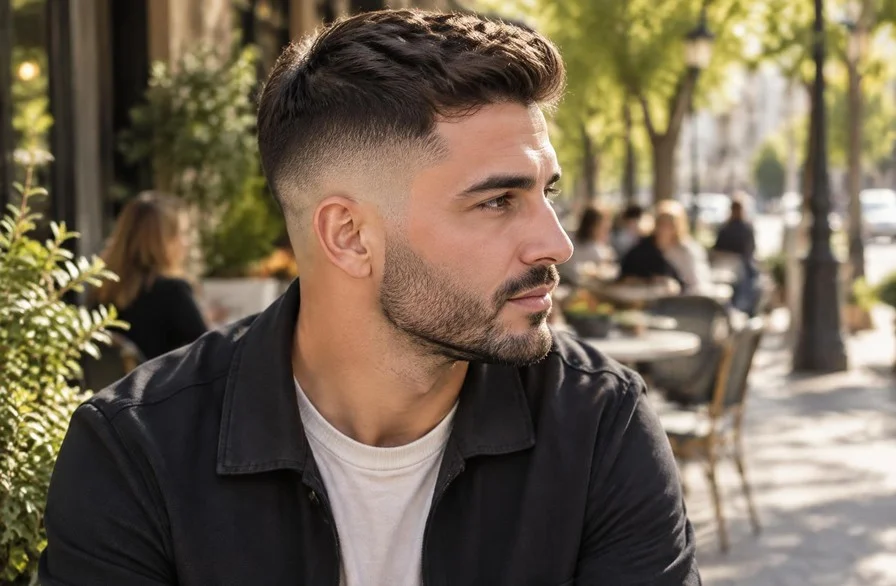
For guys who want the crisp contrast of a skin fade but a more subtle placement, the low skin fade keeps the bare-skin blending close to the ear and neckline. It’s a great entry point if you’ve never had a skin fade before.
Styling Tip: Since the contrast area is smaller, focus styling attention on the top length — the fade itself needs very little extra effort to look sharp.
Slick Back Fade
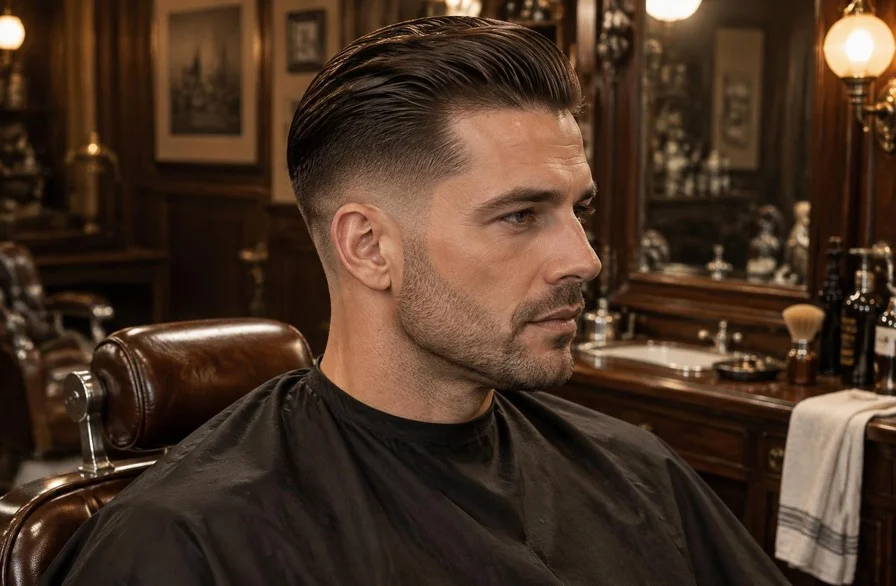
Pairing a fade with hair combed straight back on top, the slick back fade is a sharp, polished look favored for business settings and formal events. It works best with straight to wavy hair with enough length to sweep back.
Styling Tip: Comb hair back while damp using a strong-hold gel, then let it air-dry fully before touching it again to lock in the slicked shape.
Shadow Fade Haircut
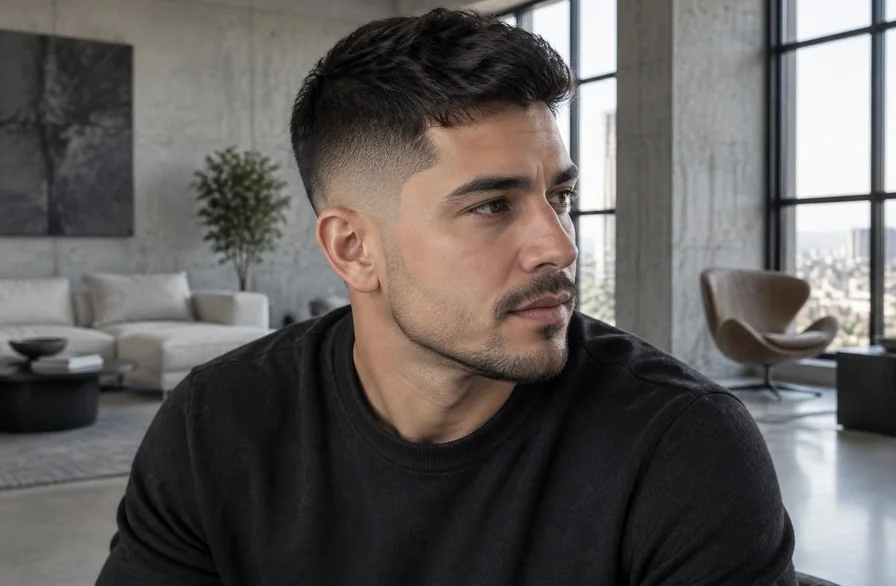
Unlike a skin fade, the shadow fade haircut never goes fully bare — instead, it fades down to a very short, barely-there length that still has a hint of “shadow” on the skin. It’s a softer, more forgiving option that suits guys who want the fade look without the stark contrast.
Styling Tip: This fade grows out more gracefully than a skin fade, so a light trim maintenance schedule works well without needing weekly touch-ups.
Military Fade Haircut
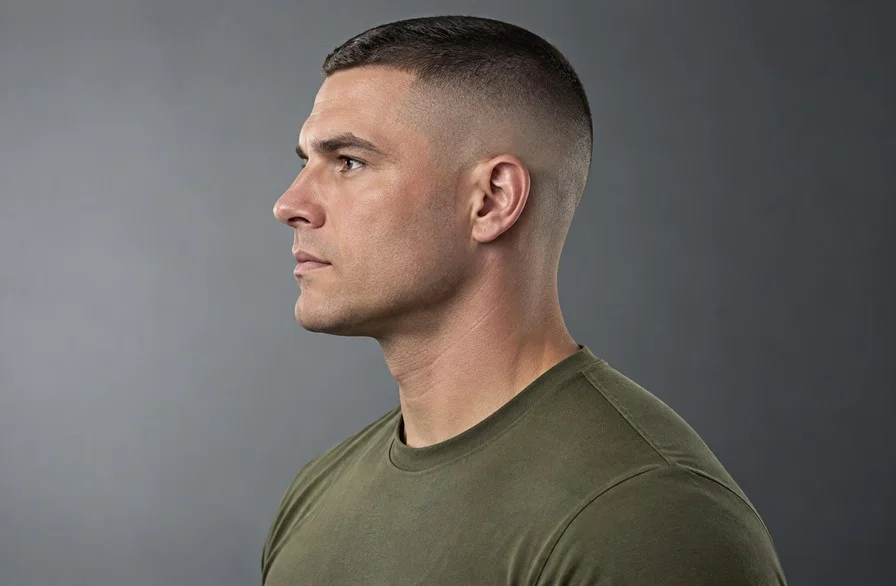
Practical and no-nonsense, the military fade haircut keeps the top extremely short — often just an inch or less — and fades the sides tightly. It’s built for low maintenance and durability.
Styling Tip: No product is usually necessary here, though a tiny amount of matte balm can knock down any unwanted shine in direct sunlight.
Taper High Fade
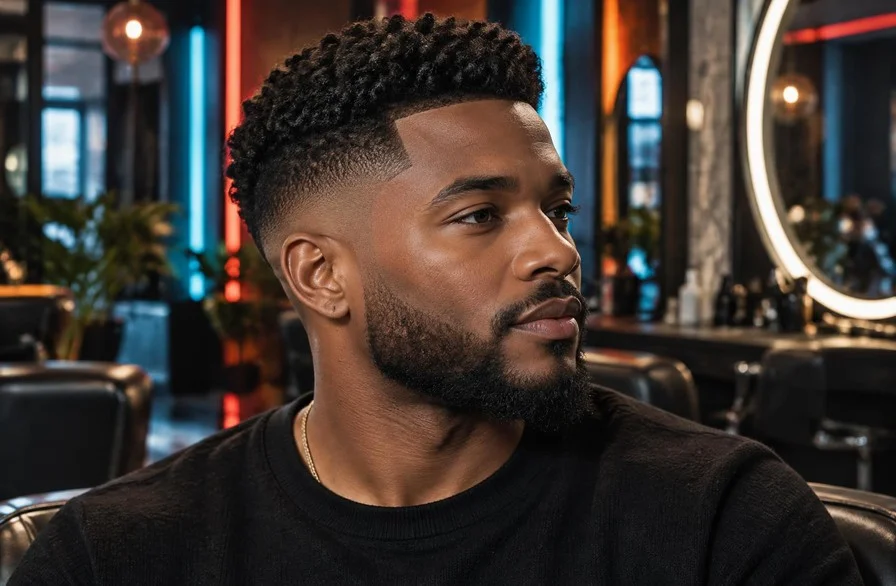
This style combines a high-starting fade with the softer taper blend rather than a hard skin finish, giving height and contrast without going fully bare on the sides. It suits guys who want a bold silhouette but prefer a slightly softer transition.
Styling Tip: Keep the top textured with a matte product so the softness of the taper is balanced by a bit of visual interest up top.
Fade Haircut With Beard
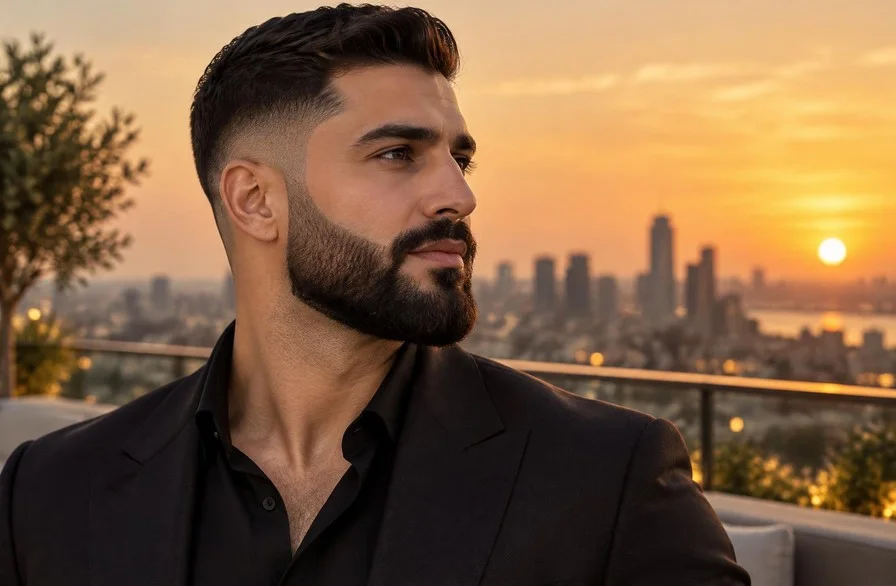
Pairing a fade with a well-groomed beard creates a cohesive, intentional look rather than two separate styling choices. This style typically has the fade blend seamlessly into the beard line along the cheek and jaw.
Styling Tip: Use a small trimmer to maintain the connection between fade and beard weekly, since this junction grows out faster than the rest of the cut.
Fade Haircut With Line Up
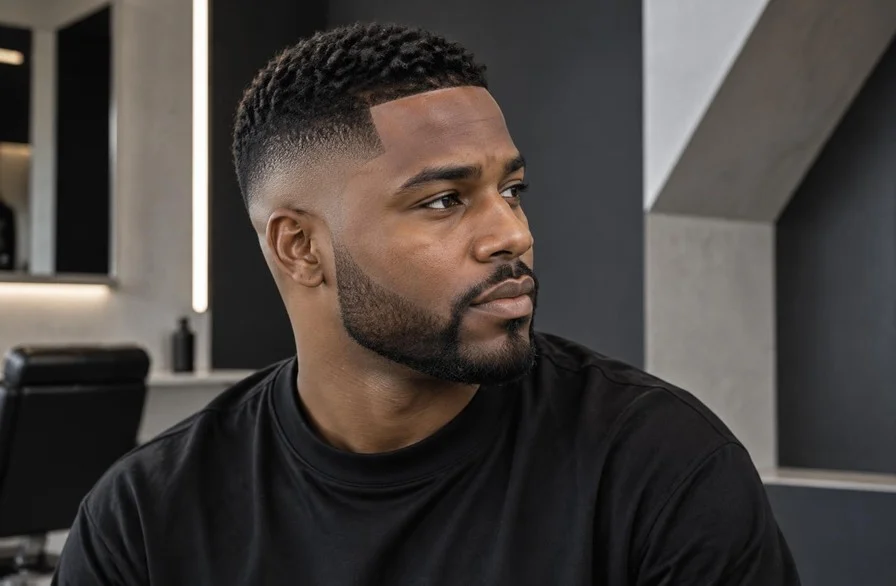
Adding a crisp, straight edge along the front hairline — known as a line-up or edge-up — sharpens the entire look of any fade. This detail is especially popular for guys with coily or curly hair.
Styling Tip: Apply a thin layer of edge control with a soft brush rather than fingers for a cleaner, more defined line that lasts through the day.
French Crop Fade Haircut
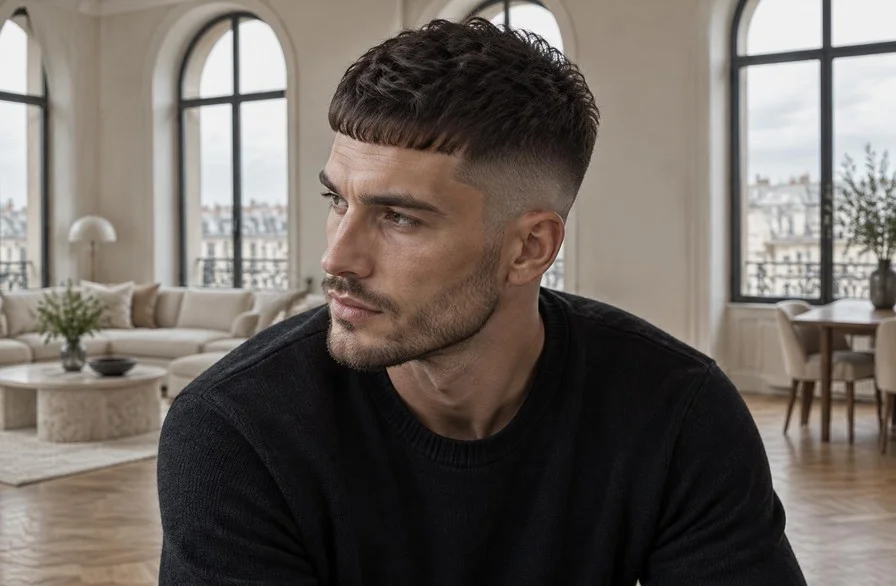
Rounding out the list, the French crop fade haircut pairs a short, textured fringe brushed forward with a fade on the sides. It’s a low-maintenance, modern take that works with straight to wavy hair and suits nearly every face shape.
Styling Tip: Work a small amount of matte clay through damp hair with your fingers, pressing the fringe forward rather than combing it for a naturally textured finish.
How to Choose the Right Fade Haircut
With 32 options on the table, narrowing things down comes down to four practical factors: your face shape, hair type, hair length, and personal style.
Choose a Fade Based on Your Face Shape
Round faces generally look best with fades that add height and angles, like a high fade or mid fade, since these draw the eye upward and create the illusion of length. Square or angular faces are flattered by softer, curved options like a drop fade or burst fade, which ease the sharpness of the jawline. Long faces benefit from fades that add width rather than height, so a low fade or low taper fade tends to work better than a high, dramatic style.
Choose a Fade Based on Your Hair Type
Curly and coily hair generally pairs best with fades that leave more length and texture on top — think curly fade, burst fade, or Boosie fade — since these styles work with the curl pattern rather than fighting it. Straight hair has more flexibility and suits nearly any fade, from a slick back fade to a French crop fade. Fine or thinning hair often looks fuller with shorter top lengths, making a buzz cut fade or military fade a smart, low-effort choice.
Choose a Fade Based on Your Hair Length
If you’re not ready to commit to short hair, a taper fade or low taper fade offers the cleanest look while keeping the most length. If you’re growing your hair out, a long hair fade or long top fade haircut lets you enjoy length on top without looking unkempt on the sides. Guys who prefer short hair overall will find the most options, from skin fades to military fades.
Choose a Fade Based on Your Personal Style
Beyond hair type and face shape, think about how much attention you want your haircut to draw. Subtle, professional guys tend to gravitate toward low fades and taper fades, while guys who want their haircut to make a statement often go for high skin fades, mohawk fades, or mullet fades. There’s no wrong answer here — it’s about what makes you feel confident.
Low Fade vs Mid Fade vs High Fade
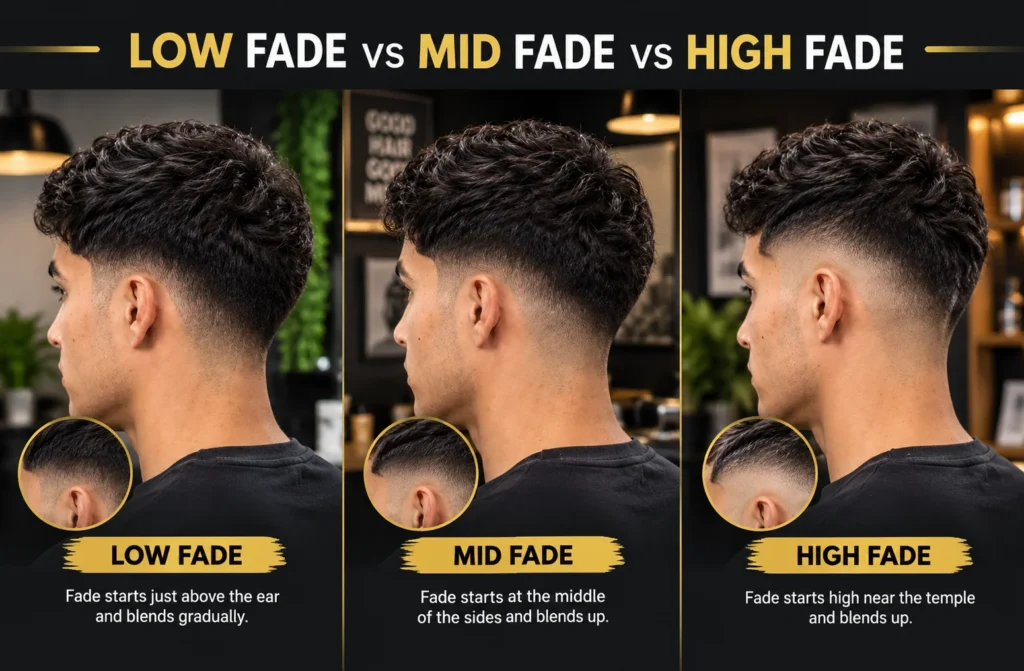
These three terms describe where the fade begins, and understanding the difference is the single most useful thing you can tell your barber. A low fade starts near the ear and neckline, offering the most subtle, professional look. A mid fade starts around the temple, giving a balanced mix of contrast and conservatism that suits most workplaces and casual settings alike. A high fade starts near the crown, creating the boldest, most eye-catching contrast — best suited for guys who want their haircut to stand out and who don’t mind more frequent trims to maintain the sharp line.
Skin Fade vs Bald Fade vs Shadow Fade
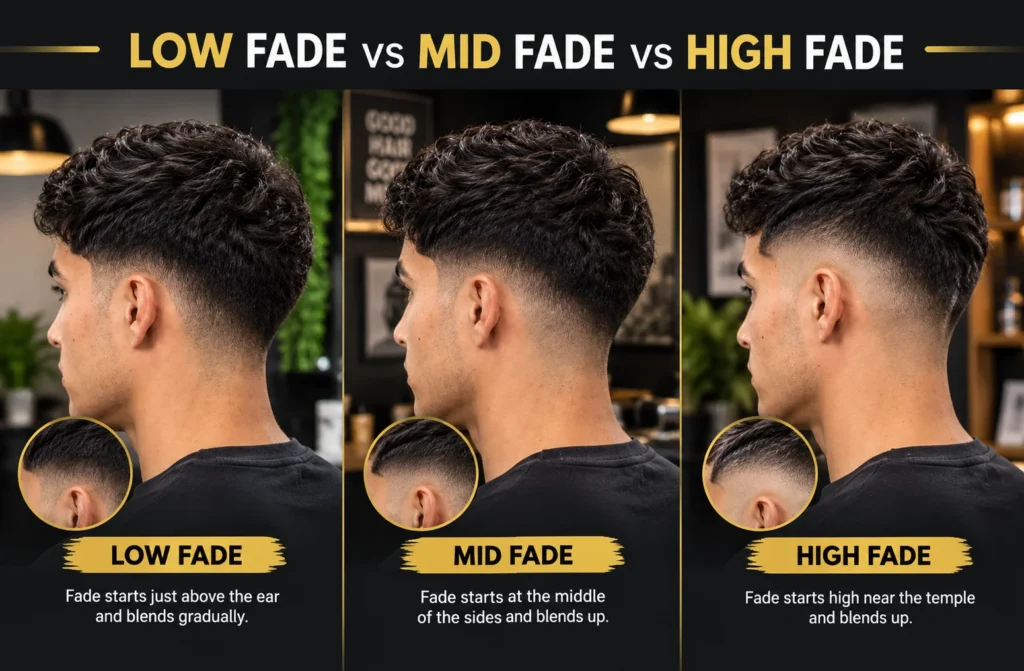
These three terms describe how short the fade gets at its lowest point, and they’re often mixed up. A skin fade goes all the way down to bare skin, creating maximum contrast against the top length. A bald fade is essentially the same concept but typically starts higher up the head, covering more surface area with bare skin. A shadow fade never quite reaches bare skin — it fades to a very short, barely-visible length that gives a softer, more forgiving transition and hides regrowth longer than the other two options.
How to Ask Your Barber for the Perfect Fade
Even with the right terminology, communication with your barber makes all the difference between the haircut you imagined and the one you actually get.
Tell Your Barber Where You Want the Fade to Start
Point to the exact spot — above the ear, at the temple, or near the crown — rather than just saying “low,” “mid,” or “high,” since these terms can mean slightly different things to different barbers. Reference photos help enormously here.
Explain How Short You Want the Sides
Be specific about whether you want bare skin, a shadow finish, or a softer taper. Mentioning a guard number (like a #1 or #2) for the shortest point gives your barber a concrete target rather than a vague description.
Decide How Much Length to Keep on Top
Think about how much time you’re willing to spend styling each morning. Shorter top lengths need less daily effort, while longer styles like a quiff or slick back require more product and time.
Ask for a Line-Up or Beard Blend
If you want extra sharpness, ask specifically for a line-up along your hairline or a blend where your fade meets your beard. These small details often separate an average haircut from a genuinely sharp one.
How to Style a Fade Haircut
Prepare Your Hair
Start with clean, towel-dried hair — most styling products work best on damp rather than soaking wet hair, since too much moisture dilutes hold and can leave hair looking greasy rather than textured.
Choose the Right Styling Product
Matte clays and pastes work well for textured, piece-y looks like a French crop or Mexican fade. Pomades give shine and strong hold, ideal for slick back styles. Curl creams and light gels help define natural texture without weighing curls down.
Style the Top According to Your Hair Type
Curly hair often looks best air-dried or diffused to preserve natural pattern. Straight hair can be blow-dried with a round brush for volume before applying product. Coily hair benefits from twisting or picking out for added height and definition.
Finish and Define the Fade
Even though the fade itself doesn’t need daily styling, a small amount of product blended along the transition zone can help it look freshly cut for longer between barber visits.
How to Maintain a Fade Haircut
How Often Should You Get a Fade?
Skin fades and high fades typically need a touch-up every one to two weeks to stay sharp, since regrowth is most visible where contrast is highest. Low fades, taper fades, and shadow fades are more forgiving and can often stretch to three or four weeks between visits.
Washing and Conditioning Tips
Wash two to three times a week rather than daily, since over-washing can dry out both hair and scalp. A lightweight conditioner helps keep the top manageable, especially for curly or coily textures.
Best Products for Fade Haircuts
Keep a matte clay or paste for textured looks, a strong-hold pomade for slicker styles, and a light leave-in or curl cream if you have natural texture on top. A small amount of beard oil is worth adding if you’re maintaining a fade haircut with beard.
How to Keep Your Hairline Sharp
Between barber visits, a personal trimmer or edger can help clean up minor regrowth along the hairline, especially if you’re maintaining a fade haircut with line up.
How to Protect Your Fade While Sleeping
A silk or satin pillowcase reduces friction that can flatten or frizz textured tops overnight, and it’s particularly helpful for guys maintaining curly or coily fade styles.
Best Fade Haircuts for Different Hair Types
Fade Haircuts for Straight Hair
Straight hair works well with almost every fade on this list, but styles like the slick back fade, French crop fade, and long top fade haircut particularly showcase straight hair’s natural shine and movement.
Fade Haircuts for Wavy Hair
Wavy hair holds texture naturally, making it ideal for the Mexican fade, burst fade, and drop fade, all of which benefit from a bit of natural movement on top.
Fade Haircuts for Curly Hair
The curly fade, burst fade, and fade haircut with line up all let curl pattern shine while keeping the sides clean and controlled.
Fade Haircuts for Coily or Coarse Hair
Coily hair pairs beautifully with the Boosie fade, high top fade, and mohawk fade, all of which use height and volume to complement tighter curl patterns.
Fade Haircuts for Thick Hair
Thick hair holds shape well, making it a great match for the mullet fade, long hair fade, and mohawk fade, since there’s enough density to maintain structure.
Fade Haircuts for Thin Hair
Thin or fine hair often looks fuller with shorter, cropped tops, so the buzz cut fade, short fade haircut, and military fade haircut are smart choices that avoid emphasizing sparse areas.
Best Fade Haircuts for Different Face Shapes
Best Fade for Oval Faces
Oval faces are considered the most versatile shape, so nearly any fade works — the high skin fade and slick back fade are particularly striking options.
Best Fade for Round Faces
Fades that add height, like the high fade and mohawk fade, help elongate round faces visually.
Best Fade for Square Faces
Softer, curved options like the drop fade and burst fade ease the strong angles of a square jawline.
Best Fade for Diamond Faces
The mid fade and temple fade haircut balance a diamond face’s narrower forehead and chin against its wider cheekbones.
Best Fade for Heart-Shaped Faces
Styles with volume lower on the head, like the low fade and French crop fade, help balance a heart-shaped face’s wider forehead.
Best Fade for Long Faces
Fades that add width rather than height, such as the low taper fade and short fade haircut, help long faces appear more proportional.
Fade Haircut Before and After
The transformation a fade offers is often more dramatic than people expect, especially when moving from an unstructured, grown-out cut to a clean, blended style. Before a fade, hair often looks bulky or shapeless around the sides; after, the same length on top suddenly looks intentional and sharp, simply because the sides have structure. This is one of the biggest reasons fades remain so popular — the transformation-to-effort ratio is hard to beat.
FAQs
Final Thoughts on Fade Haircuts for Men
With so many variations, the fade haircut has earned its place as one of the most adaptable men’s hairstyles around. Whether you’re drawn to the boldness of a high skin fade, the everyday practicality of a low taper fade, or the natural texture of a curly fade, there’s a version built for your hair type, face shape, and lifestyle.
The best approach is to start with what matters most to you — low maintenance, bold style, or a professional look — and let that guide which fade you bring up at your next barber appointment. Come prepared with a reference photo, be specific about where you want the fade to start, and don’t be afraid to ask your barber which variation would suit your particular hair type best. A great fade isn’t just a trend for 2026 — it’s a haircut that, done right, will keep looking sharp for years to come.
